

As a preceding six-parts series examined the layered urban wardrobe of Moroccan men during the 19th and 20th centuries, this series extends that enquiry to women’s dress, situating urban female attire within Morocco’s complex history of cultural interaction and political exchange. As established previously, Morocco and its neighbouring regions occupy a historically significant position at the intersection of Africa, Europe, and the Mediterranean. This geography produced a highly syncretic cultural landscape shaped by indigenous Amazigh traditions alongside influences from North and Central Africa, the wider Mediterranean, the Levant and southern Europe.
Since Classical Antiquity, Amazigh cultural traditions developed through sustained interaction with external powers. Phoenician commercial expansion along the North African coast, evidenced by settlements such as Lixus and Mogador from the first millennium BCE and later consolidated through Carthaginian influence, constituted an early phase of Mediterranean cultural exchange. These networks facilitated not only commercial and political relationships but also sustained interaction between Amazigh communities and the wider Mediterranean world. The subsequent incorporation of parts of the region into the Roman imperial sphere following the destruction of Carthage further embedded North Africa, particularly Morocco within the broader Mediterranean political and cultural networks.
By the early medieval period, Morocco had become an established site of intersection between the multiple cultural and intellectual traditions. The Arab-Islamic expansions of the seventh and eighth centuries introduced new religious, intellectual, philosophical, architectural, and material practices, which intersected with existing Amazigh traditions. Subsequent exchanges with Andalusia, particularly the Hispano-Moorish
Moorish: (noun: Moors – People of North Africa and Iberian Peninsula from Latin: mauri from ancient Greek: amouros – dark, or dim; a name designated to the Berber-speaking ethnic population of Mauritania, Northwest Africa, Iberian Peninsula, Sicily, and Malta) Christian Europeans coined it to identify the native Muslim inhabitants of this region. cultural sphere, and with southern Europe further enriched the region’s urban cultures. Cities such as Fez
Fez: (Ottoman Turkish: fes boyası - madder
Madder: (Latin: Rubia tinctorum – Eurasian herb), rose madder, common madder or dyer's madder is a vegetable dye made from the roots of a perennial plant belonging to the bedstraw and coffee family. It has been used extensively as a vegetable red dye across the globe from India to England. Ṭarbūsh: (Turkish: terpos – turban; from Persian serposh – headdress; Synonym: fez), a type of traditional skull cap with a high crown. With a possible Mediterranean origin, this head wear gained popularity in the late Ottoman period and became the forerunner of other similar caps with slight variations.
Morocco’s distinctive political relationship with the Ottoman Empire between the 16th and early 20thcenturies added another layer to this cultural landscape. Unlike much of North Africa, Morocco retained its political autonomy and was never fully incorporated into the Ottoman imperial system. Nevertheless, sustained diplomatic, military, and cultural exchanges facilitated the circulation of Ottoman influences in areas including military practice, architecture, and material culture, particularly within major urban centres such as Fez
Fez: (Ottoman Turkish: fes boyası - madder
Madder: (Latin: Rubia tinctorum – Eurasian herb), rose madder, common madder or dyer's madder is a vegetable dye made from the roots of a perennial plant belonging to the bedstraw and coffee family. It has been used extensively as a vegetable red dye across the globe from India to England. Ṭarbūsh: (Turkish: terpos – turban; from Persian serposh – headdress; Synonym: fez), a type of traditional skull cap with a high crown. With a possible Mediterranean origin, this head wear gained popularity in the late Ottoman period and became the forerunner of other similar caps with slight variations.
The French and Spanish colonial periods from the 19th into the 20th century introduced further European influences, reshaping Morocco’s political institutions, urban environments, and social and cultural structures. Within this succession of cultural encounters and historical transformations, dress and couture constituted an important site of continuity, adaptation, and negotiation. Women, in particular, played a significant role as custodians and transmitters of sartorial traditions, while simultaneously participating in their continual transformation in response to Morocco’s evolving social and cultural landscape.
Corresponding to Morocco’s multilayered historical and cultural formation, women’s dress was likewise characterised by a system of by a system of sartorial layering, in which individual garments functioned as components of a broader ensemble. Thus, like the preceding examination of urban Moroccan men’s dress, this study adopts a multipart structure organised according to the categories of the sartorial ensemble, including underdress, overgarments, headwear, footwear and accessories amongst others. The discussion therefore begins with the foundational layer of dress: underdress.
The Tahtiyah
Taḥtīyah: (Arabic; Synonym: tashāmīr, tshamir), a traditional long shirt worn by Moroccan men and a long underrobe worn by Moroccan women under the more ostentatious overgarments such as the qaftan. While it is typically made from white cotton for men, it is sometimes more decorative for women with prints and trimmings.
Tchāmīr: (Arabic; Synonym: tashāmīr, tahtiyah), a traditional long shirt worn by Moroccan men and a long underrobe worn by Moroccan women under the more ostentatious overgarments such as the qaftan. While it is typically made from white cotton for men, it is sometimes more decorative for women with prints and trimmings.
Among women in Morocco’s urban centres during the 19th and 20th centuries, an underdress constituted as an important component of the layered dress ensemble. Various terms including tahtiyah
Taḥtīyah: (Arabic; Synonym: tashāmīr, tshamir), a traditional long shirt worn by Moroccan men and a long underrobe worn by Moroccan women under the more ostentatious overgarments such as the qaftan. While it is typically made from white cotton for men, it is sometimes more decorative for women with prints and trimmings.
Tchāmīr: (Arabic; Synonym: tashāmīr, tahtiyah), a traditional long shirt worn by Moroccan men and a long underrobe worn by Moroccan women under the more ostentatious overgarments such as the qaftan. While it is typically made from white cotton for men, it is sometimes more decorative for women with prints and trimmings.
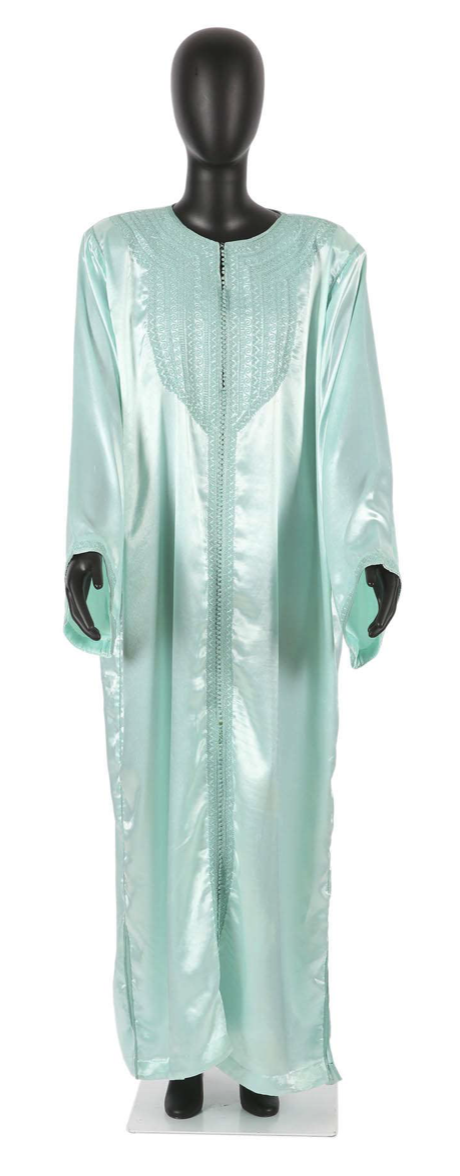
A women’s ankle-length underdress or Tashāmīr, Morocco, c. 20th century; Acc No: ZI2019.500561 MOROCCO; Source: The Zay Zay: (Arabic: costume, Pl. azyaā’), a set of clothes in a style typical of a particular country or historical period. Initiative
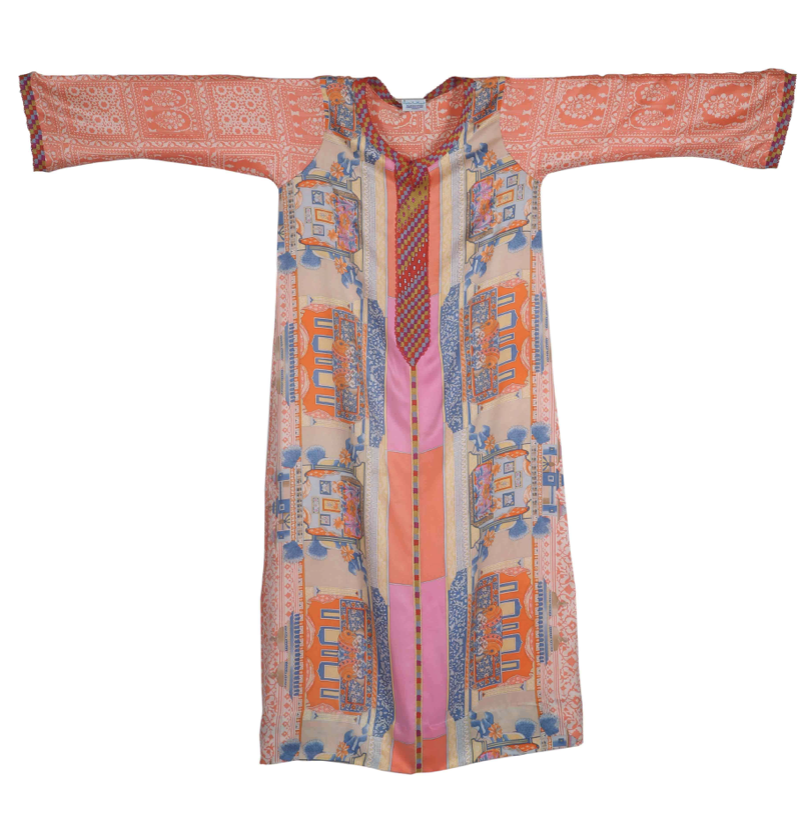
The women’s tashāmīr, however, appears to have differed structurally from its male counterpart. Rather than taking the form of a comparatively abbreviated undergarment, the women’s version often assumed the form of a loose, ankle-length, shift-like dress, covering the body beneath the outer garments. Examples preserved in The Zay Zay: (Arabic: costume, Pl. azyaā’), a set of clothes in a style typical of a particular country or historical period. Initiative collection dating from the late 20th and early 21st century demonstrate material and visual evidence of chronological variation in the form and decoration of these garments.
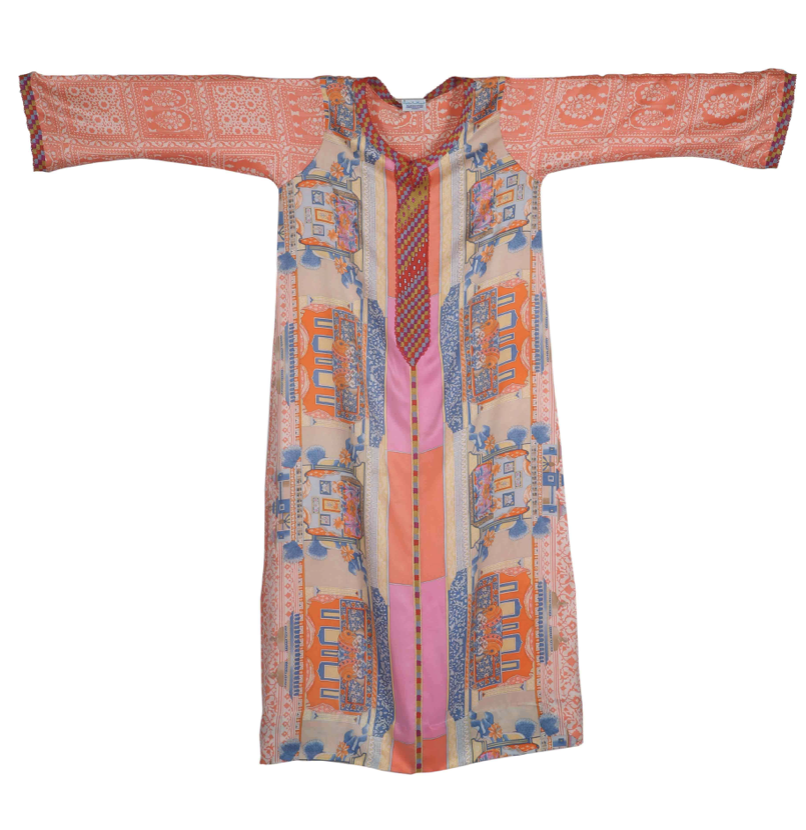
A women’s ankle-length printed underdress or Tashāmīr, Morocco, c. 21st century; Acc No: ZI2011.500906.9 MOROCCO; Source: The Zay Zay: (Arabic: costume, Pl. azyaā’), a set of clothes in a style typical of a particular country or historical period. Initiative
Frequently embellished at the collar and the cuffs with piqued, laced or embroidered textile treatment, the distribution of ornament in these garments are particularly noteworthy within the context of urban Moroccan women’s dress practice of the period. Although women in the urban centres were highly accomplished in the production and use of fine embroidery, surviving examples suggest that such decorative labour was often concentrated on specific garment components rather than applied across the principal body of the garment.
Ornamentation was consequently focused on the collar and cuffs, where embroidered or otherwise embellished textile inserts provided points of visual emphasis. This selective employment of embroidery may reflect established conventions governing the allocation of decorative labour, the construction of the garments, or the relationship between the relatively utilitarian body of the garment and its more visibly articulated edges.
Although decorated along the collars and cuffs, the earlier examples are generally characterized by their relatively plain construction and ankle-length form, whereas examples dating to the later period exhibit a greater use of printed textiles and more elaborate decorative treatments. This comparison suggests a shift, over the period represented in the collection, from comparatively restrained forms towards increasingly decorative treatments, while the garment continued to function as an integral component of the layered dress ensemble.
The Qmijah
Qmijah: (Possibly late Latin: Camishia – Linen Undergarment; Synonym: kameez, qamīs, gmijah), a traditional loose fitting long tunic or shirt worn by both men and women in the Near and Middle East, South and Central Asia. Typically extending below the waist it is usually paired with a pair of trousers.
An alternative form of women’s underdress documented in urban Morocco during this period was the qmijah
Qmijah: (Possibly late Latin: Camishia – Linen Undergarment; Synonym: kameez, qamīs, gmijah), a traditional loose fitting long tunic or shirt worn by both men and women in the Near and Middle East, South and Central Asia. Typically extending below the waist it is usually paired with a pair of trousers. Qmijah: (Possibly late Latin: Camishia – Linen Undergarment; Synonym: kameez, qamīs, gmijah), a traditional loose fitting long tunic or shirt worn by both men and women in the Near and Middle East, South and Central Asia. Typically extending below the waist it is usually paired with a pair of trousers.
The qmijah
Qmijah: (Possibly late Latin: Camishia – Linen Undergarment; Synonym: kameez, qamīs, gmijah), a traditional loose fitting long tunic or shirt worn by both men and women in the Near and Middle East, South and Central Asia. Typically extending below the waist it is usually paired with a pair of trousers. Qmijah: (Possibly late Latin: Camishia – Linen Undergarment; Synonym: kameez, qamīs, gmijah), a traditional loose fitting long tunic or shirt worn by both men and women in the Near and Middle East, South and Central Asia. Typically extending below the waist it is usually paired with a pair of trousers.
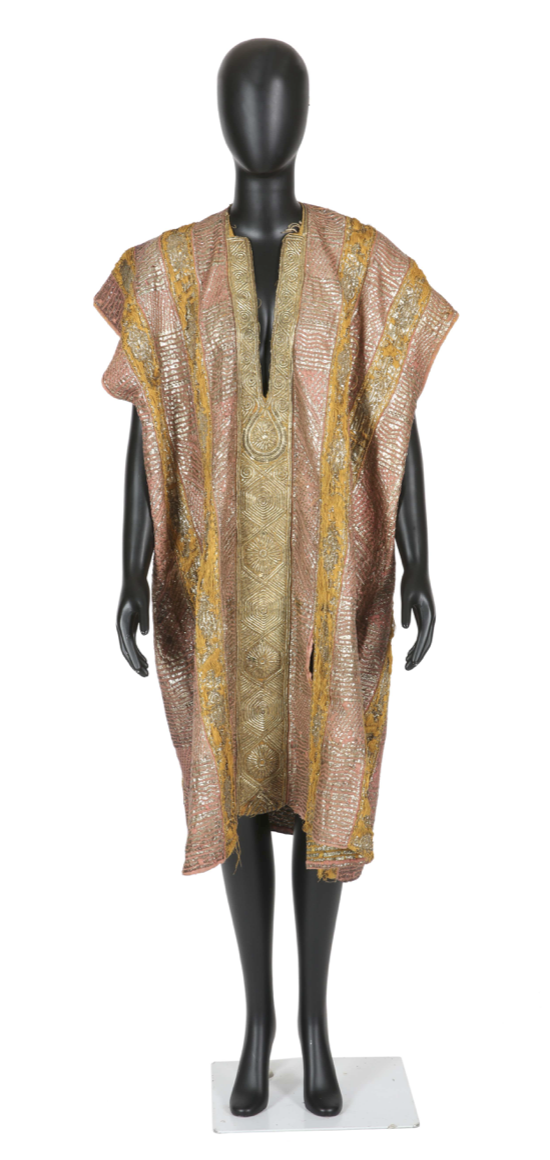
A women’s Tunisian ceremonial Qmijah
Qmijah: (Possibly late Latin: Camishia – Linen Undergarment; Synonym: kameez, qamīs, gmijah), a traditional loose fitting long tunic or shirt worn by both men and women in the Near and Middle East, South and Central Asia. Typically extending below the waist it is usually paired with a pair of trousers.
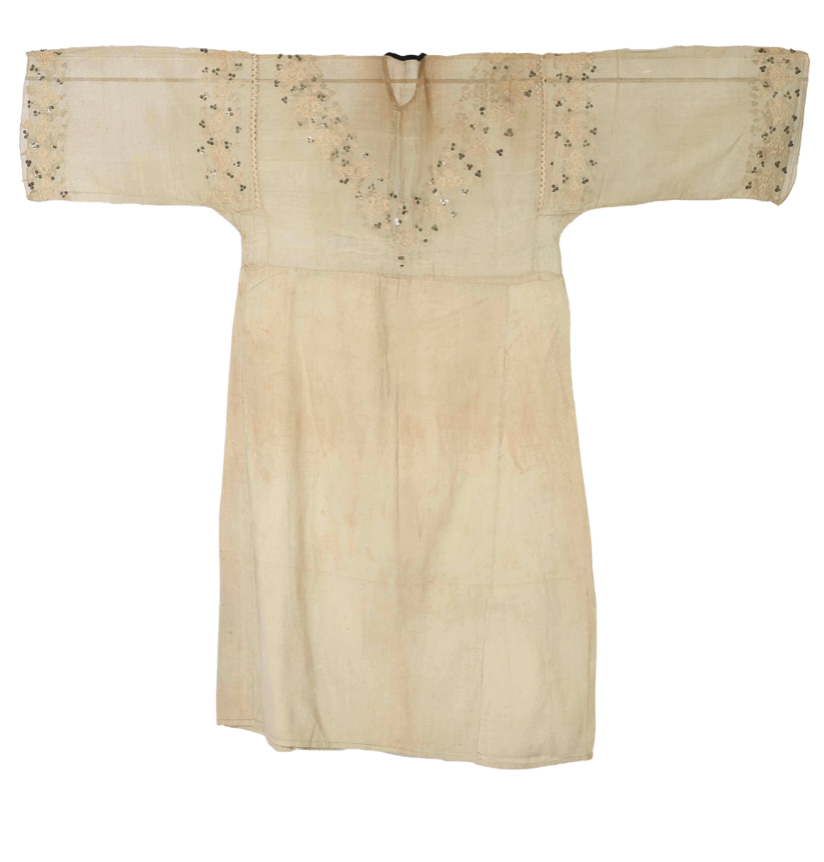
A women’s traditional Libyan Qmijah
Qmijah: (Possibly late Latin: Camishia – Linen Undergarment; Synonym: kameez, qamīs, gmijah), a traditional loose fitting long tunic or shirt worn by both men and women in the Near and Middle East, South and Central Asia. Typically extending below the waist it is usually paired with a pair of trousers.
The Moroccan qmijah
Qmijah: (Possibly late Latin: Camishia – Linen Undergarment; Synonym: kameez, qamīs, gmijah), a traditional loose fitting long tunic or shirt worn by both men and women in the Near and Middle East, South and Central Asia. Typically extending below the waist it is usually paired with a pair of trousers. Qmijah: (Possibly late Latin: Camishia – Linen Undergarment; Synonym: kameez, qamīs, gmijah), a traditional loose fitting long tunic or shirt worn by both men and women in the Near and Middle East, South and Central Asia. Typically extending below the waist it is usually paired with a pair of trousers.
Taken together, the examination of these undergarments demonstrates that women’s dress in the urban centres of 19th and 20th century Morocco was neither static nor culturally homogeneous. The t and the q reveal a vestimentary vocabulary shaped by considerations of function, materiality, ornament, seasonality, and changing patterns of cultural and commercial exchange. The morphological distinctions between these garments, together with the incorporation of printed textiles, knitted wool, and selectively embroidered components, point to a dynamic process of adaptation in which locally established practices intersected with wider transregional influences.
The discussion may consequently be extended from the garments worn closest to the body to the subsequent layers that constituted the urban Moroccan female dress ensemble. The following section examines the principal forms of lower-body dress and outer garments worn by women in Morocco during the period, with particular attention to their construction, materials, terminology, modes of wear, and decorative practices. Considered alongside the undergarments discussed above, these additional layers shall provide a more competitive view of the sartorial systems through which urban Moroccan women negotiated bodily presentation, social convention, material culture, and evolving aesthetic practices.