



1 of 11
| Local Name | Tchamir; Tahtiyah |
| Object Category | Undergarment |
| Gender | Female |
| Date of object | c. 21st century |
| Place Of orgin | Morocco |
| Region | Rabat |
| Object Range | Morocco, Algeria, Tunisia, Libya, et al |
| Dimensions | Length: 140 cm Width: 157 cm |
| Materials | Silk |
| Technique | Machine Stitched Hand Embroidered Print |
| Color | |
| Motif | Geometric Floral Other |
| Provenance | Gifted, Shaikha Salama Bint Tahnun bin Mohammed Al Nahyan, Abu Dhabi 2011 |
| Location | The Zay Zay: (Arabic: costume, Pl. azyaā’), a set of clothes in a style typical of a particular country or historical period. Initiative |
| Status | In Storage |
| ZI number | ZI2011.500906.9 MOROCCO |
Object Note
Part of a lot along with 20 more items (ZI2011.500906 MOROCCO, ZI2011.500906.1 MOROCCO, ZI2011.500906.2 MOROCCO, ZI2011.500906.3 MOROCCO, ZI2011.500906.4 MOROCCO, ZI2011.500906.5 MOROCCO, ZI2011.500906.6 MOROCCO, ZI2011.500906.7 MOROCCO, ZI2011.500906.8 MOROCCO, ZI2011.500906.10 MOROCCO, ZI2011.500906.11 MOROCCO, ZI2011.500906.12 MOROCCO, ZI2011.500906.13 MOROCCO, ZI2011.500906.14 MOROCCO, ZI2011.500906.15 MOROCCO, ZI2011.500906.16 MOROCCO, ZI2011.500906.17 MOROCCO, ZI2011.500906.18 MOROCCO, ZI2011.500906.19 MOROCCO, ZI2011.500906.20 MOROCCO) also in the collection.
Object History
This piece, along with several others, was gifted to Dr. Reem Tariq
Ṭariq: (Arabic; Synonym: tulle_bi_talli
Tūlle_bi_tallī: (French: Tulle – a city in France where fine material for veil was first made; Turkish: tel – wire; Synonym: tariq; talli; badla; khus_dozi ), series of small metal knots made on a woven net ground as embellishment. The term is commonly used in the North African Arab region specifically in Egypt. Ṭariq: (Arabic; Synonym: tulle_bi_talli
Tūlle_bi_tallī: (French: Tulle – a city in France where fine material for veil was first made; Turkish: tel – wire; Synonym: tariq; talli; badla; khus_dozi ), series of small metal knots made on a woven net ground as embellishment. The term is commonly used in the North African Arab region specifically in Egypt.
Originally owned by Sheikha Salama bint Tahnun, this garment was likely specially ordered from Rabat, Morocco. Sheikha Salama, a close friend of Dr. Reem and a staunch supporter of The Zay Zay: (Arabic: costume, Pl. azyaā’), a set of clothes in a style typical of a particular country or historical period. Initiative, is married to her paternal cousin, Sheikh Khalifah bin Mohammed bin Khalid al Nahyan. Together, they have three daughters and four sons. She holds a bachelor’s degree in interior design from Al Husn University, Abu Dhabi.
Following the 1980s, after the inaugural visit of the late Sheikh Zayid bin Sultan Al Nahyan, the founding father and first president of the UAE, to Morocco, it became customary for the ruling family and elite members of UAE society to annually commission suitcases filled with clothing for everyday wear and as gifts for loved ones.
Object Features
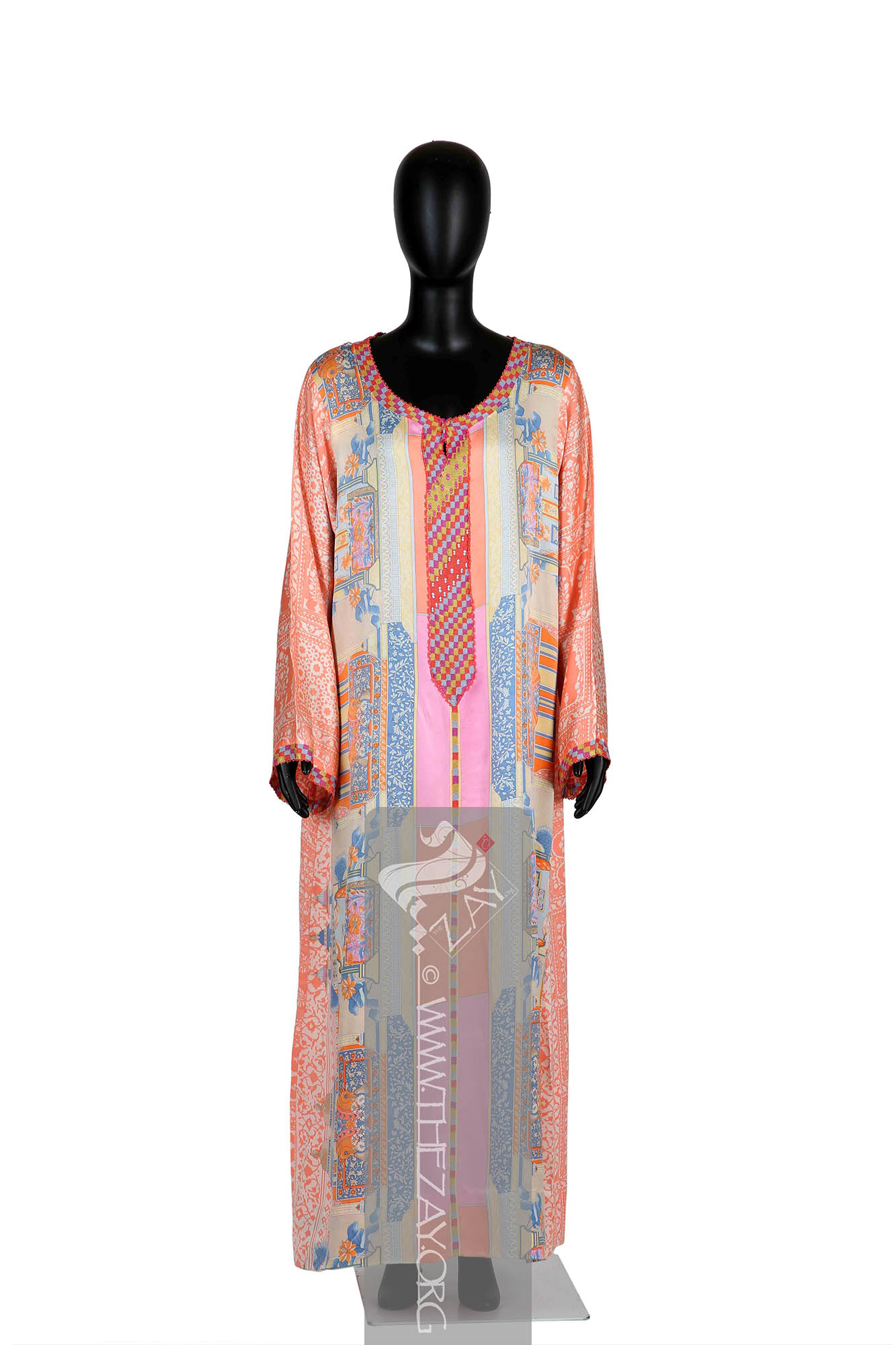
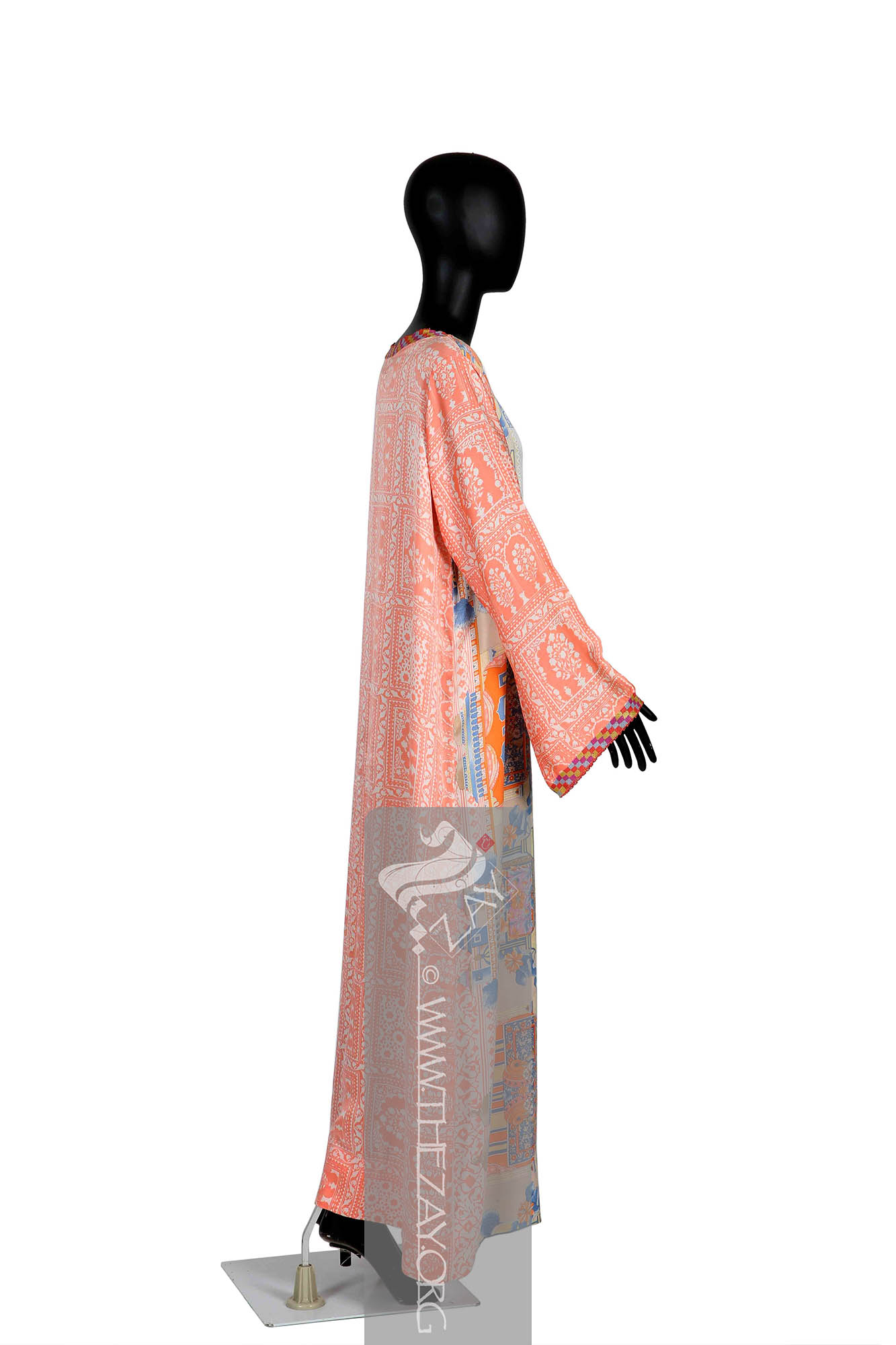
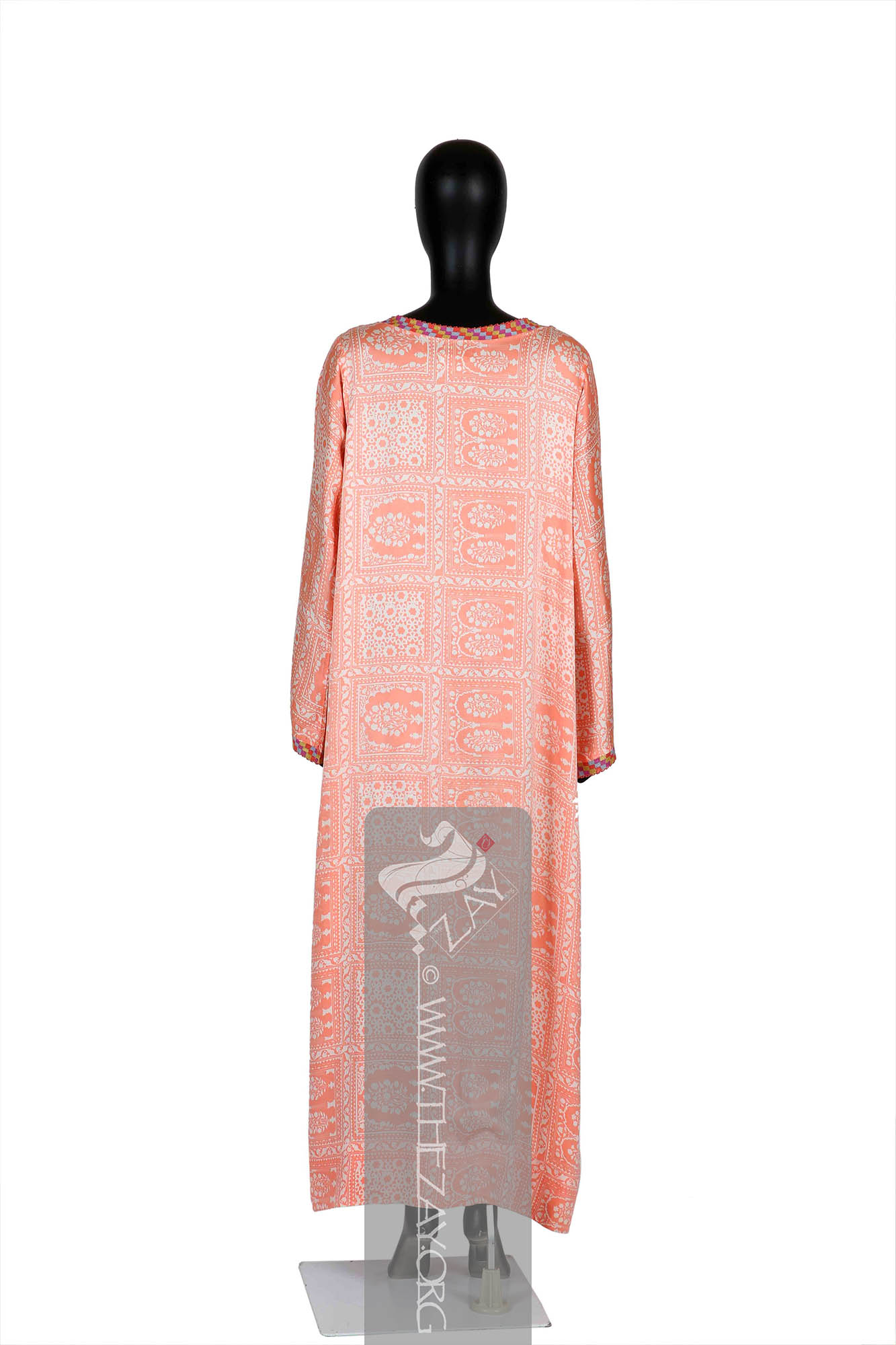
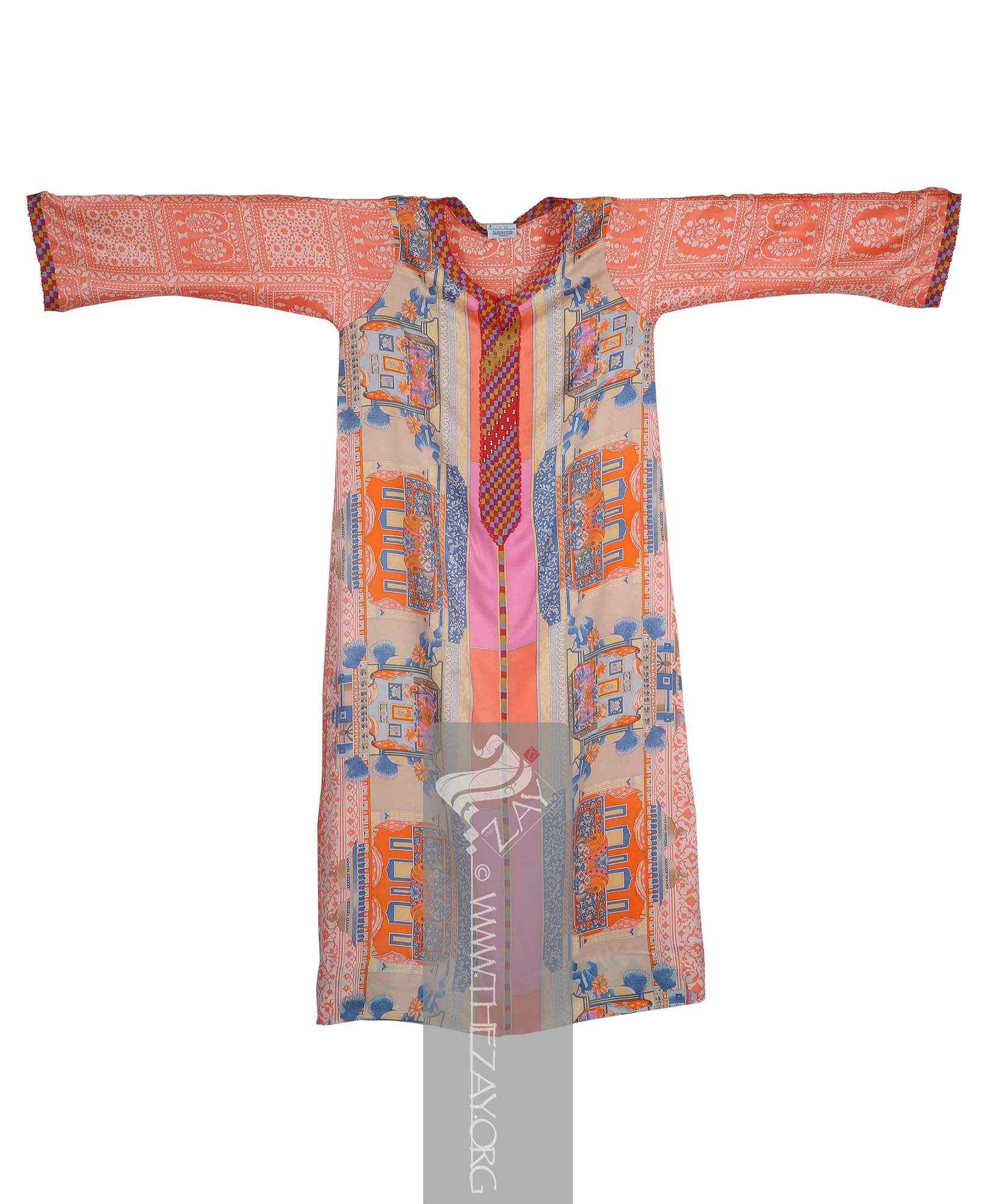
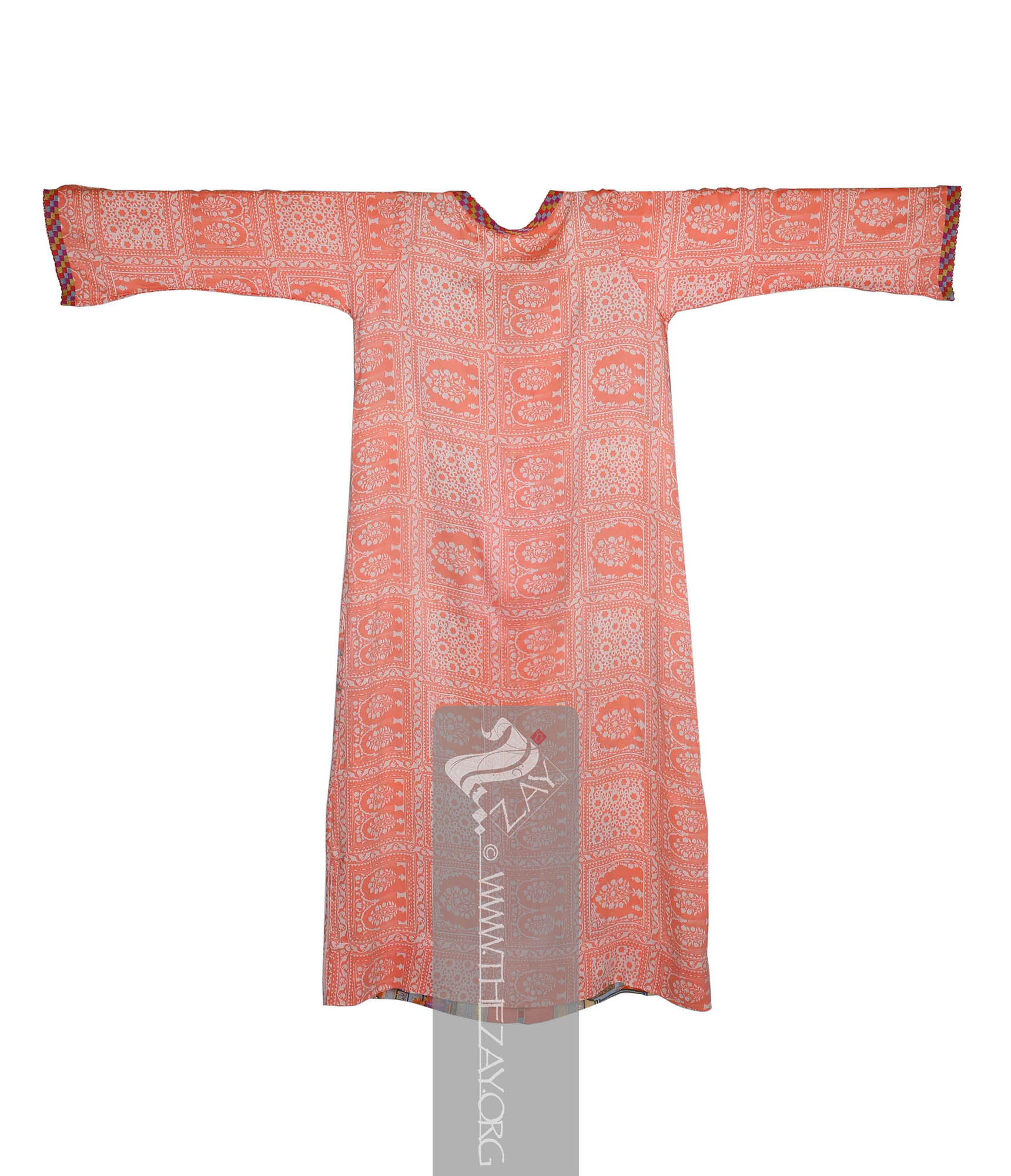
This is an ankle-length, tunic-style underdress (tchamir
Tchāmīr: (Arabic; Synonym: tashāmīr, tahtiyah), a traditional long shirt worn by Moroccan men and a long underrobe worn by Moroccan women under the more ostentatious overgarments such as the qaftan. While it is typically made from white cotton for men, it is sometimes more decorative for women with prints and trimmings. Taḥtīyah: (Arabic; Synonym: tashāmīr, tshamir), a traditional long shirt worn by Moroccan men and a long underrobe worn by Moroccan women under the more ostentatious overgarments such as the qaftan. While it is typically made from white cotton for men, it is sometimes more decorative for women with prints and trimmings.
The tchamir
Tchāmīr: (Arabic; Synonym: tashāmīr, tahtiyah), a traditional long shirt worn by Moroccan men and a long underrobe worn by Moroccan women under the more ostentatious overgarments such as the qaftan. While it is typically made from white cotton for men, it is sometimes more decorative for women with prints and trimmings.
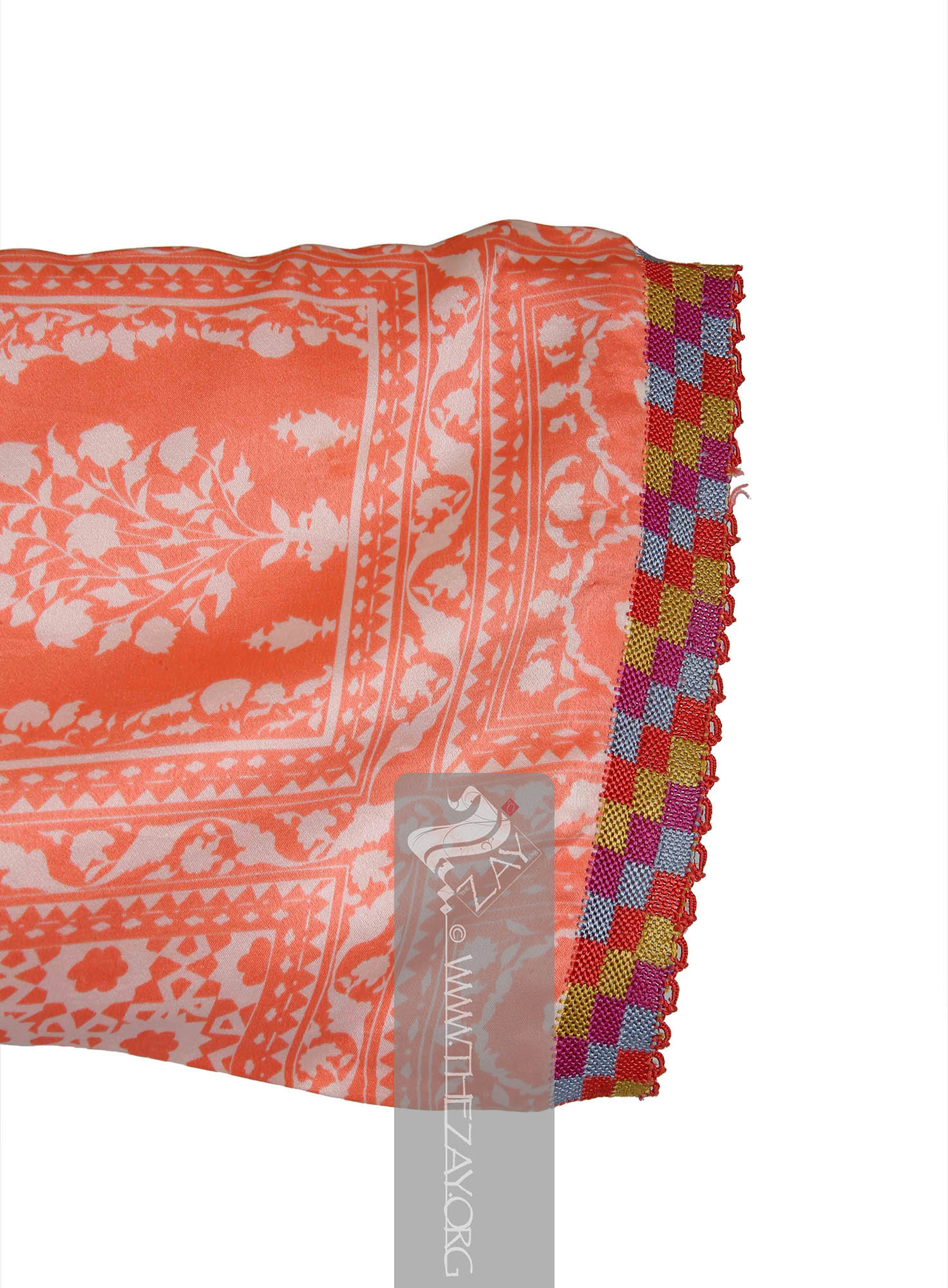
While one pattern features geometric shapes, the other pattern features two vases with floral bouquets placed beneath an arched bough lined with floral and foliage patterns. The patterns are printed in peach pink over an ivory base.
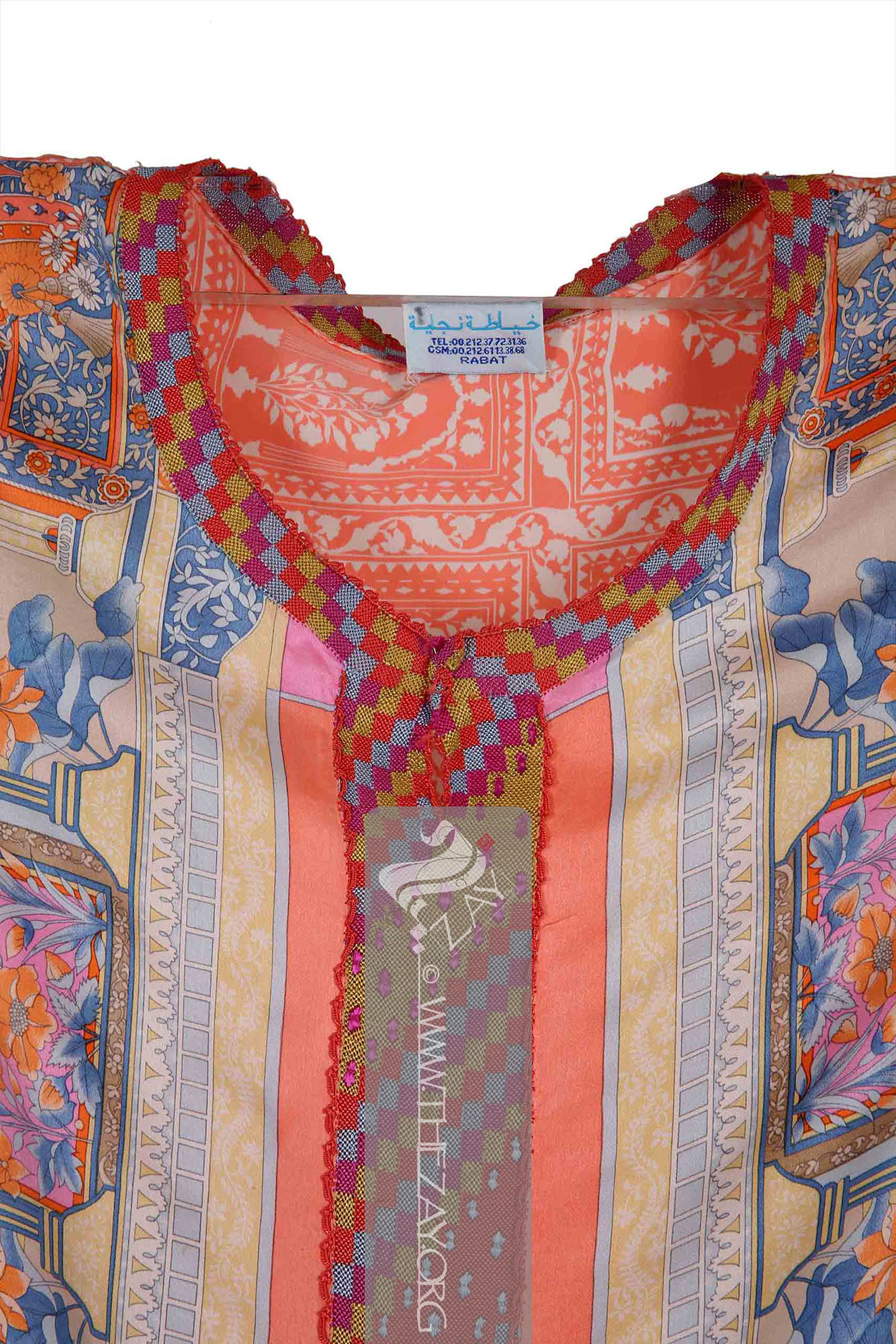
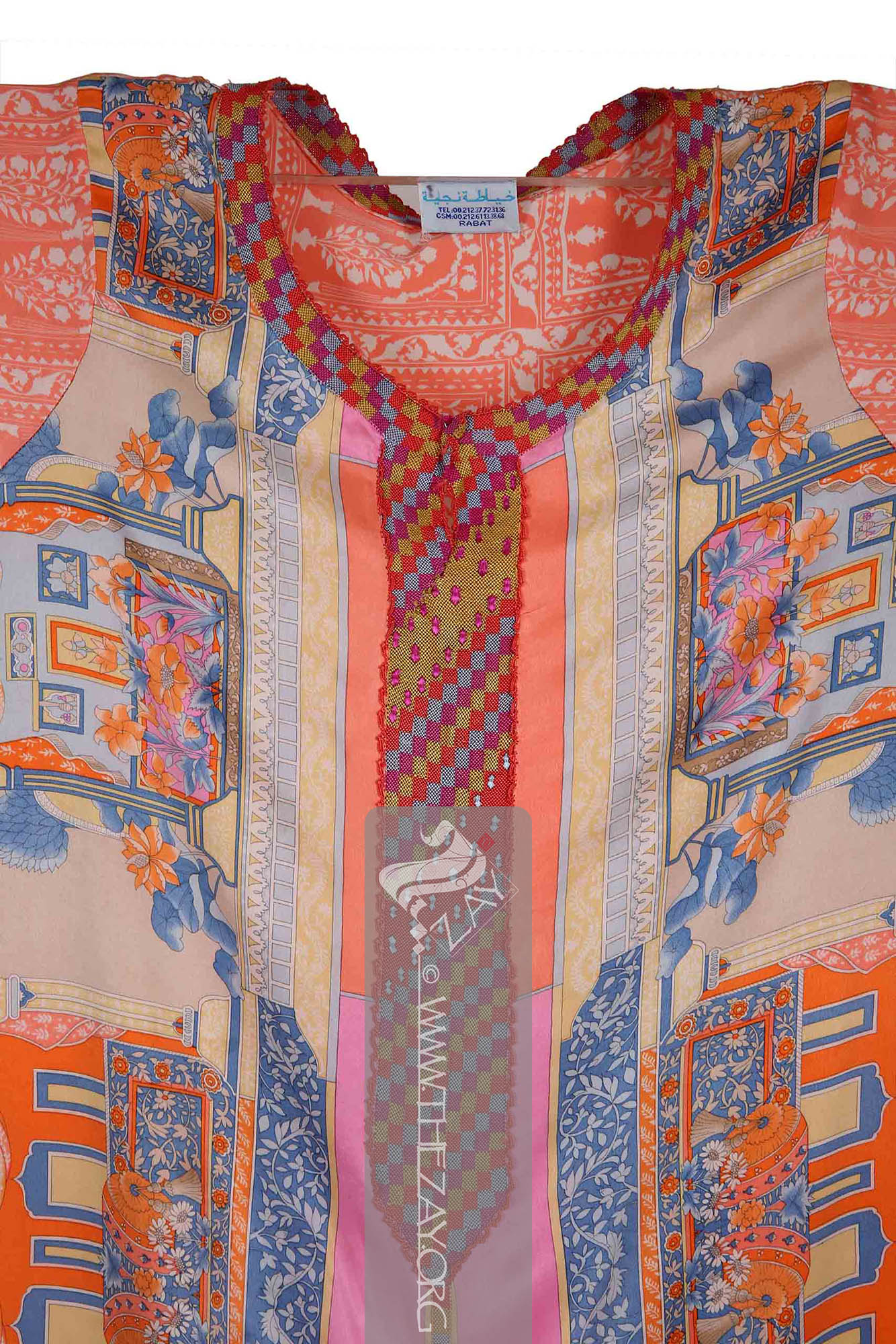
The print pattern in front of the tchamir
Tchāmīr: (Arabic; Synonym: tashāmīr, tahtiyah), a traditional long shirt worn by Moroccan men and a long underrobe worn by Moroccan women under the more ostentatious overgarments such as the qaftan. While it is typically made from white cotton for men, it is sometimes more decorative for women with prints and trimmings.
The central balcony depicts a floral carpet with a big bolster with large tassels on the sides over it on the floor, and curtains lushly draped along the side columns and the ceiling. While the central balcony has two domes over it, the two windows have smaller domes and minarets.
The narrower central panel of the front of the piece is a series of plain rectangular panels in two shades of pink–peach and pale, alternately arranged. A wide lace trimming in blue, yellow, orange, and lavender silk floss Floss: (Old French: flosche – nap of velvet), is a type of silk fibre obtained from the cocoons of wild silkworms. It is characterized by its long, fluffy fibers that are not tightly woven, making it ideal for use in various textile applications such as embroidery, lace-making, and sewing. thread featuring square grids adorns the central panel, with a thin panel of the lace running vertically down the front midriff.
A similar lace trimming is used to adorn the cuffs of the sleeves and the neckline. The trimming along the cuffs, neckline, and the front (yoke Yoke: (Synonym: Bodice_Yoke), a structured pattern fitted at the shoulders defining the structure of women’s garments. Introduced in c. 1880s it defines the transition between the upper and lower parts of the garments and can now be found stitched-in where the blouse is separated from the skirt by a horizontal seam. ) is edged with a scalloped border.
A completely unlined and machine-stitched piece, the embellishments on the tchamir
Tchāmīr: (Arabic; Synonym: tashāmīr, tahtiyah), a traditional long shirt worn by Moroccan men and a long underrobe worn by Moroccan women under the more ostentatious overgarments such as the qaftan. While it is typically made from white cotton for men, it is sometimes more decorative for women with prints and trimmings.
Links