

• HOME
  • |
  • ABOUT
  • |
  • COLLECTION
    • DIGITAL ARCHIVE
    • DICTIONARY
    • BLOG
  • |
  • EVENTS
  • |
  • MEDIA
    • PRESS
    • NEWSLETTER
  • |
  • FRIENDS
  • |
  • SHOP
  • Login
  • عربي
  • |
  • EN
  • CONTACT US
  • PARTNERS
  • DIRECTORY
  • NEWSLETTER
  • VIDEOS
  • SHOP
Newsletter

Privacy Policy

© TheZayInitiative - All images and All content are protected by copyright. All rights are reserved, written permission is required before re-use.

UK: Registered Charity (#1182725) Regulated by Charity Commission for England and Wales.

Support The Zay
Donate
Website devloped by Eng.Talal Hisham Sultan
TOP
  • Example
    Example
    Product Image 1
  • Example
    Example
    Product Image 2
  • Example
    Example
    Product Image 3
  • Example
    Example
    Product Image 4
  • Example
    Example
    Product Image 5
  • Example
    Example
    Product Image 6
  • Example
    Example
    Product Image 7
  • Example
    Example
    Product Image 8

1 of 8

  • Product Image 1
  • Product Image 2
  • Product Image 3
  • Product Image 4
  • Product Image 5
  • Product Image 6
  • Product Image 7
  • Product Image 8

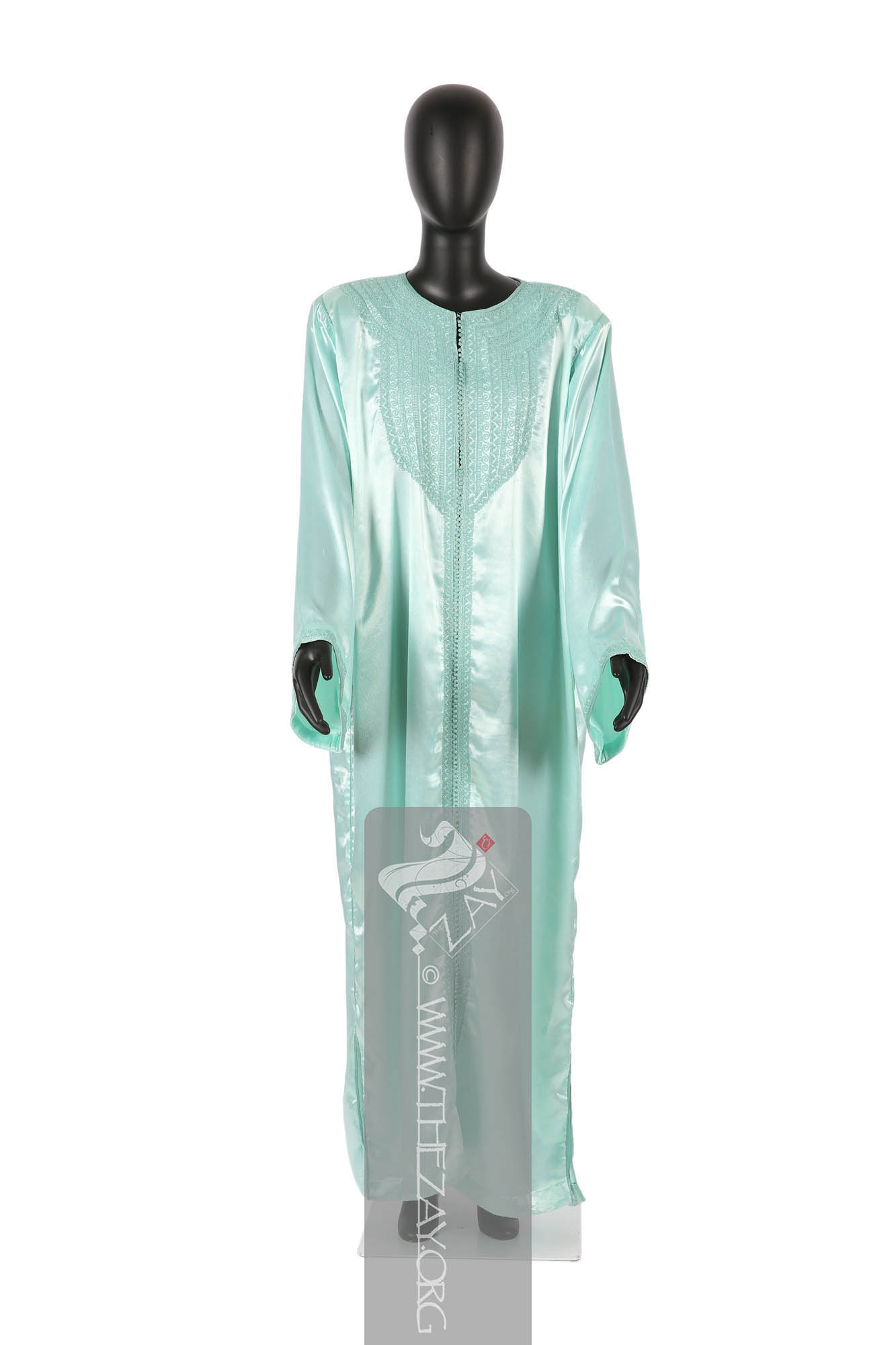
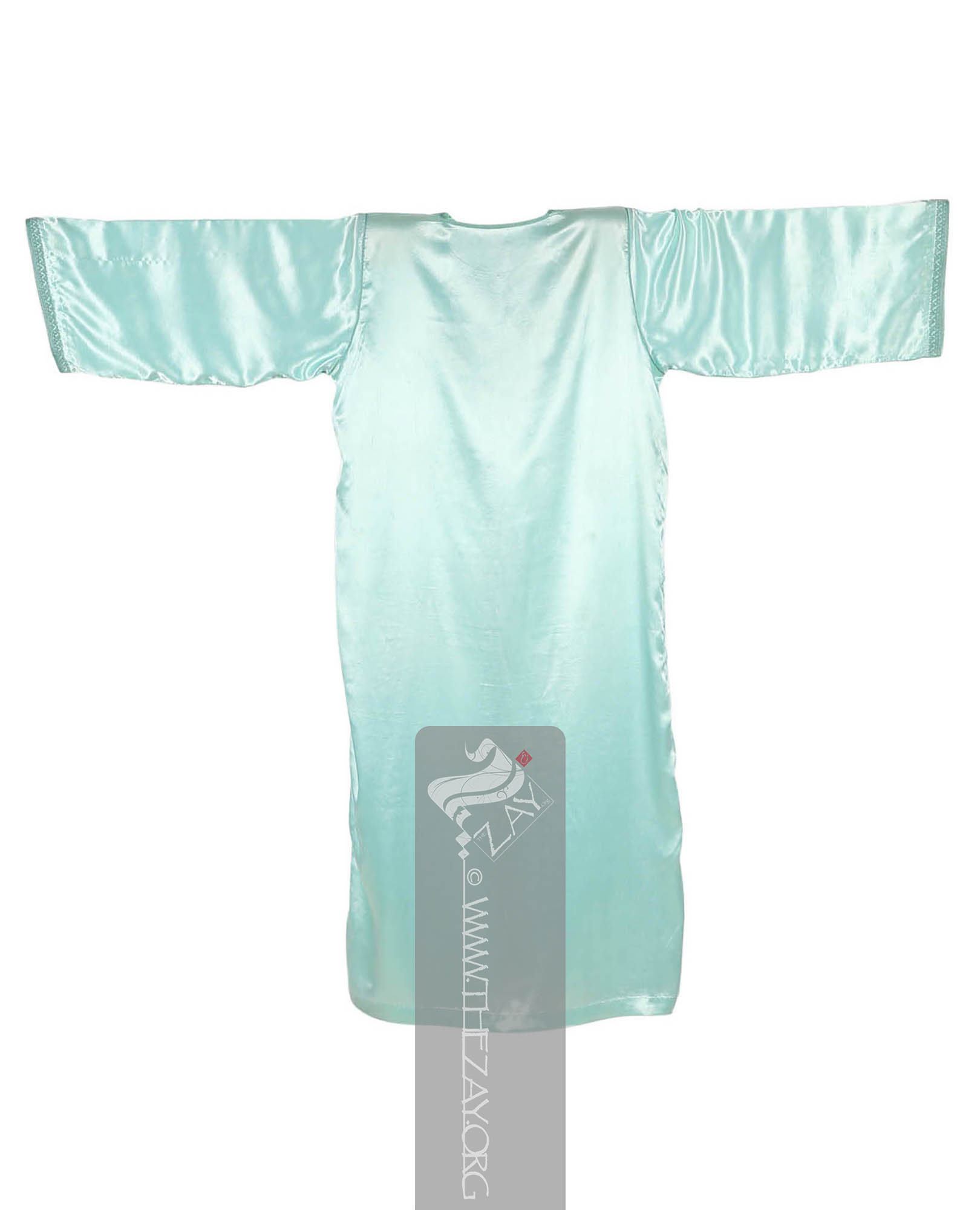
Silk robe – Morocco

Back
Local NameTchamir; Tahtiyah
Object CategoryUndergarment    
GenderFemale    
Date of objectc. 20th century
Place Of orginMorocco
RegionMorocco
Object RangeMorocco, Libya, Tunis, Egypt, Algeria, et al
DimensionsLength: 150 cm Width: 167 cm
MaterialsSilk    
TechniqueMachine Stitched    Machine Embroidered    
Color
MotifFloral    
ProvenancePurchased, Dealer, London 2019
LocationThe Zay Zay: (Arabic: costume, Pl. azyaā’), a set of clothes in a style typical of a particular country or historical period. Initiative
StatusIn Storage
ZI numberZI2019.500561 MOROCCO

Object History  

This piece was purchased by Dr. Reem Tariq

Ṭariq: (Arabic; Synonym: tulle_bi_talli

Tūlle_bi_tallī: (French: Tulle – a city in France where fine material for veil was first made; Turkish: tel – wire; Synonym: tariq; talli; badla; khus_dozi ), series of small metal knots made on a woven net ground as embellishment. The term is commonly used in the North African Arab region specifically in Egypt.

; talli; badla; khus_dozi ), series of small metal knots made on a woven net ground as embellishment. The term is commonly used in the Levant Arab region specifically in Lebanon.

El Mutwalli Dr. Reem Tariq

Ṭariq: (Arabic; Synonym: tulle_bi_talli

Tūlle_bi_tallī: (French: Tulle – a city in France where fine material for veil was first made; Turkish: tel – wire; Synonym: tariq; talli; badla; khus_dozi ), series of small metal knots made on a woven net ground as embellishment. The term is commonly used in the North African Arab region specifically in Egypt.

; talli; badla; khus_dozi ), series of small metal knots made on a woven net ground as embellishment. The term is commonly used in the Levant Arab region specifically in Lebanon.

el Mutwallī: Founder (CEO) of the Zay Zay: (Arabic: costume, Pl. azyaā’), a set of clothes in a style typical of a particular country or historical period. Initiative, a public figure, speaker and author. An expert curator and consultant in Islamic art and architecture, interior design, historic costume, and UAE heritage. from a London-based independent dealer in 2019 to be added to and enhance the Zay Zay: (Arabic: costume, Pl. azyaā’), a set of clothes in a style typical of a particular country or historical period. Initiative collection. 


Object Features  

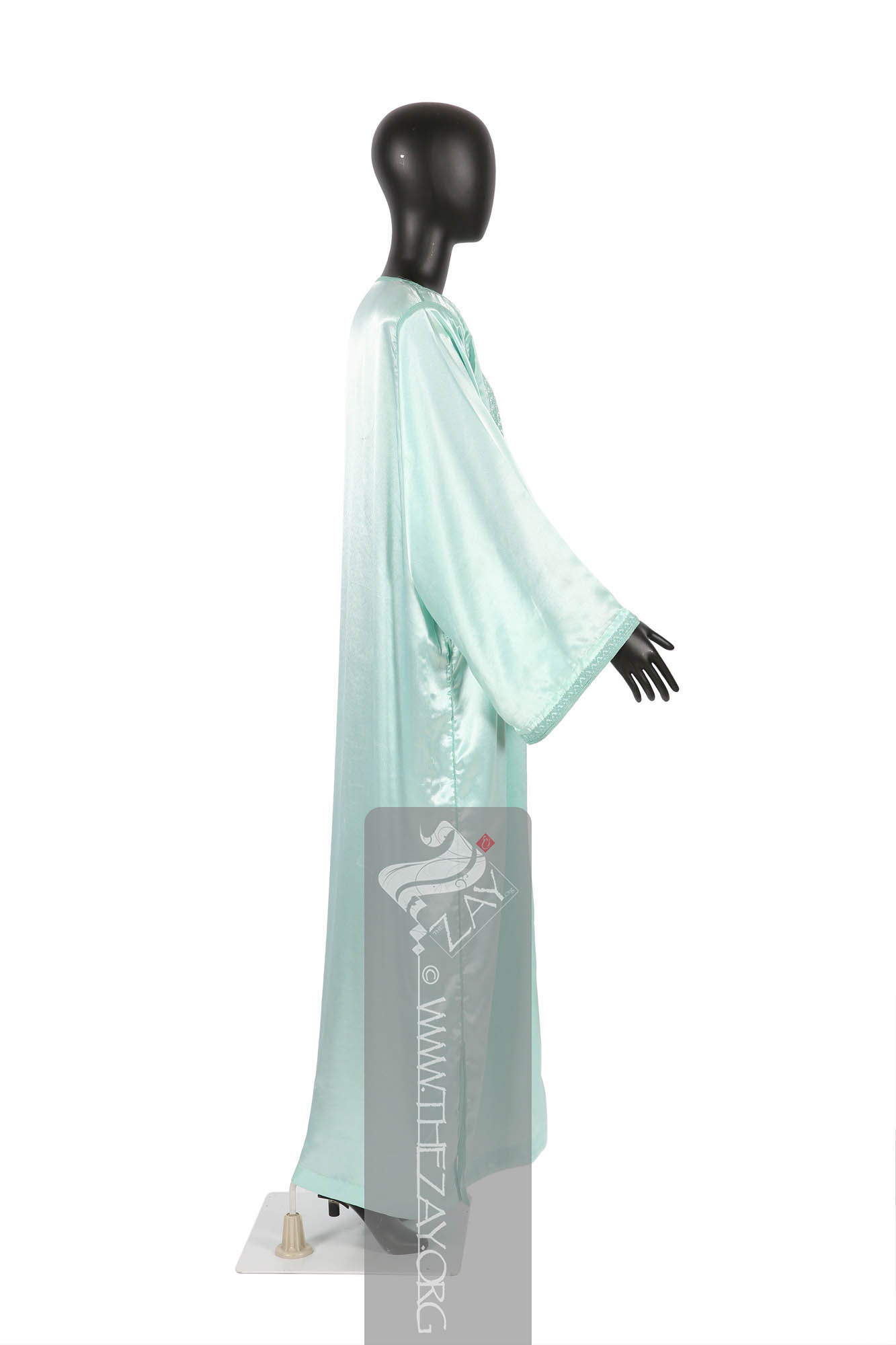
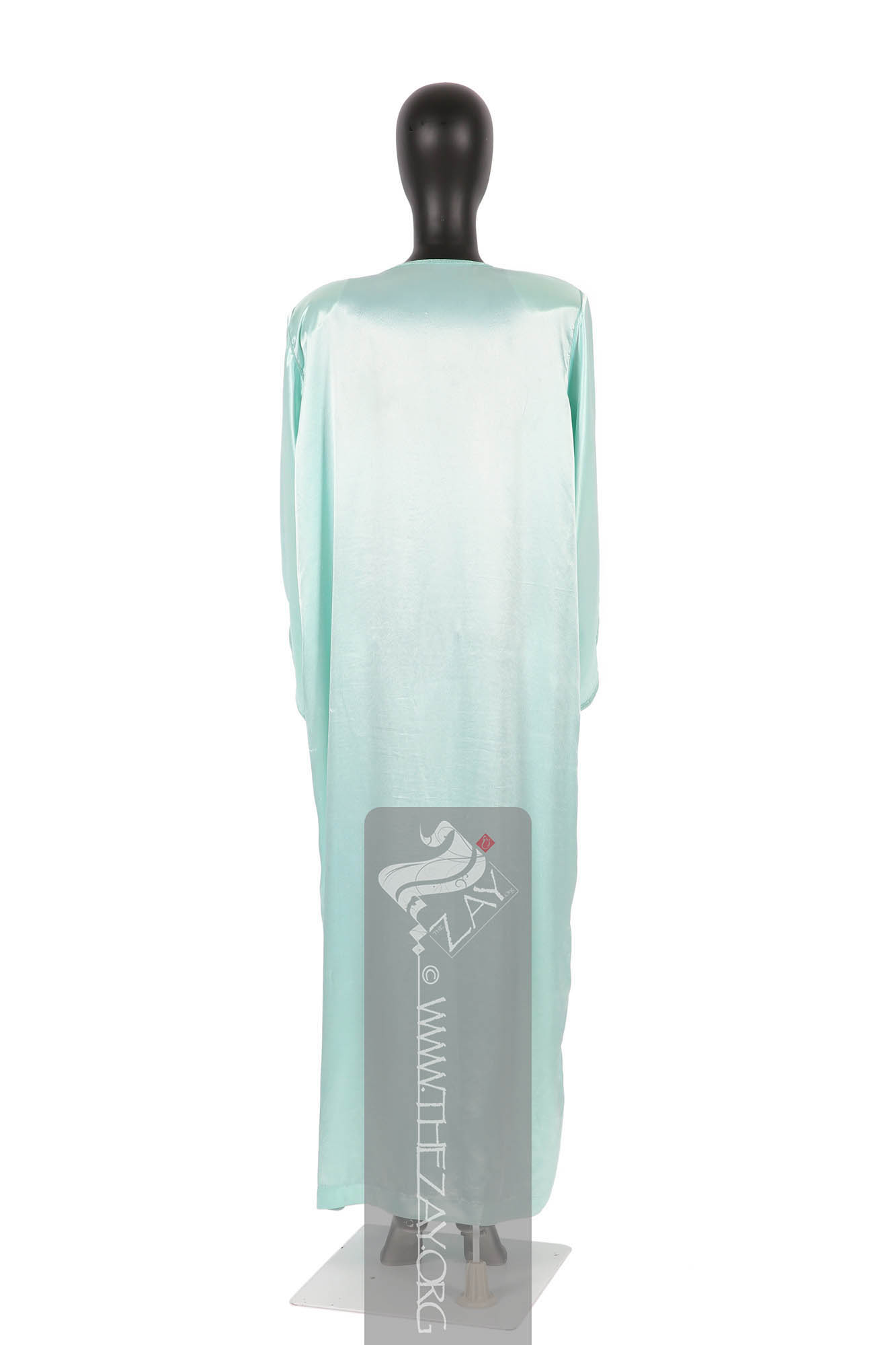
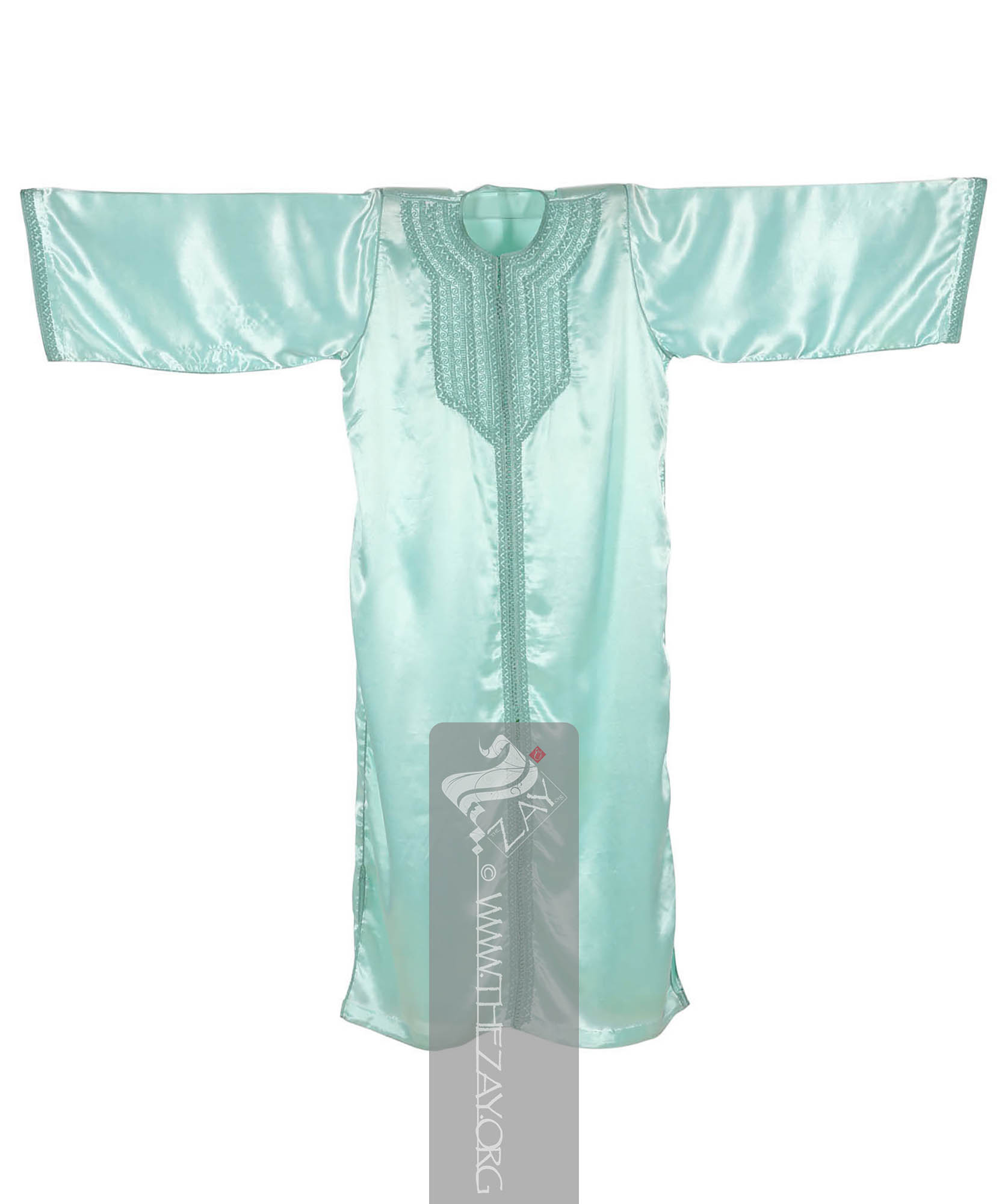
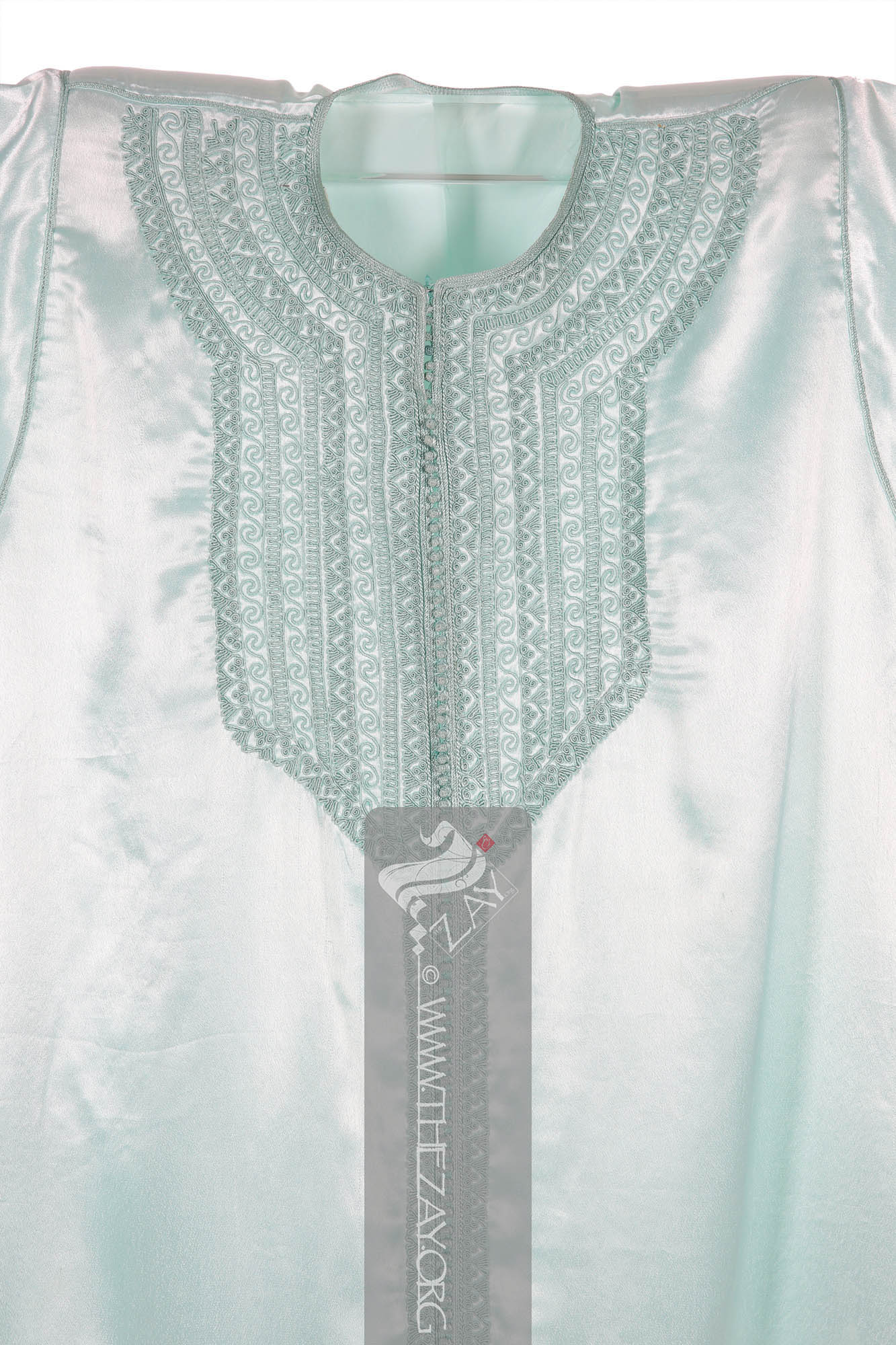
This is an ankle-length Moroccan tunic style underdress (tchamir

Tchāmīr: (Arabic; Synonym: tashāmīr, tahtiyah), a traditional long shirt worn by Moroccan men and a long underrobe worn by Moroccan women under the more ostentatious overgarments such as the qaftan. While it is typically made from white cotton for men, it is sometimes more decorative for women with prints and trimmings.

) / (tahtiyah

Taḥtīyah: (Arabic; Synonym: tashāmīr, tshamir), a traditional long shirt worn by Moroccan men and a long underrobe worn by Moroccan women under the more ostentatious overgarments such as the qaftan. While it is typically made from white cotton for men, it is sometimes more decorative for women with prints and trimmings.

) for women constructed of a light green (satin Sātin: (Arabic: Zaytuni: from Chinese port of Zayton in Quanzhou province where it was exported from and acquired by Arab merchants), one of the three basic types of woven fabric with a glossy top surface and a dull back. Originated in China and was fundamentally woven in silk.), possibly silk, featuring a round neckline, long loose sleeves, and buttoned embellishment. 

The field of the tchamir

Tchāmīr: (Arabic; Synonym: tashāmīr, tahtiyah), a traditional long shirt worn by Moroccan men and a long underrobe worn by Moroccan women under the more ostentatious overgarments such as the qaftan. While it is typically made from white cotton for men, it is sometimes more decorative for women with prints and trimmings.

is plain with no embellishment. However, the front of the (yoke Yoke: (Synonym: Bodice_Yoke), a structured pattern fitted at the shoulders defining the structure of women’s garments. Introduced in c. 1880s it defines the transition between the upper and lower parts of the garments and can now be found stitched-in where the blouse is separated from the skirt by a horizontal seam. ) around the neckline features stylised floral pattern embellishment with green satin Sātin: (Arabic: Zaytuni: from Chinese port of Zayton in Quanzhou province where it was exported from and acquired by Arab merchants), one of the three basic types of woven fabric with a glossy top surface and a dull back. Originated in China and was fundamentally woven in silk. cord in (couching

Couching: (Latin: collocare – Place together), in needlework and embroidery couching is a technique in which yarn or other materials are laid across the surface of the ground fabric and fastened in place with small stitches of the same or a different yarn

) style. A total of nine panels of three different patterns run parallel to each other alternately.  

The tchamir

Tchāmīr: (Arabic; Synonym: tashāmīr, tahtiyah), a traditional long shirt worn by Moroccan men and a long underrobe worn by Moroccan women under the more ostentatious overgarments such as the qaftan. While it is typically made from white cotton for men, it is sometimes more decorative for women with prints and trimmings.

also features a row of (frog_fastener

Frog_fastener: (Synonym: Chinese frog closure, frog closure), is a decorative and functional type of button used to fasten clothing. Said to have originated between c. 5th to 7th century China these buttons consist of a cord or braid looped through a decorative knot. 

) style buttons in a vertical row along the midriff. While the front of the tchamir

Tchāmīr: (Arabic; Synonym: tashāmīr, tahtiyah), a traditional long shirt worn by Moroccan men and a long underrobe worn by Moroccan women under the more ostentatious overgarments such as the qaftan. While it is typically made from white cotton for men, it is sometimes more decorative for women with prints and trimmings.

appears to be open at first glance, it is stitched along its midriff with only the top nine buttons unstitched and a metal hook and eye fastener at the underside of the collar, thus making the panel and the rest of the buttons purely decorative.  

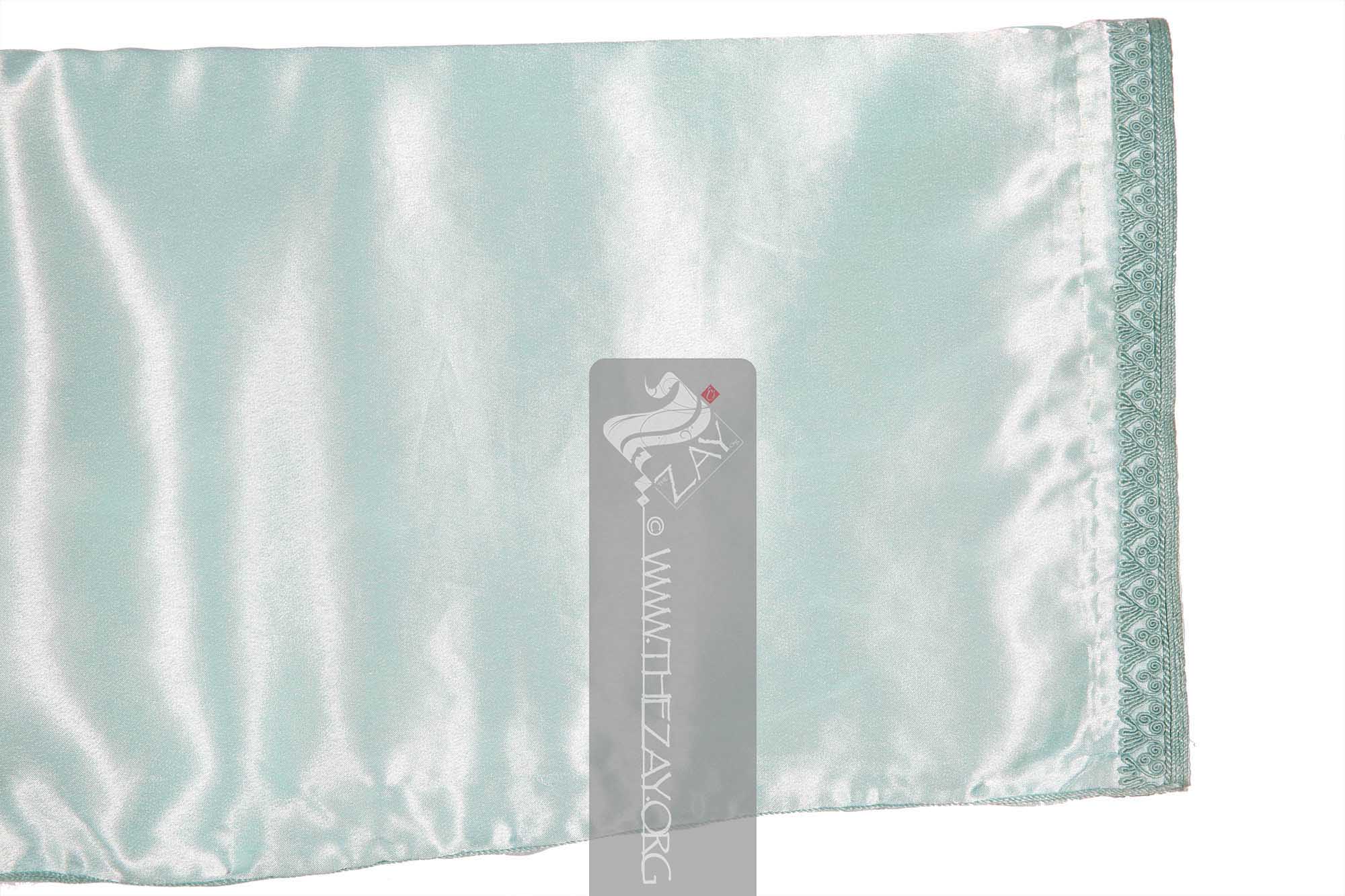
While a similar braided panel is repeated at the cuffs of each sleeve, the seamlines of the piece are adorned with a thin braided trimming in silk. The tchamir

Tchāmīr: (Arabic; Synonym: tashāmīr, tahtiyah), a traditional long shirt worn by Moroccan men and a long underrobe worn by Moroccan women under the more ostentatious overgarments such as the qaftan. While it is typically made from white cotton for men, it is sometimes more decorative for women with prints and trimmings.

is unlined and machine-stitched and also features a thick shoulder pad made of synthetic sponge on each side. 


Links 

  • Vogelsang-Eastwood, Gillian. Encyclopedia of Embroidery from the Arab World. Bloomsbury Academic, 2016.  
  • Besancenot, Jean, et al. Costumes of Morocco. Kegan Paul International, 1990.  
  • Scarce, Jennifer M. Women’s Costume of the near and Middle East. Unwin Hyman, 1987.  
  • Montaldo, Elisabetta, and Clotilde Sarnico. L’oro Del Mare: L’antico Costume Delle Donne Di Procida. Libreria Dante & Descartes, 2009.  
  • Rubens, Alfred. A History of Jewish Costume. Weidenfeld and Nicholson, 1967.  
  • Stillman, Yedida Kalfon, and Norman A. Stillman. Arab Dress: From the Dawn of Islam to Modern Times. Brill, 2000.  

Related Products

    Leave a comment