

Building upon the preceding section that examined women’s undergarments within the urban Moroccan dress landscape of the 19th and 20th centuries, the discussion in the present section extends the examination to the lower garments and outer layers that constituted the wider female sartorial ensemble. Particular attention is given to the ways in which they contributed to the articulation of dress within different urban contexts.
At first consideration, women’s dress in the urban centres of Morocco during this period may appear comparatively restrained when set against the more visibly elaborate sartorial practices associated with men. Such an assessment, however, risks conflating the public visibility of dress with the complexity of the ensemble itself. The relative visual simplicity of women’s exterior appearance was, to a considerable extent, conditioned by practices of bodily covering in public, which could conceal substantial layers of clothing worn beneath the outermost garments. These concealed layers could be materially elaborate and richly ornamented, incorporating differential textiles, construction techniques, embroidery, and other forms of surface embellishment. Women’s dress therefore constituted a complex system whose material richness was not necessarily legible from its external appearance alone.
Moreover, women’s dress in the 19th and 20th century Morocco was not uniform. Significant variations can be observed across communities and according to religious, regional, tribal, social, and urban contexts, with differences expressed through garment morphology, textile choice, ornamentation, colour, and modes of wearing. These distinctions are particularly important for understanding Moroccan dress as a heterogenous and historically situated material culture rather than a single, nationally uniform costume tradition.
The present section focuses on lower-body and outer garments, with particular attention to a range of trouser and skirt-like forms. Among the principal types documented within the period are the stylised trousers commonly identified as şarwāl and rijlin şarwāl, as well as skirts such as the zeltita whose varied forms, materials, construction, and decorative treatments formed an integral part of the dress culture and visual expression of urban Moroccan women of the period.
Şarwāl:
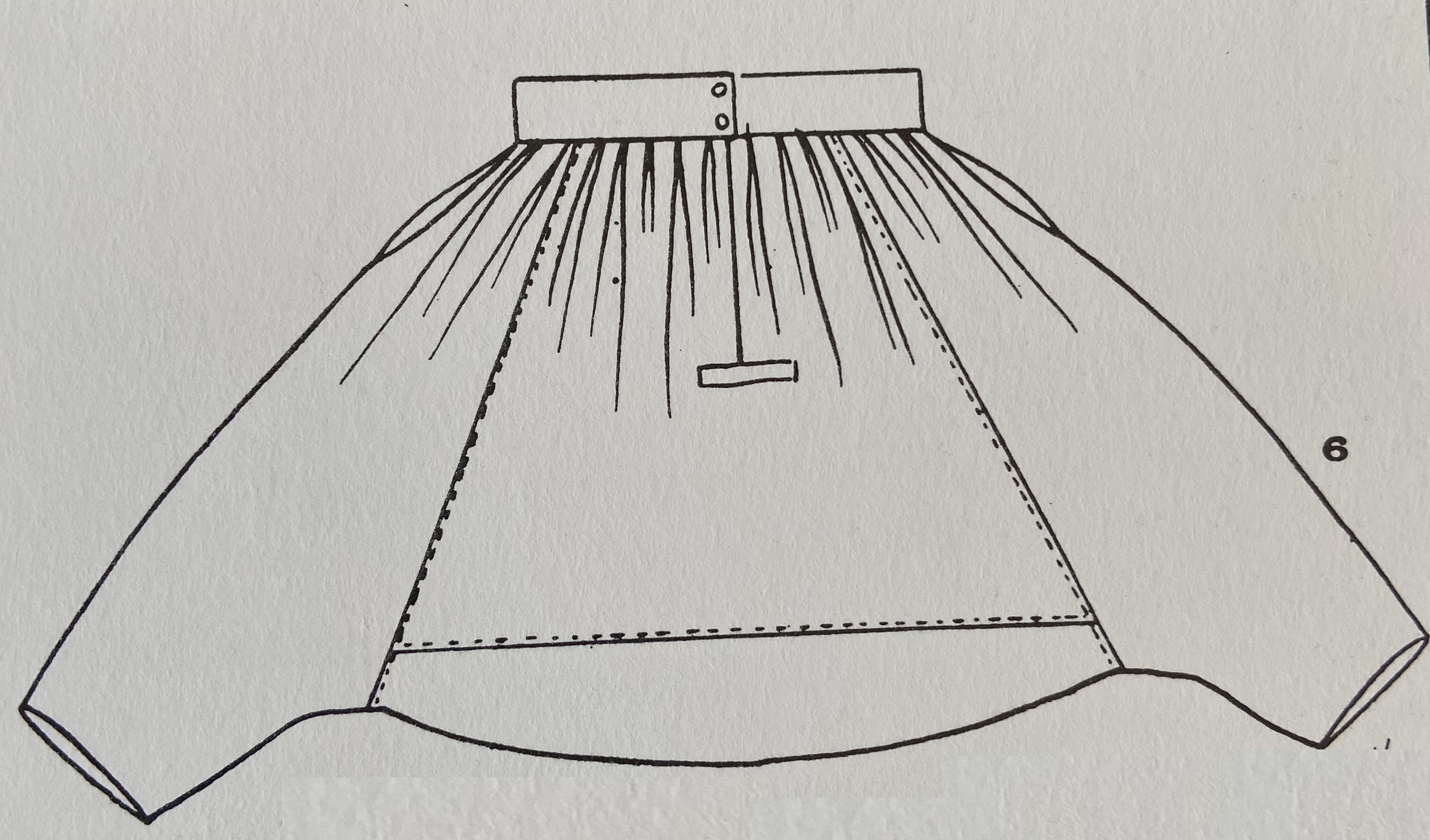
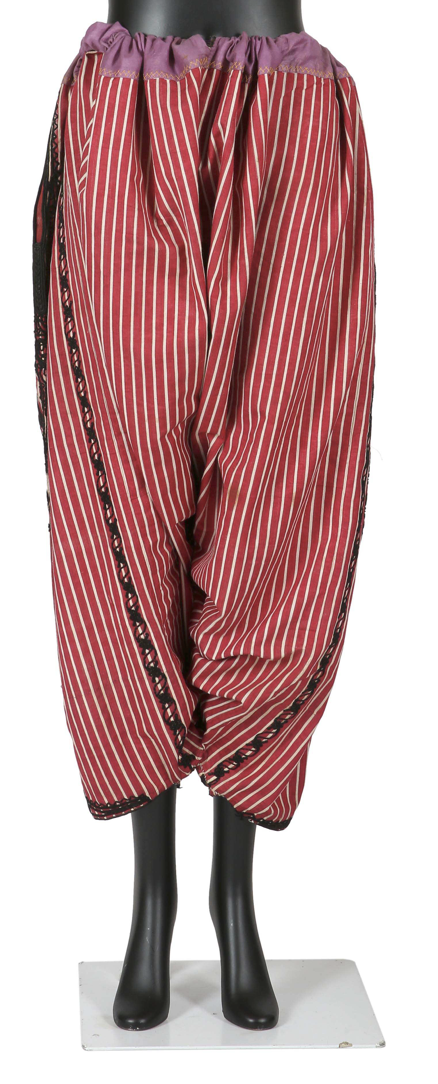
The şarwāl denotes a form of bifurcated lower-body garment, typically secured at the waist by drawstrings and, in many iterations, narrowing towards the ankles. Although the term and garment are generally associated with Central and later West Asian dress traditions, trouser forms identified as şarwāl had become established across the substantial parts of the Arab world by the medieval period – c. 12thcentury. Their subsequent circulation across North Africa, especially in regions by Ottoman political and cultural influence, contributed to the incorporation of trouser forms into both male and female dress.
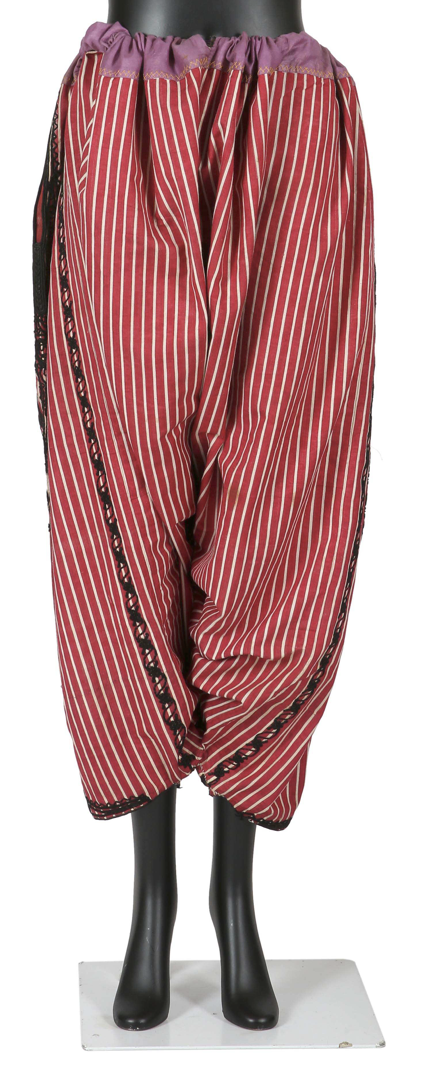
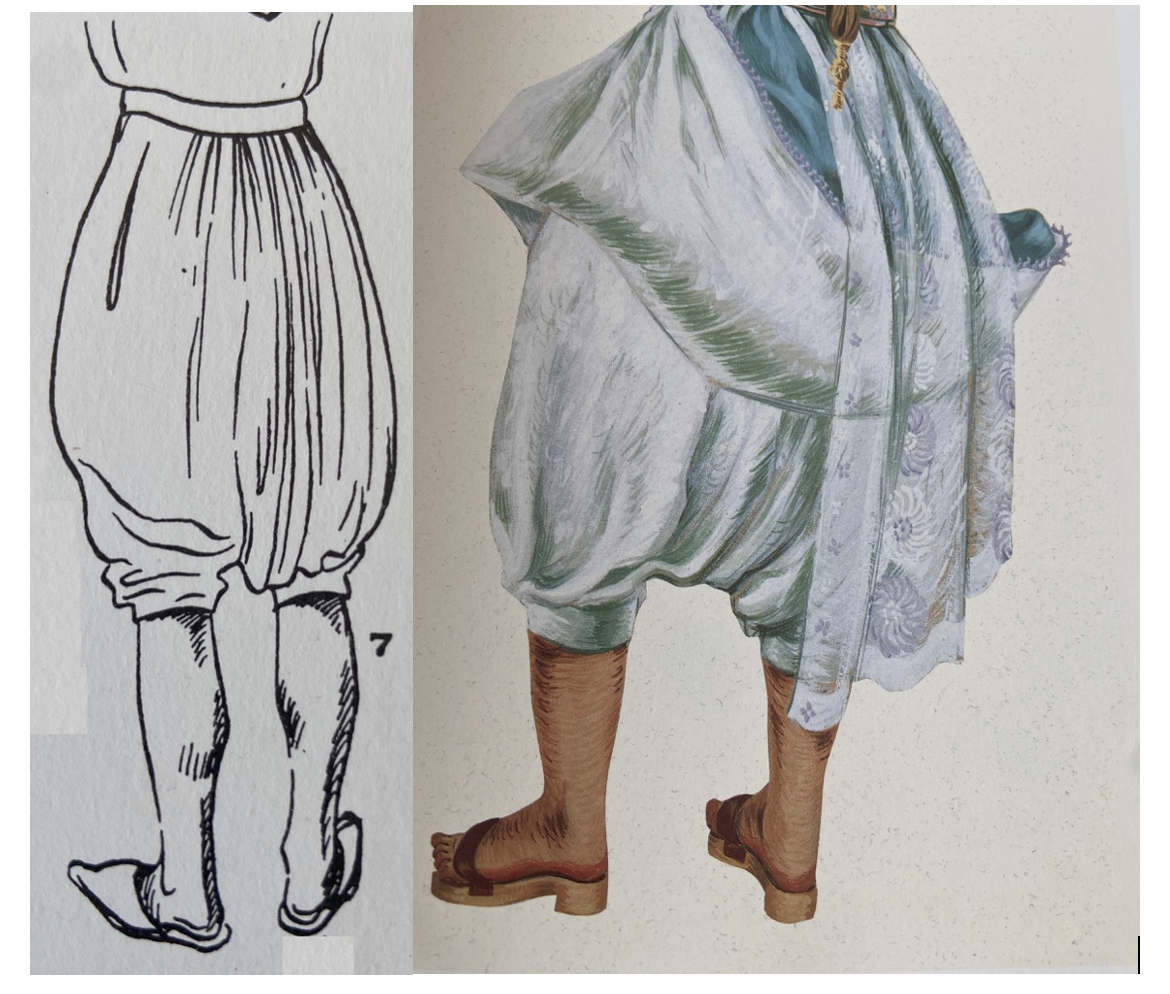
For everyday wear, urban Moroccan women of the period appear to have worn trouser forms broadly comparable to those worn by men, particularly in contexts of domestic or less formal dress. These trousers or şarwāl were characterised by a relatively loose or voluminous fit through the waist and upper leg, narrowing towards the lower leg and terminating in comparatively close-fitting cuffs around the calf. This construction produced a distinctive silhouette in which the lower portion of the leg remained partially exposed below the trouser hem.
Rijlin Şarwāl:
A further form of women’s trousers emerged within the urban Moroccan dress context of the 19th and 20th centuries, distinguished morphologically from the more conventional şarwāl. Known as the rijlin şarwāl, this garment appears to have occupied a more specialised position within the women’s dress and was principally associated with formal and public modes of dress rather than everyday domestic wear. Its differentiated cut and sartorial function indicate that the rijlin şarwāl constituted not merely a variant of the standard şarwāl, but a distinct garment within the broader spectrum of urabn Moroccan women’s dress.
Surviving examples indicated a construction in textiles such as silk or cotton, with a close-fitting section extending from the waist to approximately the knee, followed by a markedly looser lower portion that fell into a series of accordion-like pleats like bangles toward the ankles. The resulting silhouette combined a fitted upper leg with pronounced vertical fullness below the knee, producing a visually distinctive form within the expanded catalogue of Moroccan women’s lower-body dress.
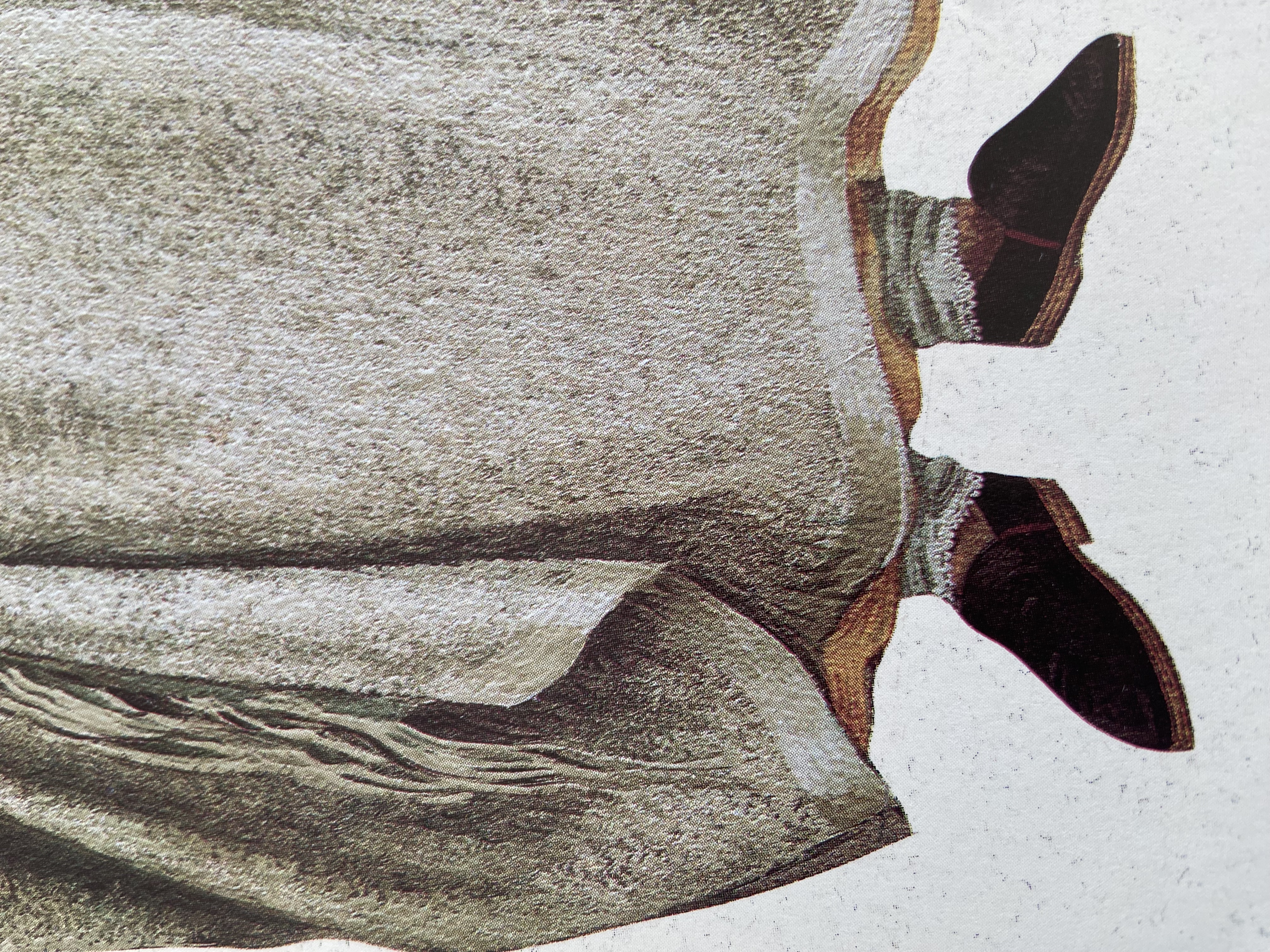
The rijlin şarwāl appears to have been a recurrent component of women’s dress across Morocco’s principal urban centres during the period under consideration. Examples associated with Rabat, Salé, Fez
Fez: (Ottoman Turkish: fes boyası - madder
Madder: (Latin: Rubia tinctorum – Eurasian herb), rose madder, common madder or dyer's madder is a vegetable dye made from the roots of a perennial plant belonging to the bedstraw and coffee family. It has been used extensively as a vegetable red dye across the globe from India to England. Ṭarbūsh: (Turkish: terpos – turban; from Persian serposh – headdress; Synonym: fez), a type of traditional skull cap with a high crown. With a possible Mediterranean origin, this head wear gained popularity in the late Ottoman period and became the forerunner of other similar caps with slight variations.
At this point, it is instructive to note that a broadly comparable silhouette was also established in South Asia. Known as the churidār, this form represents one among several trouser silhouettes that developed within South Asian dress traditions from at least the 14th century and has remained in use into the present. The structural and anatomical correspondence between the South Asian churidār and the Moroccan rijlin şarwāl is therefore significant, particularly in the shared juxtaposition of a closely fitted upper section with a markedly looser, pleated lower portion.
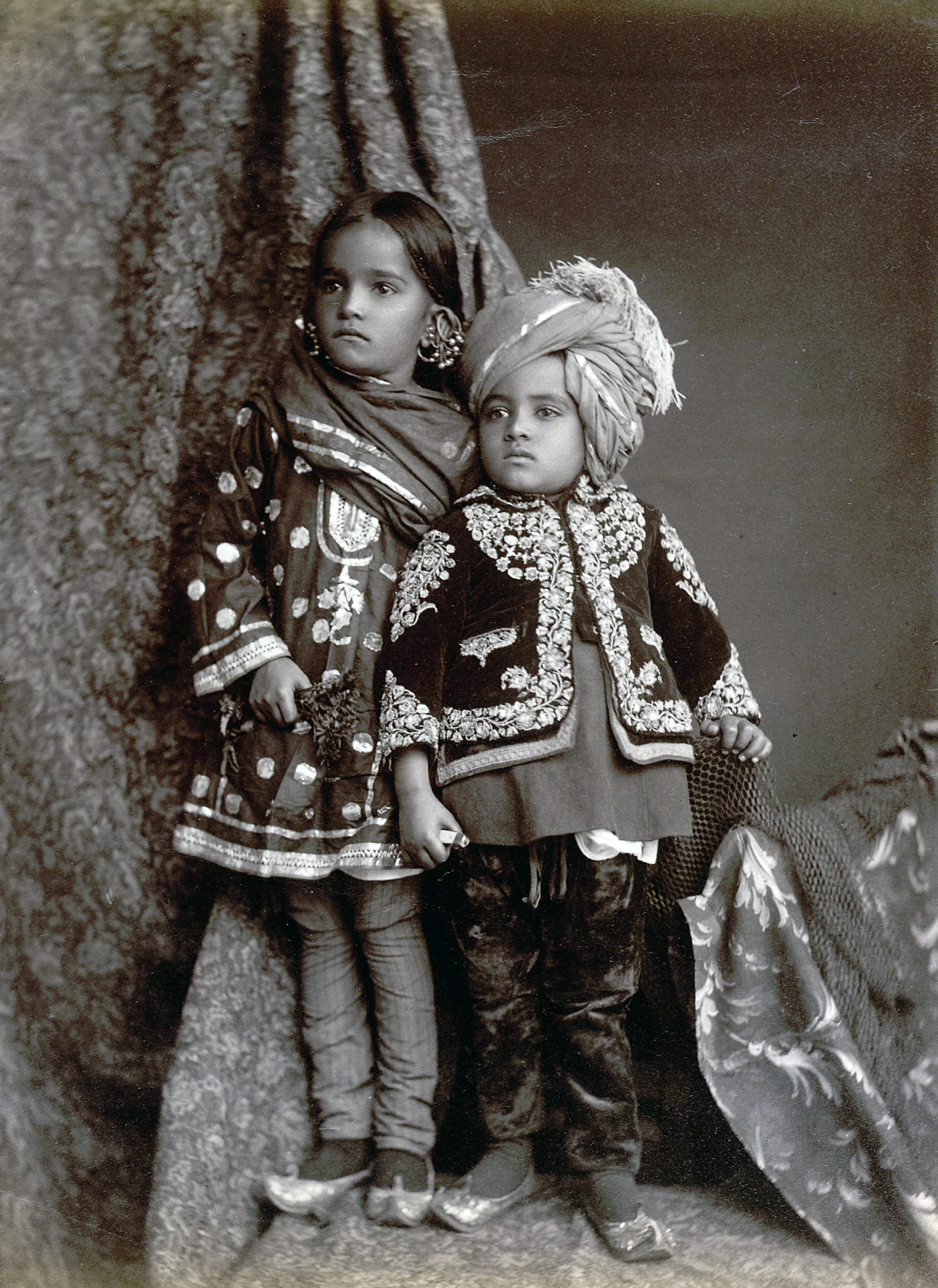
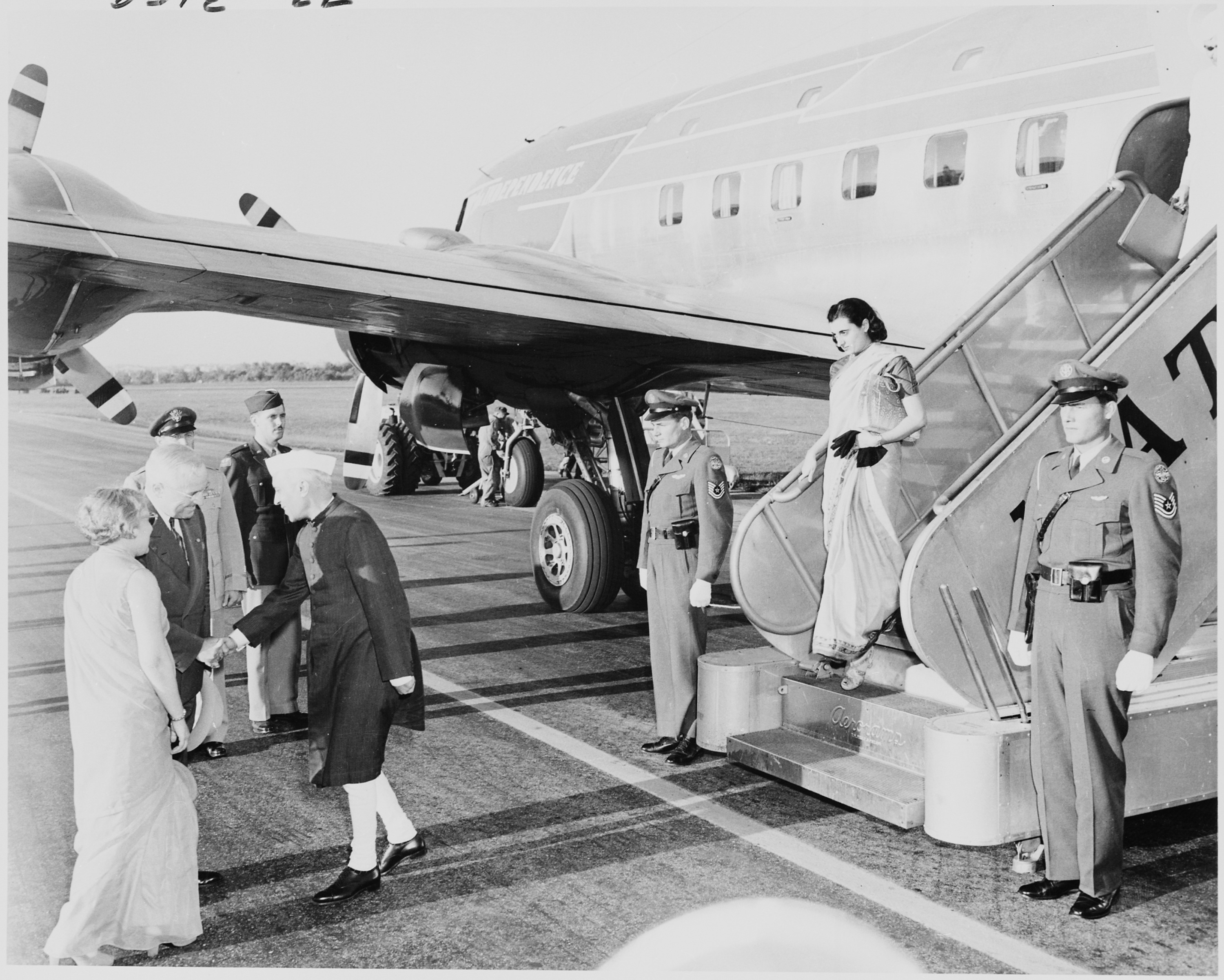
While such formal similarity cannot, in the absence of corroborating evidence, be taken as proof of direct transmission between the two traditions, it invites consideration of the rijlin şarwāl within a wider history of transregional trouser forms and sartorial exchange. The comparison demonstrates how similar structural solutions to the construction and articulation of bifurcated garments could emerge across geographically distant dress cultures, while acquiring distinct regional terminologies, materials, proportions, and modes of wear. The rijlin şarwāl may thus be understood not solely as a local variant of the şarwāl, but as part of a broader and historically interconnected spectrum of women’s trouser forms across Asia and North Africa.
Zeltita:
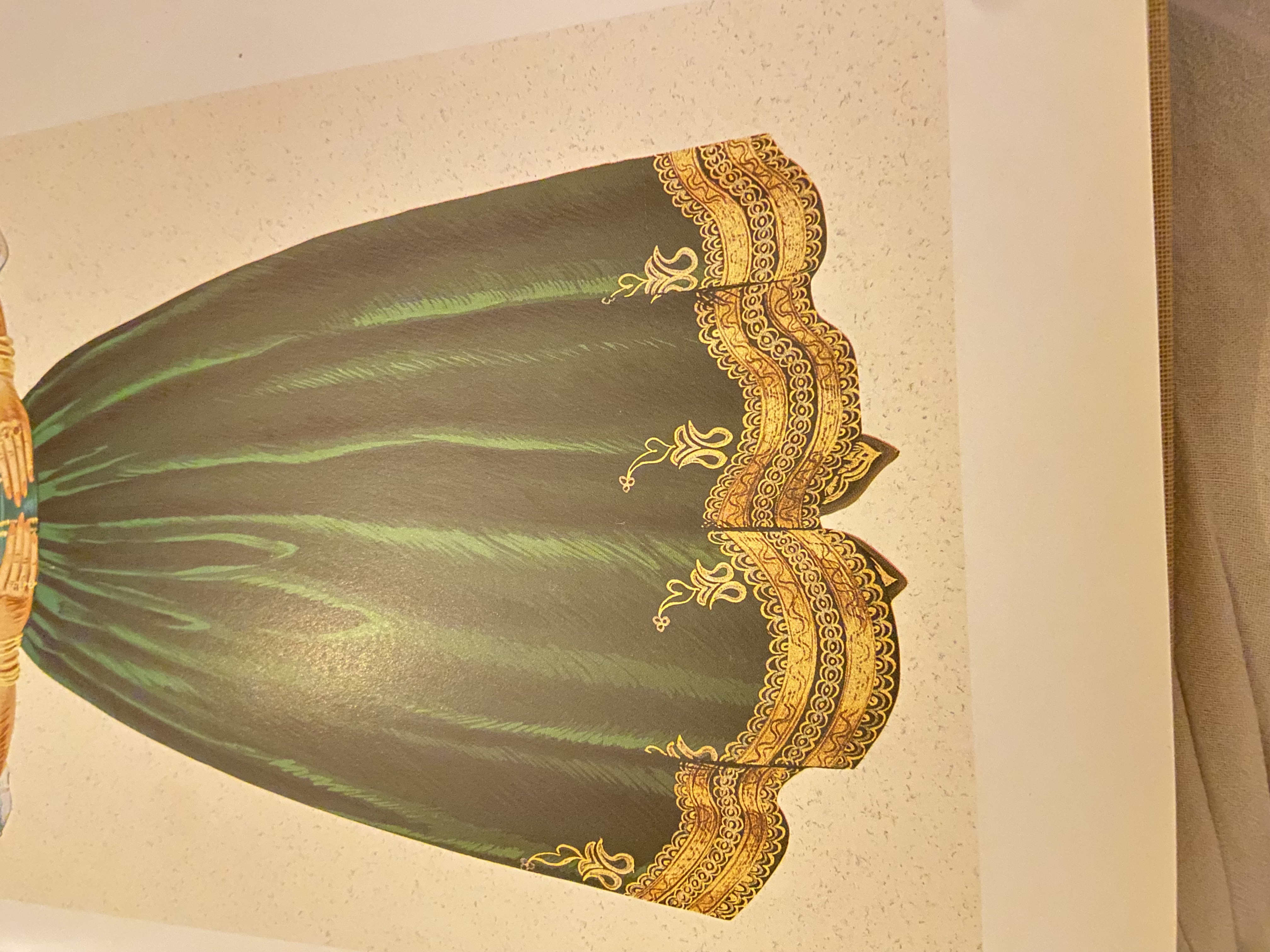
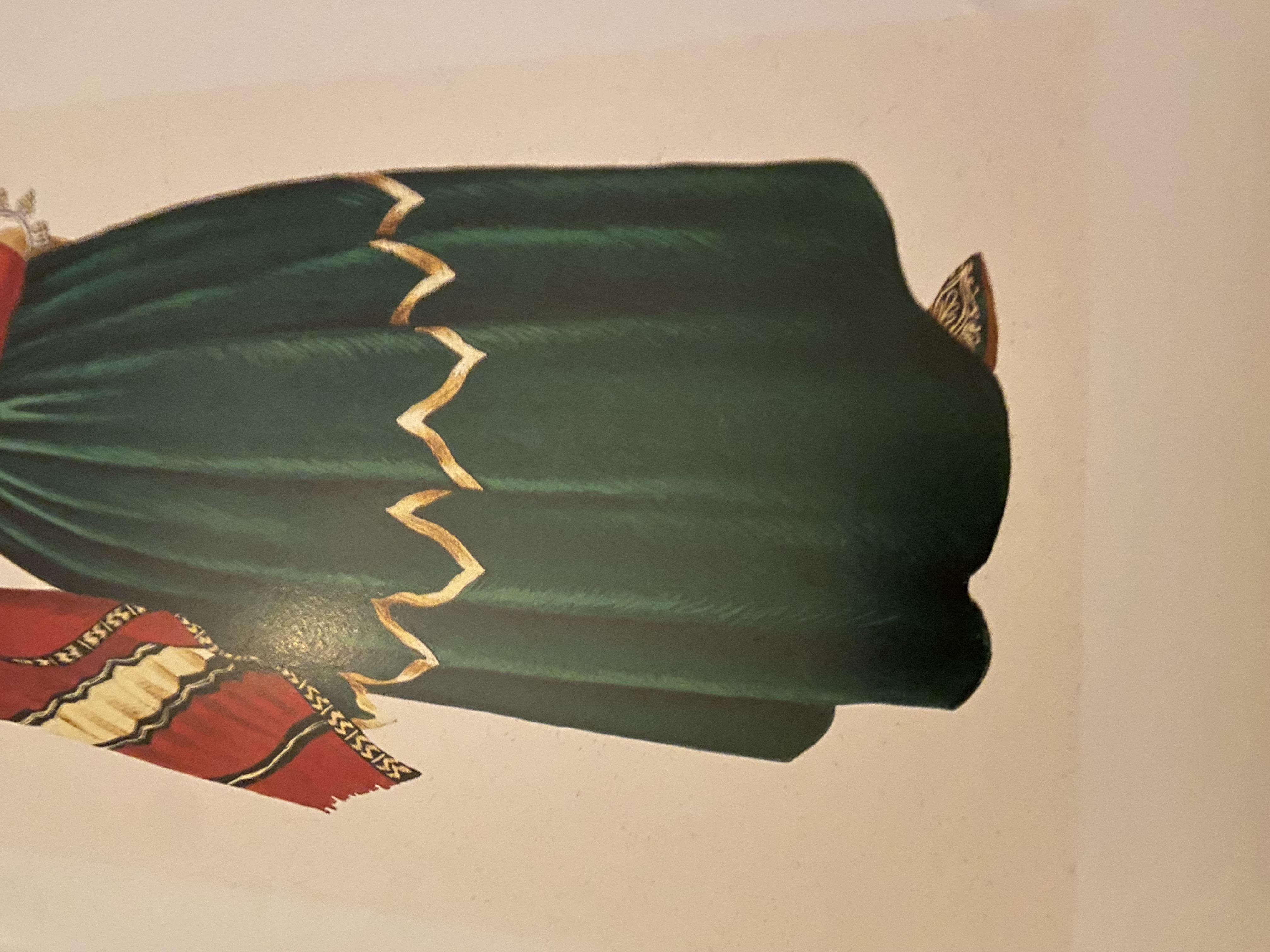
Unlike garments intended for everyday wear, the zeltita was an elaborately decorated wrap skirt associated particularly with Moroccan Jewish women’s dress. Constructed frequently from rich velvet and characterised by its enveloping wrap-around form, the garment constituted an important component of the Moroccan Jewish bridal ensemble kiswah Kiswah: (Arabic: kiswat al-ka'bah from Arabic: kuswa – robe or apparel), overall covering of the Islamic holy shrine of Ka’ba in Mecca, Saudi Arabia woven with dyed silk yarns. It is draped once annually and is accompanied with several other supplementary parts. al kbira. Its association with Jewish communities suggests that its use may have been concentrated within the mellah of Morocco’s urban centres, although the extent to which the garment circulated beyond the communal spaces requires further documentary and material investigation.
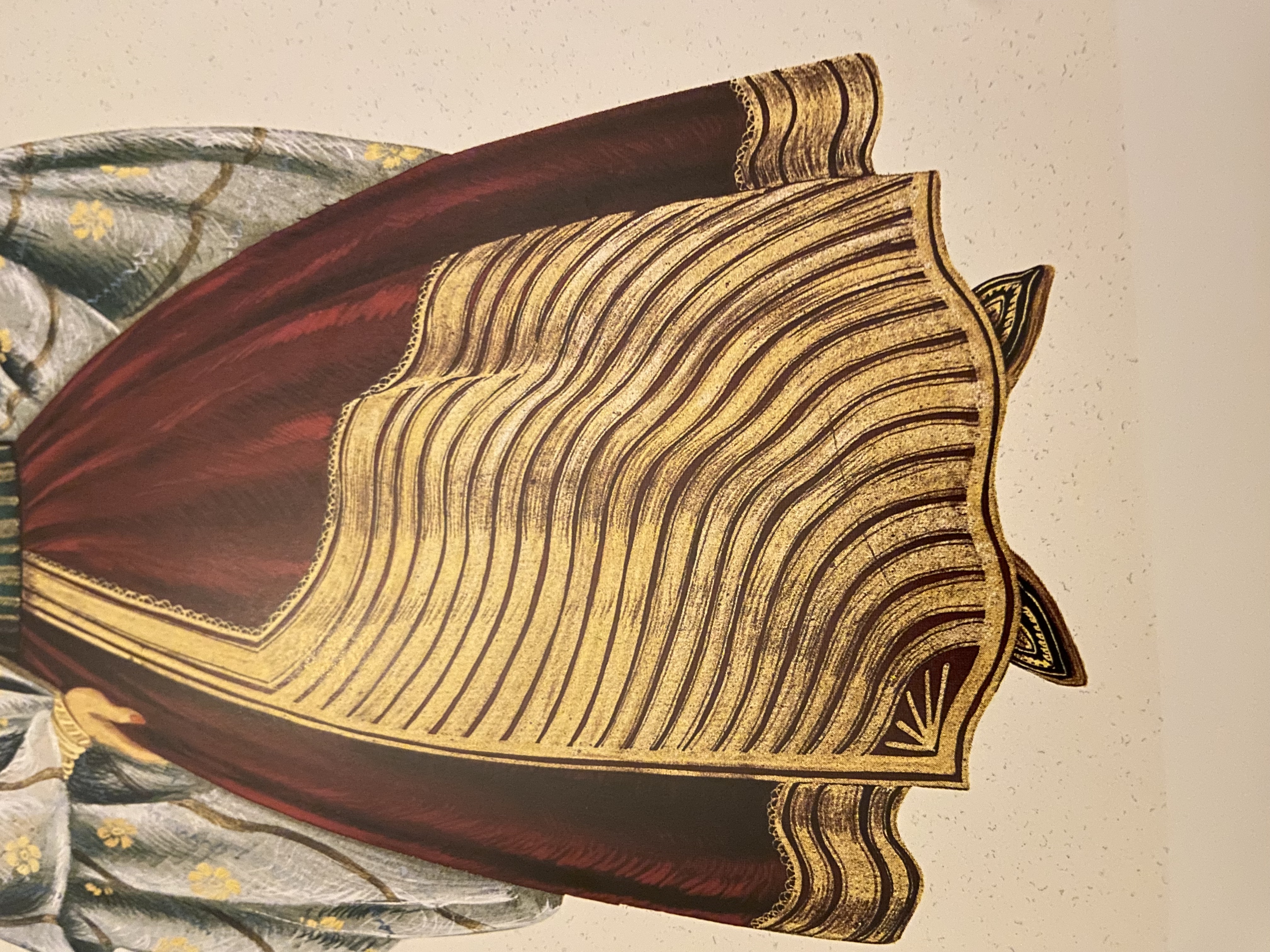
The zeltita was typically constructed from three broad panels and arranged as a left-to-right wrap, producing a distinctive overlapping configuration. Its surface was frequently embellished with gold braided passementerie
Passementerie: (French: passement – braid), decorative trimmings or edgings for textile, often made of threads of silk, cotton, or precious metals such as gold and silver, generally braided or twisted into cords. Fez: (Ottoman Turkish: fes boyası - madder
Madder: (Latin: Rubia tinctorum – Eurasian herb), rose madder, common madder or dyer's madder is a vegetable dye made from the roots of a perennial plant belonging to the bedstraw and coffee family. It has been used extensively as a vegetable red dye across the globe from India to England. Ṭarbūsh: (Turkish: terpos – turban; from Persian serposh – headdress; Synonym: fez), a type of traditional skull cap with a high crown. With a possible Mediterranean origin, this head wear gained popularity in the late Ottoman period and became the forerunner of other similar caps with slight variations.
Fez: (Ottoman Turkish: fes boyası - madder
Madder: (Latin: Rubia tinctorum – Eurasian herb), rose madder, common madder or dyer's madder is a vegetable dye made from the roots of a perennial plant belonging to the bedstraw and coffee family. It has been used extensively as a vegetable red dye across the globe from India to England. Ṭarbūsh: (Turkish: terpos – turban; from Persian serposh – headdress; Synonym: fez), a type of traditional skull cap with a high crown. With a possible Mediterranean origin, this head wear gained popularity in the late Ottoman period and became the forerunner of other similar caps with slight variations.
These differences in the placement and density of ornament demonstrate that the zeltita, despite its broadly consistent construction and function within Moroccan Jewish dress, was not a visually uniform garment. Rather, its decorative anatomy appears to have been responsive to local sartorial conventions and urban contexts, providing material evidence of regional variation within the wider tradition of Moroccan Jewish bridal dress.
The examination of women’s lower-body garments demonstrates the considerable diversity of form, material, ornamentation, and social function within urban Moroccan landscape during the period. The discussion may now be extended to the outer layers that completed and visually articulated these ensembles. The following section shall therefore focus on robe-like overgarments, including the various qaftan
Qafṭān: (Persian: khaftān, Pl. qafāṭin, synonyms: ghandurah, qandurah
Qandūrah: (Arabic, pl. qanādīr, synonyms: ghandurah, darā’ah, dishdāshah, jalābah, jallābīyah, qaftan, mqta’, thawb
Thawb: (Arabic: thawb, Pl. Athwāb/thībān), can be pronounced thobe
Thobe: (Arabic: thawb, Pl. Athwāb/thībān), can be pronounced thawb or tobe
Tobe: (Arabic: thawb, Pl. Athwāb/thībān), can be pronounced thawb or thobe based on locale. The standard Arabic word for ‘fabric’ or ‘garment’. It can refer to a qamīs-like tunic worn by men and women in the Arabian Peninsula, Iraq, the southern and south-western ports and islands of Iran, and some countries in East and West Africa. More specifically, it can refer to the square-shaped Bedouin overgarment worn by women. based on locale. The standard Arabic word for ‘fabric’ or ‘garment’. It can also refer to a qamīs-like tunic worn by men and women in the Arabian Peninsula, Iraq, the southern and south-western ports and islands of Iran, and some countries in East and West Africa. More specifically, it can refer to the square-shaped Bedouin overgarment worn by women. or tobe
Tobe: (Arabic: thawb, Pl. Athwāb/thībān), can be pronounced thawb or thobe based on locale. The standard Arabic word for ‘fabric’ or ‘garment’. It can refer to a qamīs-like tunic worn by men and women in the Arabian Peninsula, Iraq, the southern and south-western ports and islands of Iran, and some countries in East and West Africa. More specifically, it can refer to the square-shaped Bedouin overgarment worn by women. based on locale. The standard Arabic word for ‘fabric’ or ‘garment’. It can also refer to a qamīs-like tunic worn by men and women in the Arabian Peninsula, Iraq, the southern and south-western ports and islands of Iran, and some countries in East and West Africa. More specifically, it can refer to the square-shaped Bedouin overgarment worn by women in the Arabian Gulf region. or tobe
Tobe: (Arabic: thawb, Pl. Athwāb/thībān), can be pronounced thawb or thobe based on locale. The standard Arabic word for ‘fabric’ or ‘garment’. It can refer to a qamīs-like tunic worn by men and women in the Arabian Peninsula, Iraq, the southern and south-western ports and islands of Iran, and some countries in East and West Africa. More specifically, it can refer to the square-shaped Bedouin overgarment worn by women. ), a loose, short or long-sleeved, shirt like (qamis) tunic with frontal neckline opening, worn by both sexes. Each Arab region has a different term for what is essentially a similar garment with various small differences. , drā’ah, dishdāshah, jalābah, jallābīyah, kandurah, mqta’, thawb
Thawb: (Arabic: thawb, Pl. Athwāb/thībān), can be pronounced thobe
Thobe: (Arabic: thawb, Pl. Athwāb/thībān), can be pronounced thawb or tobe
Tobe: (Arabic: thawb, Pl. Athwāb/thībān), can be pronounced thawb or thobe based on locale. The standard Arabic word for ‘fabric’ or ‘garment’. It can refer to a qamīs-like tunic worn by men and women in the Arabian Peninsula, Iraq, the southern and south-western ports and islands of Iran, and some countries in East and West Africa. More specifically, it can refer to the square-shaped Bedouin overgarment worn by women. based on locale. The standard Arabic word for ‘fabric’ or ‘garment’. It can also refer to a qamīs-like tunic worn by men and women in the Arabian Peninsula, Iraq, the southern and south-western ports and islands of Iran, and some countries in East and West Africa. More specifically, it can refer to the square-shaped Bedouin overgarment worn by women. or tobe
Tobe: (Arabic: thawb, Pl. Athwāb/thībān), can be pronounced thawb or thobe based on locale. The standard Arabic word for ‘fabric’ or ‘garment’. It can refer to a qamīs-like tunic worn by men and women in the Arabian Peninsula, Iraq, the southern and south-western ports and islands of Iran, and some countries in East and West Africa. More specifically, it can refer to the square-shaped Bedouin overgarment worn by women. based on locale. The standard Arabic word for ‘fabric’ or ‘garment’. It can also refer to a qamīs-like tunic worn by men and women in the Arabian Peninsula, Iraq, the southern and south-western ports and islands of Iran, and some countries in East and West Africa. More specifically, it can refer to the square-shaped Bedouin overgarment worn by women in the Arabian Gulf region. or tobe
Tobe: (Arabic: thawb, Pl. Athwāb/thībān), can be pronounced thawb or thobe based on locale. The standard Arabic word for ‘fabric’ or ‘garment’. It can refer to a qamīs-like tunic worn by men and women in the Arabian Peninsula, Iraq, the southern and south-western ports and islands of Iran, and some countries in East and West Africa. More specifically, it can refer to the square-shaped Bedouin overgarment worn by women. ) loose, short or long-sleeved, shirt like (qamis
Qamīṣ: (Possibly late Latin: Camisia – Linen Undergarment; Synonym: Kamiz), a traditional loose fitting long tunic or shirt worn by both men and women in South and Central Asia and the Arab world. Typically extending below the waist it is usually paired with a pair of trousers.