

Author Dr. Reem Tariq
Ṭariq: (Arabic; Synonym: tulle_bi_talli
Tūlle_bi_tallī: (French: Tulle – a city in France where fine material for veil was first made; Turkish: tel – wire; Synonym: tariq; talli; badla; khus_dozi ), series of small metal knots made on a woven net ground as embellishment. The term is commonly used in the North African Arab region specifically in Egypt. Ṭariq: (Arabic; Synonym: tulle_bi_talli
Tūlle_bi_tallī: (French: Tulle – a city in France where fine material for veil was first made; Turkish: tel – wire; Synonym: tariq; talli; badla; khus_dozi ), series of small metal knots made on a woven net ground as embellishment. The term is commonly used in the North African Arab region specifically in Egypt.
Co Authored and Edited by Rajrupa Das
Abstract
The izar
Izār: (Arabic: azar: to support and strengthen, synonyms: wizrah
Wizrah: (Arabic: small garment, synonyms: izār, wizār, fūṭah), refers to a loincloth wrapped around the lower half of the body, between the navel and the knee. Known in the Arabian Peninsula, Iraq, the Horn of Africa (Somalia, Somaliland, Djibouti, Ethiopia, and Eritrea), Indonesia, Malaysia, Bangladesh, Pakistan, and countries in some parts of East Africa and in India., wizār, fūṭah, sharshaf
Sharshaf: (Ottoman Turkic: çarsaf – bed sheet; Synonym: mlaya, mlyaya, sharsaf), a set of large cloth usually used as a body wrap by women in public. Izār: (Arabic: azar: to support and strengthen, synonyms: wizrah
Wizrah: (Arabic: small garment, synonyms: izār, wizār, fūṭah), refers to a loincloth wrapped around the lower half of the body, between the navel and the knee. Known in the Arabian Peninsula, Iraq, the Horn of Africa (Somalia, Somaliland, Djibouti, Ethiopia, and Eritrea), Indonesia, Malaysia, Bangladesh, Pakistan, and countries in some parts of East Africa and in India., wizār, fūṭah, sharshaf
Sharshaf: (Ottoman Turkic: çarsaf – bed sheet; Synonym: mlaya, mlyaya, sharsaf), a set of large cloth usually used as a body wrap by women in public. Izār: (Arabic: azar: to support and strengthen, synonyms: wizrah
Wizrah: (Arabic: small garment, synonyms: izār, wizār, fūṭah), refers to a loincloth wrapped around the lower half of the body, between the navel and the knee. Known in the Arabian Peninsula, Iraq, the Horn of Africa (Somalia, Somaliland, Djibouti, Ethiopia, and Eritrea), Indonesia, Malaysia, Bangladesh, Pakistan, and countries in some parts of East Africa and in India., wizār, fūṭah, sharshaf
Sharshaf: (Ottoman Turkic: çarsaf – bed sheet; Synonym: mlaya, mlyaya, sharsaf), a set of large cloth usually used as a body wrap by women in public. Izār: (Arabic: azar: to support and strengthen, synonyms: wizrah
Wizrah: (Arabic: small garment, synonyms: izār, wizār, fūṭah), refers to a loincloth wrapped around the lower half of the body, between the navel and the knee. Known in the Arabian Peninsula, Iraq, the Horn of Africa (Somalia, Somaliland, Djibouti, Ethiopia, and Eritrea), Indonesia, Malaysia, Bangladesh, Pakistan, and countries in some parts of East Africa and in India., wizār, fūṭah, sharshaf
Sharshaf: (Ottoman Turkic: çarsaf – bed sheet; Synonym: mlaya, mlyaya, sharsaf), a set of large cloth usually used as a body wrap by women in public.
Introduction: The Izar
Izār: (Arabic: azar: to support and strengthen, synonyms: wizrah
Wizrah: (Arabic: small garment, synonyms: izār, wizār, fūṭah), refers to a loincloth wrapped around the lower half of the body, between the navel and the knee. Known in the Arabian Peninsula, Iraq, the Horn of Africa (Somalia, Somaliland, Djibouti, Ethiopia, and Eritrea), Indonesia, Malaysia, Bangladesh, Pakistan, and countries in some parts of East Africa and in India., wizār, fūṭah, sharshaf
Sharshaf: (Ottoman Turkic: çarsaf – bed sheet; Synonym: mlaya, mlyaya, sharsaf), a set of large cloth usually used as a body wrap by women in public.
The izār constitutes a deceptively simple yet historically persistent form of dress: a wrapped length of cloth that has occupied a central position within Arab-Islamic sartorial practice from antiquity to the present. Although frequently eclipsed in scholarly and popular discourse by tailored garments such as the thawb Thawb: (Arabic: thawb, Pl. Athwāb/thībān), can be pronounced thobe Thobe: (Arabic: thawb, Pl. Athwāb/thībān), can be pronounced thawb or tobe Tobe: (Arabic: thawb, Pl. Athwāb/thībān), can be pronounced thawb or thobe based on locale. The standard Arabic word for ‘fabric’ or ‘garment’. It can refer to a qamīs-like tunic worn by men and women in the Arabian Peninsula, Iraq, the southern and south-western ports and islands of Iran, and some countries in East and West Africa. More specifically, it can refer to the square-shaped Bedouin overgarment worn by women. based on locale. The standard Arabic word for ‘fabric’ or ‘garment’. It can also refer to a qamīs-like tunic worn by men and women in the Arabian Peninsula, Iraq, the southern and south-western ports and islands of Iran, and some countries in East and West Africa. More specifically, it can refer to the square-shaped Bedouin overgarment worn by women. or tobe Tobe: (Arabic: thawb, Pl. Athwāb/thībān), can be pronounced thawb or thobe based on locale. The standard Arabic word for ‘fabric’ or ‘garment’. It can refer to a qamīs-like tunic worn by men and women in the Arabian Peninsula, Iraq, the southern and south-western ports and islands of Iran, and some countries in East and West Africa. More specifically, it can refer to the square-shaped Bedouin overgarment worn by women. based on locale. The standard Arabic word for ‘fabric’ or ‘garment’. It can also refer to a qamīs-like tunic worn by men and women in the Arabian Peninsula, Iraq, the southern and south-western ports and islands of Iran, and some countries in East and West Africa. More specifically, it can refer to the square-shaped Bedouin overgarment worn by women in the Arabian Gulf region. , the izār has played a foundational role in everyday and ritual contexts. Historically, it formed an integral component of women’s public dress, while for men it retains enduring religious significance as a prescribed element of iḥrām during the ḥajj. In this dual capacity, the izār operates at the intersection of the quotidian and the sacral, simultaneously embedded in daily life and elevated through religious codification.
This article examines the izār through an interdisciplinary lens, focusing on its etymological origins, regional manifestations, and function as a marker of legal, social, and cultural distinction. It traces the garment’s persistence within ethnographic settings, its representation in artistic and early photographic archives, and its transregional circulation facilitated by networks of trade and exchange. Situating the izār within a comparative framework that includes synonymous garments such as the thawb
Thawb: (Arabic: thawb, Pl. Athwāb/thībān), can be pronounced thobe
Thobe: (Arabic: thawb, Pl. Athwāb/thībān), can be pronounced thawb or tobe
Tobe: (Arabic: thawb, Pl. Athwāb/thībān), can be pronounced thawb or thobe based on locale. The standard Arabic word for ‘fabric’ or ‘garment’. It can refer to a qamīs-like tunic worn by men and women in the Arabian Peninsula, Iraq, the southern and south-western ports and islands of Iran, and some countries in East and West Africa. More specifically, it can refer to the square-shaped Bedouin overgarment worn by women. based on locale. The standard Arabic word for ‘fabric’ or ‘garment’. It can also refer to a qamīs-like tunic worn by men and women in the Arabian Peninsula, Iraq, the southern and south-western ports and islands of Iran, and some countries in East and West Africa. More specifically, it can refer to the square-shaped Bedouin overgarment worn by women. or tobe
Tobe: (Arabic: thawb, Pl. Athwāb/thībān), can be pronounced thawb or thobe based on locale. The standard Arabic word for ‘fabric’ or ‘garment’. It can refer to a qamīs-like tunic worn by men and women in the Arabian Peninsula, Iraq, the southern and south-western ports and islands of Iran, and some countries in East and West Africa. More specifically, it can refer to the square-shaped Bedouin overgarment worn by women. based on locale. The standard Arabic word for ‘fabric’ or ‘garment’. It can also refer to a qamīs-like tunic worn by men and women in the Arabian Peninsula, Iraq, the southern and south-western ports and islands of Iran, and some countries in East and West Africa. More specifically, it can refer to the square-shaped Bedouin overgarment worn by women in the Arabian Gulf region. /thobe
Thobe: (Arabic: thawb, Pl. Athwāb/thībān), can be pronounced thawb or tobe
Tobe: (Arabic: thawb, Pl. Athwāb/thībān), can be pronounced thawb or thobe based on locale. The standard Arabic word for ‘fabric’ or ‘garment’. It can refer to a qamīs-like tunic worn by men and women in the Arabian Peninsula, Iraq, the southern and south-western ports and islands of Iran, and some countries in East and West Africa. More specifically, it can refer to the square-shaped Bedouin overgarment worn by women. based on locale. The standard Arabic word for ‘fabric’ or ‘garment’. It can also refer to a qamīs-like tunic worn by men and women in the Arabian Peninsula, Iraq, the southern and south-western ports and islands of Iran, and some countries in East and West Africa. More specifically, it can refer to the square-shaped Bedouin overgarment worn by women. /tobe
Tobe: (Arabic: thawb, Pl. Athwāb/thībān), can be pronounced thawb or thobe based on locale. The standard Arabic word for ‘fabric’ or ‘garment’. It can refer to a qamīs-like tunic worn by men and women in the Arabian Peninsula, Iraq, the southern and south-western ports and islands of Iran, and some countries in East and West Africa. More specifically, it can refer to the square-shaped Bedouin overgarment worn by women. , ḥayk, ridāʾ, milḥafa, milāyah, and çarşaf/sharshaf
Sharshaf: (Ottoman Turkic: çarsaf – bed sheet; Synonym: mlaya, mlyaya, sharsaf), a set of large cloth usually used as a body wrap by women in public.
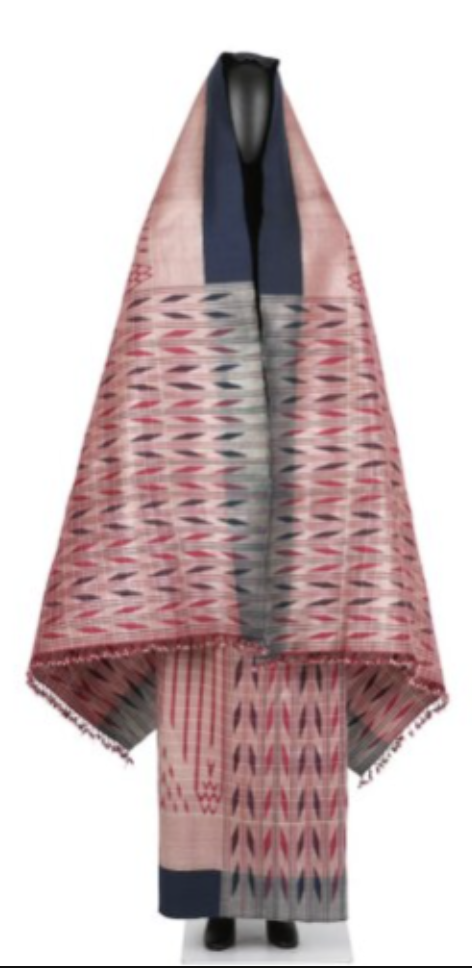
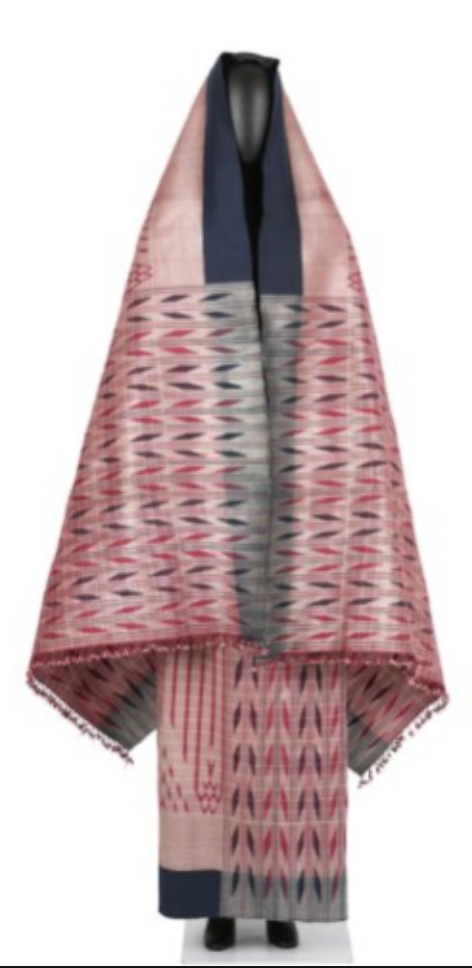
Brocade Brocade: (Italian: brocco – twisted thread), is a richly decorative fabric woven with an intricate raised pattern. Its origins can be traced back to ancient China, where it was made for the imperial court. It later spread to Europe during the Renaissance and became popular in couture and decorative arts. silk cloak; Iraq; c. 20th century; Acc. No. Source: ZI1983.500238 IRAQ The Zay Zay: (Arabic: costume, Pl. azyaā’), a set of clothes in a style typical of a particular country or historical period. Initiative
Recent scholarship has foregrounded textiles as critical media of social communication within Indian Ocean worlds; read within this expansive textile economy, the izār emerges not merely as an article of dress but as a material node through which meanings of mobility, identity, and cultural exchange were articulated.
1. HISTORY & DEVELOPMENT
1.1 Etymology and early references
it admonitions against allowing the izar
Izār: (Arabic: azar: to support and strengthen, synonyms: wizrah
Wizrah: (Arabic: small garment, synonyms: izār, wizār, fūṭah), refers to a loincloth wrapped around the lower half of the body, between the navel and the knee. Known in the Arabian Peninsula, Iraq, the Horn of Africa (Somalia, Somaliland, Djibouti, Ethiopia, and Eritrea), Indonesia, Malaysia, Bangladesh, Pakistan, and countries in some parts of East Africa and in India., wizār, fūṭah, sharshaf
Sharshaf: (Ottoman Turkic: çarsaf – bed sheet; Synonym: mlaya, mlyaya, sharsaf), a set of large cloth usually used as a body wrap by women in public. Izār: (Arabic: azar: to support and strengthen, synonyms: wizrah
Wizrah: (Arabic: small garment, synonyms: izār, wizār, fūṭah), refers to a loincloth wrapped around the lower half of the body, between the navel and the knee. Known in the Arabian Peninsula, Iraq, the Horn of Africa (Somalia, Somaliland, Djibouti, Ethiopia, and Eritrea), Indonesia, Malaysia, Bangladesh, Pakistan, and countries in some parts of East Africa and in India., wizār, fūṭah, sharshaf
Sharshaf: (Ottoman Turkic: çarsaf – bed sheet; Synonym: mlaya, mlyaya, sharsaf), a set of large cloth usually used as a body wrap by women in public.
The earliest forms of the izār appear to have consisted of two identical lengths of fabric woven on the same loom. These pieces, typically left unstitched, were worn as separate components covering the lower and upper parts of the body. The upper cloth was draped across the torso and could extend to cover the head or function as a veil, while the lower cloth was wrapped around the waist. Over time, these two elements were occasionally joined by stitching along their weft Weft: one of the two basic components used in weaving that transforms thread or yarns into a piece of fabric. It is the crosswise thread on a loom that is passed over and under the warp threads. edges, giving rise to a composite, sewn version of the izār. Both the unstitched and stitched configurations coexisted and were worn in different social and ceremonial contexts until the mid-twentieth century. Notably, a North African variant commonly identified as the ridāʾ continues to be worn in parts of Libya, Algeria, Tunisia, and Morocco, particularly during festivals and ceremonial occasions that call for the display of traditional dress.
Although izar
Izār: (Arabic: azar: to support and strengthen, synonyms: wizrah
Wizrah: (Arabic: small garment, synonyms: izār, wizār, fūṭah), refers to a loincloth wrapped around the lower half of the body, between the navel and the knee. Known in the Arabian Peninsula, Iraq, the Horn of Africa (Somalia, Somaliland, Djibouti, Ethiopia, and Eritrea), Indonesia, Malaysia, Bangladesh, Pakistan, and countries in some parts of East Africa and in India., wizār, fūṭah, sharshaf
Sharshaf: (Ottoman Turkic: çarsaf – bed sheet; Synonym: mlaya, mlyaya, sharsaf), a set of large cloth usually used as a body wrap by women in public.
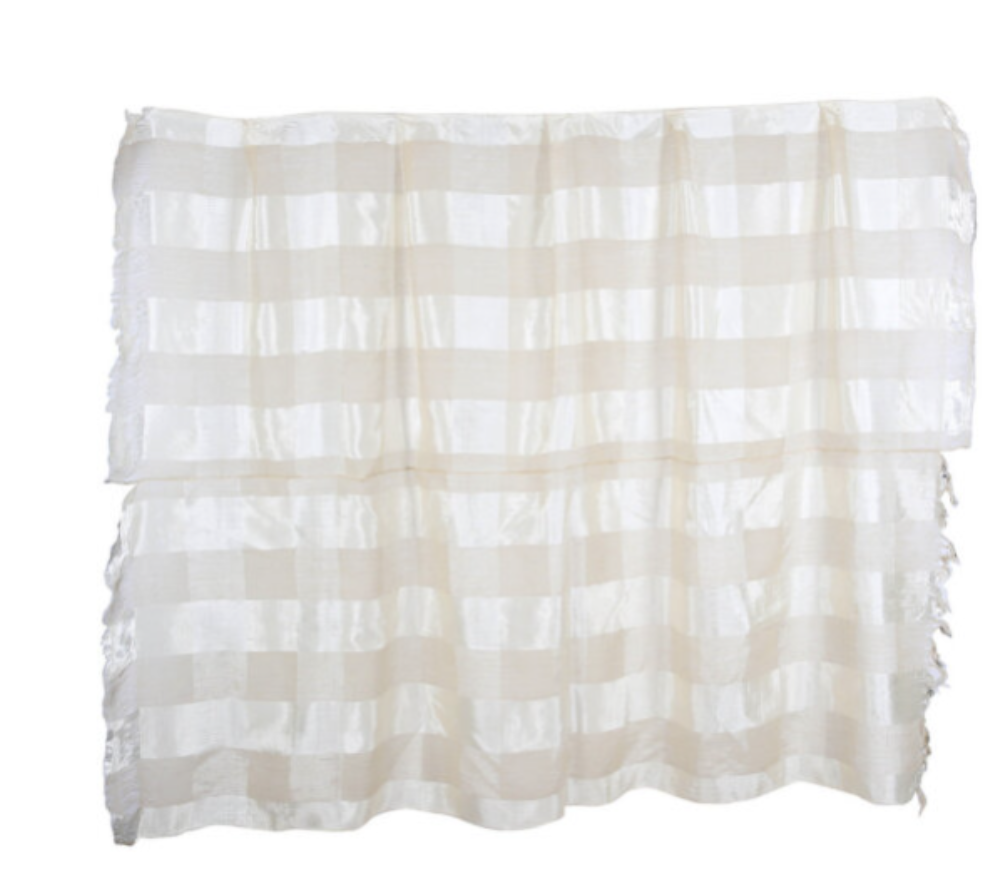
Silk and linen cloak, Iraq, c. 20th century; ZI1997.500237 IRAQ; The Zay Zay: (Arabic: costume, Pl. azyaā’), a set of clothes in a style typical of a particular country or historical period. Initiative
In the Nile Valley and western Sahel, the toub or tobe Tobe: (Arabic: thawb, Pl. Athwāb/thībān), can be pronounced thawb or thobe based on locale. The standard Arabic word for ‘fabric’ or ‘garment’. It can refer to a qamīs-like tunic worn by men and women in the Arabian Peninsula, Iraq, the southern and south-western ports and islands of Iran, and some countries in East and West Africa. More specifically, it can refer to the square-shaped Bedouin overgarment worn by women. , particularly in Sudan and Mauritania, developed as a long rectangular draped cloth worn by women to envelop the body and head. This form is historically rooted in earlier Nile Valley draping practices and was subsequently reshaped through the circulation of imported textiles. Within the Arabian Peninsula, women frequently favoured the milḥafa, alongside the wizār or wizrah Wizrah: (Arabic: small garment, synonyms: izār, wizār, fūṭah), refers to a loincloth wrapped around the lower half of the body, between the navel and the knee. Known in the Arabian Peninsula, Iraq, the Horn of Africa (Somalia, Somaliland, Djibouti, Ethiopia, and Eritrea), Indonesia, Malaysia, Bangladesh, Pakistan, and countries in some parts of East Africa and in India., garments distinguished by their larger dimensions and fuller coverage.
The izar
Izār: (Arabic: azar: to support and strengthen, synonyms: wizrah
Wizrah: (Arabic: small garment, synonyms: izār, wizār, fūṭah), refers to a loincloth wrapped around the lower half of the body, between the navel and the knee. Known in the Arabian Peninsula, Iraq, the Horn of Africa (Somalia, Somaliland, Djibouti, Ethiopia, and Eritrea), Indonesia, Malaysia, Bangladesh, Pakistan, and countries in some parts of East Africa and in India., wizār, fūṭah, sharshaf
Sharshaf: (Ottoman Turkic: çarsaf – bed sheet; Synonym: mlaya, mlyaya, sharsaf), a set of large cloth usually used as a body wrap by women in public. Izār: (Arabic: azar: to support and strengthen, synonyms: wizrah
Wizrah: (Arabic: small garment, synonyms: izār, wizār, fūṭah), refers to a loincloth wrapped around the lower half of the body, between the navel and the knee. Known in the Arabian Peninsula, Iraq, the Horn of Africa (Somalia, Somaliland, Djibouti, Ethiopia, and Eritrea), Indonesia, Malaysia, Bangladesh, Pakistan, and countries in some parts of East Africa and in India., wizār, fūṭah, sharshaf
Sharshaf: (Ottoman Turkic: çarsaf – bed sheet; Synonym: mlaya, mlyaya, sharsaf), a set of large cloth usually used as a body wrap by women in public.
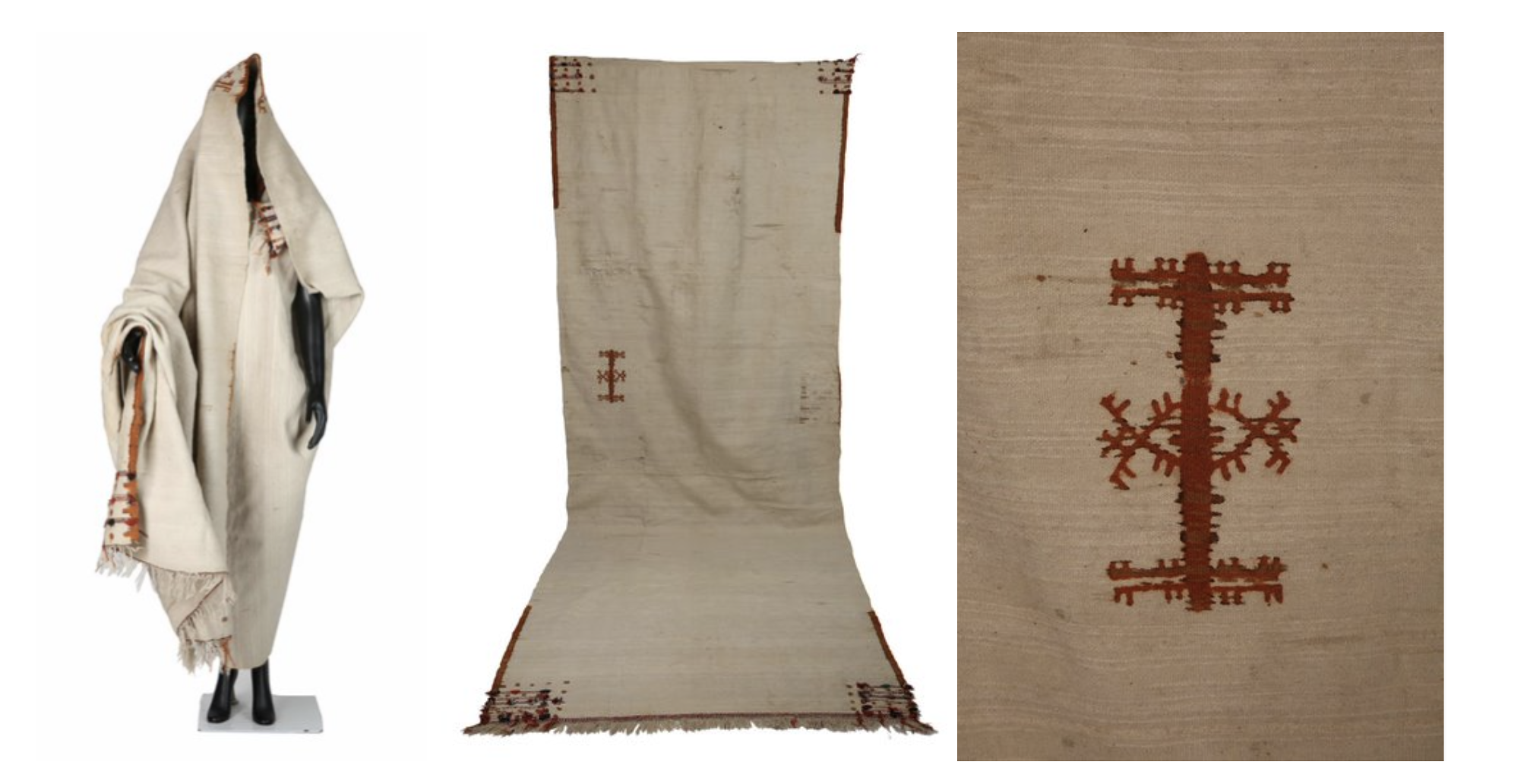
Woven camelid fibre cloak, Anti-Atlas
Atlas: (Arabic and Aramaic: atlas – silk; from Greek: Atlas – Character from Greek mythology Synonym: adras, ikat
Ikat: (Indonesian and Malay: Chord, thread, bundle; Synonym: atlas, adras), is a resist dyeing technique that involves tying and dyeing yarns or threads before weaving, resulting in a distinct pattern. With strong traditions in Southeast Asia, Central Asia, the Indian subcontinent and Central America it probably originated independently around the world. , abr), a resist dyeing technique that involves tying and dyeing yarns or threads before weaving, resulting in a distinct pattern. With strong traditions sporadically across the globe it probably originated independently around the world. Aṭlas: (Latin: Atticus Atlas
Atlas: (Arabic and Aramaic: atlas – silk; from Greek: Atlas – Character from Greek mythology Synonym: adras, ikat
Ikat: (Indonesian and Malay: Chord, thread, bundle; Synonym: atlas, adras), is a resist dyeing technique that involves tying and dyeing yarns or threads before weaving, resulting in a distinct pattern. With strong traditions in Southeast Asia, Central Asia, the Indian subcontinent and Central America it probably originated independently around the world. , abr), a resist dyeing technique that involves tying and dyeing yarns or threads before weaving, resulting in a distinct pattern. With strong traditions sporadically across the globe it probably originated independently around the world. – a large silk producing moth; from Greek: Atlas
Atlas: (Arabic and Aramaic: atlas – silk; from Greek: Atlas – Character from Greek mythology Synonym: adras, ikat
Ikat: (Indonesian and Malay: Chord, thread, bundle; Synonym: atlas, adras), is a resist dyeing technique that involves tying and dyeing yarns or threads before weaving, resulting in a distinct pattern. With strong traditions in Southeast Asia, Central Asia, the Indian subcontinent and Central America it probably originated independently around the world. , abr), a resist dyeing technique that involves tying and dyeing yarns or threads before weaving, resulting in a distinct pattern. With strong traditions sporadically across the globe it probably originated independently around the world. – character from Greek mythology; Synonym: harir
Ḥarīr: (Arabic, Synonym: aṭlas), a common term for silk in the Arab world especially the Levant.
Within the wider Indian Ocean world, comparable wrapped garments such as the Indonesian sarong further attest to the diffusion of draped lower-body textiles across maritime networks of exchange. In Ottoman and Persian contexts, adaptations including the izarband illustrate processes of linguistic borrowing and sartorial hybridization, reflecting sustained cross-cultural interaction. Taken together, these linguistic and material variations underscore the izar
Izār: (Arabic: azar: to support and strengthen, synonyms: wizrah
Wizrah: (Arabic: small garment, synonyms: izār, wizār, fūṭah), refers to a loincloth wrapped around the lower half of the body, between the navel and the knee. Known in the Arabian Peninsula, Iraq, the Horn of Africa (Somalia, Somaliland, Djibouti, Ethiopia, and Eritrea), Indonesia, Malaysia, Bangladesh, Pakistan, and countries in some parts of East Africa and in India., wizār, fūṭah, sharshaf
Sharshaf: (Ottoman Turkic: çarsaf – bed sheet; Synonym: mlaya, mlyaya, sharsaf), a set of large cloth usually used as a body wrap by women in public.
1.2 Variants and Mentions in Islamic Literature Sumptuary Edicts
A significant historical dimension of the izar
Izār: (Arabic: azar: to support and strengthen, synonyms: wizrah
Wizrah: (Arabic: small garment, synonyms: izār, wizār, fūṭah), refers to a loincloth wrapped around the lower half of the body, between the navel and the knee. Known in the Arabian Peninsula, Iraq, the Horn of Africa (Somalia, Somaliland, Djibouti, Ethiopia, and Eritrea), Indonesia, Malaysia, Bangladesh, Pakistan, and countries in some parts of East Africa and in India., wizār, fūṭah, sharshaf
Sharshaf: (Ottoman Turkic: çarsaf – bed sheet; Synonym: mlaya, mlyaya, sharsaf), a set of large cloth usually used as a body wrap by women in public. Izār: (Arabic: azar: to support and strengthen, synonyms: wizrah
Wizrah: (Arabic: small garment, synonyms: izār, wizār, fūṭah), refers to a loincloth wrapped around the lower half of the body, between the navel and the knee. Known in the Arabian Peninsula, Iraq, the Horn of Africa (Somalia, Somaliland, Djibouti, Ethiopia, and Eritrea), Indonesia, Malaysia, Bangladesh, Pakistan, and countries in some parts of East Africa and in India., wizār, fūṭah, sharshaf
Sharshaf: (Ottoman Turkic: çarsaf – bed sheet; Synonym: mlaya, mlyaya, sharsaf), a set of large cloth usually used as a body wrap by women in public.
Although such regulations were unevenly implemented and often subject to local negotiation, they articulated a normative ideal of visible religious distinction within urban space. In this context, the izar
Izār: (Arabic: azar: to support and strengthen, synonyms: wizrah
Wizrah: (Arabic: small garment, synonyms: izār, wizār, fūṭah), refers to a loincloth wrapped around the lower half of the body, between the navel and the knee. Known in the Arabian Peninsula, Iraq, the Horn of Africa (Somalia, Somaliland, Djibouti, Ethiopia, and Eritrea), Indonesia, Malaysia, Bangladesh, Pakistan, and countries in some parts of East Africa and in India., wizār, fūṭah, sharshaf
Sharshaf: (Ottoman Turkic: çarsaf – bed sheet; Synonym: mlaya, mlyaya, sharsaf), a set of large cloth usually used as a body wrap by women in public.
1.3 Visual and Artistic Sources
Sculptural evidence from the ancient North Hejazi kingdoms frequently depicts bare-chested male figures clothed solely in an izar
Izār: (Arabic: azar: to support and strengthen, synonyms: wizrah
Wizrah: (Arabic: small garment, synonyms: izār, wizār, fūṭah), refers to a loincloth wrapped around the lower half of the body, between the navel and the knee. Known in the Arabian Peninsula, Iraq, the Horn of Africa (Somalia, Somaliland, Djibouti, Ethiopia, and Eritrea), Indonesia, Malaysia, Bangladesh, Pakistan, and countries in some parts of East Africa and in India., wizār, fūṭah, sharshaf
Sharshaf: (Ottoman Turkic: çarsaf – bed sheet; Synonym: mlaya, mlyaya, sharsaf), a set of large cloth usually used as a body wrap by women in public. Izār: (Arabic: azar: to support and strengthen, synonyms: wizrah
Wizrah: (Arabic: small garment, synonyms: izār, wizār, fūṭah), refers to a loincloth wrapped around the lower half of the body, between the navel and the knee. Known in the Arabian Peninsula, Iraq, the Horn of Africa (Somalia, Somaliland, Djibouti, Ethiopia, and Eritrea), Indonesia, Malaysia, Bangladesh, Pakistan, and countries in some parts of East Africa and in India., wizār, fūṭah, sharshaf
Sharshaf: (Ottoman Turkic: çarsaf – bed sheet; Synonym: mlaya, mlyaya, sharsaf), a set of large cloth usually used as a body wrap by women in public.
Further evidence of the garment’s historical persistence is found in medieval visual culture. Illustrated copies of the Maqāmāt manuscripts, commonly dated to the late twelfth and thirteenth centuries, depict female figures draped in various configurations of the izar
Izār: (Arabic: azar: to support and strengthen, synonyms: wizrah
Wizrah: (Arabic: small garment, synonyms: izār, wizār, fūṭah), refers to a loincloth wrapped around the lower half of the body, between the navel and the knee. Known in the Arabian Peninsula, Iraq, the Horn of Africa (Somalia, Somaliland, Djibouti, Ethiopia, and Eritrea), Indonesia, Malaysia, Bangladesh, Pakistan, and countries in some parts of East Africa and in India., wizār, fūṭah, sharshaf
Sharshaf: (Ottoman Turkic: çarsaf – bed sheet; Synonym: mlaya, mlyaya, sharsaf), a set of large cloth usually used as a body wrap by women in public.
The izar
Izār: (Arabic: azar: to support and strengthen, synonyms: wizrah
Wizrah: (Arabic: small garment, synonyms: izār, wizār, fūṭah), refers to a loincloth wrapped around the lower half of the body, between the navel and the knee. Known in the Arabian Peninsula, Iraq, the Horn of Africa (Somalia, Somaliland, Djibouti, Ethiopia, and Eritrea), Indonesia, Malaysia, Bangladesh, Pakistan, and countries in some parts of East Africa and in India., wizār, fūṭah, sharshaf
Sharshaf: (Ottoman Turkic: çarsaf – bed sheet; Synonym: mlaya, mlyaya, sharsaf), a set of large cloth usually used as a body wrap by women in public.
Parallel dynamics are evident in nineteenth-century photography. Studios operated by photographers including Bonfils, Zangaki, and Lehnert & Landrock produced carefully staged images of women wearing izars for European consumption. Although highly mediated and stylized, these photographs constitute valuable visual records, preserving details of textile patterning, methods of wrapping, and gendered codes of dress. As such, they provide comparative material of enduring relevance for historians of dress and textiles, enabling critical engagement with both the material culture represented and the representational frameworks through which it was mediated.
1.4 Ethnographic Continuities
Despite the imposition of regulatory and social constraints, the izar
Izār: (Arabic: azar: to support and strengthen, synonyms: wizrah
Wizrah: (Arabic: small garment, synonyms: izār, wizār, fūṭah), refers to a loincloth wrapped around the lower half of the body, between the navel and the knee. Known in the Arabian Peninsula, Iraq, the Horn of Africa (Somalia, Somaliland, Djibouti, Ethiopia, and Eritrea), Indonesia, Malaysia, Bangladesh, Pakistan, and countries in some parts of East Africa and in India., wizār, fūṭah, sharshaf
Sharshaf: (Ottoman Turkic: çarsaf – bed sheet; Synonym: mlaya, mlyaya, sharsaf), a set of large cloth usually used as a body wrap by women in public.
Colonial and postcolonial transformations reshaped the production, circulation, and public visibility of the izar
Izār: (Arabic: azar: to support and strengthen, synonyms: wizrah
Wizrah: (Arabic: small garment, synonyms: izār, wizār, fūṭah), refers to a loincloth wrapped around the lower half of the body, between the navel and the knee. Known in the Arabian Peninsula, Iraq, the Horn of Africa (Somalia, Somaliland, Djibouti, Ethiopia, and Eritrea), Indonesia, Malaysia, Bangladesh, Pakistan, and countries in some parts of East Africa and in India., wizār, fūṭah, sharshaf
Sharshaf: (Ottoman Turkic: çarsaf – bed sheet; Synonym: mlaya, mlyaya, sharsaf), a set of large cloth usually used as a body wrap by women in public. Izār: (Arabic: azar: to support and strengthen, synonyms: wizrah
Wizrah: (Arabic: small garment, synonyms: izār, wizār, fūṭah), refers to a loincloth wrapped around the lower half of the body, between the navel and the knee. Known in the Arabian Peninsula, Iraq, the Horn of Africa (Somalia, Somaliland, Djibouti, Ethiopia, and Eritrea), Indonesia, Malaysia, Bangladesh, Pakistan, and countries in some parts of East Africa and in India., wizār, fūṭah, sharshaf
Sharshaf: (Ottoman Turkic: çarsaf – bed sheet; Synonym: mlaya, mlyaya, sharsaf), a set of large cloth usually used as a body wrap by women in public.
This first part has established the izar
Izār: (Arabic: azar: to support and strengthen, synonyms: wizrah
Wizrah: (Arabic: small garment, synonyms: izār, wizār, fūṭah), refers to a loincloth wrapped around the lower half of the body, between the navel and the knee. Known in the Arabian Peninsula, Iraq, the Horn of Africa (Somalia, Somaliland, Djibouti, Ethiopia, and Eritrea), Indonesia, Malaysia, Bangladesh, Pakistan, and countries in some parts of East Africa and in India., wizār, fūṭah, sharshaf
Sharshaf: (Ottoman Turkic: çarsaf – bed sheet; Synonym: mlaya, mlyaya, sharsaf), a set of large cloth usually used as a body wrap by women in public. Izār: (Arabic: azar: to support and strengthen, synonyms: wizrah
Wizrah: (Arabic: small garment, synonyms: izār, wizār, fūṭah), refers to a loincloth wrapped around the lower half of the body, between the navel and the knee. Known in the Arabian Peninsula, Iraq, the Horn of Africa (Somalia, Somaliland, Djibouti, Ethiopia, and Eritrea), Indonesia, Malaysia, Bangladesh, Pakistan, and countries in some parts of East Africa and in India., wizār, fūṭah, sharshaf
Sharshaf: (Ottoman Turkic: çarsaf – bed sheet; Synonym: mlaya, mlyaya, sharsaf), a set of large cloth usually used as a body wrap by women in public.
The next part of this series will shift from historical development toward comparative analysis, situating the izar
Izār: (Arabic: azar: to support and strengthen, synonyms: wizrah
Wizrah: (Arabic: small garment, synonyms: izār, wizār, fūṭah), refers to a loincloth wrapped around the lower half of the body, between the navel and the knee. Known in the Arabian Peninsula, Iraq, the Horn of Africa (Somalia, Somaliland, Djibouti, Ethiopia, and Eritrea), Indonesia, Malaysia, Bangladesh, Pakistan, and countries in some parts of East Africa and in India., wizār, fūṭah, sharshaf
Sharshaf: (Ottoman Turkic: çarsaf – bed sheet; Synonym: mlaya, mlyaya, sharsaf), a set of large cloth usually used as a body wrap by women in public. Izār: (Arabic: azar: to support and strengthen, synonyms: wizrah
Wizrah: (Arabic: small garment, synonyms: izār, wizār, fūṭah), refers to a loincloth wrapped around the lower half of the body, between the navel and the knee. Known in the Arabian Peninsula, Iraq, the Horn of Africa (Somalia, Somaliland, Djibouti, Ethiopia, and Eritrea), Indonesia, Malaysia, Bangladesh, Pakistan, and countries in some parts of East Africa and in India., wizār, fūṭah, sharshaf
Sharshaf: (Ottoman Turkic: çarsaf – bed sheet; Synonym: mlaya, mlyaya, sharsaf), a set of large cloth usually used as a body wrap by women in public.