

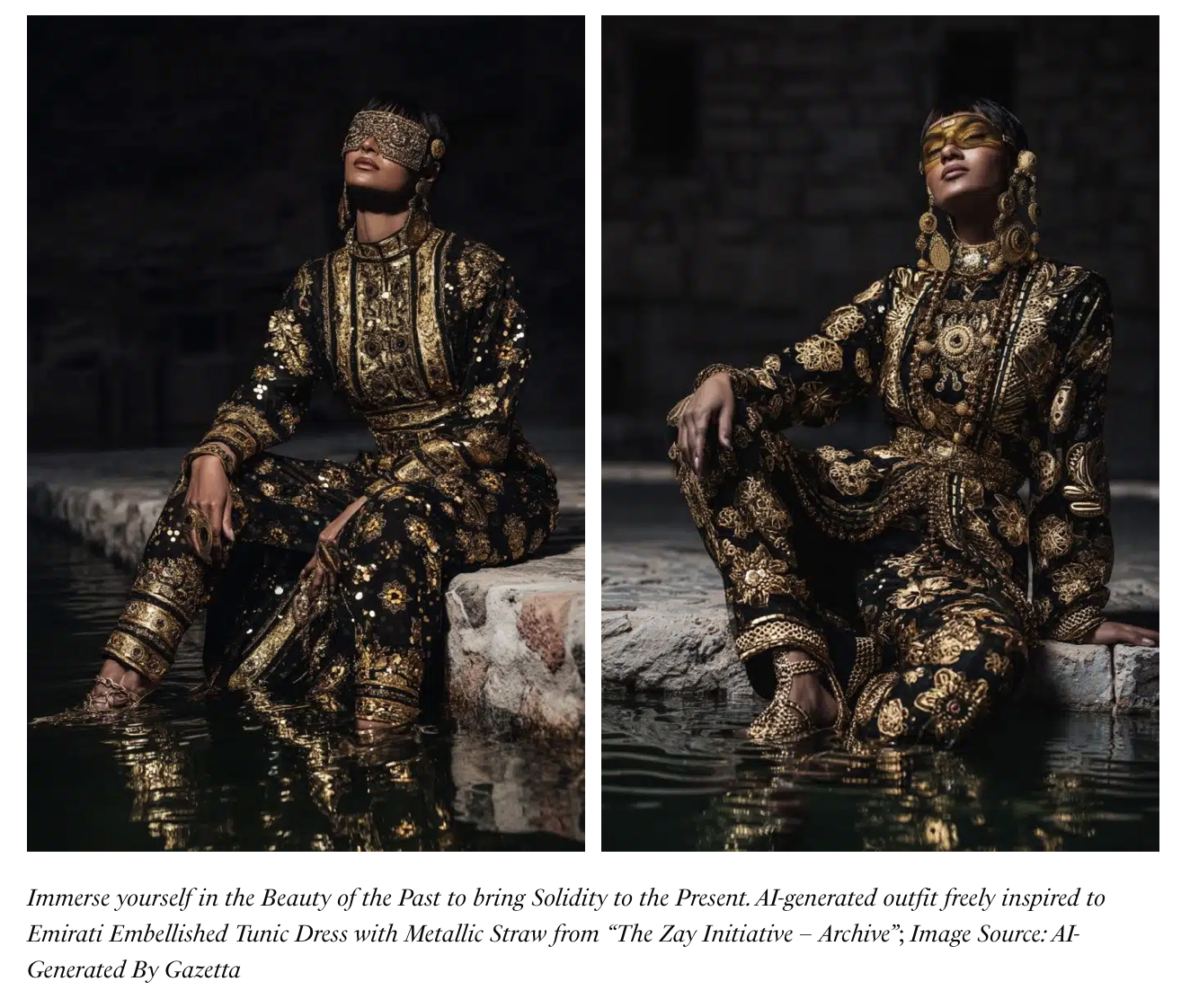
In the first part of this series, we explored how a US based e-zine Gazetta and The Zay Zay: (Arabic: costume, Pl. azyaā’), a set of clothes in a style typical of a particular country or historical period. Initiative came together through a shared interest in bridging tradition and modernity. We traced Manuela’s background, her discovery of The Zay Zay: (Arabic: costume, Pl. azyaā’), a set of clothes in a style typical of a particular country or historical period.’s archive, and her decision to reinterpret historical garments using artificial intelligence rather than simply document them. That discussion revealed AI as a creative mediator – one capable of opening new dialogues between past and present.
In this second part, the conversation widens. Here, we turn toward the broader implications of AI in academia, sustainability, and museum curation, and consider how these tools might reshape not only how heritage is displayed, but how it is taught, preserved, and ethically extended into the future.
AI in Academia and Curatorial Practice
Q: What is your perspective on the role of artificial intelligence in academia and curation?
Manuela:“I remember telling Dina Yasina, our editor-in-chief, that we had created something truly groundbreaking. By starting from tradition and moving forward, we demonstrated how the past and the present can genuinely coexist. Today, sustainability is at the centre of so many discussions, and this work is part of that dialogue. It’s not only about preserving tradition – it’s about sustaining it.”
For Manuela, AI’s value lies in its capacity to reframe education.
“I believe this type of work should be introduced across academies, specially fashion academies. It’s an innovative way to use artificial intelligence – combining technology with tradition rather than opposing them.”
She contrasts this approach with the relentless pursuit of novelty.
“We are constantly looking for new fabrics and materials – often producing things that are visually fascinating but poor in quality or longevity. Instead, we should reflect on what our ancestors achieved, often under conditions of scarcity, and consider how we can continue that legacy using today’s tools.”
Sustainability Beyond Materials
In this context, sustainability extends beyond textiles or production methods. It becomes a question of cultural continuity.
“Tradition plus innovation,” Manuela says. “Starting from the past to create something new.”
This philosophy challenges the disposable logic of fast fashion and surface-level innovation. By revisiting historical garments and techniques through AI, designers, students, and curators are encouraged to engage with depth rather than speed.
Imagining the Museum of Tomorrow
Manuela:“In the museum sector especially, this approach could be transformative. I imagine an exhibition where historic garments are displayed alongside AI-generated reinterpretations—new forms emerging from old silhouettes.”
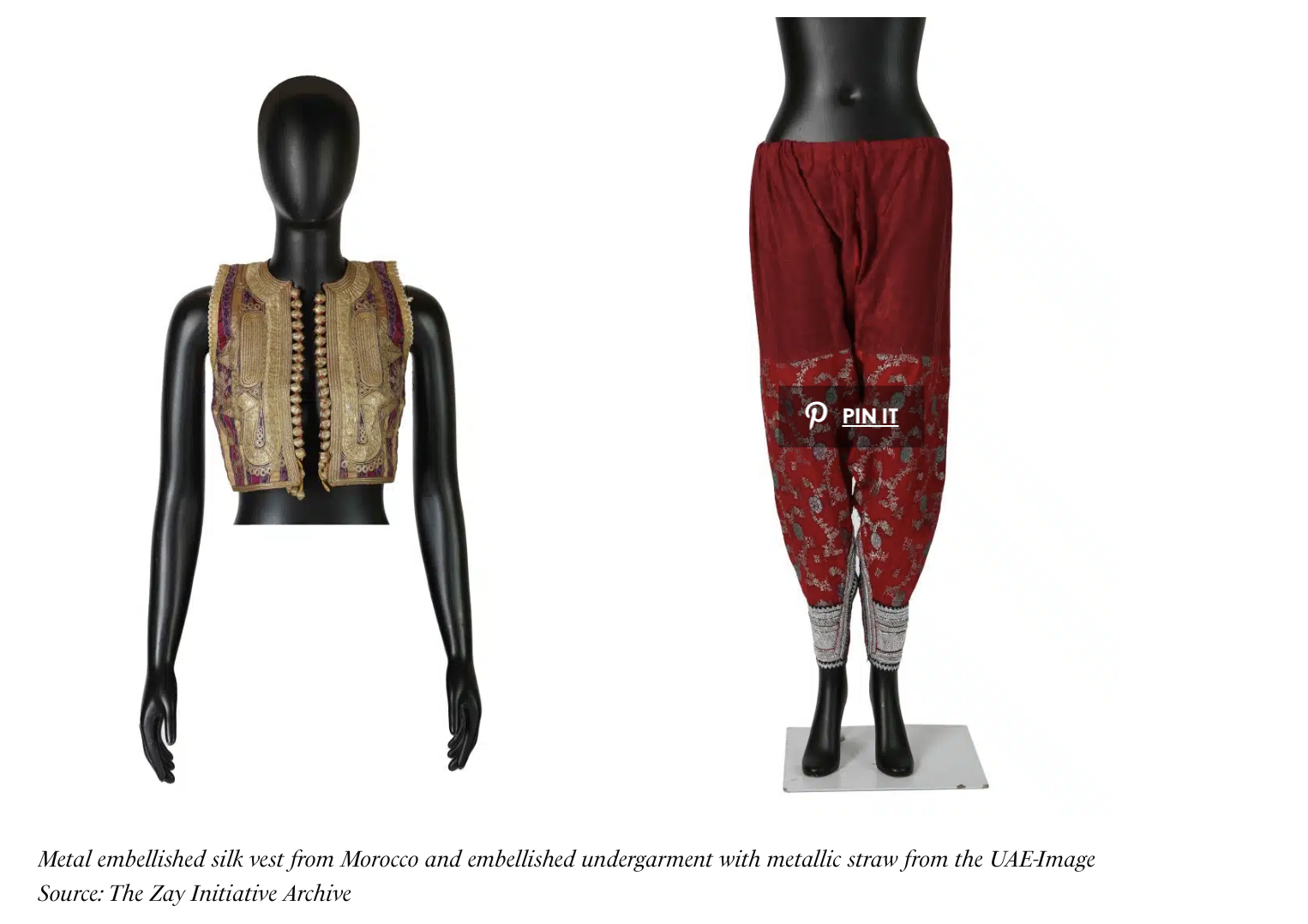
Screenshot of the story from ezine Gazetta
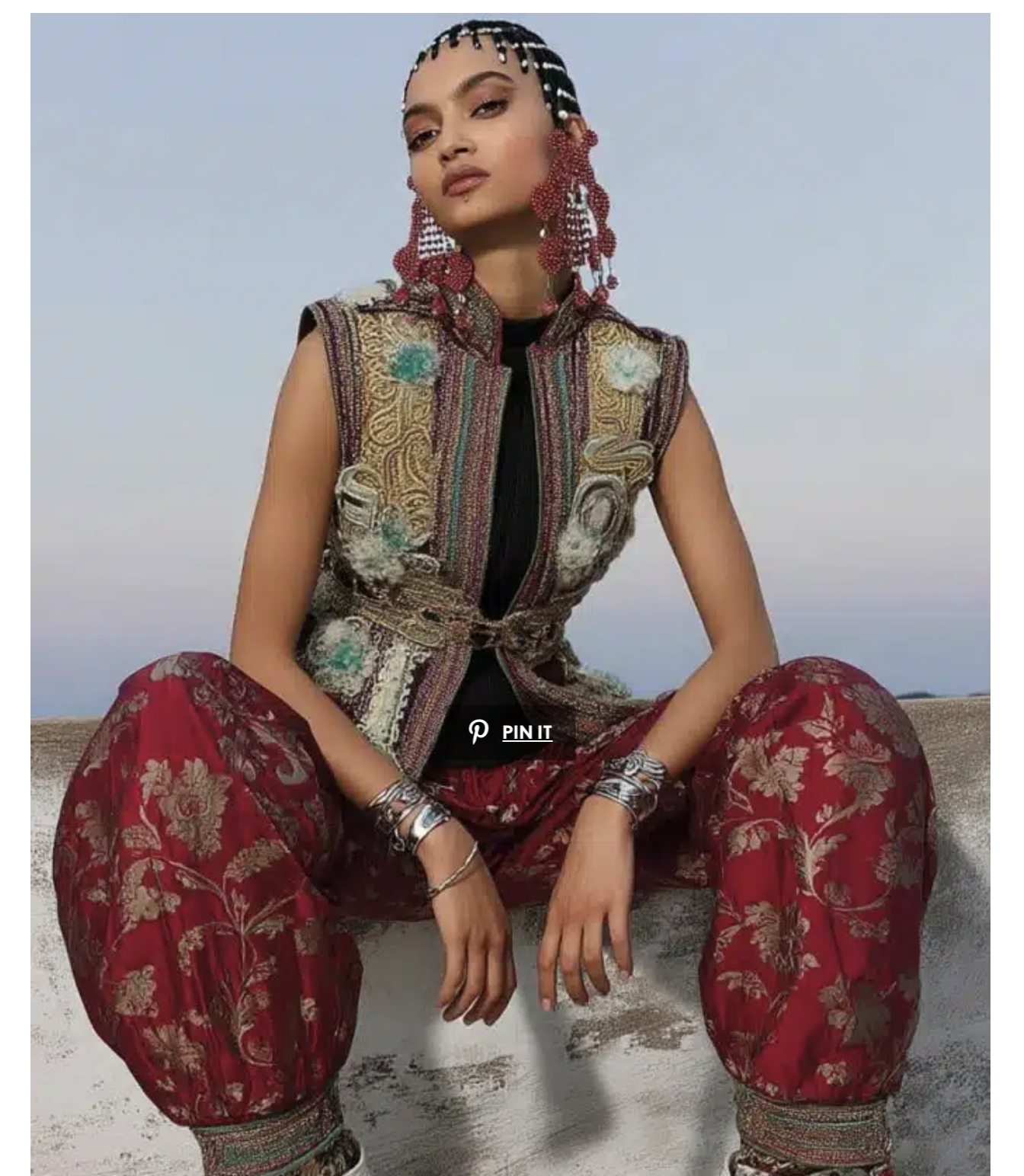
Screenshot of the story from ezine Gazetta
Such an exhibition would not aim to compete with original artefacts, but to extend their interpretive reach.
“It would be a visual transposition from past to present,” she continues, “allowing visitors to understand continuity rather than rupture.”
This layered display model offers a compelling alternative to traditional exhibition formats—one that speaks simultaneously to scholarship, creativity, and public engagement.
The Zay Zay: (Arabic: costume, Pl. azyaā’), a set of clothes in a style typical of a particular country or historical period. Initiative as a Living Archive
Within this vision, The Zay Zay: (Arabic: costume, Pl. azyaā’), a set of clothes in a style typical of a particular country or historical period. Initiative occupies a unique position. Its archive of historic dress is not treated as a closed collection, but as a living resource – one capable of inspiring new forms of research, design, and storytelling.
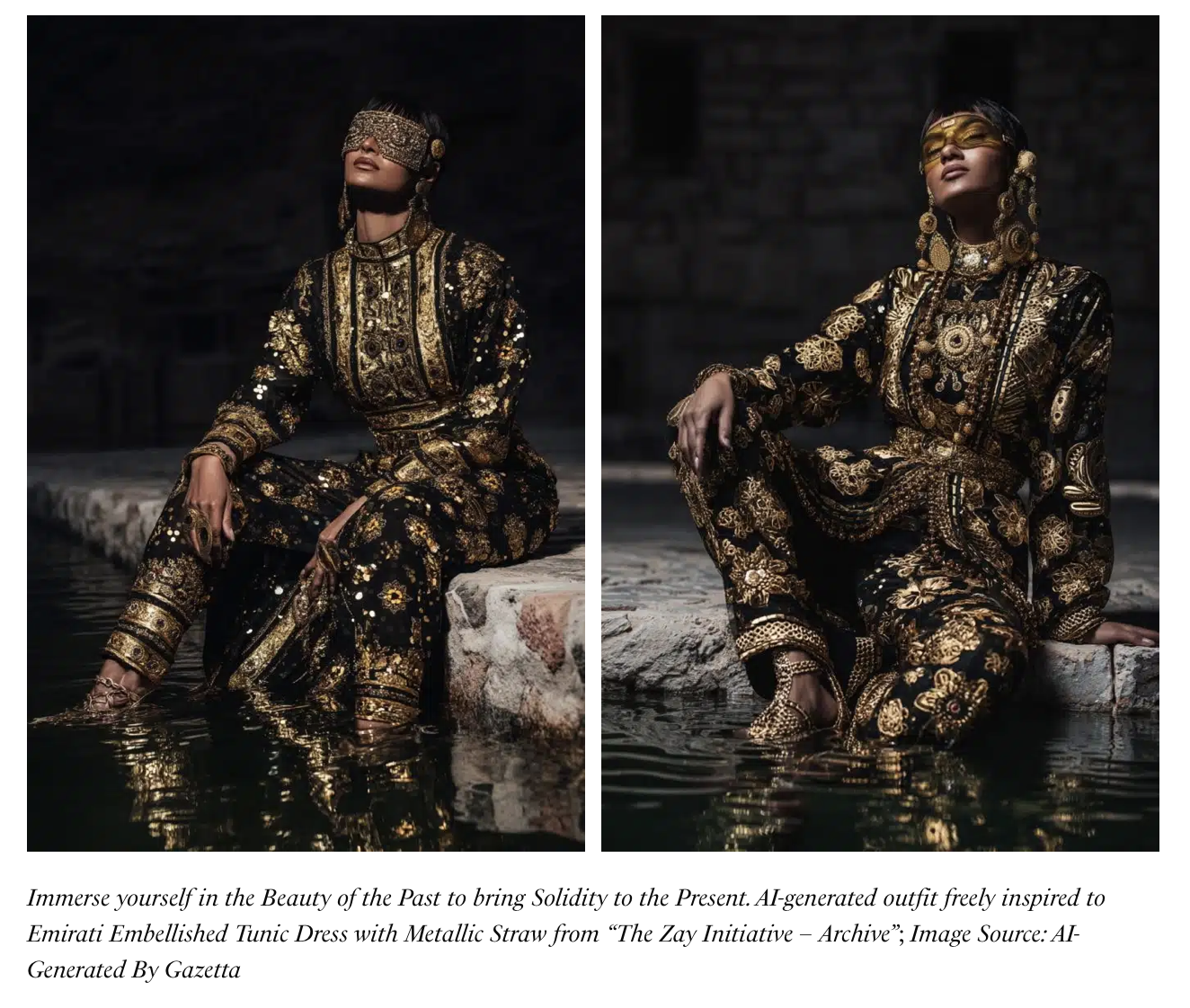
Screenshot of the story from ezine Gazetta
By engaging with AI thoughtfully, The Zay Zay: (Arabic: costume, Pl. azyaā’), a set of clothes in a style typical of a particular country or historical period. demonstrates how technology can be aligned with cultural responsibility. Rather than erasing context, it deepens it. Rather than accelerating consumption, it encourages reflection.
Conclusion: Toward a Responsible Future
As artificial intelligence continues to influence how we learn, curate, and create, the question is no longer whether it belongs in cultural institutions, but how it should be used. The collaboration between Gazetta and The Zay Zay: (Arabic: costume, Pl. azyaā’), a set of clothes in a style typical of a particular country or historical period. Initiative offers a compelling answer: with intention, sensitivity, and respect for the past.
Through Manuela’s work, AI becomes a tool for sustainability, education, and continuity—one that allows tradition to evolve without being diluted. In an era defined by speed and excess, this approach invites a necessary pause, reminding us that innovation is most meaningful when it remains anchored in memory.
Together, The Zay Zay: (Arabic: costume, Pl. azyaā’), a set of clothes in a style typical of a particular country or historical period. Initiative and Gazetta point toward a future where archives are not endpoints, but beginnings—where history is not only preserved but reactivated for generations to come.