

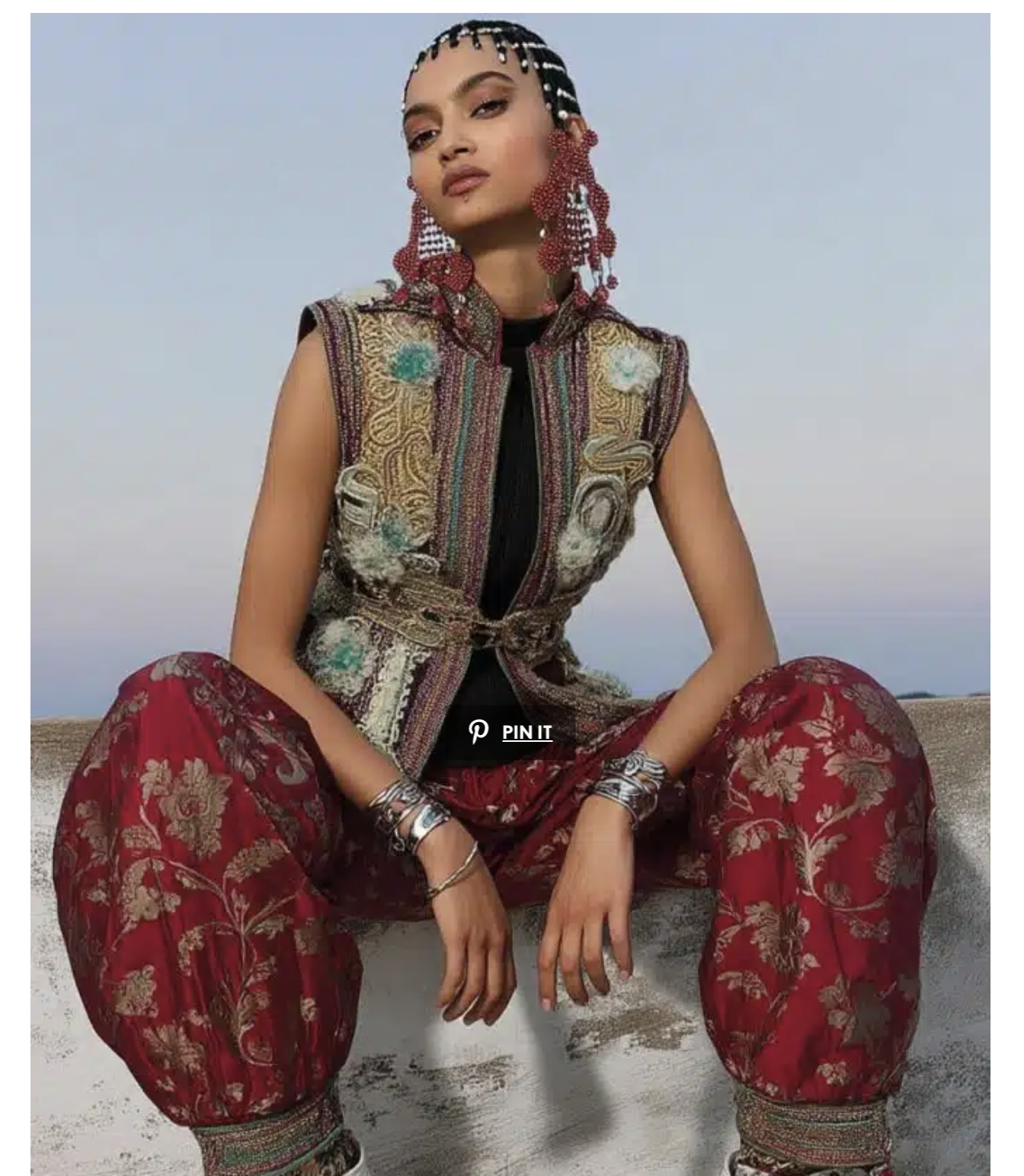
Building on the financial, technical, and institutional constraints outlined in Part i, this section shifts focus from 3D rendering as a computationally intensive practice to artificial intelligence–generated imagery as a comparatively lightweight yet conceptually complex alternative. The previous part established that while digital entertainment industries have demonstrated the visual potential of rendering historically inflected garments, such practices rely on production scales fundamentally misaligned with museum realities. Against this backdrop, Part ii examines how AI-generated images – specifically those produced for Gazetta’s feature on The Zay Zay: (Arabic: costume, Pl. azyaā’), a set of clothes in a style typical of a particular country or historical period. Initiative – reopen questions of visualisation, interpretation, and accuracy, while also reframing digital imagery as a tool for engagement rather than authoritative reconstruction.
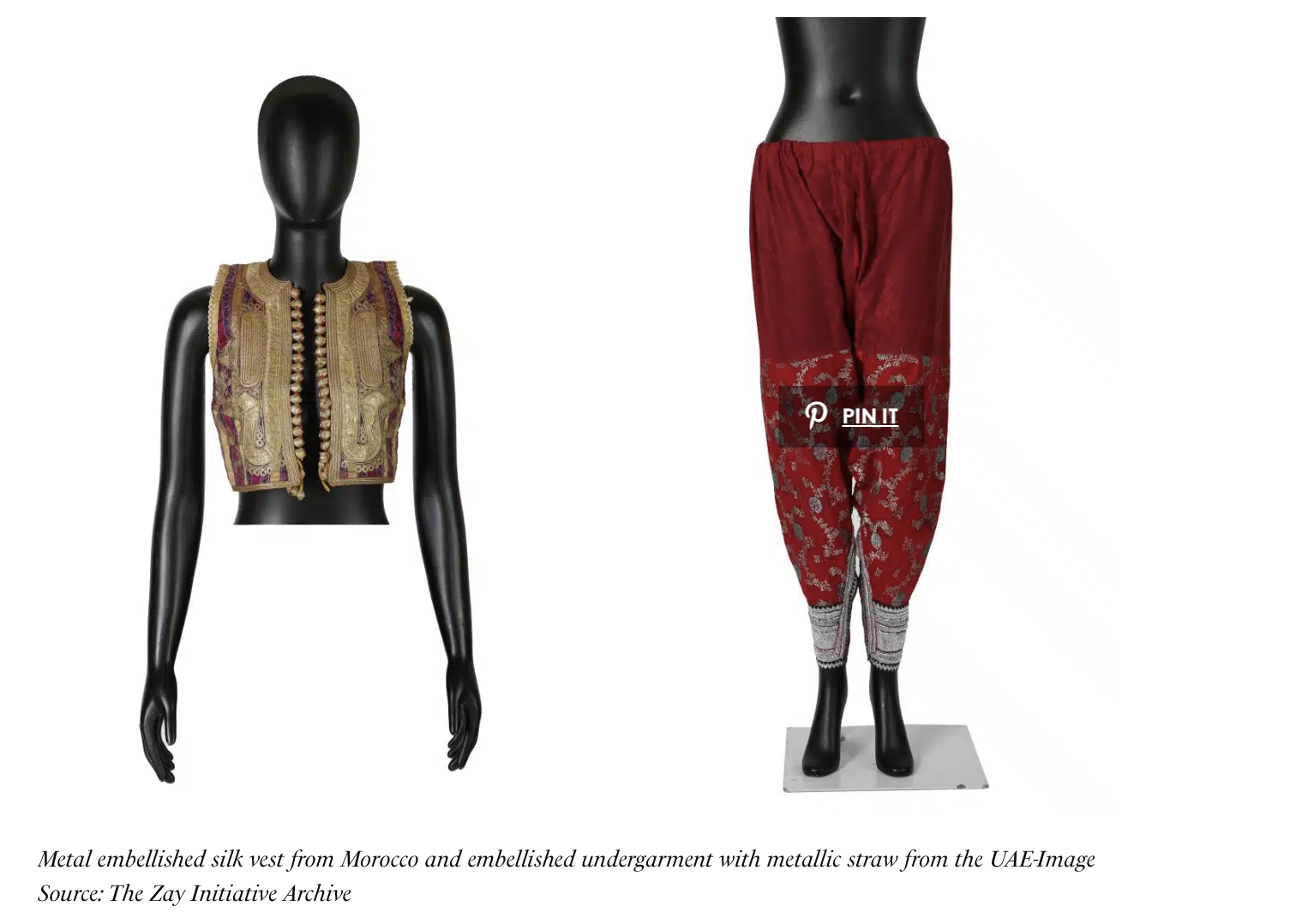
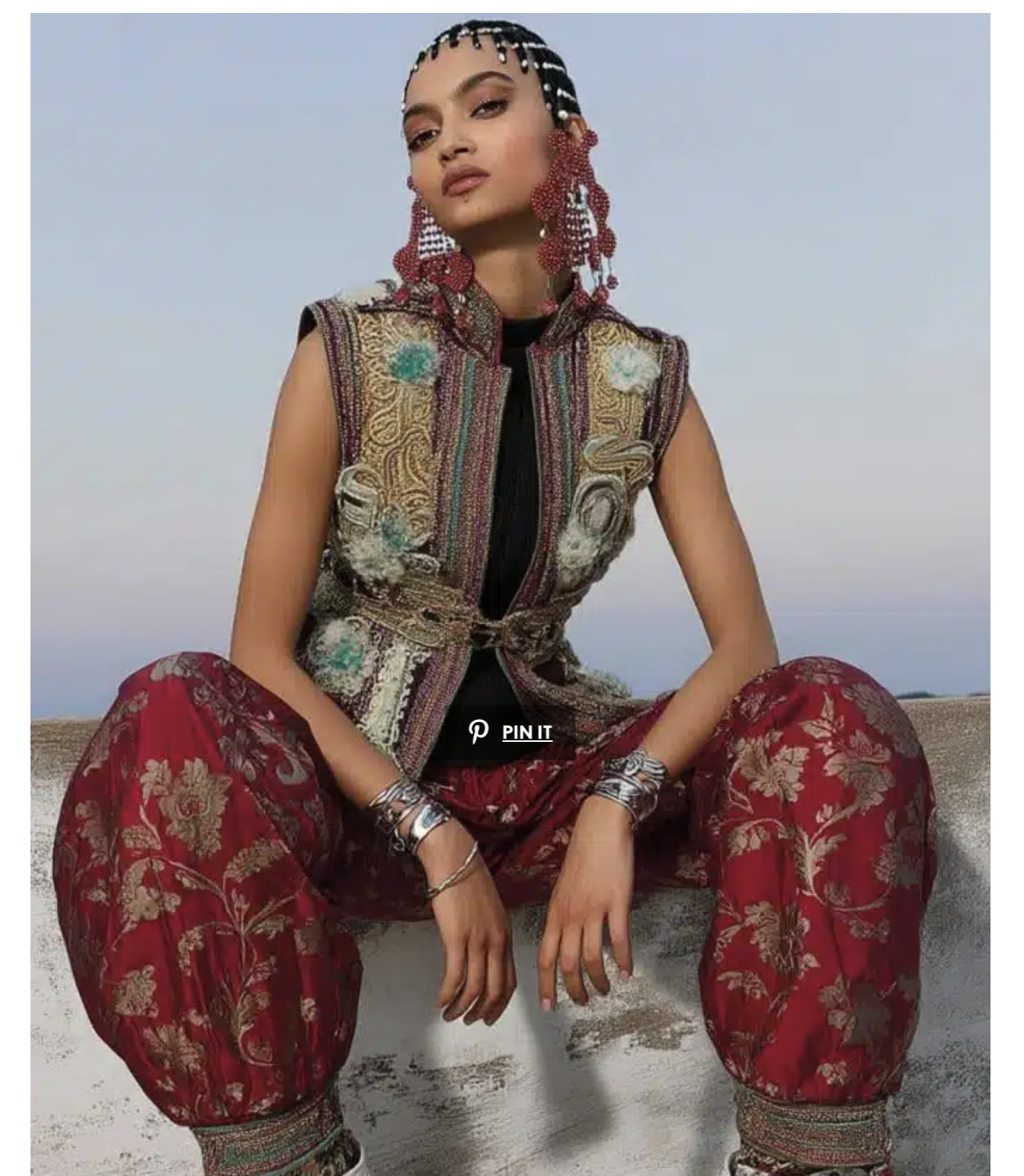
Screenshots from Gazetta showing reimagined drapes from original using AI
Against this backdrop, Gazetta’s AI generated images offered a partial realization of the visual possibilities that earlier 3D imaging experiments had aimed to achieve. At the same time, they foregrounded an unresolved methodological question: namely, whether artificial intelligence can render garments draped on bodies with sufficient historical and cultural accuracy.
In this context, it may be argued that the digital entertainment industry – particularly video game development – has already demonstrated a capacity to render three-dimensional representations of draped garments on bodies, as evidenced by several historically themed games discussed above. Many of these titles are situated within clearly defined historical settings and draw explicitly on the visual cultures of specific periods.
For instance, successive instalments of the Assassin’s Creed franchise are anchored in distinct historical contexts, including Assassin’s Creed Origins, set during the late Ptolemaic period in Egypt (305–30 BCE); Assassin’s Creed Odyssey, situated during the Peloponnesian War between Athens and Sparta (431–422 BCE); and Assassin’s Creed Mirage, located in Abbasid (750–1517 CE) Baghdad.
However, such examples also underscore a critical limitation. While the costumes in these games are broadly designed to align with the general aesthetic conventions of their respective periods, the temporal scope of each setting often encompasses several centuries.
This approach risks producing a homogenized visual identity of dress that obscures historical variability. In practice, clothing and fashion in these societies evolved with considerable dynamism, not unlike contemporary fashion systems. To take Assassin’s Creed Mirage as a case in point, if the narrative is implicitly situated within the periods when Baghdad functioned as the Abbasid capital (762–836 CE and 892–1258 CE), the game effectively collapses approximately four and a half centuries of sartorial change into a single, unified visual language. Such compression, while effective for gameplay and narrative coherence, inevitably departs from historical accuracy and highlights the challenges inherent in digitally rendering dress with both aesthetic cohesion and precise temporal specificity.

Assassin’s Creed Mirage: Launch Trailer (Official); Ubisoft
While the answer remains uncertain (and likely negative under current technological and financial limitations) the experiment nonetheless points to the potential of AI generated imagery as a tool for sustainable education and public engagement. Rather than serving as a substitute for scholarly reconstruction, such visualizations may function as speculative and interpretive devices, expanding access to collections and fostering broader awareness while remaining clearly differentiated from historically authoritative representations.