

Author Dr Reem Tariq
Ṭariq: (Arabic; Synonym: tulle_bi_talli
Tūlle_bi_tallī: (French: Tulle – a city in France where fine material for veil was first made; Turkish: tel – wire; Synonym: tariq; talli; badla; khus_dozi ), series of small metal knots made on a woven net ground as embellishment. The term is commonly used in the North African Arab region specifically in Egypt.
Co authored and Edited by Rajrupa Das
Izār: (Arabic: azar: to support and strengthen, synonyms: wizrah
Wizrah: (Arabic: small garment, synonyms: izār, wizār, fūṭah), refers to a loincloth wrapped around the lower half of the body, between the navel and the knee. Known in the Arabian Peninsula, Iraq, the Horn of Africa (Somalia, Somaliland, Djibouti, Ethiopia, and Eritrea), Indonesia, Malaysia, Bangladesh, Pakistan, and countries in some parts of East Africa and in India., wizār, fūṭah, sharshaf
Sharshaf: (Ottoman Turkic: çarsaf – bed sheet; Synonym: mlaya, mlyaya, sharsaf), a set of large cloth usually used as a body wrap by women in public.
The final part of this series brings together the historical, comparative, and case-based analyses developed in the preceding sections to examine the mechanisms that enabled the circulation and endurance of draped garments across Afro-Asia. Focusing on trade, migration, technological transfer, and symbolic reuse, it elucidates how shared material forms were continuously reworked within diverse cultural contexts.
This concluding section also reflects on future research directions, emphasizing the value of micro-comparative approaches that integrate archival documentation, material analysis, and ethnographic inquiry in the study of textile histories.
3.1 Mechanisms Linking Draped Garments: Trade, Migration, Technology, and Symbolic Reuse
The circulation and interrelation of draped garments across the Indian Ocean world were enabled by a set of interconnected mechanisms encompassing commerce, mobility, technological transfer, and symbolic transformation. Foremost among these was maritime textile trade. From the early modern period onward, South Asia – particularly production centres along the Coromandel Coast and in Mumbai (Bombay) – functioned as a major exporter of cotton textiles and printed cloths. These materials entered Arabian and East African port cities, where they were cut, reprinted, overdyed, or otherwise repurposed for local forms of dress. The Swahili term merikani, used to denote American or foreign cottons in Zanzibar, alongside documented imports of Indian kerchiefs, provides concrete evidence of these material flows.
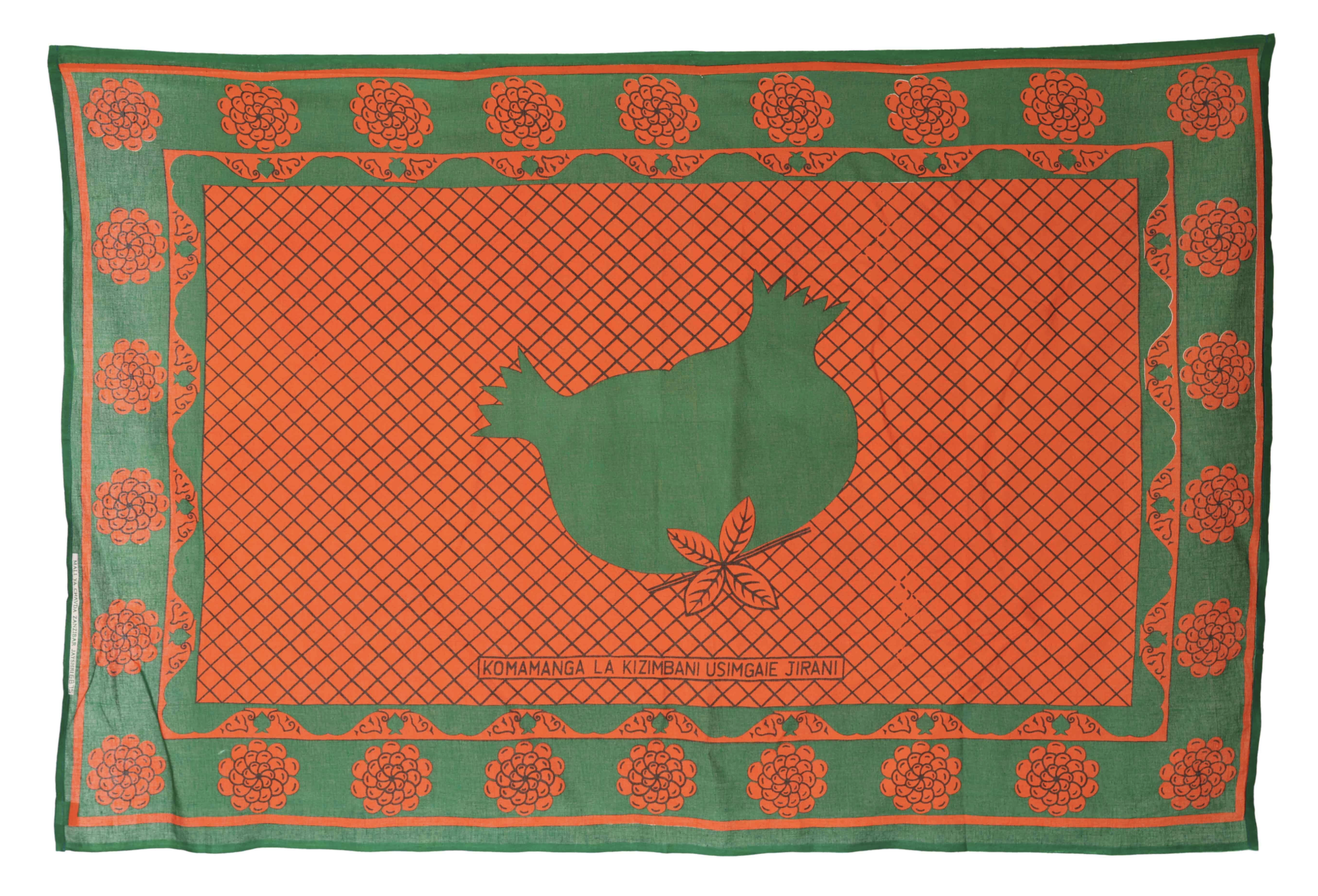
Printed Fabric (merikani type), Zanzibar, Tanzania, c. 21st century; ZI2022.501009.4 AFRICA; The Zay Zay: (Arabic: costume, Pl. azyaā’), a set of clothes in a style typical of a particular country or historical period. Initiative
Diasporic networks of artisans and merchants further facilitated the movement of textiles and techniques. South Asian diasporas, including Gujarati and Kutch communities as well as Muslim merchant groups, in conjunction with Hadhrami trading networks, operated as intermediaries who transported not only cloth and dyes but, in some instances, embodied knowledge of wrapping practices. These mobile actors played a crucial role in embedding imported textiles within local sartorial systems.
Technological transmission constituted a third key mechanism. Block-printing and later roller-printing technologies, initially concentrated in South Asia and subsequently disseminated through industrial centres, profoundly shaped the visual grammar of garments such as the kanga and kitenge. Over time, the establishment of local printing facilities in East Africa enabled the reproduction and adaptation of these aesthetics within regional contexts.
Finally, processes of symbolic reuse transformed imported textiles into culturally specific objects. Plain commercial cloths were frequently dyed, printed with localized motifs, or inscribed with sayings – most notably the jina proverbs of the kanga – thereby converting mass-produced imports into communicative media embedded with social meaning. Together, these mechanisms elucidate how draped garments were not merely transmitted but actively reworked, allowing shared material forms to sustain diverse cultural expressions across interconnected regions.
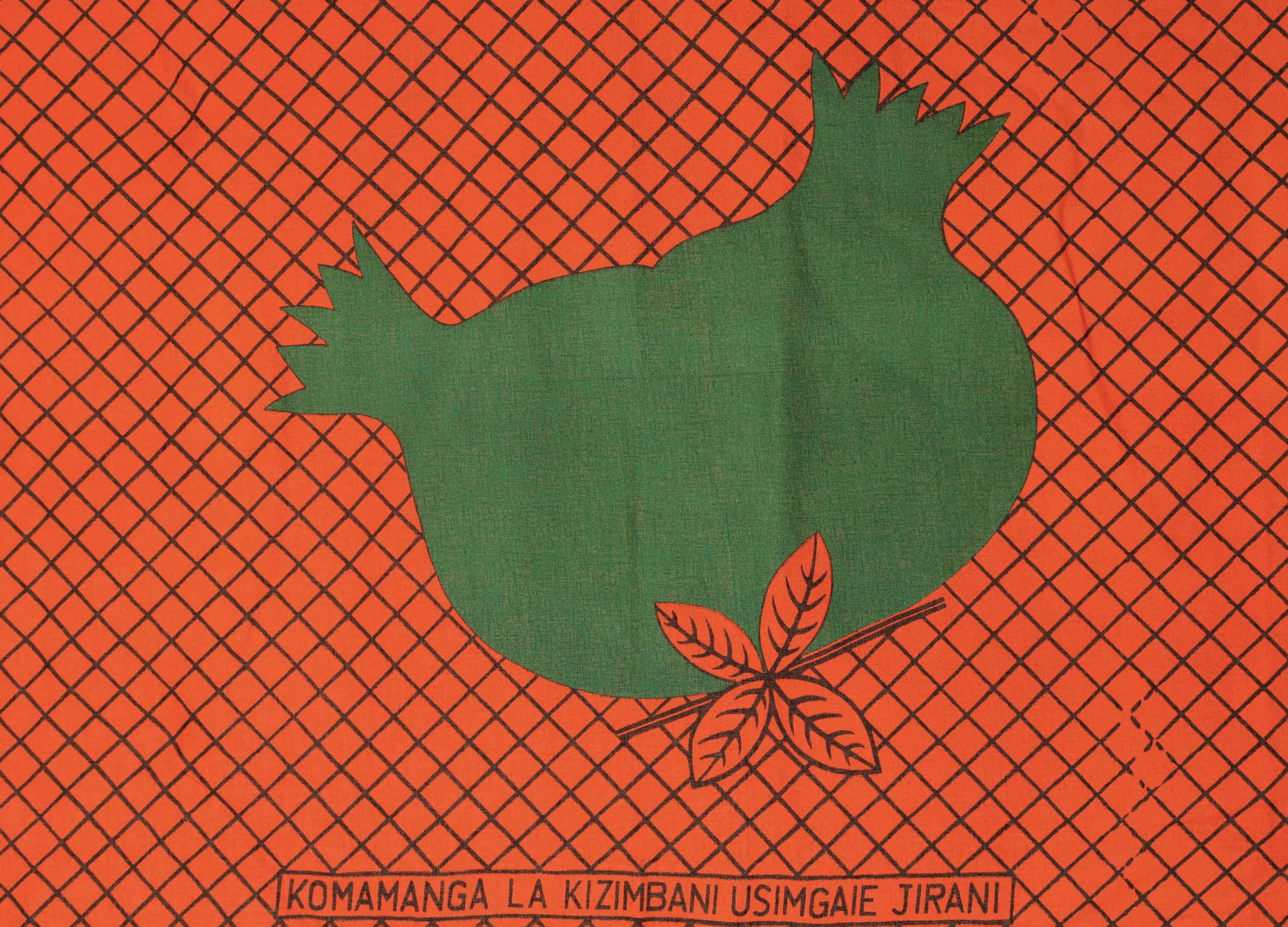
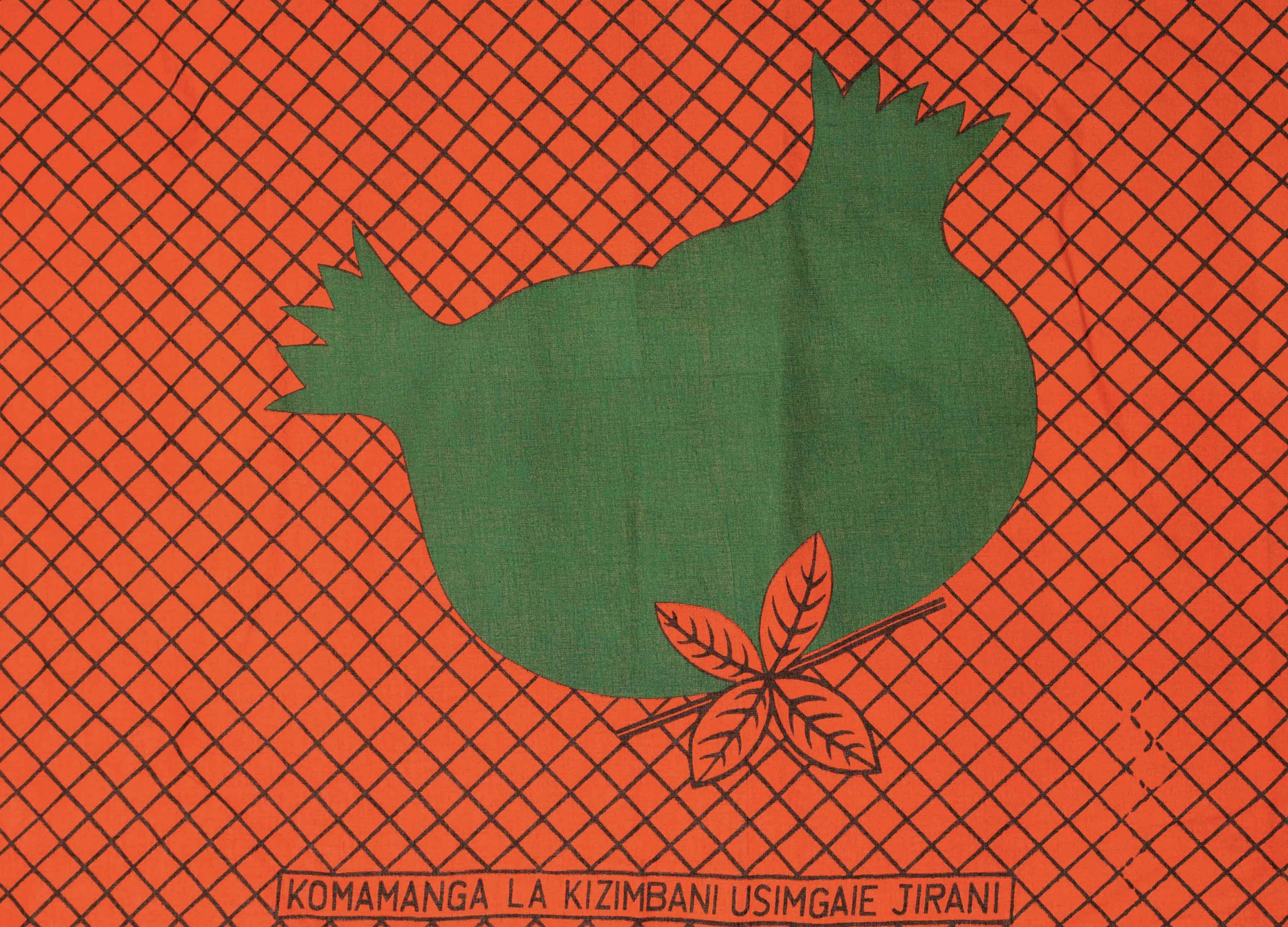
Closeup of the jina proverb on the block printed merikani type fabric, Zanzibar, Tanzania, c. 21stcentury; ZI2022.501009.4 AFRICA; The Zay Zay: (Arabic: costume, Pl. azyaā’), a set of clothes in a style typical of a particular country or historical period. Initiative
Scope for Micro-Comparative Directions in Further Archival and Field Research
While this article delineates the izar
Izār: (Arabic: azar: to support and strengthen, synonyms: wizrah
Wizrah: (Arabic: small garment, synonyms: izār, wizār, fūṭah), refers to a loincloth wrapped around the lower half of the body, between the navel and the knee. Known in the Arabian Peninsula, Iraq, the Horn of Africa (Somalia, Somaliland, Djibouti, Ethiopia, and Eritrea), Indonesia, Malaysia, Bangladesh, Pakistan, and countries in some parts of East Africa and in India., wizār, fūṭah, sharshaf
Sharshaf: (Ottoman Turkic: çarsaf – bed sheet; Synonym: mlaya, mlyaya, sharsaf), a set of large cloth usually used as a body wrap by women in public.
One promising avenue concerns the provenance of cloths preserved in dated museum collections. Comparative examination of weave structures, printing techniques, and selvedge
Selvedge: (English: Self-finished edge or self-edge: a dialect forming transition), an edge produced on woven fabric during manufacture that prevents it from unravelling. Traditionally the term selvage applied to only loom woven fabric, presently it could be applied to flat knitted fabric too. characteristics – distinguishing, for example, Indian roller-printed textiles from European chromolithographs or locally produced block prints – could refine understandings of production origins in kanga and izar
Izār: (Arabic: azar: to support and strengthen, synonyms: wizrah
Wizrah: (Arabic: small garment, synonyms: izār, wizār, fūṭah), refers to a loincloth wrapped around the lower half of the body, between the navel and the knee. Known in the Arabian Peninsula, Iraq, the Horn of Africa (Somalia, Somaliland, Djibouti, Ethiopia, and Eritrea), Indonesia, Malaysia, Bangladesh, Pakistan, and countries in some parts of East Africa and in India., wizār, fūṭah, sharshaf
Sharshaf: (Ottoman Turkic: çarsaf – bed sheet; Synonym: mlaya, mlyaya, sharsaf), a set of large cloth usually used as a body wrap by women in public.
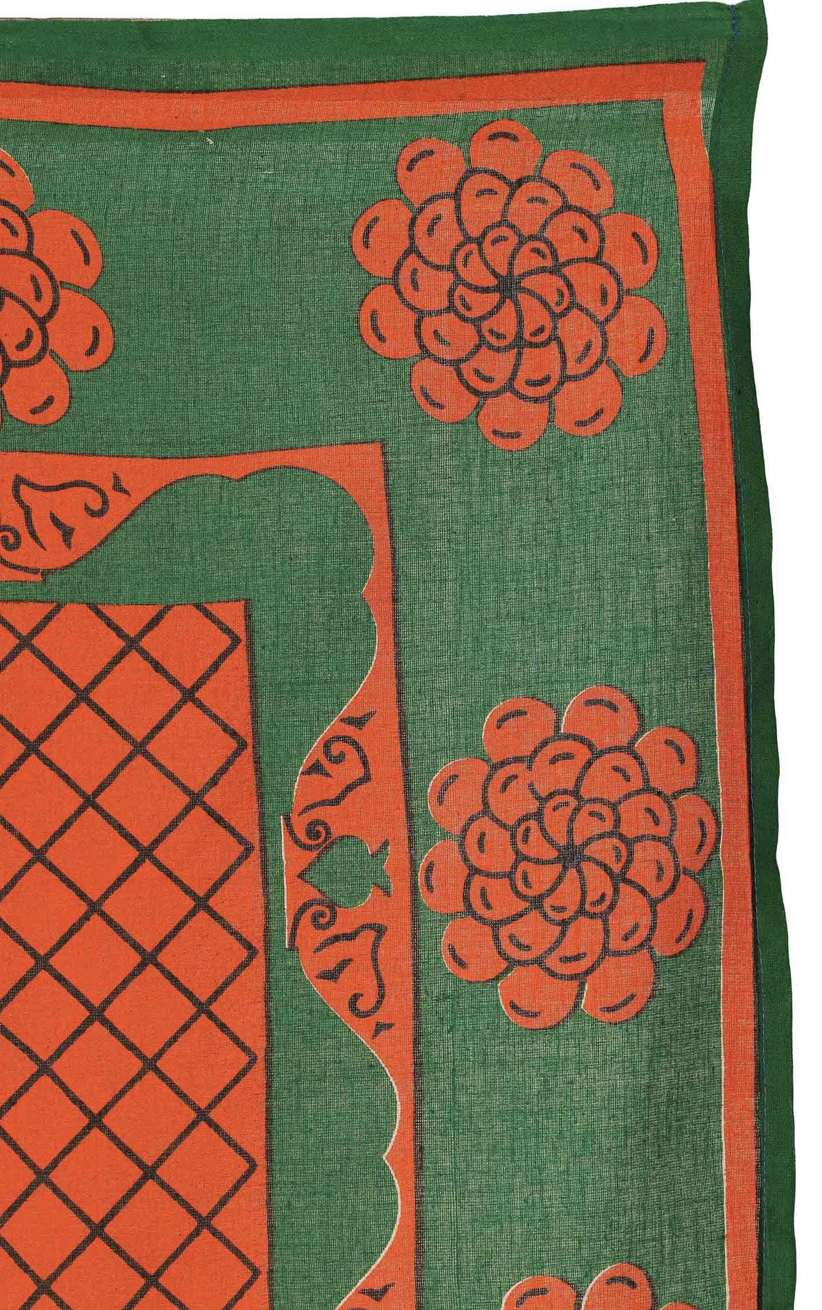
Closeup of a block printed Fabric, Zanzibar, Tanzania, c. 21st century; ZI2022.501009.4 AFRICA; The Zay Zay: (Arabic: costume, Pl. azyaā’), a set of clothes in a style typical of a particular country or historical period. Initiative
A second line of inquiry involves merchant correspondence and customs records. Systematic analysis of shipping manifests, invoices, and port documentation may allow scholars to trace consignments of “kerchiefs” or lenços, merikani cottons, and printed textile lengths to specific nodes such as Mumbai (Bombay), Muscat, and Zanzibar from the eighteenth through the twentieth centuries, thereby clarifying the temporal and spatial dynamics of textile circulation.
Additionally, this series is limited to an examination of the izār’s significance, influence, formal affinities and divergences, and material applications in relation to East Africa and the Indian Ocean trade networks, broadly understood as part of the global East. Comparative analysis of the izār within Greco-Roman and Byzantine sartorial traditions, as well as across the wider Mediterranean world in antiquity, remains a promising and as yet underexplored field for future research.
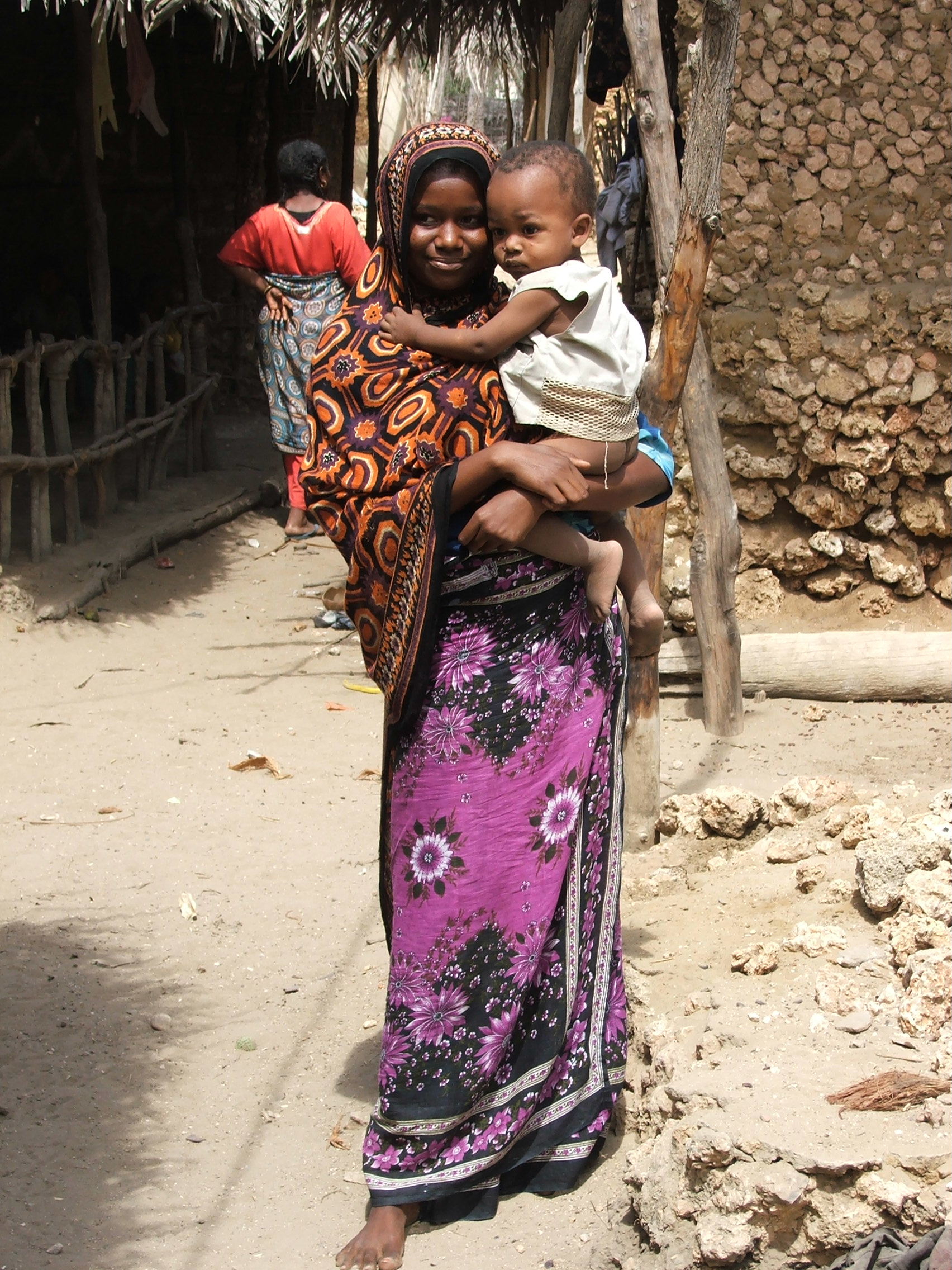
Woman in kanga from Siyu on the Pate Island in Kenya, Kenya, c.2005; Pic. Credit: Petr Berka; Source: Wikimedia Commons
Finally, gendered use-histories warrant closer comparative attention. Investigating how women employed kangas as communicative media through inscribed proverbs, in contrast to women’s uses of the izar
Izār: (Arabic: azar: to support and strengthen, synonyms: wizrah
Wizrah: (Arabic: small garment, synonyms: izār, wizār, fūṭah), refers to a loincloth wrapped around the lower half of the body, between the navel and the knee. Known in the Arabian Peninsula, Iraq, the Horn of Africa (Somalia, Somaliland, Djibouti, Ethiopia, and Eritrea), Indonesia, Malaysia, Bangladesh, Pakistan, and countries in some parts of East Africa and in India., wizār, fūṭah, sharshaf
Sharshaf: (Ottoman Turkic: çarsaf – bed sheet; Synonym: mlaya, mlyaya, sharsaf), a set of large cloth usually used as a body wrap by women in public.
Conclusion
The izar
Izār: (Arabic: azar: to support and strengthen, synonyms: wizrah
Wizrah: (Arabic: small garment, synonyms: izār, wizār, fūṭah), refers to a loincloth wrapped around the lower half of the body, between the navel and the knee. Known in the Arabian Peninsula, Iraq, the Horn of Africa (Somalia, Somaliland, Djibouti, Ethiopia, and Eritrea), Indonesia, Malaysia, Bangladesh, Pakistan, and countries in some parts of East Africa and in India., wizār, fūṭah, sharshaf
Sharshaf: (Ottoman Turkic: çarsaf – bed sheet; Synonym: mlaya, mlyaya, sharsaf), a set of large cloth usually used as a body wrap by women in public.
From the urban landscapes of medieval Cairo – where chromatic distinctions in izar
Izār: (Arabic: azar: to support and strengthen, synonyms: wizrah
Wizrah: (Arabic: small garment, synonyms: izār, wizār, fūṭah), refers to a loincloth wrapped around the lower half of the body, between the navel and the knee. Known in the Arabian Peninsula, Iraq, the Horn of Africa (Somalia, Somaliland, Djibouti, Ethiopia, and Eritrea), Indonesia, Malaysia, Bangladesh, Pakistan, and countries in some parts of East Africa and in India., wizār, fūṭah, sharshaf
Sharshaf: (Ottoman Turkic: çarsaf – bed sheet; Synonym: mlaya, mlyaya, sharsaf), a set of large cloth usually used as a body wrap by women in public. Izār: (Arabic: azar: to support and strengthen, synonyms: wizrah
Wizrah: (Arabic: small garment, synonyms: izār, wizār, fūṭah), refers to a loincloth wrapped around the lower half of the body, between the navel and the knee. Known in the Arabian Peninsula, Iraq, the Horn of Africa (Somalia, Somaliland, Djibouti, Ethiopia, and Eritrea), Indonesia, Malaysia, Bangladesh, Pakistan, and countries in some parts of East Africa and in India., wizār, fūṭah, sharshaf
Sharshaf: (Ottoman Turkic: çarsaf – bed sheet; Synonym: mlaya, mlyaya, sharsaf), a set of large cloth usually used as a body wrap by women in public.