



1 of 10
| Local Name | Qaftan |
| Object Category | Overgarment |
| Gender | Male |
| Date of object | c. mid 20th century |
| Place Of orgin | Morocco |
| Region | Morocco |
| Object Range | Morocco, Libya, Tunis, Egypt, Algeria, et al |
| Dimensions | Length: 143 cm Width: 166 cm |
| Materials | Silk Other |
| Technique | Machine Stitched Woven |
| Color | |
| Motif | Floral |
| Provenance | Purchased, Independent Dealer, London 2019 |
| Location | The Zay Zay: (Arabic: costume, Pl. azyaā’), a set of clothes in a style typical of a particular country or historical period. Initiative |
| Status | In storage |
| ZI number | ZI2019.500569 MOROCCO |
Object History
This piece was purchased by Dr. Reem Tariq
Ṭariq: (Arabic; Synonym: tulle_bi_talli
Tūlle_bi_tallī: (French: Tulle – a city in France where fine material for veil was first made; Turkish: tel – wire; Synonym: tariq; talli; badla; khus_dozi ), series of small metal knots made on a woven net ground as embellishment. The term is commonly used in the North African Arab region specifically in Egypt. Ṭariq: (Arabic; Synonym: tulle_bi_talli
Tūlle_bi_tallī: (French: Tulle – a city in France where fine material for veil was first made; Turkish: tel – wire; Synonym: tariq; talli; badla; khus_dozi ), series of small metal knots made on a woven net ground as embellishment. The term is commonly used in the North African Arab region specifically in Egypt.
Object Features
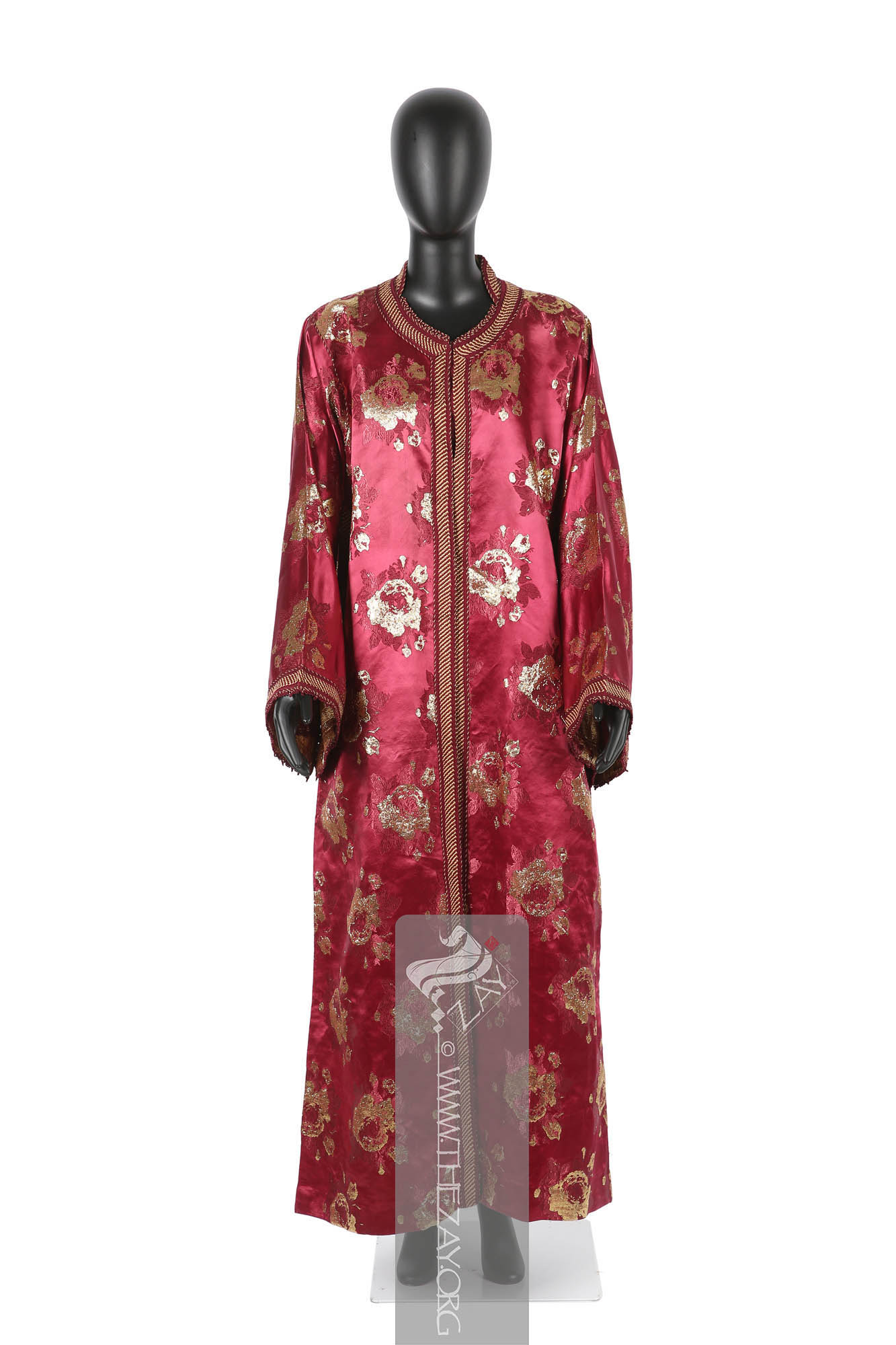
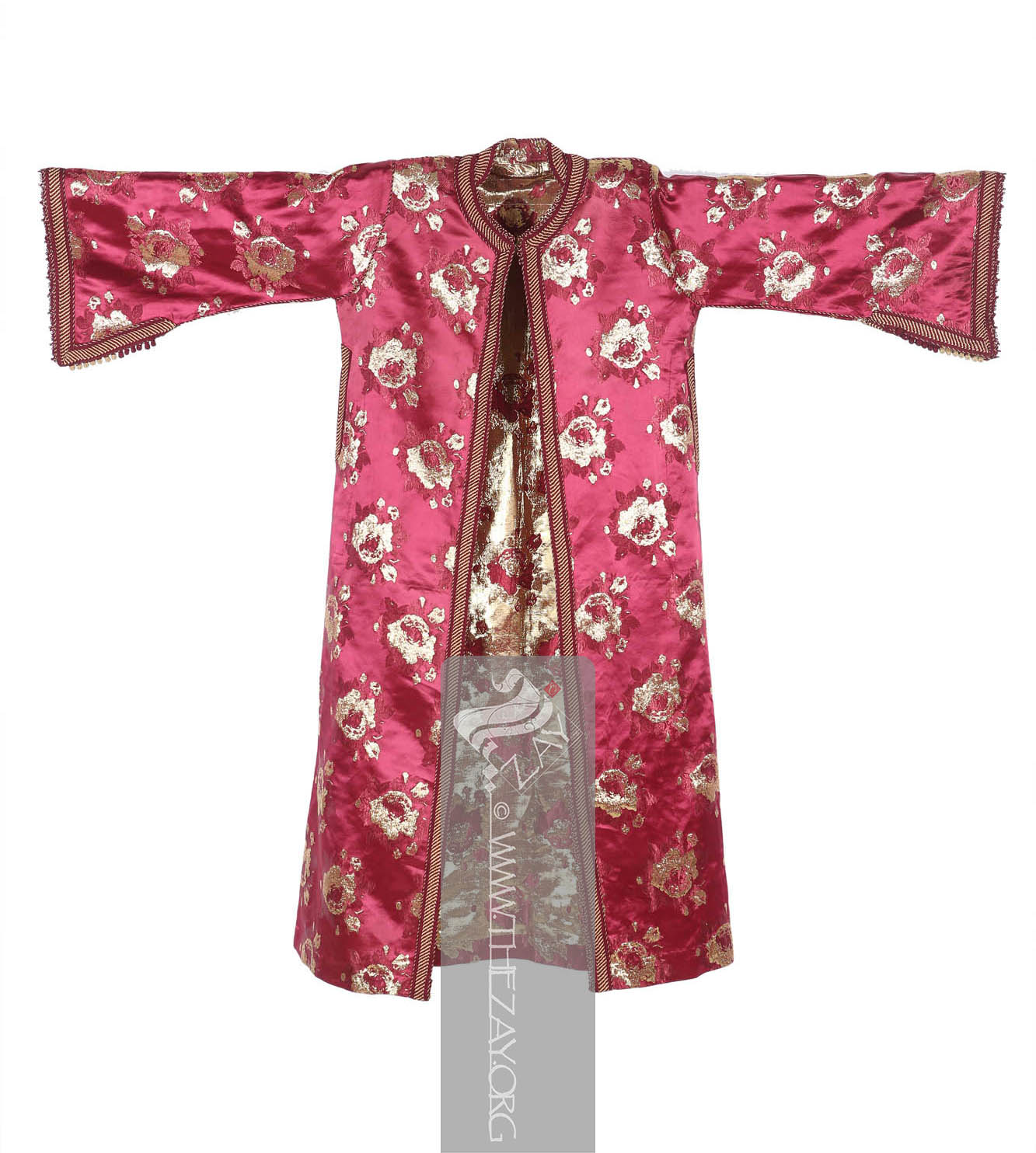
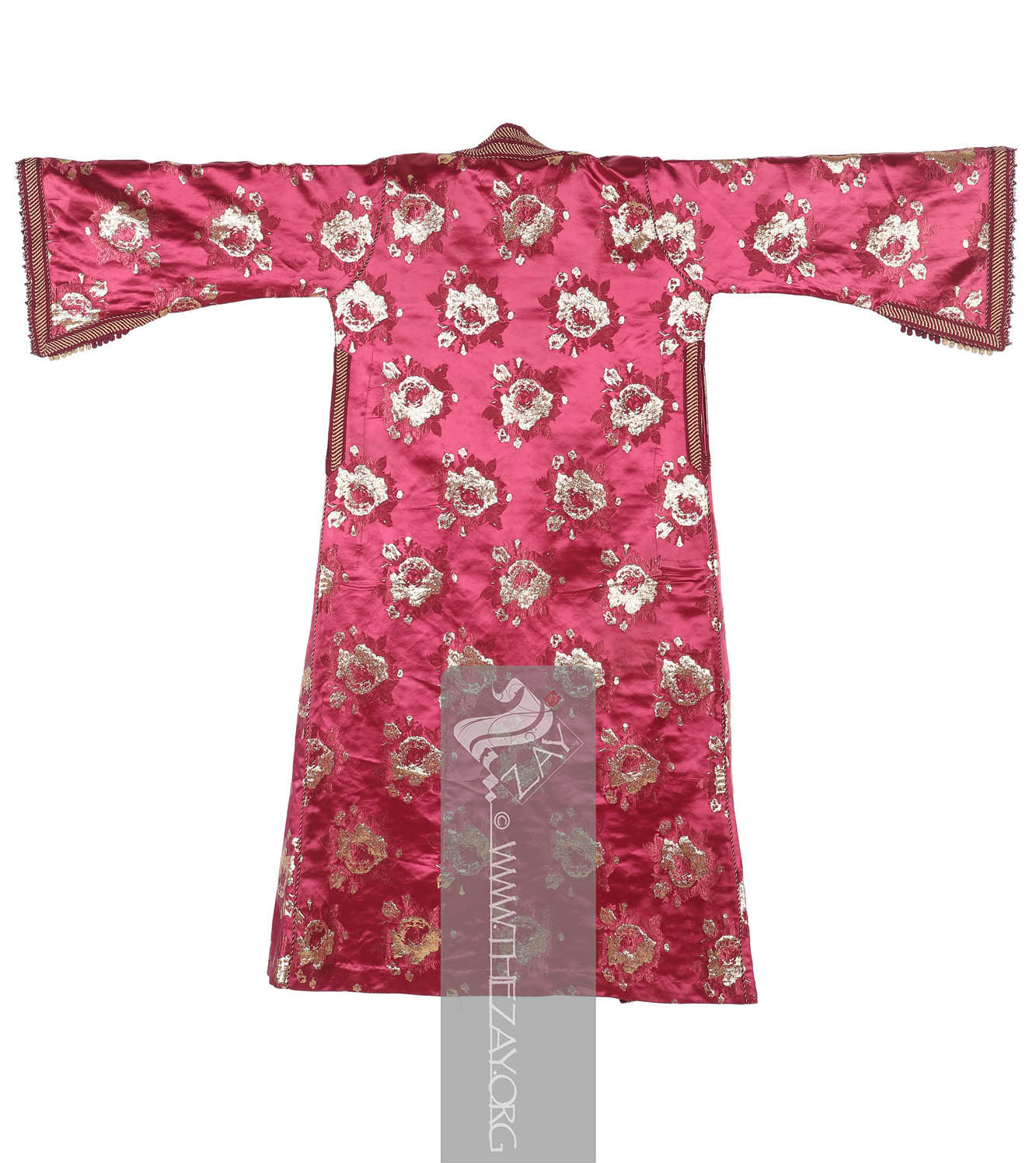
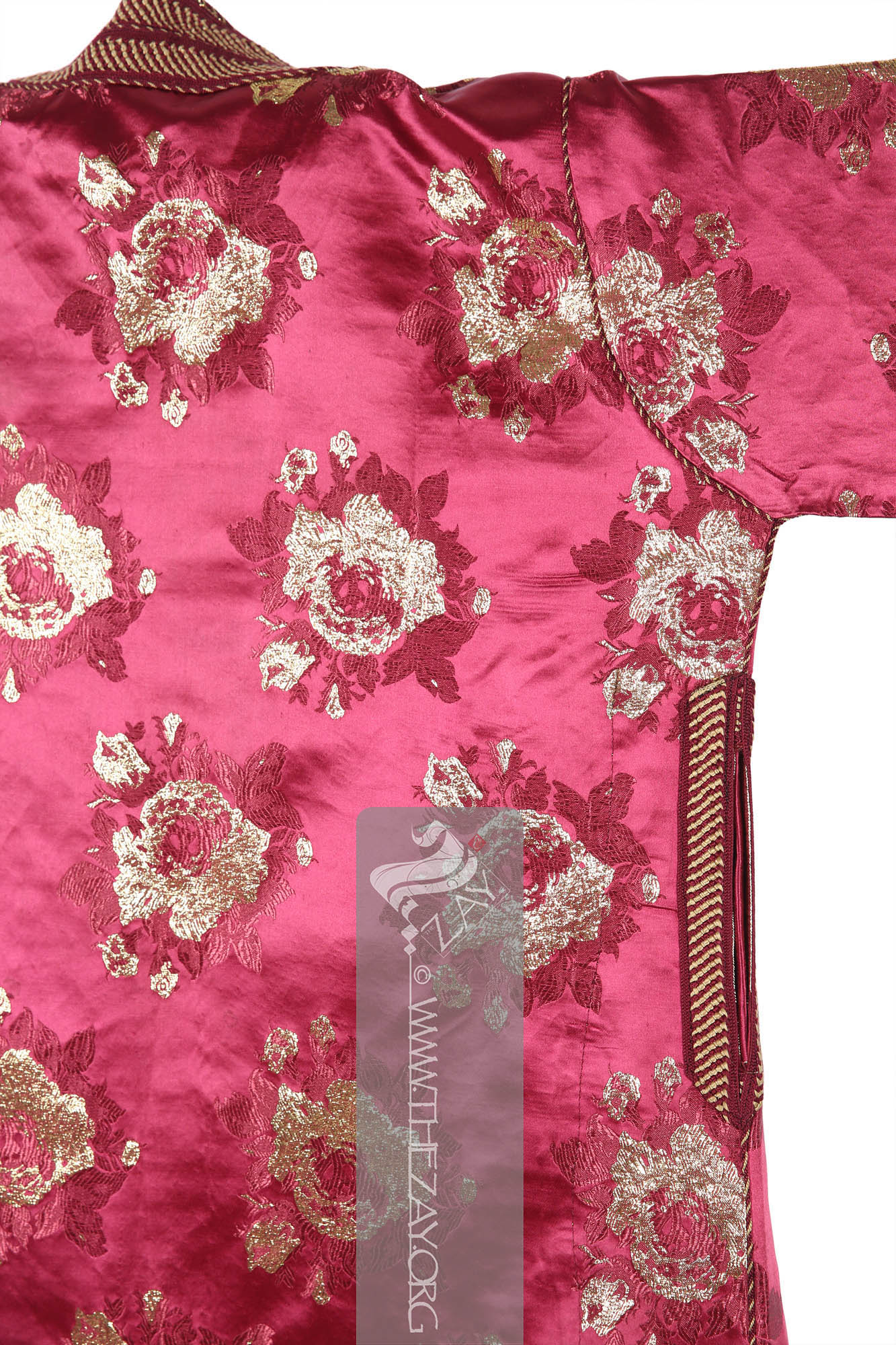
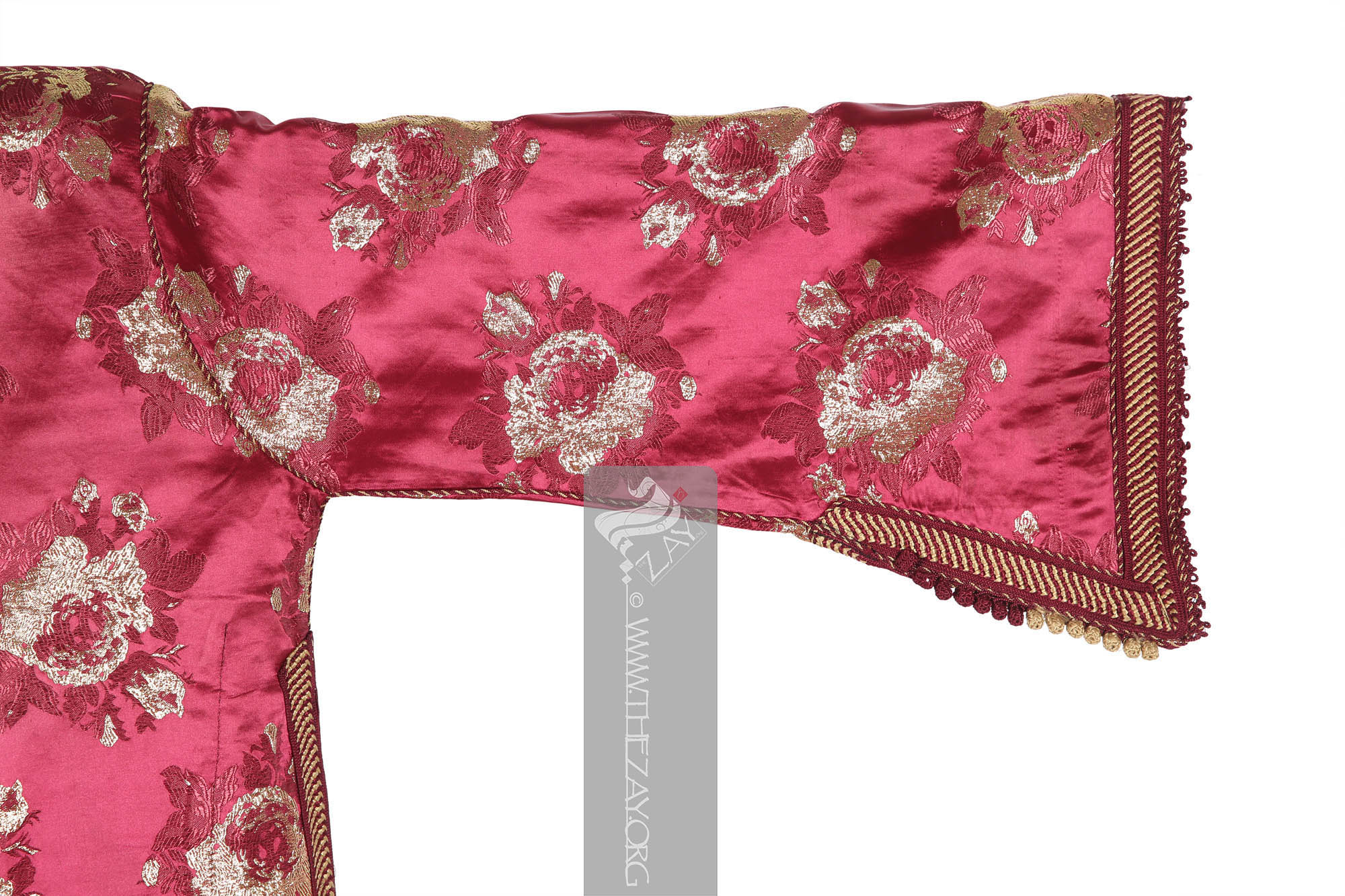
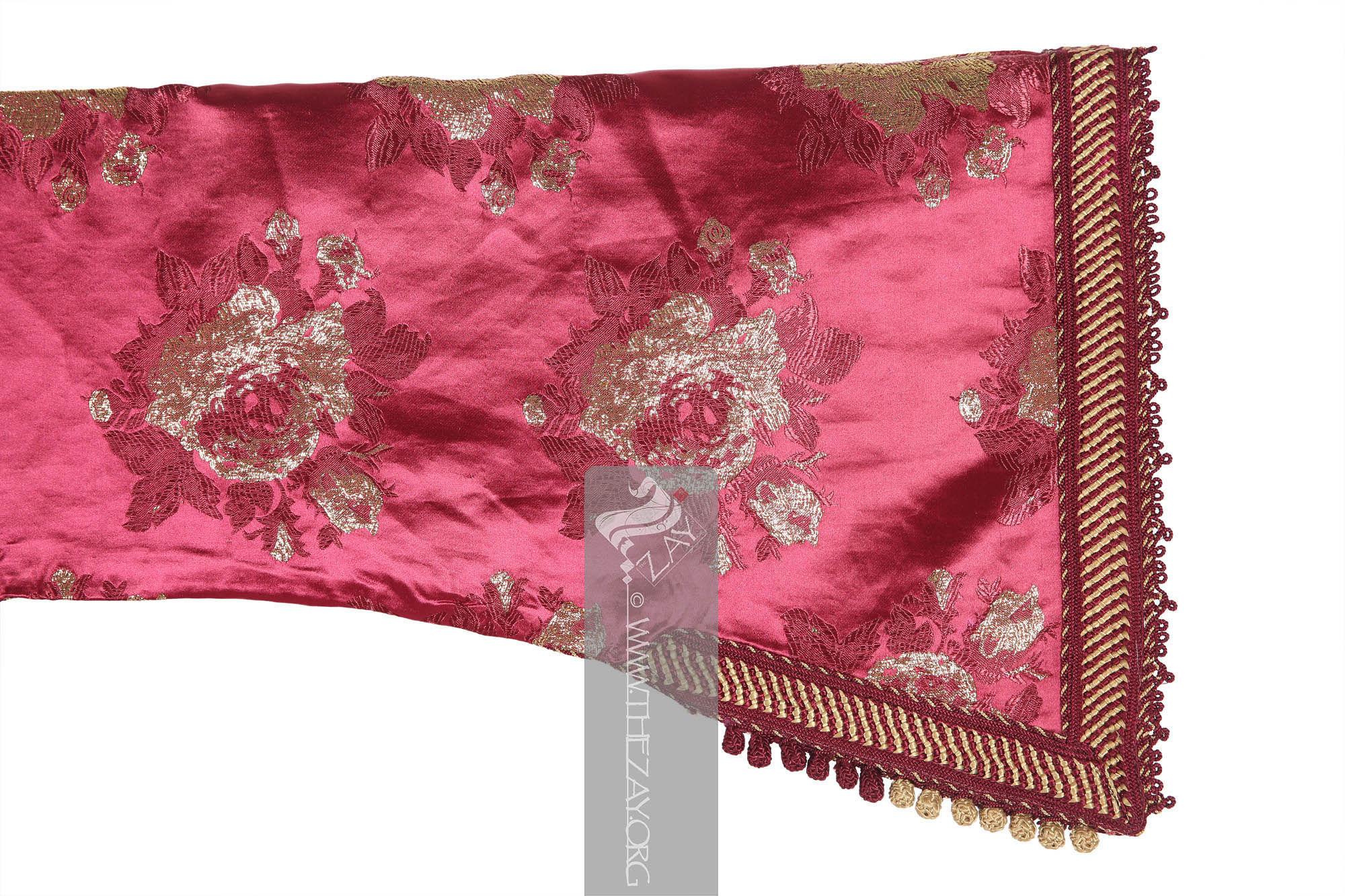
This is an ankle-length, front-open robe (qaftan
Qafṭān: (Persian: khaftān, Pl. qafāṭin, synonyms: ghandurah, qandurah
Qandūrah: (Arabic, pl. qanādīr, synonyms: ghandurah, darā’ah, dishdāshah, jalābah, jallābīyah, qaftan, mqta’, thawb
Thawb: (Arabic: thawb, Pl. Athwāb/thībān), can be pronounced thobe
Thobe: (Arabic: thawb, Pl. Athwāb/thībān), can be pronounced thawb or tobe
Tobe: (Arabic: thawb, Pl. Athwāb/thībān), can be pronounced thawb or thobe based on locale. The standard Arabic word for ‘fabric’ or ‘garment’. It can refer to a qamīs-like tunic worn by men and women in the Arabian Peninsula, Iraq, the southern and south-western ports and islands of Iran, and some countries in East and West Africa. More specifically, it can refer to the square-shaped Bedouin overgarment worn by women. based on locale. The standard Arabic word for ‘fabric’ or ‘garment’. It can also refer to a qamīs-like tunic worn by men and women in the Arabian Peninsula, Iraq, the southern and south-western ports and islands of Iran, and some countries in East and West Africa. More specifically, it can refer to the square-shaped Bedouin overgarment worn by women. or tobe
Tobe: (Arabic: thawb, Pl. Athwāb/thībān), can be pronounced thawb or thobe based on locale. The standard Arabic word for ‘fabric’ or ‘garment’. It can refer to a qamīs-like tunic worn by men and women in the Arabian Peninsula, Iraq, the southern and south-western ports and islands of Iran, and some countries in East and West Africa. More specifically, it can refer to the square-shaped Bedouin overgarment worn by women. based on locale. The standard Arabic word for ‘fabric’ or ‘garment’. It can also refer to a qamīs-like tunic worn by men and women in the Arabian Peninsula, Iraq, the southern and south-western ports and islands of Iran, and some countries in East and West Africa. More specifically, it can refer to the square-shaped Bedouin overgarment worn by women in the Arabian Gulf region. or tobe
Tobe: (Arabic: thawb, Pl. Athwāb/thībān), can be pronounced thawb or thobe based on locale. The standard Arabic word for ‘fabric’ or ‘garment’. It can refer to a qamīs-like tunic worn by men and women in the Arabian Peninsula, Iraq, the southern and south-western ports and islands of Iran, and some countries in East and West Africa. More specifically, it can refer to the square-shaped Bedouin overgarment worn by women. ), a loose, short or long-sleeved, shirt like (qamis) tunic with frontal neckline opening, worn by both sexes. Each Arab region has a different term for what is essentially a similar garment with various small differences. , drā’ah, dishdāshah, jalābah, jallābīyah, kandurah, mqta’, thawb
Thawb: (Arabic: thawb, Pl. Athwāb/thībān), can be pronounced thobe
Thobe: (Arabic: thawb, Pl. Athwāb/thībān), can be pronounced thawb or tobe
Tobe: (Arabic: thawb, Pl. Athwāb/thībān), can be pronounced thawb or thobe based on locale. The standard Arabic word for ‘fabric’ or ‘garment’. It can refer to a qamīs-like tunic worn by men and women in the Arabian Peninsula, Iraq, the southern and south-western ports and islands of Iran, and some countries in East and West Africa. More specifically, it can refer to the square-shaped Bedouin overgarment worn by women. based on locale. The standard Arabic word for ‘fabric’ or ‘garment’. It can also refer to a qamīs-like tunic worn by men and women in the Arabian Peninsula, Iraq, the southern and south-western ports and islands of Iran, and some countries in East and West Africa. More specifically, it can refer to the square-shaped Bedouin overgarment worn by women. or tobe
Tobe: (Arabic: thawb, Pl. Athwāb/thībān), can be pronounced thawb or thobe based on locale. The standard Arabic word for ‘fabric’ or ‘garment’. It can refer to a qamīs-like tunic worn by men and women in the Arabian Peninsula, Iraq, the southern and south-western ports and islands of Iran, and some countries in East and West Africa. More specifically, it can refer to the square-shaped Bedouin overgarment worn by women. based on locale. The standard Arabic word for ‘fabric’ or ‘garment’. It can also refer to a qamīs-like tunic worn by men and women in the Arabian Peninsula, Iraq, the southern and south-western ports and islands of Iran, and some countries in East and West Africa. More specifically, it can refer to the square-shaped Bedouin overgarment worn by women in the Arabian Gulf region. or tobe
Tobe: (Arabic: thawb, Pl. Athwāb/thībān), can be pronounced thawb or thobe based on locale. The standard Arabic word for ‘fabric’ or ‘garment’. It can refer to a qamīs-like tunic worn by men and women in the Arabian Peninsula, Iraq, the southern and south-western ports and islands of Iran, and some countries in East and West Africa. More specifically, it can refer to the square-shaped Bedouin overgarment worn by women. ) loose, short or long-sleeved, shirt like (qamis
Qamīṣ: (Possibly late Latin: Camisia – Linen Undergarment; Synonym: Kamiz), a traditional loose fitting long tunic or shirt worn by both men and women in South and Central Asia and the Arab world. Typically extending below the waist it is usually paired with a pair of trousers.
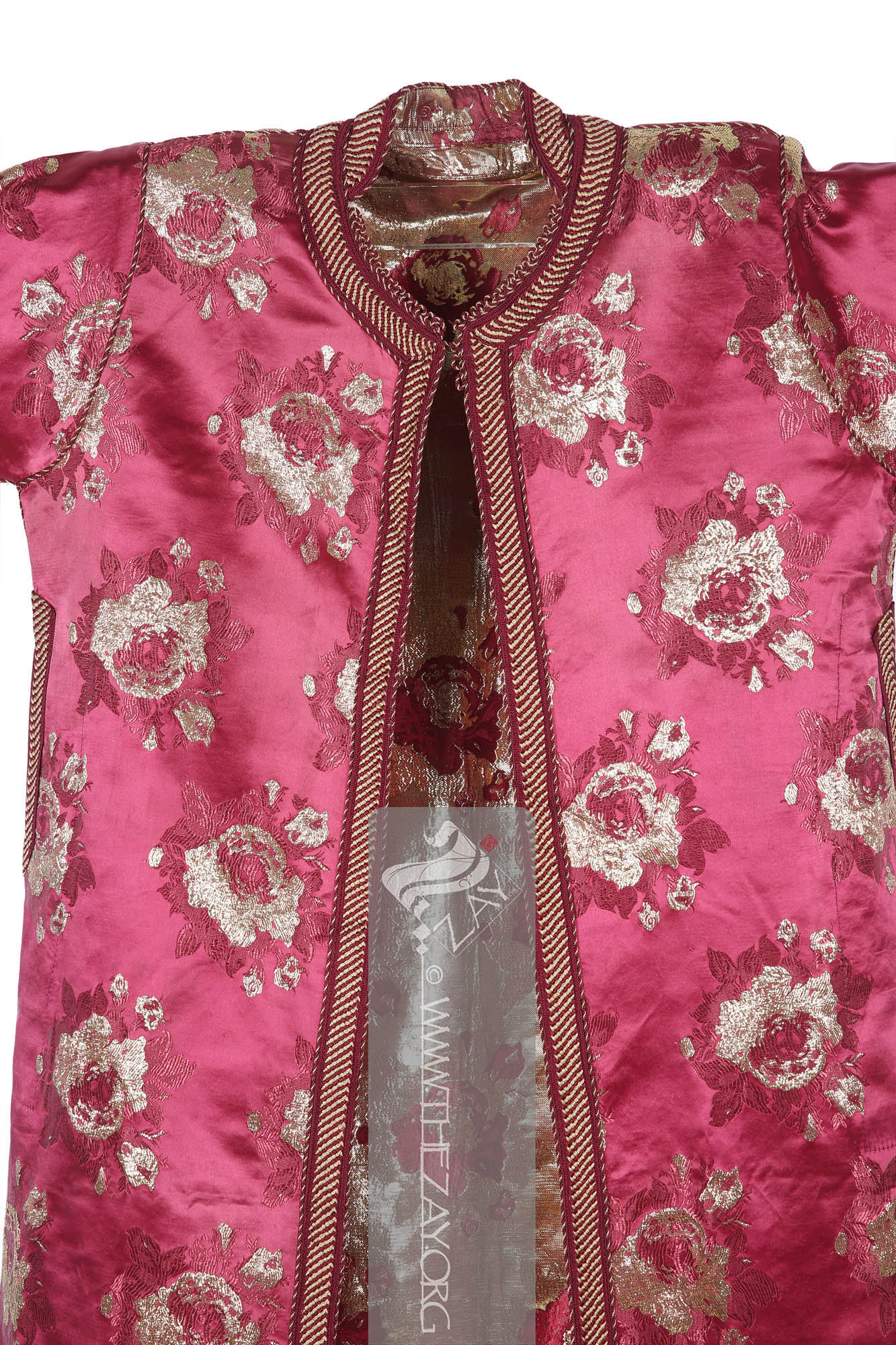
The field of the qaftan
Qafṭān: (Persian: khaftān, Pl. qafāṭin, synonyms: ghandurah, qandurah
Qandūrah: (Arabic, pl. qanādīr, synonyms: ghandurah, darā’ah, dishdāshah, jalābah, jallābīyah, qaftan, mqta’, thawb
Thawb: (Arabic: thawb, Pl. Athwāb/thībān), can be pronounced thobe
Thobe: (Arabic: thawb, Pl. Athwāb/thībān), can be pronounced thawb or tobe
Tobe: (Arabic: thawb, Pl. Athwāb/thībān), can be pronounced thawb or thobe based on locale. The standard Arabic word for ‘fabric’ or ‘garment’. It can refer to a qamīs-like tunic worn by men and women in the Arabian Peninsula, Iraq, the southern and south-western ports and islands of Iran, and some countries in East and West Africa. More specifically, it can refer to the square-shaped Bedouin overgarment worn by women. based on locale. The standard Arabic word for ‘fabric’ or ‘garment’. It can also refer to a qamīs-like tunic worn by men and women in the Arabian Peninsula, Iraq, the southern and south-western ports and islands of Iran, and some countries in East and West Africa. More specifically, it can refer to the square-shaped Bedouin overgarment worn by women. or tobe
Tobe: (Arabic: thawb, Pl. Athwāb/thībān), can be pronounced thawb or thobe based on locale. The standard Arabic word for ‘fabric’ or ‘garment’. It can refer to a qamīs-like tunic worn by men and women in the Arabian Peninsula, Iraq, the southern and south-western ports and islands of Iran, and some countries in East and West Africa. More specifically, it can refer to the square-shaped Bedouin overgarment worn by women. based on locale. The standard Arabic word for ‘fabric’ or ‘garment’. It can also refer to a qamīs-like tunic worn by men and women in the Arabian Peninsula, Iraq, the southern and south-western ports and islands of Iran, and some countries in East and West Africa. More specifically, it can refer to the square-shaped Bedouin overgarment worn by women in the Arabian Gulf region. or tobe
Tobe: (Arabic: thawb, Pl. Athwāb/thībān), can be pronounced thawb or thobe based on locale. The standard Arabic word for ‘fabric’ or ‘garment’. It can refer to a qamīs-like tunic worn by men and women in the Arabian Peninsula, Iraq, the southern and south-western ports and islands of Iran, and some countries in East and West Africa. More specifically, it can refer to the square-shaped Bedouin overgarment worn by women. ), a loose, short or long-sleeved, shirt like (qamis) tunic with frontal neckline opening, worn by both sexes. Each Arab region has a different term for what is essentially a similar garment with various small differences. , drā’ah, dishdāshah, jalābah, jallābīyah, kandurah, mqta’, thawb
Thawb: (Arabic: thawb, Pl. Athwāb/thībān), can be pronounced thobe
Thobe: (Arabic: thawb, Pl. Athwāb/thībān), can be pronounced thawb or tobe
Tobe: (Arabic: thawb, Pl. Athwāb/thībān), can be pronounced thawb or thobe based on locale. The standard Arabic word for ‘fabric’ or ‘garment’. It can refer to a qamīs-like tunic worn by men and women in the Arabian Peninsula, Iraq, the southern and south-western ports and islands of Iran, and some countries in East and West Africa. More specifically, it can refer to the square-shaped Bedouin overgarment worn by women. based on locale. The standard Arabic word for ‘fabric’ or ‘garment’. It can also refer to a qamīs-like tunic worn by men and women in the Arabian Peninsula, Iraq, the southern and south-western ports and islands of Iran, and some countries in East and West Africa. More specifically, it can refer to the square-shaped Bedouin overgarment worn by women. or tobe
Tobe: (Arabic: thawb, Pl. Athwāb/thībān), can be pronounced thawb or thobe based on locale. The standard Arabic word for ‘fabric’ or ‘garment’. It can refer to a qamīs-like tunic worn by men and women in the Arabian Peninsula, Iraq, the southern and south-western ports and islands of Iran, and some countries in East and West Africa. More specifically, it can refer to the square-shaped Bedouin overgarment worn by women. based on locale. The standard Arabic word for ‘fabric’ or ‘garment’. It can also refer to a qamīs-like tunic worn by men and women in the Arabian Peninsula, Iraq, the southern and south-western ports and islands of Iran, and some countries in East and West Africa. More specifically, it can refer to the square-shaped Bedouin overgarment worn by women in the Arabian Gulf region. or tobe
Tobe: (Arabic: thawb, Pl. Athwāb/thībān), can be pronounced thawb or thobe based on locale. The standard Arabic word for ‘fabric’ or ‘garment’. It can refer to a qamīs-like tunic worn by men and women in the Arabian Peninsula, Iraq, the southern and south-western ports and islands of Iran, and some countries in East and West Africa. More specifically, it can refer to the square-shaped Bedouin overgarment worn by women. ) loose, short or long-sleeved, shirt like (qamis
Qamīṣ: (Possibly late Latin: Camisia – Linen Undergarment; Synonym: Kamiz), a traditional loose fitting long tunic or shirt worn by both men and women in South and Central Asia and the Arab world. Typically extending below the waist it is usually paired with a pair of trousers. Passementerie: (French: passement – braid), decorative trimmings or edgings for textile, often made of threads of silk, cotton, or precious metals such as gold and silver, generally braided or twisted into cords. ‘uqdah: (Arabic: ‘uqdah – knot), passementerie buttons often used for fastening or for decorative purposes on North African Arab garments especially Moroccan qaftan.
A single thin braided trimming in similar material and colour adorns the seamlines within the field of the qaftan
Qafṭān: (Persian: khaftān, Pl. qafāṭin, synonyms: ghandurah, qandurah
Qandūrah: (Arabic, pl. qanādīr, synonyms: ghandurah, darā’ah, dishdāshah, jalābah, jallābīyah, qaftan, mqta’, thawb
Thawb: (Arabic: thawb, Pl. Athwāb/thībān), can be pronounced thobe
Thobe: (Arabic: thawb, Pl. Athwāb/thībān), can be pronounced thawb or tobe
Tobe: (Arabic: thawb, Pl. Athwāb/thībān), can be pronounced thawb or thobe based on locale. The standard Arabic word for ‘fabric’ or ‘garment’. It can refer to a qamīs-like tunic worn by men and women in the Arabian Peninsula, Iraq, the southern and south-western ports and islands of Iran, and some countries in East and West Africa. More specifically, it can refer to the square-shaped Bedouin overgarment worn by women. based on locale. The standard Arabic word for ‘fabric’ or ‘garment’. It can also refer to a qamīs-like tunic worn by men and women in the Arabian Peninsula, Iraq, the southern and south-western ports and islands of Iran, and some countries in East and West Africa. More specifically, it can refer to the square-shaped Bedouin overgarment worn by women. or tobe
Tobe: (Arabic: thawb, Pl. Athwāb/thībān), can be pronounced thawb or thobe based on locale. The standard Arabic word for ‘fabric’ or ‘garment’. It can refer to a qamīs-like tunic worn by men and women in the Arabian Peninsula, Iraq, the southern and south-western ports and islands of Iran, and some countries in East and West Africa. More specifically, it can refer to the square-shaped Bedouin overgarment worn by women. based on locale. The standard Arabic word for ‘fabric’ or ‘garment’. It can also refer to a qamīs-like tunic worn by men and women in the Arabian Peninsula, Iraq, the southern and south-western ports and islands of Iran, and some countries in East and West Africa. More specifically, it can refer to the square-shaped Bedouin overgarment worn by women in the Arabian Gulf region. or tobe
Tobe: (Arabic: thawb, Pl. Athwāb/thībān), can be pronounced thawb or thobe based on locale. The standard Arabic word for ‘fabric’ or ‘garment’. It can refer to a qamīs-like tunic worn by men and women in the Arabian Peninsula, Iraq, the southern and south-western ports and islands of Iran, and some countries in East and West Africa. More specifically, it can refer to the square-shaped Bedouin overgarment worn by women. ), a loose, short or long-sleeved, shirt like (qamis) tunic with frontal neckline opening, worn by both sexes. Each Arab region has a different term for what is essentially a similar garment with various small differences. , drā’ah, dishdāshah, jalābah, jallābīyah, kandurah, mqta’, thawb
Thawb: (Arabic: thawb, Pl. Athwāb/thībān), can be pronounced thobe
Thobe: (Arabic: thawb, Pl. Athwāb/thībān), can be pronounced thawb or tobe
Tobe: (Arabic: thawb, Pl. Athwāb/thībān), can be pronounced thawb or thobe based on locale. The standard Arabic word for ‘fabric’ or ‘garment’. It can refer to a qamīs-like tunic worn by men and women in the Arabian Peninsula, Iraq, the southern and south-western ports and islands of Iran, and some countries in East and West Africa. More specifically, it can refer to the square-shaped Bedouin overgarment worn by women. based on locale. The standard Arabic word for ‘fabric’ or ‘garment’. It can also refer to a qamīs-like tunic worn by men and women in the Arabian Peninsula, Iraq, the southern and south-western ports and islands of Iran, and some countries in East and West Africa. More specifically, it can refer to the square-shaped Bedouin overgarment worn by women. or tobe
Tobe: (Arabic: thawb, Pl. Athwāb/thībān), can be pronounced thawb or thobe based on locale. The standard Arabic word for ‘fabric’ or ‘garment’. It can refer to a qamīs-like tunic worn by men and women in the Arabian Peninsula, Iraq, the southern and south-western ports and islands of Iran, and some countries in East and West Africa. More specifically, it can refer to the square-shaped Bedouin overgarment worn by women. based on locale. The standard Arabic word for ‘fabric’ or ‘garment’. It can also refer to a qamīs-like tunic worn by men and women in the Arabian Peninsula, Iraq, the southern and south-western ports and islands of Iran, and some countries in East and West Africa. More specifically, it can refer to the square-shaped Bedouin overgarment worn by women in the Arabian Gulf region. or tobe
Tobe: (Arabic: thawb, Pl. Athwāb/thībān), can be pronounced thawb or thobe based on locale. The standard Arabic word for ‘fabric’ or ‘garment’. It can refer to a qamīs-like tunic worn by men and women in the Arabian Peninsula, Iraq, the southern and south-western ports and islands of Iran, and some countries in East and West Africa. More specifically, it can refer to the square-shaped Bedouin overgarment worn by women. ) loose, short or long-sleeved, shirt like (qamis
Qamīṣ: (Possibly late Latin: Camisia – Linen Undergarment; Synonym: Kamiz), a traditional loose fitting long tunic or shirt worn by both men and women in South and Central Asia and the Arab world. Typically extending below the waist it is usually paired with a pair of trousers. Frog_fastener: (Synonym: Chinese frog closure, frog closure), is a decorative and functional type of button used to fasten clothing. Said to have originated between c. 5th to 7th century China these buttons consist of a cord or braid looped through a decorative knot.
The qaftan
Qafṭān: (Persian: khaftān, Pl. qafāṭin, synonyms: ghandurah, qandurah
Qandūrah: (Arabic, pl. qanādīr, synonyms: ghandurah, darā’ah, dishdāshah, jalābah, jallābīyah, qaftan, mqta’, thawb
Thawb: (Arabic: thawb, Pl. Athwāb/thībān), can be pronounced thobe
Thobe: (Arabic: thawb, Pl. Athwāb/thībān), can be pronounced thawb or tobe
Tobe: (Arabic: thawb, Pl. Athwāb/thībān), can be pronounced thawb or thobe based on locale. The standard Arabic word for ‘fabric’ or ‘garment’. It can refer to a qamīs-like tunic worn by men and women in the Arabian Peninsula, Iraq, the southern and south-western ports and islands of Iran, and some countries in East and West Africa. More specifically, it can refer to the square-shaped Bedouin overgarment worn by women. based on locale. The standard Arabic word for ‘fabric’ or ‘garment’. It can also refer to a qamīs-like tunic worn by men and women in the Arabian Peninsula, Iraq, the southern and south-western ports and islands of Iran, and some countries in East and West Africa. More specifically, it can refer to the square-shaped Bedouin overgarment worn by women. or tobe
Tobe: (Arabic: thawb, Pl. Athwāb/thībān), can be pronounced thawb or thobe based on locale. The standard Arabic word for ‘fabric’ or ‘garment’. It can refer to a qamīs-like tunic worn by men and women in the Arabian Peninsula, Iraq, the southern and south-western ports and islands of Iran, and some countries in East and West Africa. More specifically, it can refer to the square-shaped Bedouin overgarment worn by women. based on locale. The standard Arabic word for ‘fabric’ or ‘garment’. It can also refer to a qamīs-like tunic worn by men and women in the Arabian Peninsula, Iraq, the southern and south-western ports and islands of Iran, and some countries in East and West Africa. More specifically, it can refer to the square-shaped Bedouin overgarment worn by women in the Arabian Gulf region. or tobe
Tobe: (Arabic: thawb, Pl. Athwāb/thībān), can be pronounced thawb or thobe based on locale. The standard Arabic word for ‘fabric’ or ‘garment’. It can refer to a qamīs-like tunic worn by men and women in the Arabian Peninsula, Iraq, the southern and south-western ports and islands of Iran, and some countries in East and West Africa. More specifically, it can refer to the square-shaped Bedouin overgarment worn by women. ), a loose, short or long-sleeved, shirt like (qamis) tunic with frontal neckline opening, worn by both sexes. Each Arab region has a different term for what is essentially a similar garment with various small differences. , drā’ah, dishdāshah, jalābah, jallābīyah, kandurah, mqta’, thawb
Thawb: (Arabic: thawb, Pl. Athwāb/thībān), can be pronounced thobe
Thobe: (Arabic: thawb, Pl. Athwāb/thībān), can be pronounced thawb or tobe
Tobe: (Arabic: thawb, Pl. Athwāb/thībān), can be pronounced thawb or thobe based on locale. The standard Arabic word for ‘fabric’ or ‘garment’. It can refer to a qamīs-like tunic worn by men and women in the Arabian Peninsula, Iraq, the southern and south-western ports and islands of Iran, and some countries in East and West Africa. More specifically, it can refer to the square-shaped Bedouin overgarment worn by women. based on locale. The standard Arabic word for ‘fabric’ or ‘garment’. It can also refer to a qamīs-like tunic worn by men and women in the Arabian Peninsula, Iraq, the southern and south-western ports and islands of Iran, and some countries in East and West Africa. More specifically, it can refer to the square-shaped Bedouin overgarment worn by women. or tobe
Tobe: (Arabic: thawb, Pl. Athwāb/thībān), can be pronounced thawb or thobe based on locale. The standard Arabic word for ‘fabric’ or ‘garment’. It can refer to a qamīs-like tunic worn by men and women in the Arabian Peninsula, Iraq, the southern and south-western ports and islands of Iran, and some countries in East and West Africa. More specifically, it can refer to the square-shaped Bedouin overgarment worn by women. based on locale. The standard Arabic word for ‘fabric’ or ‘garment’. It can also refer to a qamīs-like tunic worn by men and women in the Arabian Peninsula, Iraq, the southern and south-western ports and islands of Iran, and some countries in East and West Africa. More specifically, it can refer to the square-shaped Bedouin overgarment worn by women in the Arabian Gulf region. or tobe
Tobe: (Arabic: thawb, Pl. Athwāb/thībān), can be pronounced thawb or thobe based on locale. The standard Arabic word for ‘fabric’ or ‘garment’. It can refer to a qamīs-like tunic worn by men and women in the Arabian Peninsula, Iraq, the southern and south-western ports and islands of Iran, and some countries in East and West Africa. More specifically, it can refer to the square-shaped Bedouin overgarment worn by women. ) loose, short or long-sleeved, shirt like (qamis
Qamīṣ: (Possibly late Latin: Camisia – Linen Undergarment; Synonym: Kamiz), a traditional loose fitting long tunic or shirt worn by both men and women in South and Central Asia and the Arab world. Typically extending below the waist it is usually paired with a pair of trousers.
Links