

1 of 9
| Local Name | Farmlah |
| Object Category | Overgarment |
| Gender | Female |
| Date of object | c. 19th - 20th century |
| Place Of orgin | Morocco |
| Region | Morocco |
| Object Range | Morocco, Libya, Algeria, Egypt, Spain, Italy, Greece, et al |
| Dimensions | Length: 57 cm Width: 37 cm |
| Materials | Silk Metal Other |
| Technique | Hand Stitched Machine Embroidered |
| Color | |
| Motif | Floral Geometric Arabesque Paisley |
| Provenance | Purchased, Dealer, UK 2022 |
| Location | The Zay Zay: (Arabic: costume, Pl. azyaā’), a set of clothes in a style typical of a particular country or historical period. Initiative |
| Status | In Storage |
| ZI number | ZI2022.500993 MOROCCO |
Object History
This piece was purchased by Dr. Reem Tariq
Ṭariq: (Arabic; Synonym: tulle_bi_talli
Tūlle_bi_tallī: (French: Tulle – a city in France where fine material for veil was first made; Turkish: tel – wire; Synonym: tariq; talli; badla; khus_dozi ), series of small metal knots made on a woven net ground as embellishment. The term is commonly used in the North African Arab region specifically in Egypt. Ṭariq: (Arabic; Synonym: tulle_bi_talli
Tūlle_bi_tallī: (French: Tulle – a city in France where fine material for veil was first made; Turkish: tel – wire; Synonym: tariq; talli; badla; khus_dozi ), series of small metal knots made on a woven net ground as embellishment. The term is commonly used in the North African Arab region specifically in Egypt.
Object Features
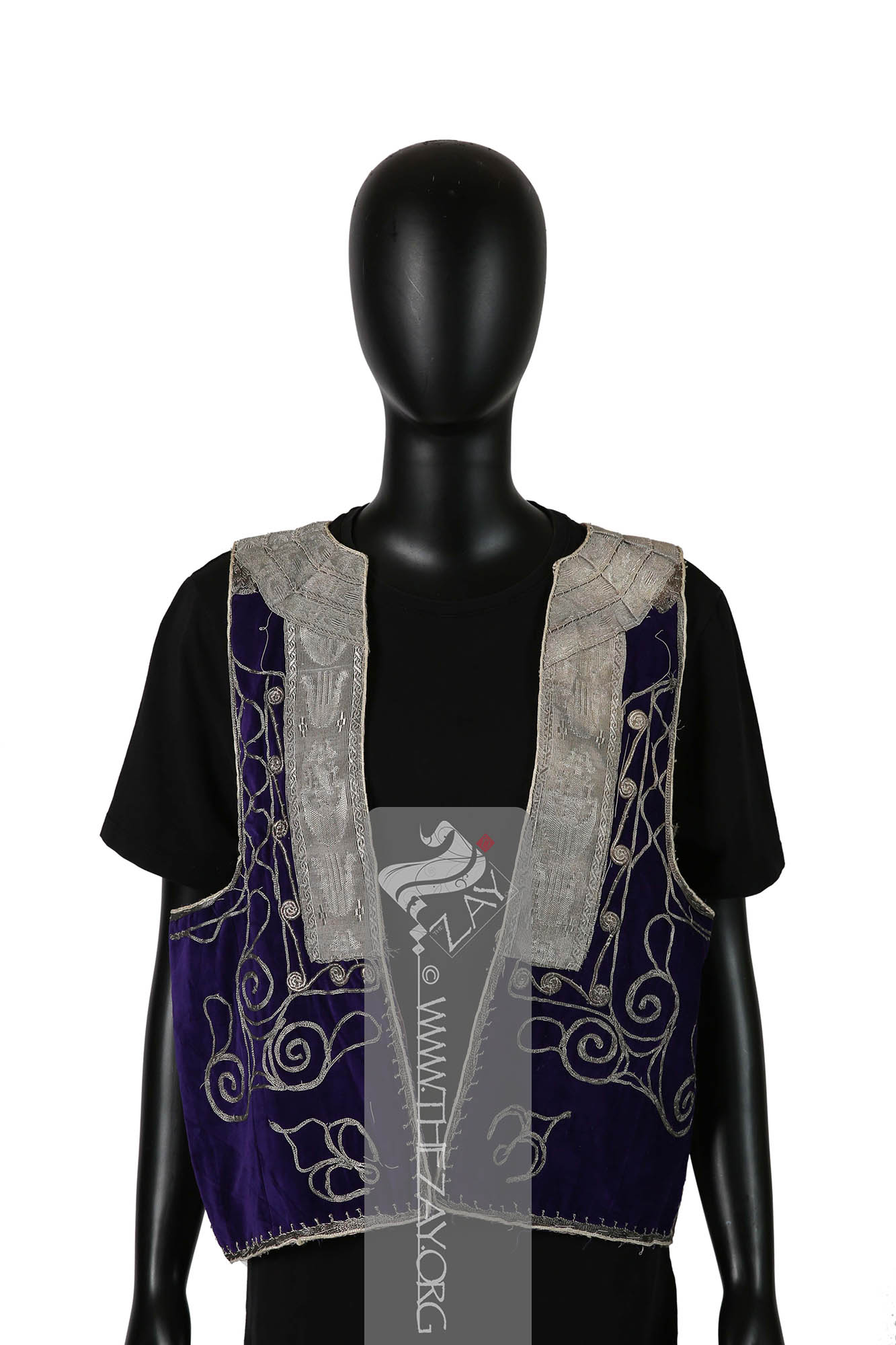
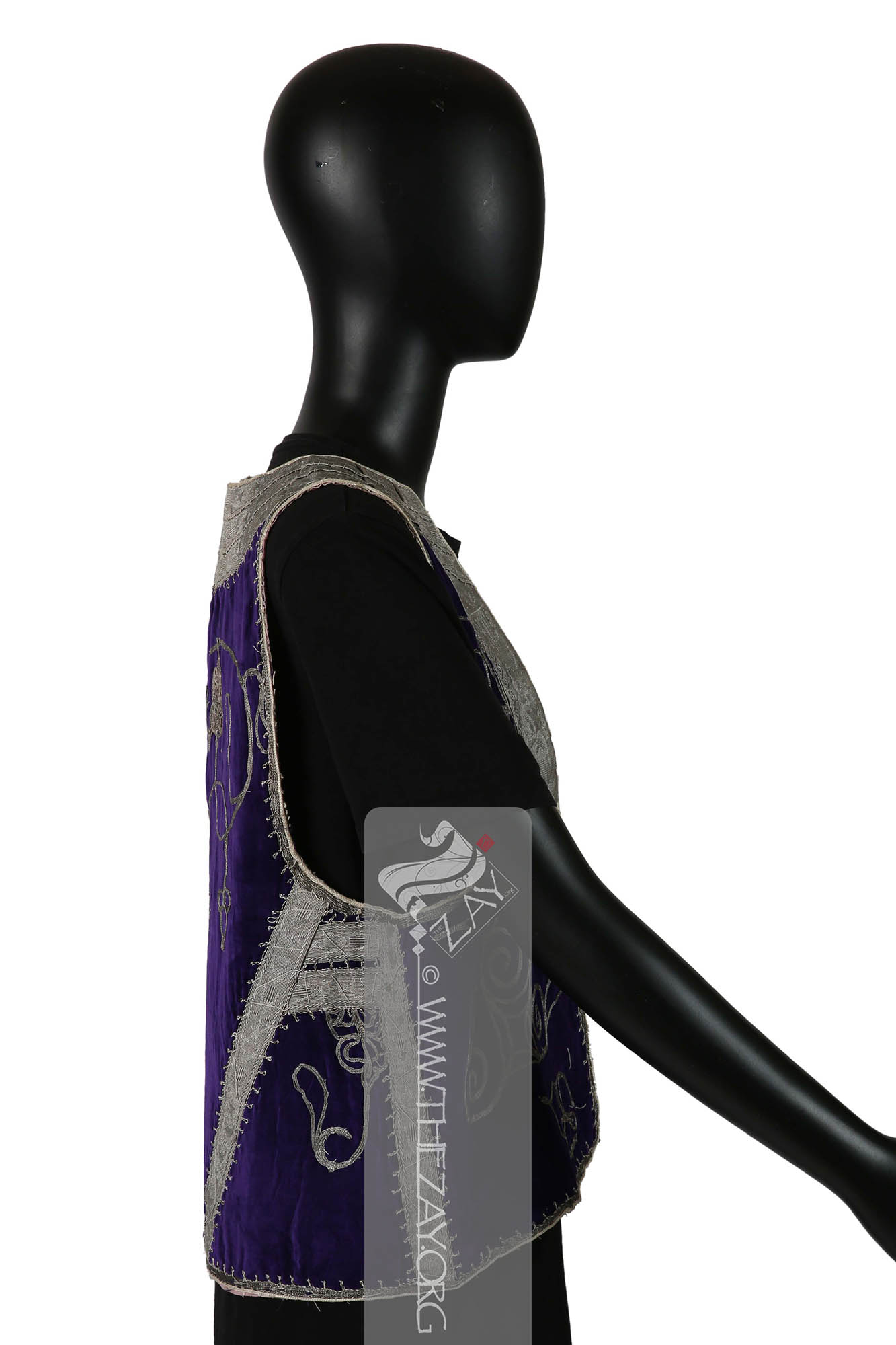
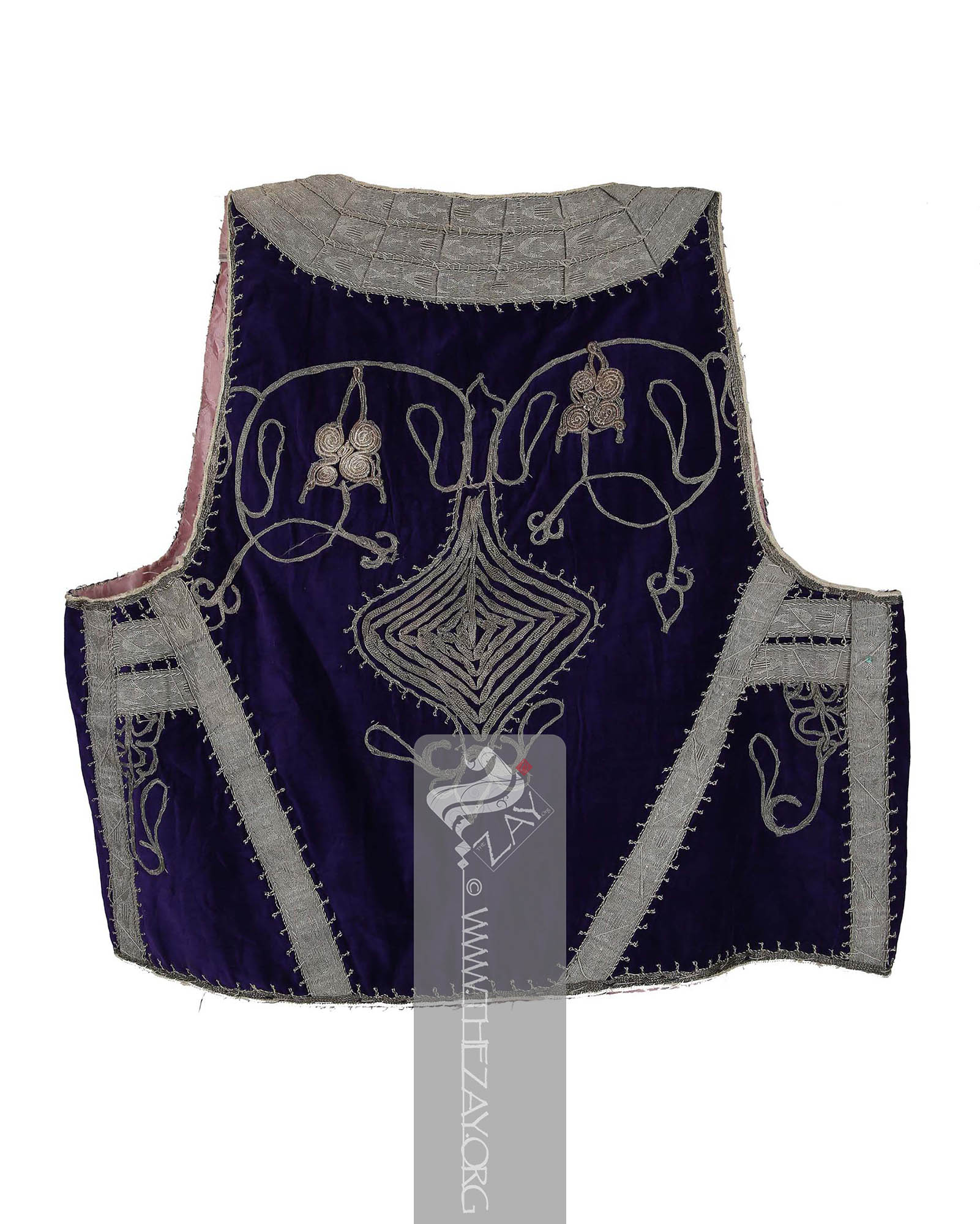
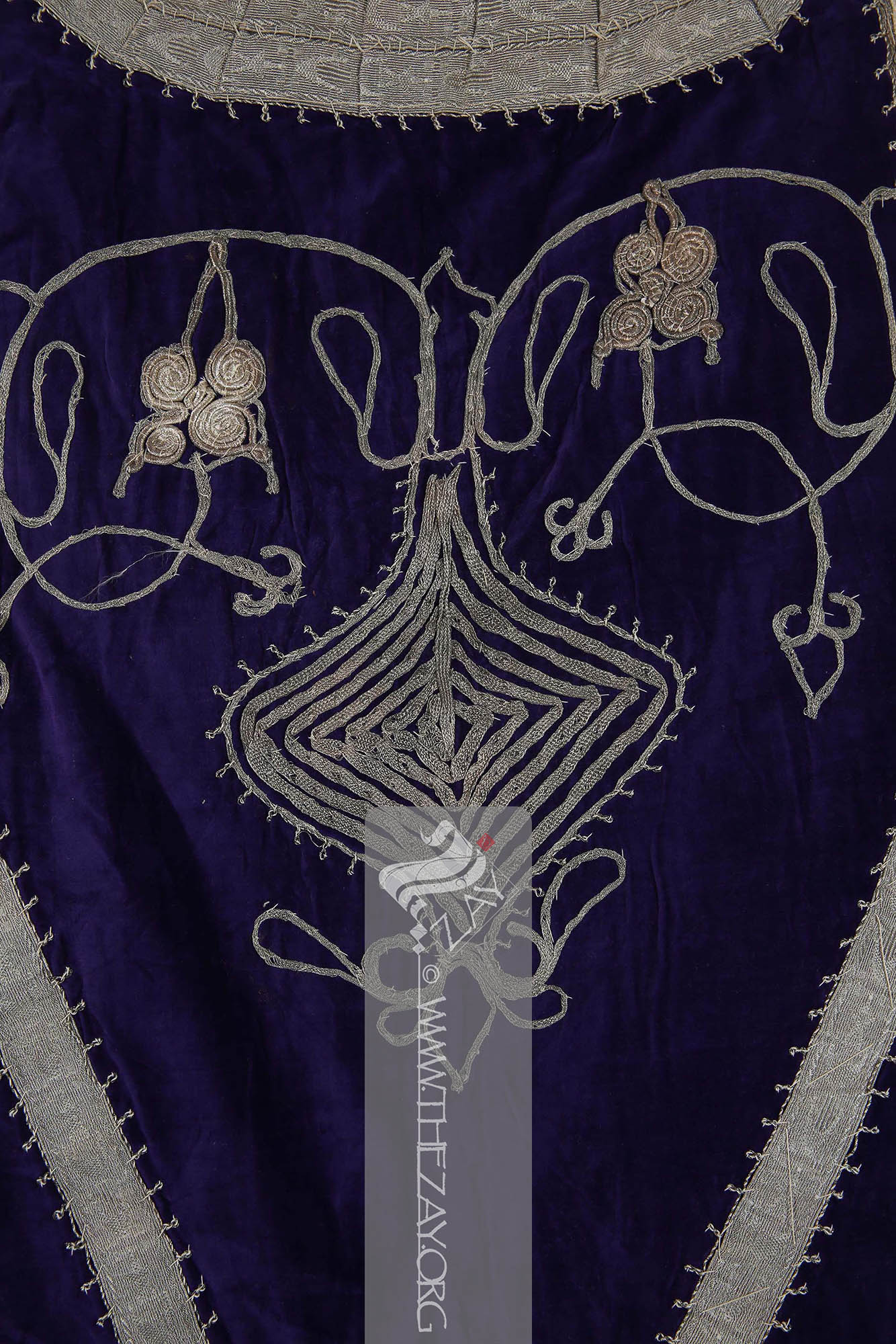
This is a purple silk velvet ceremonial waistcoat (farmlah
Farmlah: (Arabic), a traditional ceremonial sleeveless vest worn by both men and women, especially of the Berber community of the North African countries. The garment is opulently embellished over a velvet base with gold and silver threads for women while the male counterparts are considerably simpler.
The field is embellished mostly with metal threads, possibly in silver, embellished on the purple silk velvet base using (couching
Couching: (Latin: collocare – Place together), in needlework and embroidery couching is a technique in which yarn or other materials are laid across the surface of the ground fabric and fastened in place with small stitches of the same or a different yarn
The farmlah
Farmlah: (Arabic), a traditional ceremonial sleeveless vest worn by both men and women, especially of the Berber community of the North African countries. The garment is opulently embellished over a velvet base with gold and silver threads for women while the male counterparts are considerably simpler. Cloth_of_gold: (English; Synonym: gold_cloth
Gold_cloth: (English; Synonym: cloth_of_gold; tela_aurea
Tela_aurea: (Latin: tela – web, aurea – gold/golden; Synonym: cloth_of_gold; gold_cloth), a luxurious fabric woven with gold threads, creating a shimmering effect. Historically prized for its opulence, it was used in royal garments, ecclesiastical vestments, and ceremonial textiles, signifying wealth and prestige. Tela_aurea: (Latin: tela – web, aurea – gold/golden; Synonym: cloth_of_gold; gold_cloth), a luxurious fabric woven with gold threads, creating a shimmering effect. Historically prized for its opulence, it was used in royal garments, ecclesiastical vestments, and ceremonial textiles, signifying wealth and prestige. Gold_cloth: (English; Synonym: cloth_of_gold; tela_aurea
Tela_aurea: (Latin: tela – web, aurea – gold/golden; Synonym: cloth_of_gold; gold_cloth), a luxurious fabric woven with gold threads, creating a shimmering effect. Historically prized for its opulence, it was used in royal garments, ecclesiastical vestments, and ceremonial textiles, signifying wealth and prestige. Tela_aurea: (Latin: tela – web, aurea – gold/golden; Synonym: cloth_of_gold; gold_cloth), a luxurious fabric woven with gold threads, creating a shimmering effect. Historically prized for its opulence, it was used in royal garments, ecclesiastical vestments, and ceremonial textiles, signifying wealth and prestige.
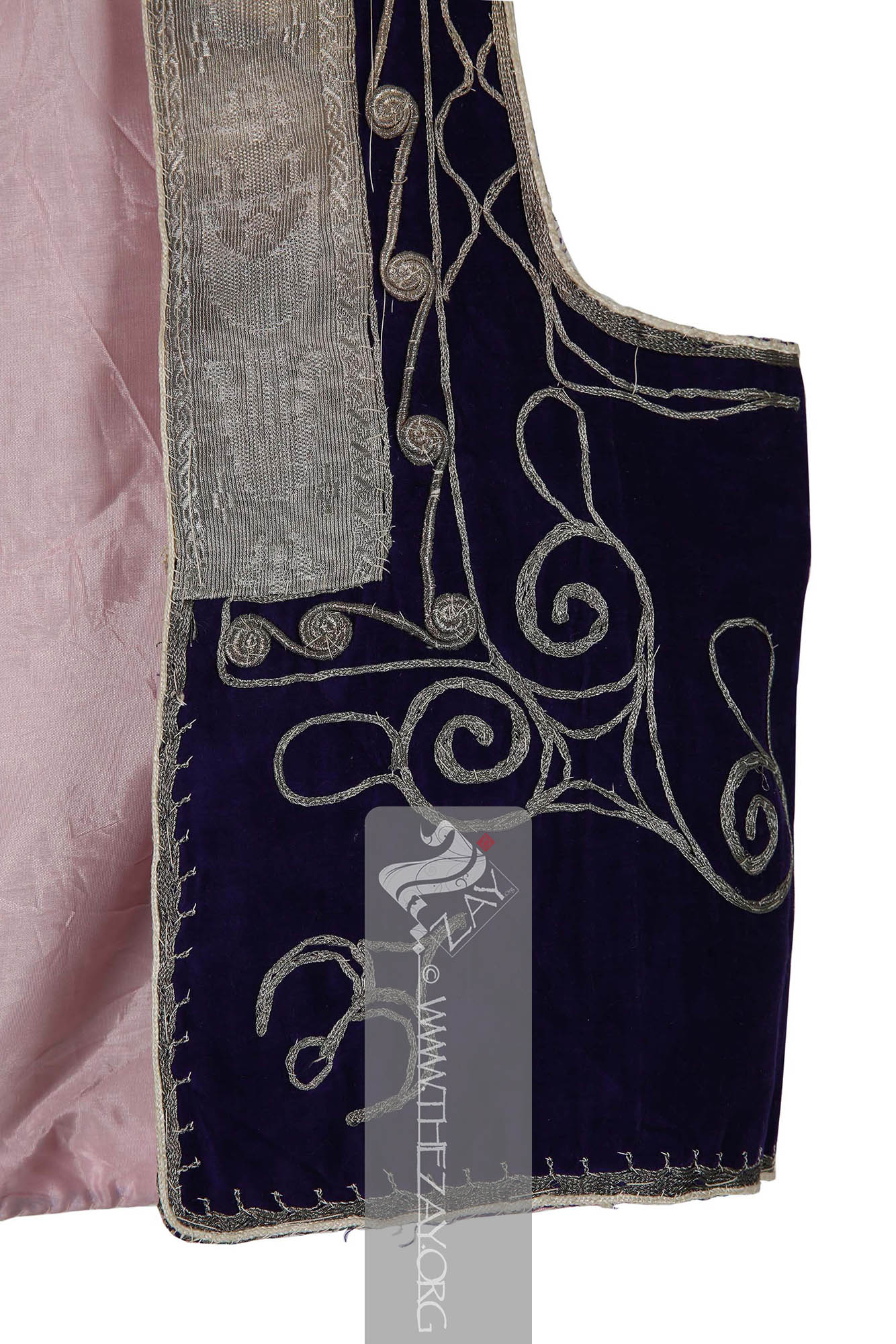
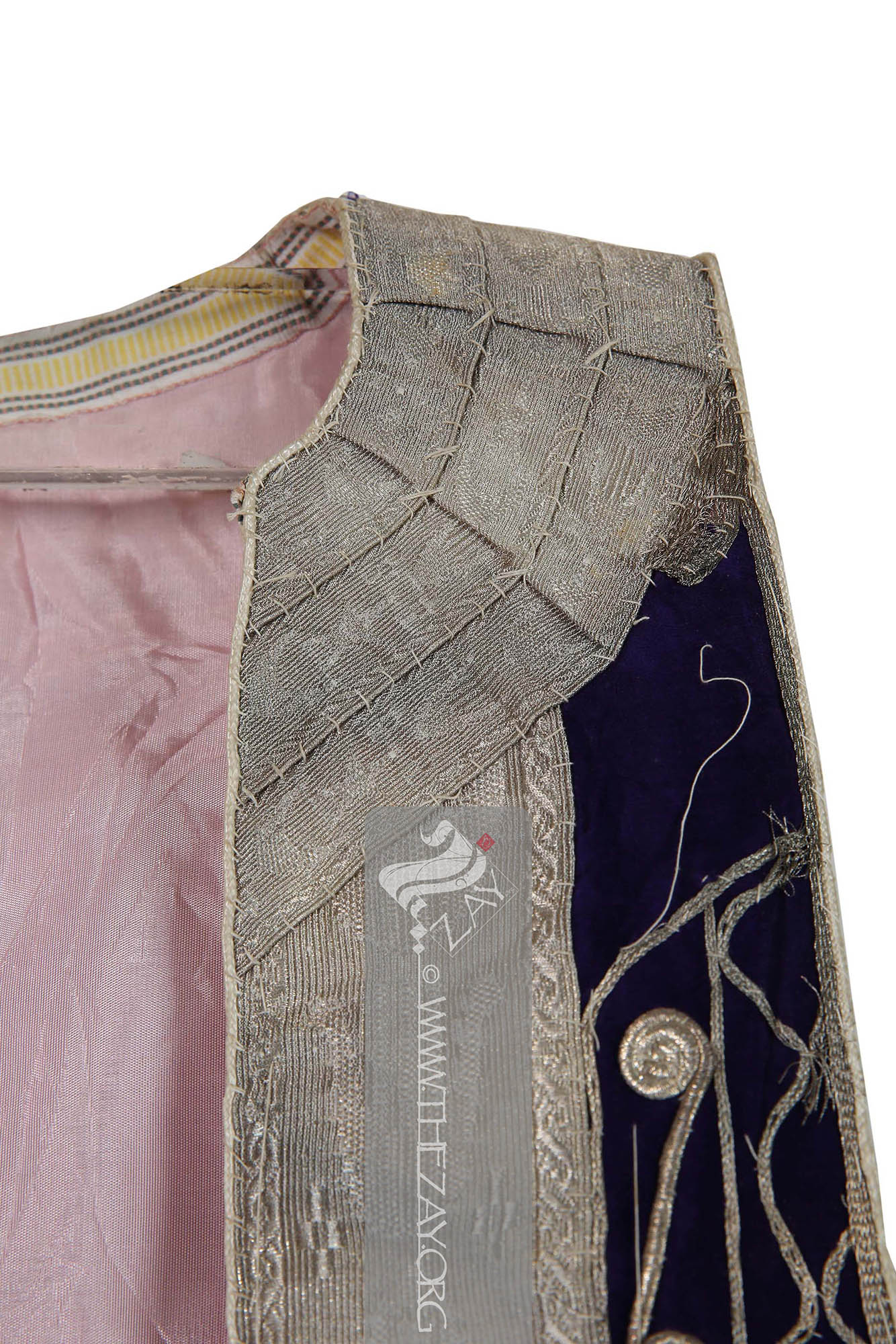
The two wide panels and neckline of tela_aurea
Tela_aurea: (Latin: tela – web, aurea – gold/golden; Synonym: cloth_of_gold; gold_cloth), a luxurious fabric woven with gold threads, creating a shimmering effect. Historically prized for its opulence, it was used in royal garments, ecclesiastical vestments, and ceremonial textiles, signifying wealth and prestige. Khamsah: (Arabic: Five; Synonym: Hamsa; Hand_of_Fatima), a symbol of protection and good luck in various Mediterranean and Middle Eastern cultures, featuring an open palm with an eye in the center. An amulet motif believed to ward off evil its ancient origins date back to Mesopotamian, Egyptian and Greek cultures. Hand_of_Fatimah: (Arabic: Fatima – Prophet’s daughter; Synonym: Hamsa; Khamsa), a symbol of protection and good luck in various Mediterranean and Middle Eastern cultures, featuring an open palm with an eye in the center. An amulet motif believed to ward off evil its ancient origins date back to Mesopotamian, Egyptian and Greek cultures.
From the use of motifs steeped in Islamic symbolism, especially the khamsah
Khamsah: (Arabic: Five; Synonym: Hamsa; Hand_of_Fatima), a symbol of protection and good luck in various Mediterranean and Middle Eastern cultures, featuring an open palm with an eye in the center. An amulet motif believed to ward off evil its ancient origins date back to Mesopotamian, Egyptian and Greek cultures. Farmlah: (Arabic), a traditional ceremonial sleeveless vest worn by both men and women, especially of the Berber community of the North African countries. The garment is opulently embellished over a velvet base with gold and silver threads for women while the male counterparts are considerably simpler. Farmlah: (Arabic), a traditional ceremonial sleeveless vest worn by both men and women, especially of the Berber community of the North African countries. The garment is opulently embellished over a velvet base with gold and silver threads for women while the male counterparts are considerably simpler. Farmlah: (Arabic), a traditional ceremonial sleeveless vest worn by both men and women, especially of the Berber community of the North African countries. The garment is opulently embellished over a velvet base with gold and silver threads for women while the male counterparts are considerably simpler.
The corners of each of these panels feature a floral-inspired abstract pattern of metal thread held down by couching
Couching: (Latin: collocare – Place together), in needlework and embroidery couching is a technique in which yarn or other materials are laid across the surface of the ground fabric and fastened in place with small stitches of the same or a different yarn
The hem of the farmlah
Farmlah: (Arabic), a traditional ceremonial sleeveless vest worn by both men and women, especially of the Berber community of the North African countries. The garment is opulently embellished over a velvet base with gold and silver threads for women while the male counterparts are considerably simpler.
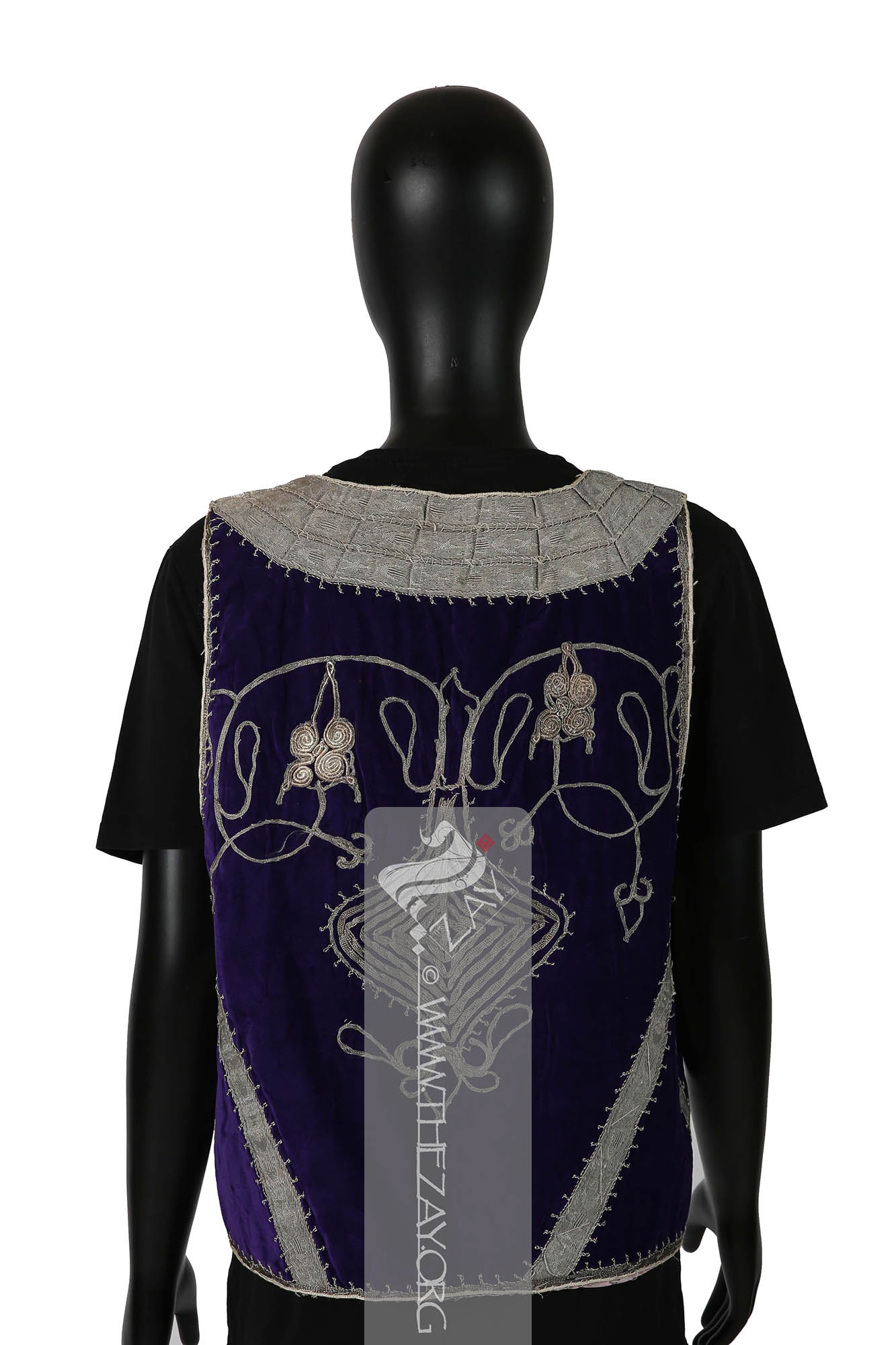
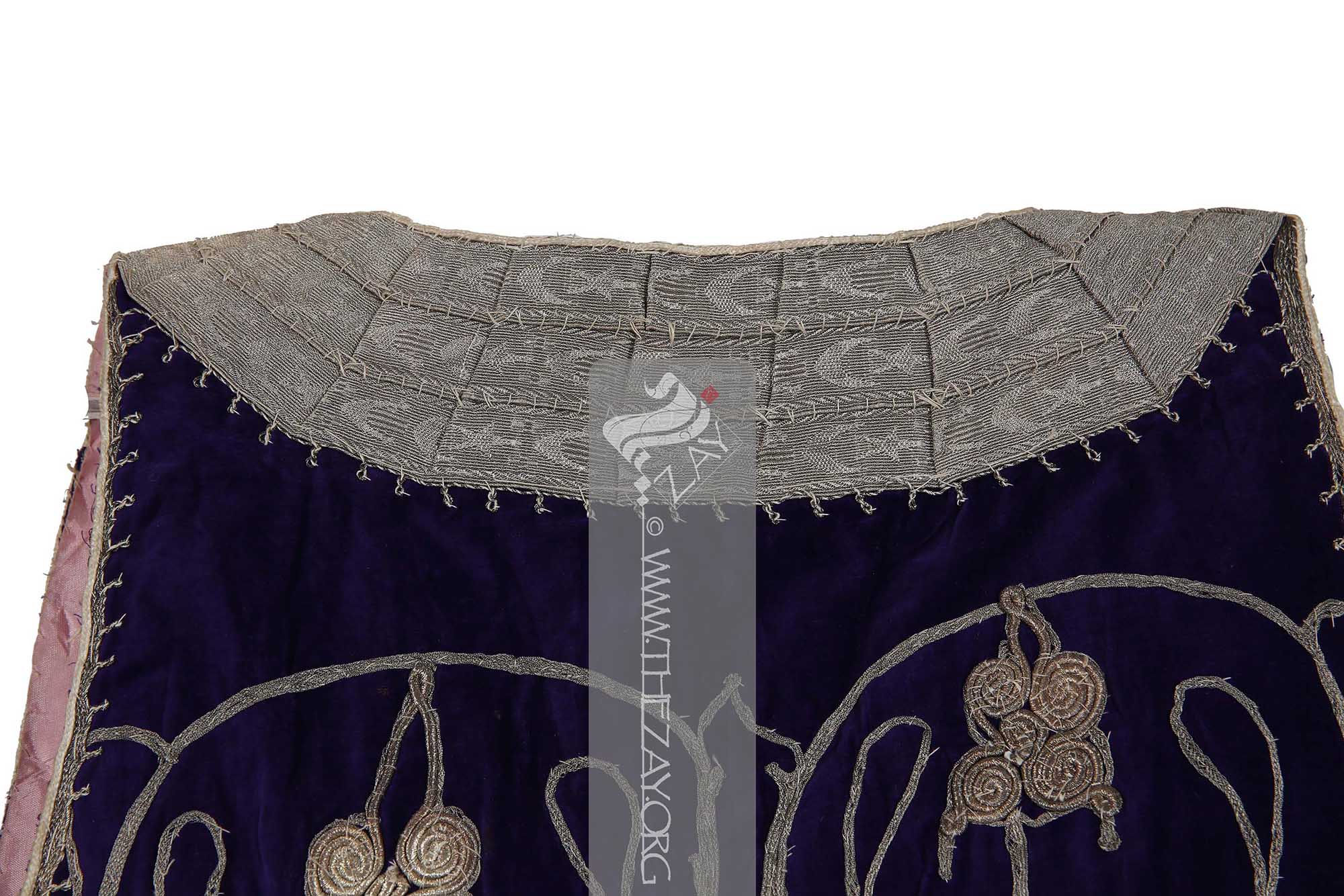
The back of the piece features three panels, with a long central V-shaped panel with a heavily embellished floral pattern done in couching
Couching: (Latin: collocare – Place together), in needlework and embroidery couching is a technique in which yarn or other materials are laid across the surface of the ground fabric and fastened in place with small stitches of the same or a different yarn Tela_aurea: (Latin: tela – web, aurea – gold/golden; Synonym: cloth_of_gold; gold_cloth), a luxurious fabric woven with gold threads, creating a shimmering effect. Historically prized for its opulence, it was used in royal garments, ecclesiastical vestments, and ceremonial textiles, signifying wealth and prestige.
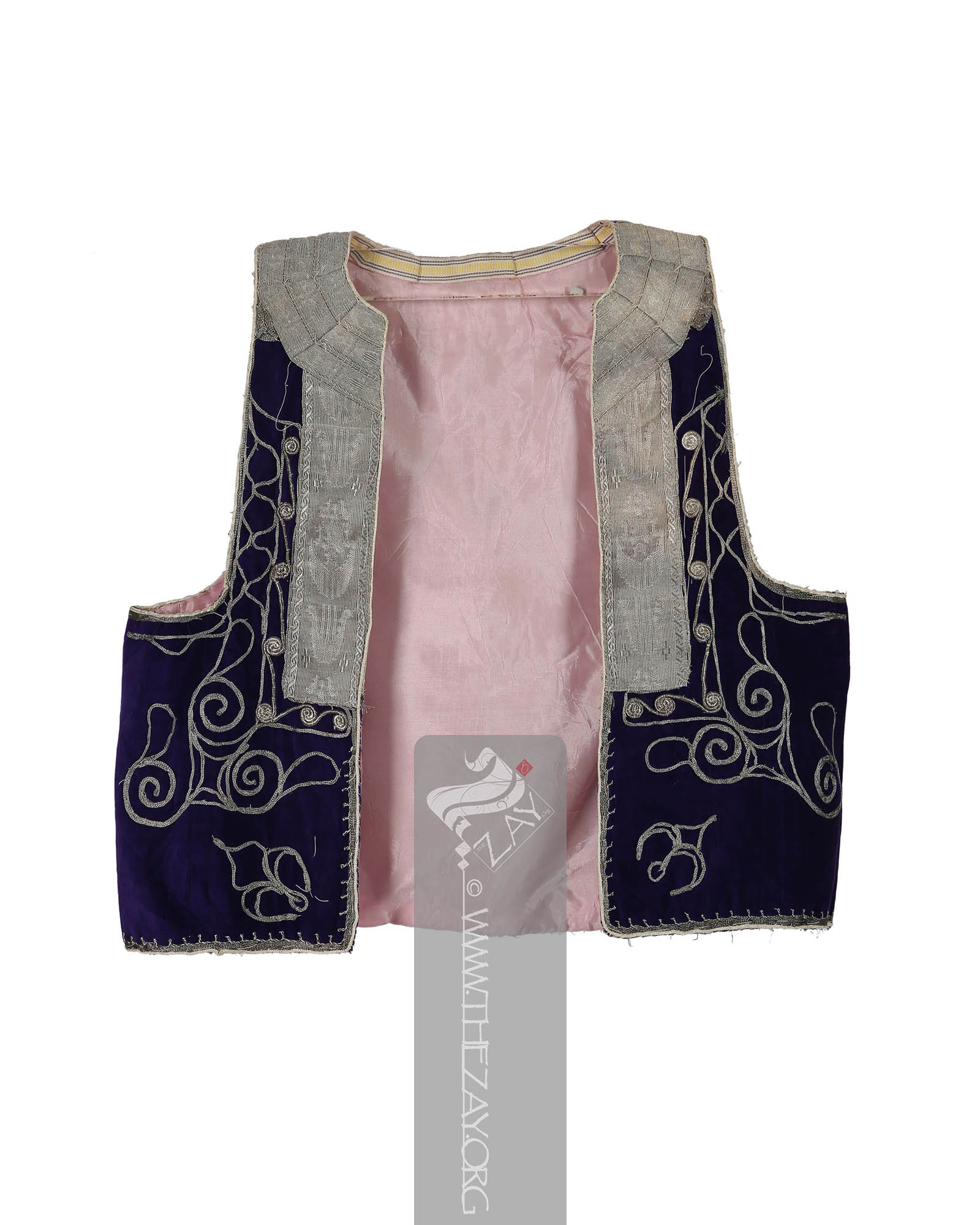
The piece is lined with a plain pink, possibly synthetic fabric in (satin
Sātin: (Arabic: Zaytuni: from Chinese port of Zayton in Quanzhou province where it was exported from and acquired by Arab merchants), one of the three basic types of woven fabric with a glossy top surface and a dull back. Originated in China and was fundamentally woven in silk.) weave. The farmlah
Farmlah: (Arabic), a traditional ceremonial sleeveless vest worn by both men and women, especially of the Berber community of the North African countries. The garment is opulently embellished over a velvet base with gold and silver threads for women while the male counterparts are considerably simpler.
Links