

1 of 7
| Local Name | Gargush |
| Object Category | Headwear |
| Gender | Female |
| Date of object | c. 1930 |
| Place Of orgin | Yemen |
| Region | Sa`fan, Haraz |
| Object Range | Yemen |
| Dimensions | Length: 25 cm Width: 21 cm |
| Materials | Silk Cotton Metal |
| Technique | Hand Stitched Hand Embroidered Woven |
| Color | |
| Motif | Geometric |
| Provenance | Purchased, Zakariyah Ahmed, Yemen 2018 |
| Location | The Zay Zay: (Arabic: costume, Pl. azyaā’), a set of clothes in a style typical of a particular country or historical period. Initiative |
| Status | In storage |
| ZI number | ZI2018.500288a YEMEN |
Object Note
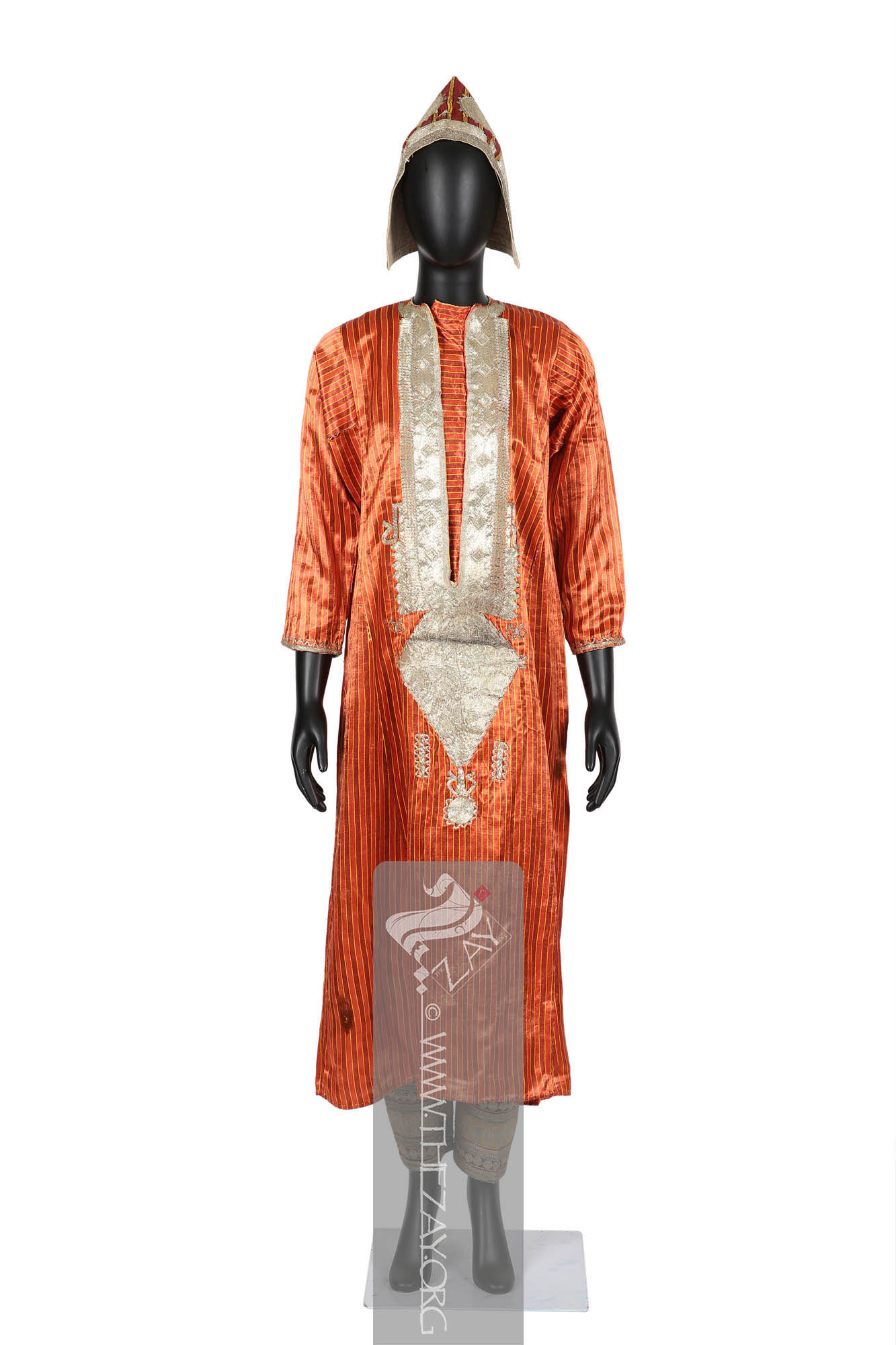
Part of a set along with another item (ZI2018.500288 YEMEN) also in the collection.
Object History
This piece was purchased by Dr. Reem Tariq
Ṭariq: (Arabic; Synonym: tulle_bi_talli
Tūlle_bi_tallī: (French: Tulle – a city in France where fine material for veil was first made; Turkish: tel – wire; Synonym: tariq; talli; badla; khus_dozi ), series of small metal knots made on a woven net ground as embellishment. The term is commonly used in the North African Arab region specifically in Egypt. Ṭariq: (Arabic; Synonym: tulle_bi_talli
Tūlle_bi_tallī: (French: Tulle – a city in France where fine material for veil was first made; Turkish: tel – wire; Synonym: tariq; talli; badla; khus_dozi ), series of small metal knots made on a woven net ground as embellishment. The term is commonly used in the North African Arab region specifically in Egypt.
Mr. Ahmed, like many others, reached out to the team shortly after the launch of The Zay Zay: (Arabic: costume, Pl. azyaā’), a set of clothes in a style typical of a particular country or historical period.’s digital archive in 2019. An antique and silver dealer from Yemen and a close supporter of The Zay Zay: (Arabic: costume, Pl. azyaā’), a set of clothes in a style typical of a particular country or historical period., Mr Ahmed has sourced many items, especially from Yemen and the KSA, for the collection.
We at The Zay Zay: (Arabic: costume, Pl. azyaā’), a set of clothes in a style typical of a particular country or historical period. will remain forever grateful to Mr Ahmed for his gracious support and help.
Object Features
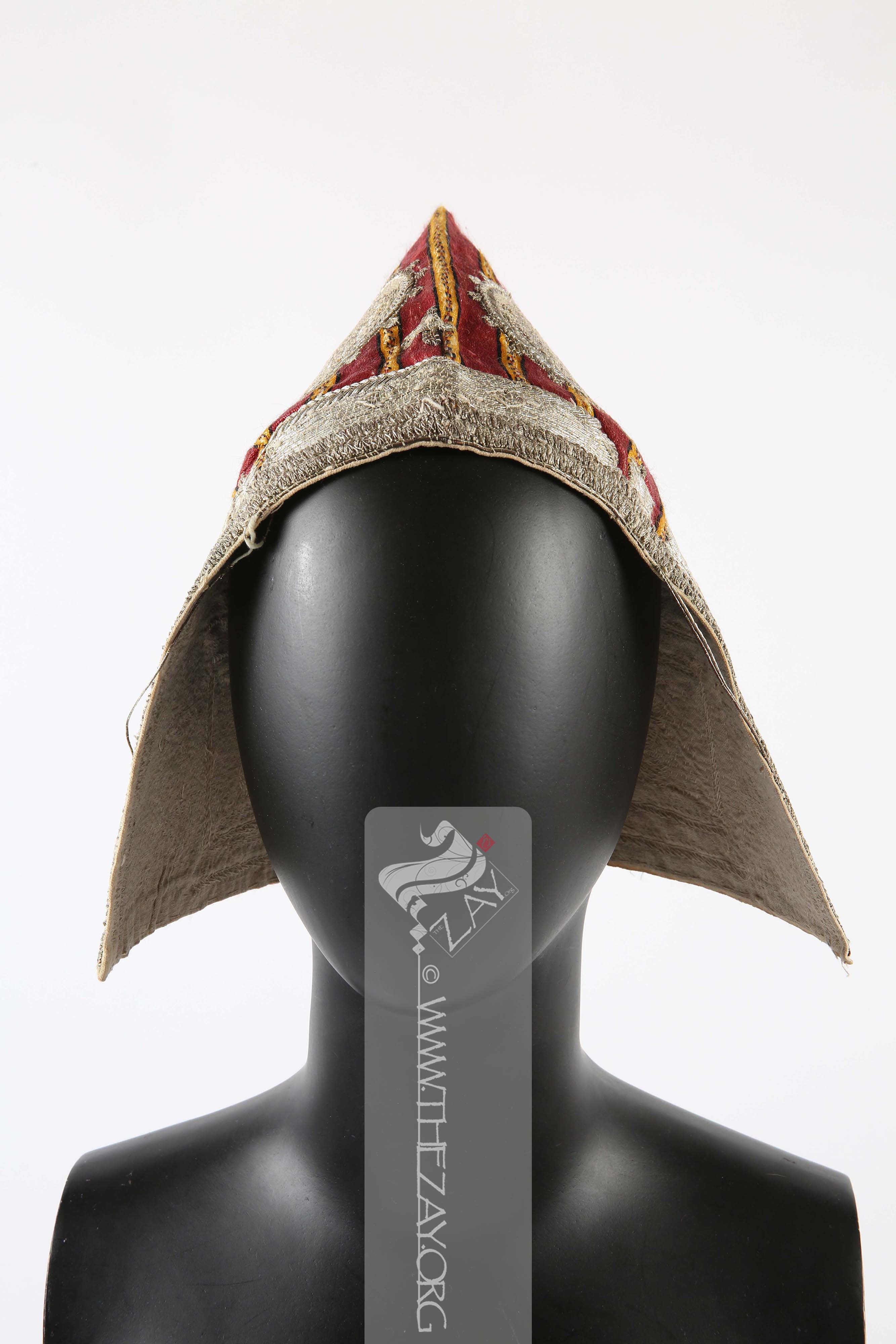
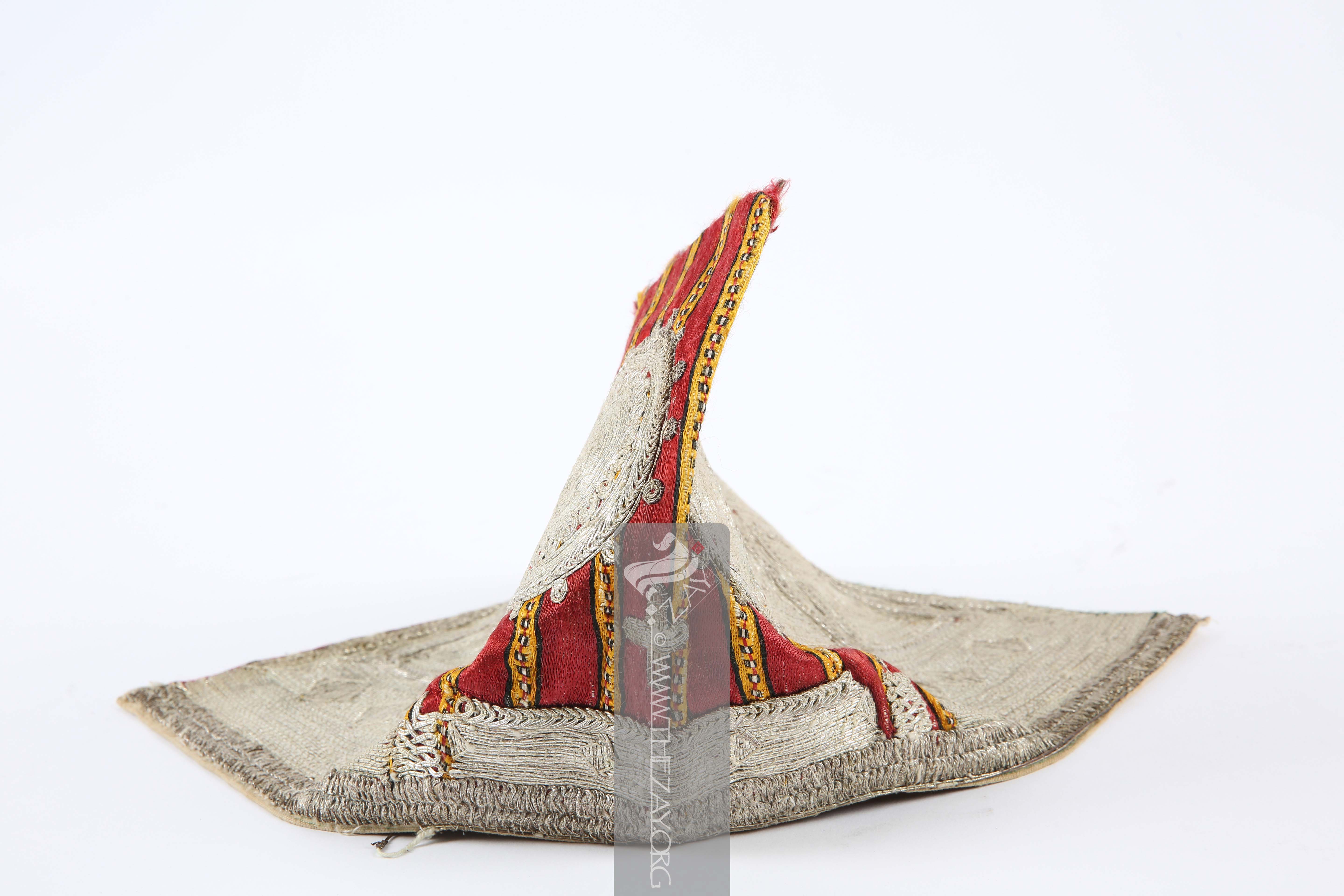
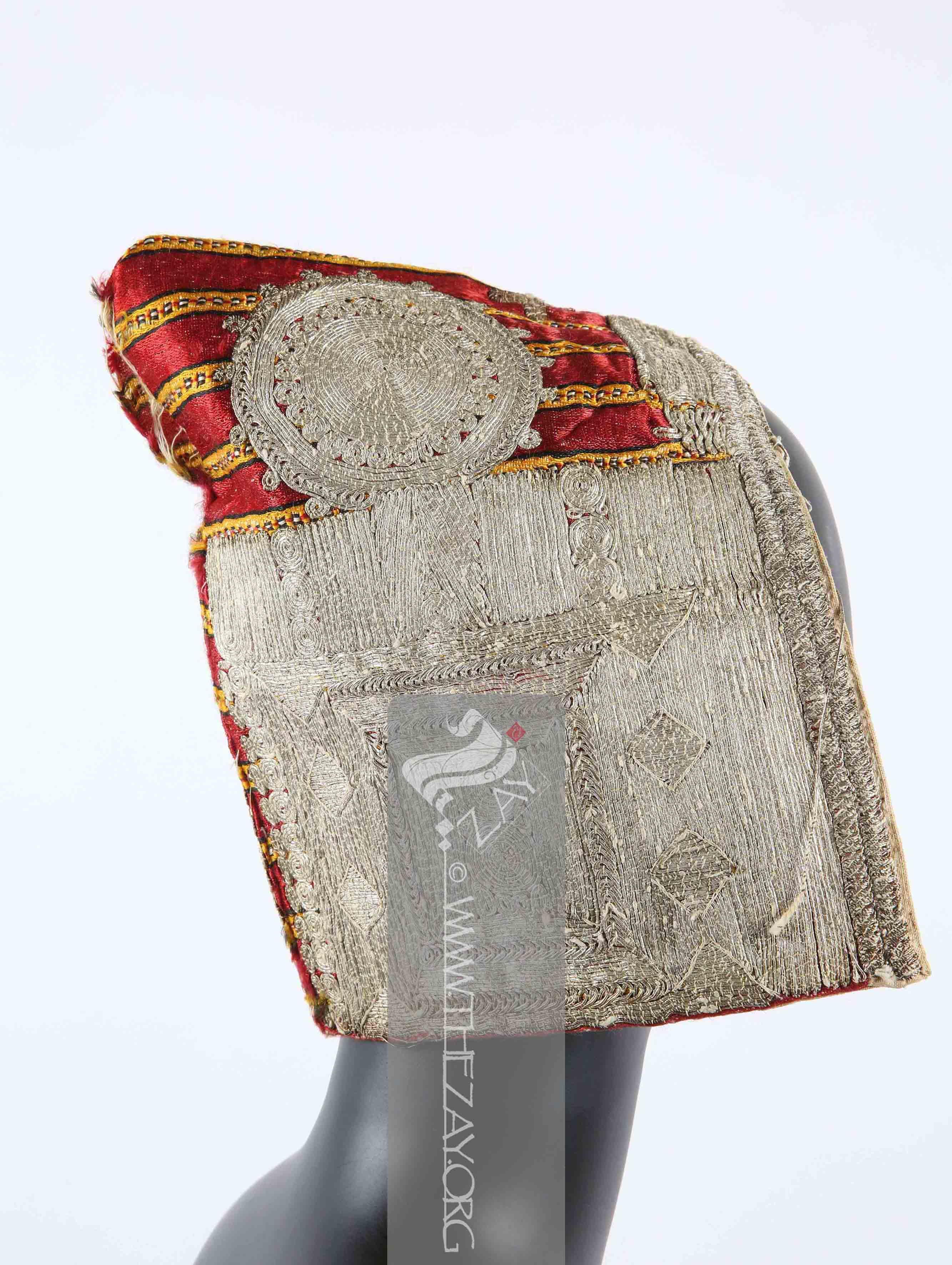
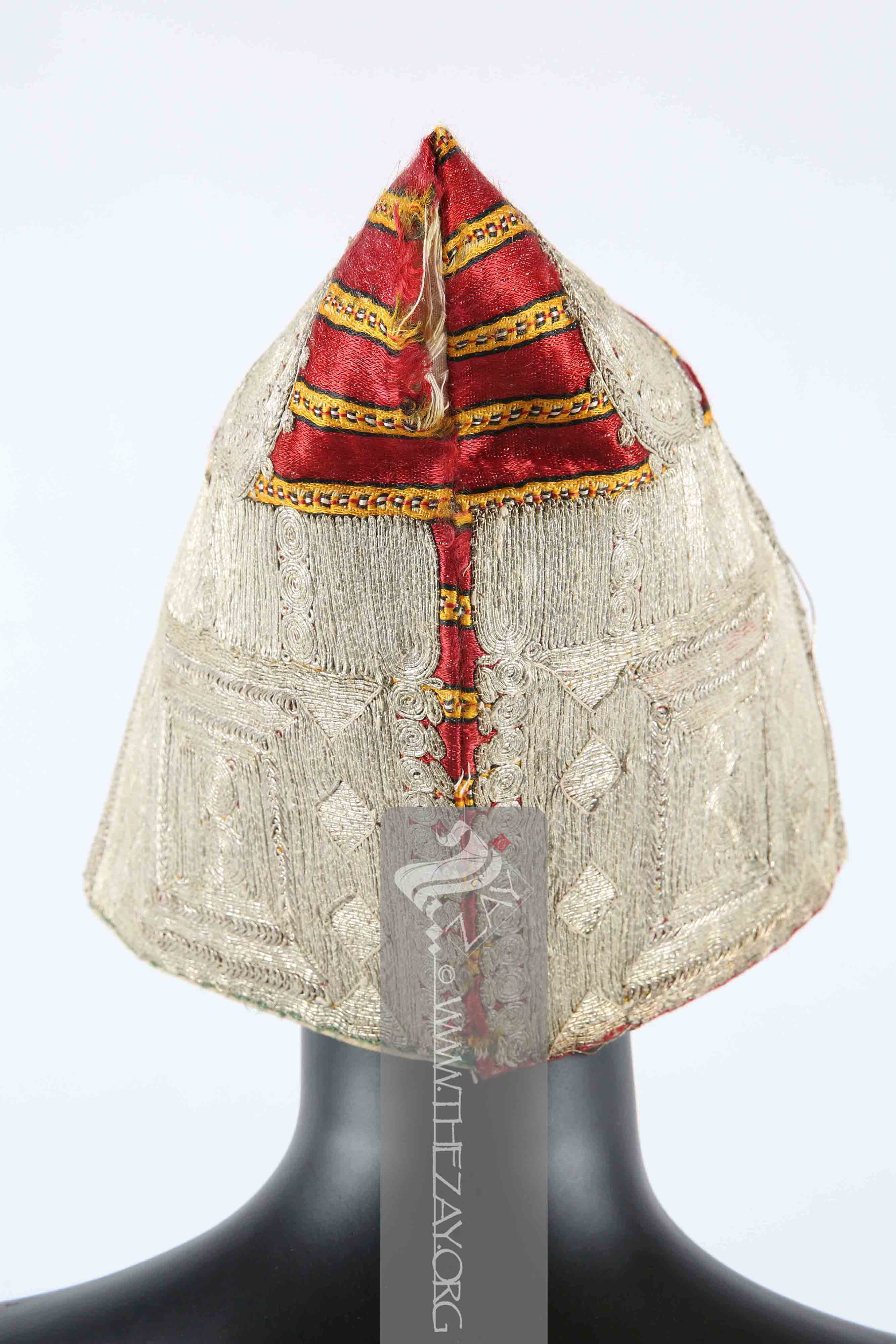
This is a woman’s coif or cap (gargush
Gargūsh: (Arabic: Qarqūsh), a hood-shaped coif traditionally worn by women of the Jewish community in Yemen. In this case, the name is a variant of the original Arabic word in the local Yemeni dialect.
The field of the gargush
Gargūsh: (Arabic: Qarqūsh), a hood-shaped coif traditionally worn by women of the Jewish community in Yemen. In this case, the name is a variant of the original Arabic word in the local Yemeni dialect. Couching: (Latin: collocare – Place together), in needlework and embroidery couching is a technique in which yarn or other materials are laid across the surface of the ground fabric and fastened in place with small stitches of the same or a different yarn Gargūsh: (Arabic: Qarqūsh), a hood-shaped coif traditionally worn by women of the Jewish community in Yemen. In this case, the name is a variant of the original Arabic word in the local Yemeni dialect. Couching: (Latin: collocare – Place together), in needlework and embroidery couching is a technique in which yarn or other materials are laid across the surface of the ground fabric and fastened in place with small stitches of the same or a different yarn Herringbone_stitch: a decorative stitch that creates a V-shaped pattern, resembling fish bones. It's commonly used in embroidery, sewing, and quilting to join fabrics or for decorative detailing. The stitch is worked diagonally and often gives a clean, attractive finish. Buttonhole_stitch: It is a decorative embroidery or looped stitch that is worked around the edge of an opening like the edges of buttonholes, creating a strong durable and neat finish.
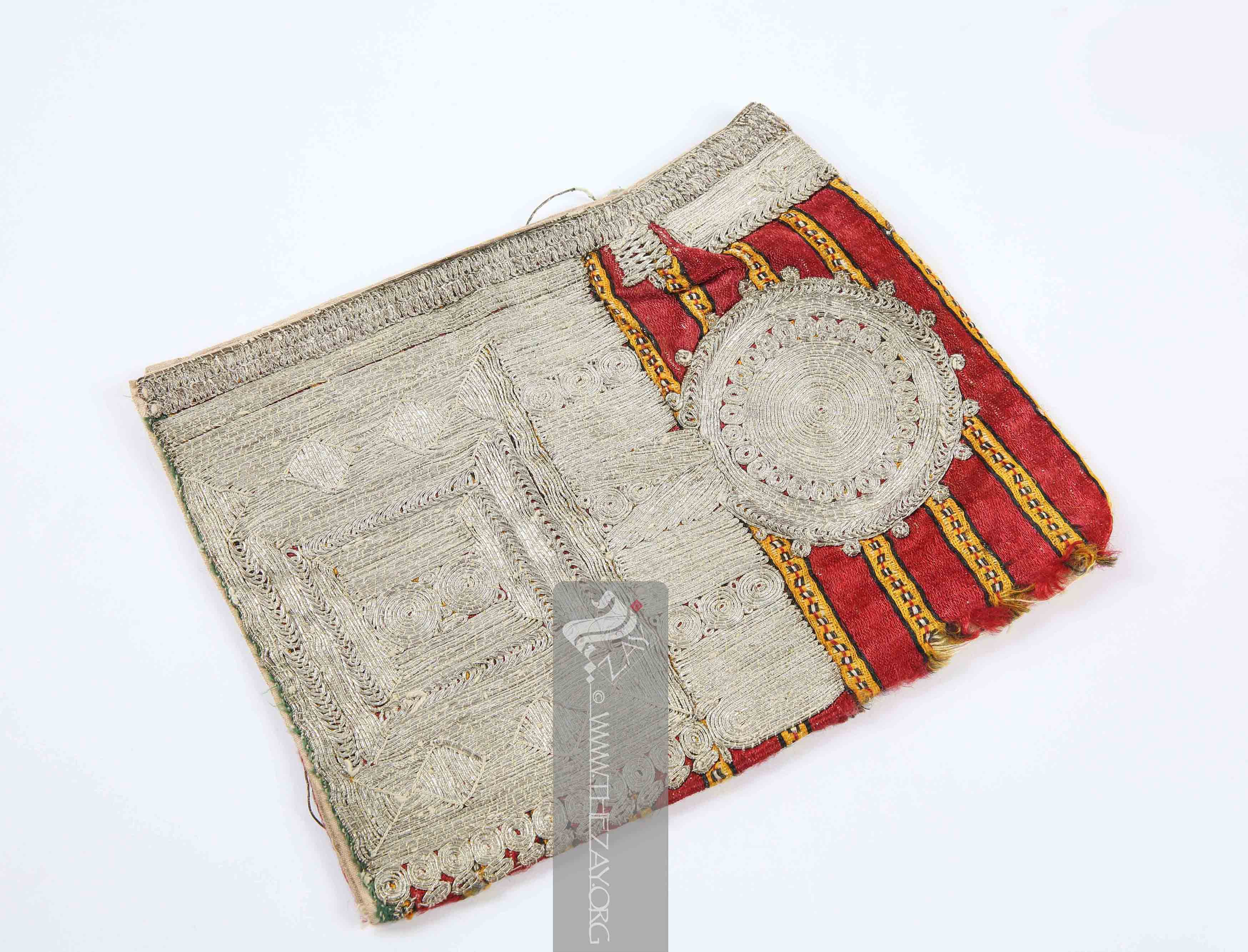
A large roundel sits atop each of the squares. Each roundel is composed of concentric circles made by looping the metal thread. Between the two roundels in the middle above the forehead rests a small cross also embroidered with silver thread in couching
Couching: (Latin: collocare – Place together), in needlework and embroidery couching is a technique in which yarn or other materials are laid across the surface of the ground fabric and fastened in place with small stitches of the same or a different yarn
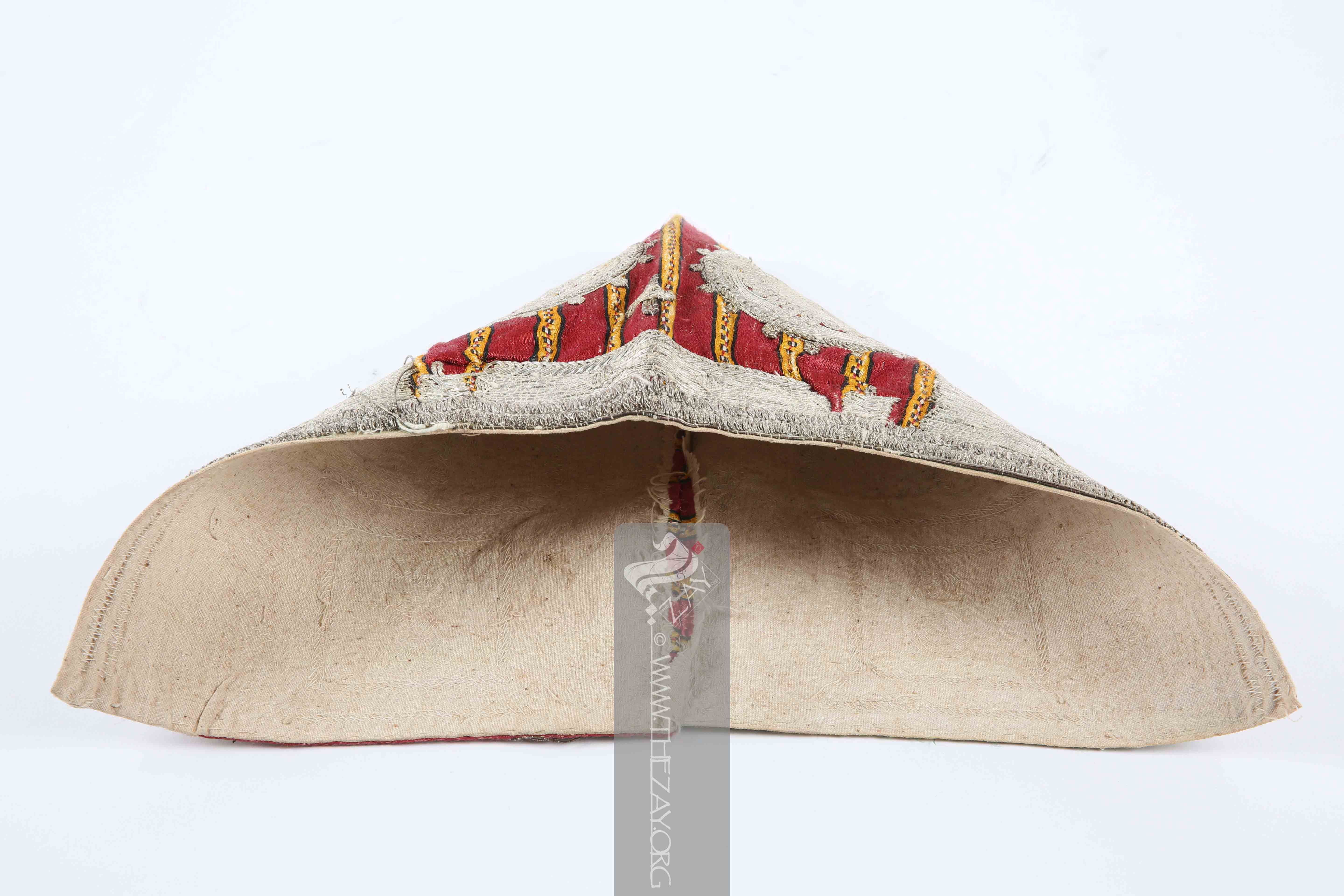
Although the piece is entirely lined with a plain ivory cotton fabric, the embroidery has been executed over it, making it readily apparent that it is thoroughly hand-embroidered. Additionally, it is also easily noticeable that it has been meticulously hand-stitched, too.
Although not much is known about this particular piece, gargush
Gargūsh: (Arabic: Qarqūsh), a hood-shaped coif traditionally worn by women of the Jewish community in Yemen. In this case, the name is a variant of the original Arabic word in the local Yemeni dialect. Gargūsh: (Arabic: Qarqūsh), a hood-shaped coif traditionally worn by women of the Jewish community in Yemen. In this case, the name is a variant of the original Arabic word in the local Yemeni dialect. Gargūsh: (Arabic: Qarqūsh), a hood-shaped coif traditionally worn by women of the Jewish community in Yemen. In this case, the name is a variant of the original Arabic word in the local Yemeni dialect. Gargūsh: (Arabic: Qarqūsh), a hood-shaped coif traditionally worn by women of the Jewish community in Yemen. In this case, the name is a variant of the original Arabic word in the local Yemeni dialect. Gargūsh: (Arabic: Qarqūsh), a hood-shaped coif traditionally worn by women of the Jewish community in Yemen. In this case, the name is a variant of the original Arabic word in the local Yemeni dialect.
More details
Headdresses such as this, alongside other more complicated forms of coifs, sometimes with a trail, were often elaborately decorated with amulets and were worn by women all over Yemen. However, decorations and style would differ depending upon the local forms and traditions, as well as occasions.
The most commonly worn coif or gargush
Gargūsh: (Arabic: Qarqūsh), a hood-shaped coif traditionally worn by women of the Jewish community in Yemen. In this case, the name is a variant of the original Arabic word in the local Yemeni dialect. Gargūsh: (Arabic: Qarqūsh), a hood-shaped coif traditionally worn by women of the Jewish community in Yemen. In this case, the name is a variant of the original Arabic word in the local Yemeni dialect. Gargūsh_gadīfah: (Arabic: qadifah – velvet), a hood shaped coif made of velvet traditionally worn by women of the Jewish community in Yemen.
In traditional Yemenite Jewish culture, girls would wear their first gargush
Gargūsh: (Arabic: Qarqūsh), a hood-shaped coif traditionally worn by women of the Jewish community in Yemen. In this case, the name is a variant of the original Arabic word in the local Yemeni dialect. Gargūsh: (Arabic: Qarqūsh), a hood-shaped coif traditionally worn by women of the Jewish community in Yemen. In this case, the name is a variant of the original Arabic word in the local Yemeni dialect.
These were the (gargush_mkharrat
Gargūsh_mkharraṭ: (Arabic: Mkharrat – conical shape), a hood shaped coif traditionally worn by women of the Jewish community in Yemen. These particular pieces are more conical in shape than others and may also feature triangular shaped embellished patterns. Gargūsh: (Arabic: Qarqūsh), a hood-shaped coif traditionally worn by women of the Jewish community in Yemen. In this case, the name is a variant of the original Arabic word in the local Yemeni dialect.
Bridal gargush
Gargūsh: (Arabic: Qarqūsh), a hood-shaped coif traditionally worn by women of the Jewish community in Yemen. In this case, the name is a variant of the original Arabic word in the local Yemeni dialect. Gargūsh: (Arabic: Qarqūsh), a hood-shaped coif traditionally worn by women of the Jewish community in Yemen. In this case, the name is a variant of the original Arabic word in the local Yemeni dialect.
Beyond signifying modesty, gargush
Gargūsh: (Arabic: Qarqūsh), a hood-shaped coif traditionally worn by women of the Jewish community in Yemen. In this case, the name is a variant of the original Arabic word in the local Yemeni dialect. Gargūsh: (Arabic: Qarqūsh), a hood-shaped coif traditionally worn by women of the Jewish community in Yemen. In this case, the name is a variant of the original Arabic word in the local Yemeni dialect. Gargūsh: (Arabic: Qarqūsh), a hood-shaped coif traditionally worn by women of the Jewish community in Yemen. In this case, the name is a variant of the original Arabic word in the local Yemeni dialect.