





1 of 14
| Local Name | Zubun |
| Object Category | Cloak |
| Gender | Male |
| Date of object | c. mid 20th century |
| Place Of orgin | Libya |
| Region | Libya |
| Object Range | Libya, Egypt, Tunisia, Algeria, Morocco et al |
| Dimensions | Length: 60 cm Width: 152 cm |
| Materials | Silk Synthetic |
| Technique | Machine Stitched |
| Color | |
| Motif | Floral Abstract |
| Provenance | Purchased, Independent Dealer, Texas 2021 |
| Location | The Zay Zay: (Arabic: costume, Pl. azyaā’), a set of clothes in a style typical of a particular country or historical period. Initiative |
| Status | In Storage |
| ZI number | ZI2021.500956a LIBYA |
Object Note
Part of a set along with three more items (ZI2021.500956 LIBYA, ZI2021.500956b LIBYA, ZI2021.500956c LIBYA) also in the collection.
Object History
This piece was purchased by Dr. Reem Tariq
Ṭariq: (Arabic; Synonym: tulle_bi_talli
Tūlle_bi_tallī: (French: Tulle – a city in France where fine material for veil was first made; Turkish: tel – wire; Synonym: tariq; talli; badla; khus_dozi ), series of small metal knots made on a woven net ground as embellishment. The term is commonly used in the North African Arab region specifically in Egypt. Ṭariq: (Arabic; Synonym: tulle_bi_talli
Tūlle_bi_tallī: (French: Tulle – a city in France where fine material for veil was first made; Turkish: tel – wire; Synonym: tariq; talli; badla; khus_dozi ), series of small metal knots made on a woven net ground as embellishment. The term is commonly used in the North African Arab region specifically in Egypt.
Dr. Reem and The Zay Zay: (Arabic: costume, Pl. azyaā’), a set of clothes in a style typical of a particular country or historical period. Initiative first acquired the trousers, waistcoat, and jacket from the dealer, as the cloak itself was sold separately to someone in Europe. Upon Dr Reem’s request to complete the ensembles, the buyer of the cloak was later traced and agreed to sell it to The Zay Zay: (Arabic: costume, Pl. azyaā’), a set of clothes in a style typical of a particular country or historical period. Initiative. However, it was lost and remained untraceable for 3 months en route to the dealer in the USA. Upon collection, the dealer managed to mail it to Dr Reem only to be lost in transit once more. Luckily the item was found again and finally arrived at The Zay Zay: (Arabic: costume, Pl. azyaā’), a set of clothes in a style typical of a particular country or historical period.’s doorstep unharmed after several hiccups. Amidst all this Dr Reem and The Zay Zay: (Arabic: costume, Pl. azyaā’), a set of clothes in a style typical of a particular country or historical period. Initiative were also furnished with a digital photograph of the gentleman donning the ensemble.
Object Features
This is a black (twill
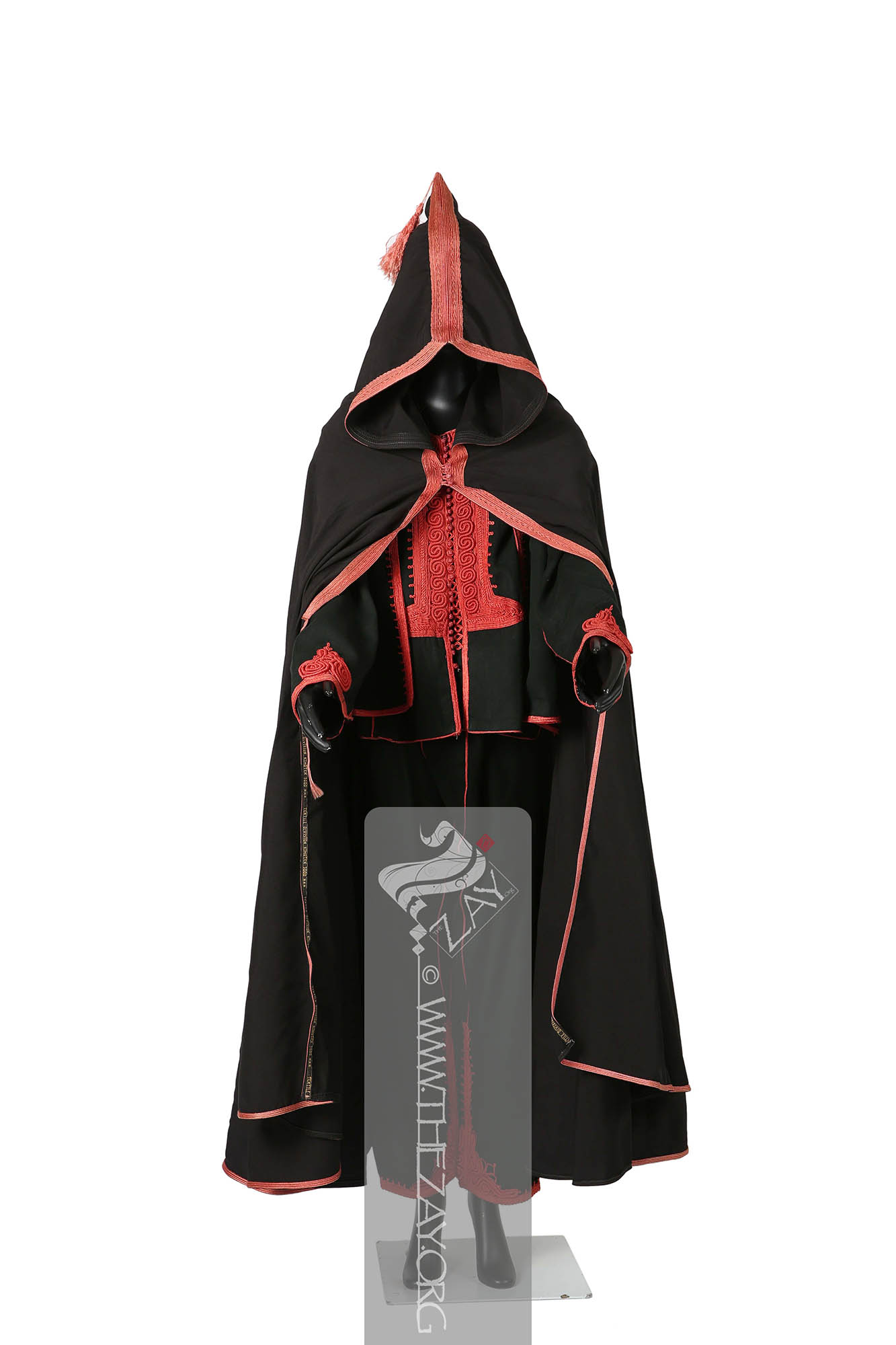
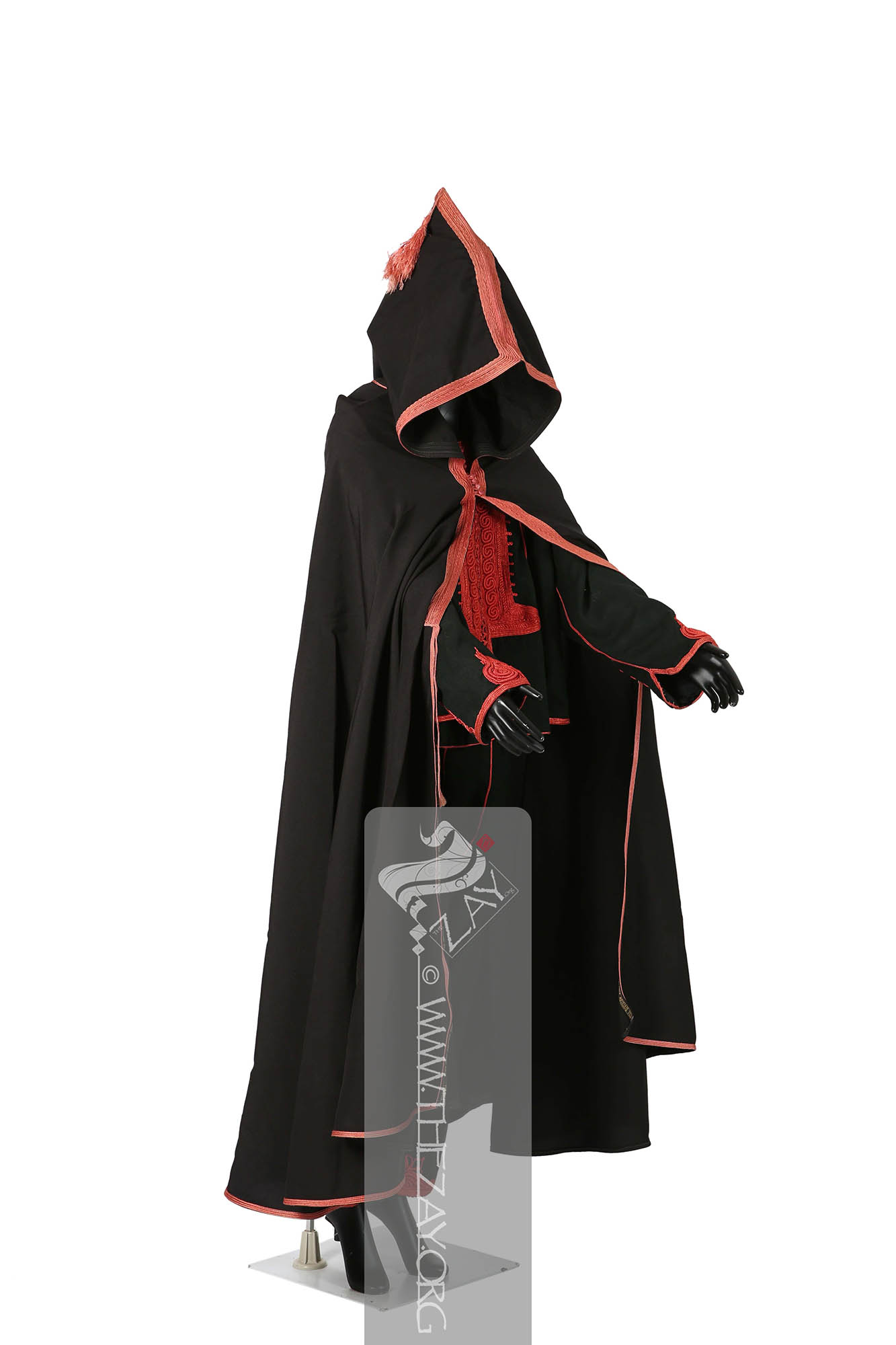
Twill: (English), one of the three primary textile weaves is defined by its prominent diagonal rib pattern. The fabrics woven in this method typically exhibit a pronounced, often darker front side, while the back is lighter. Zubūn: (Turkish: zibin – a type of jacket, synonyms: sayah, qumbāz, gombaz, yalak), long front open, unlined, lightweight silk traditional cloak either with a quarter or no sleeves fastened at the waist often worn by both men and women in the Levant, Fertile Crescent, and Najd regions.
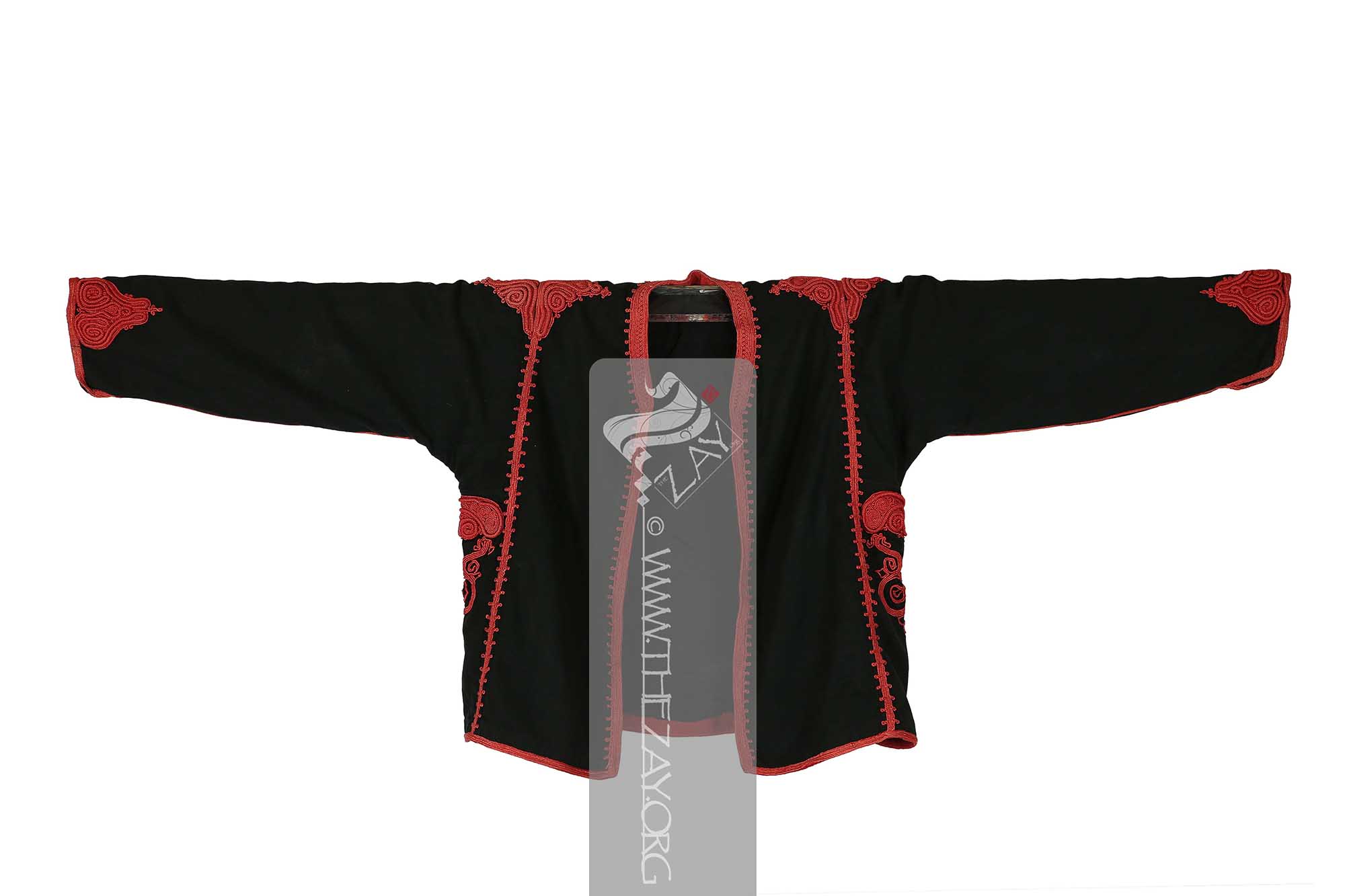
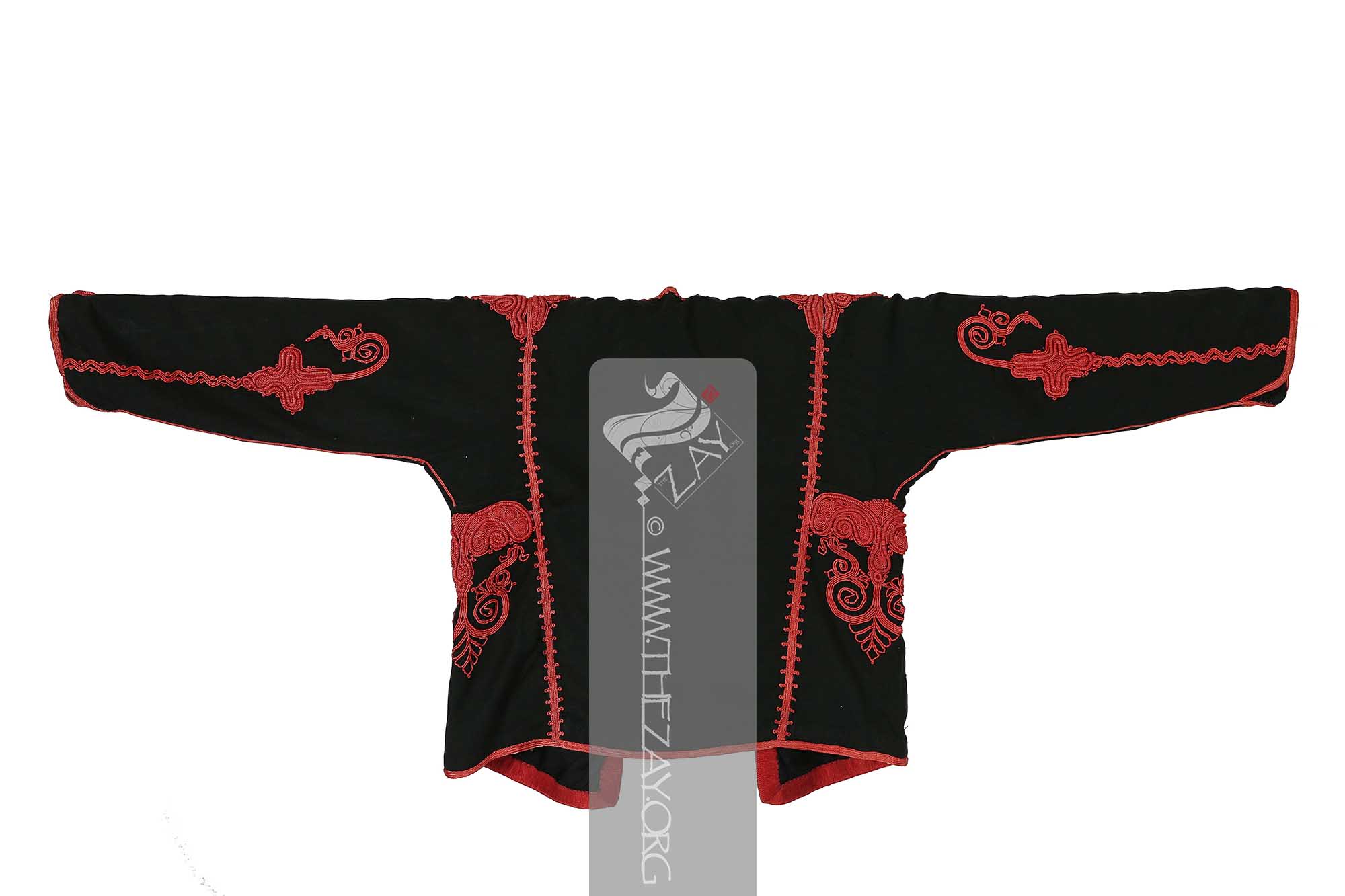
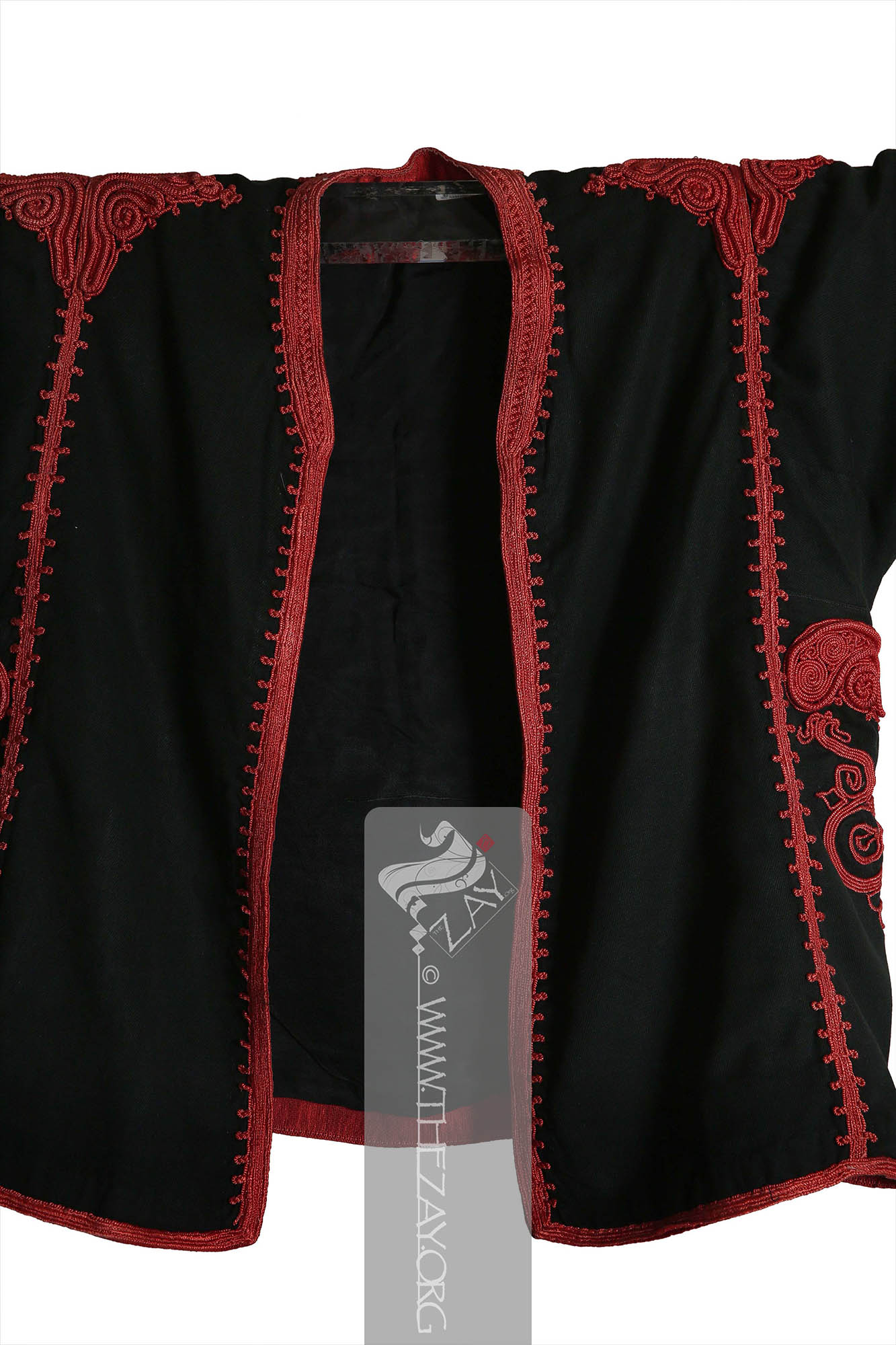
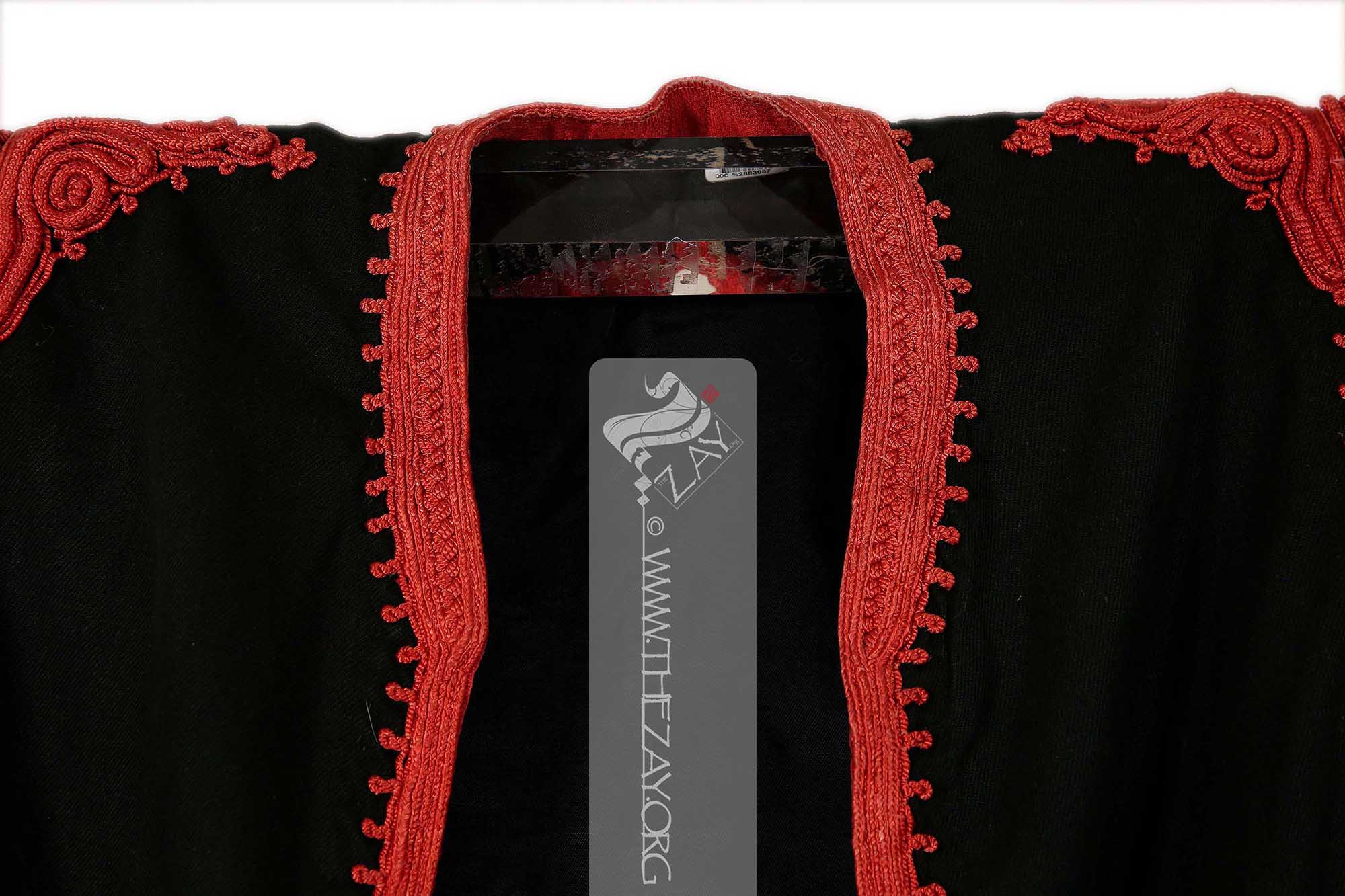
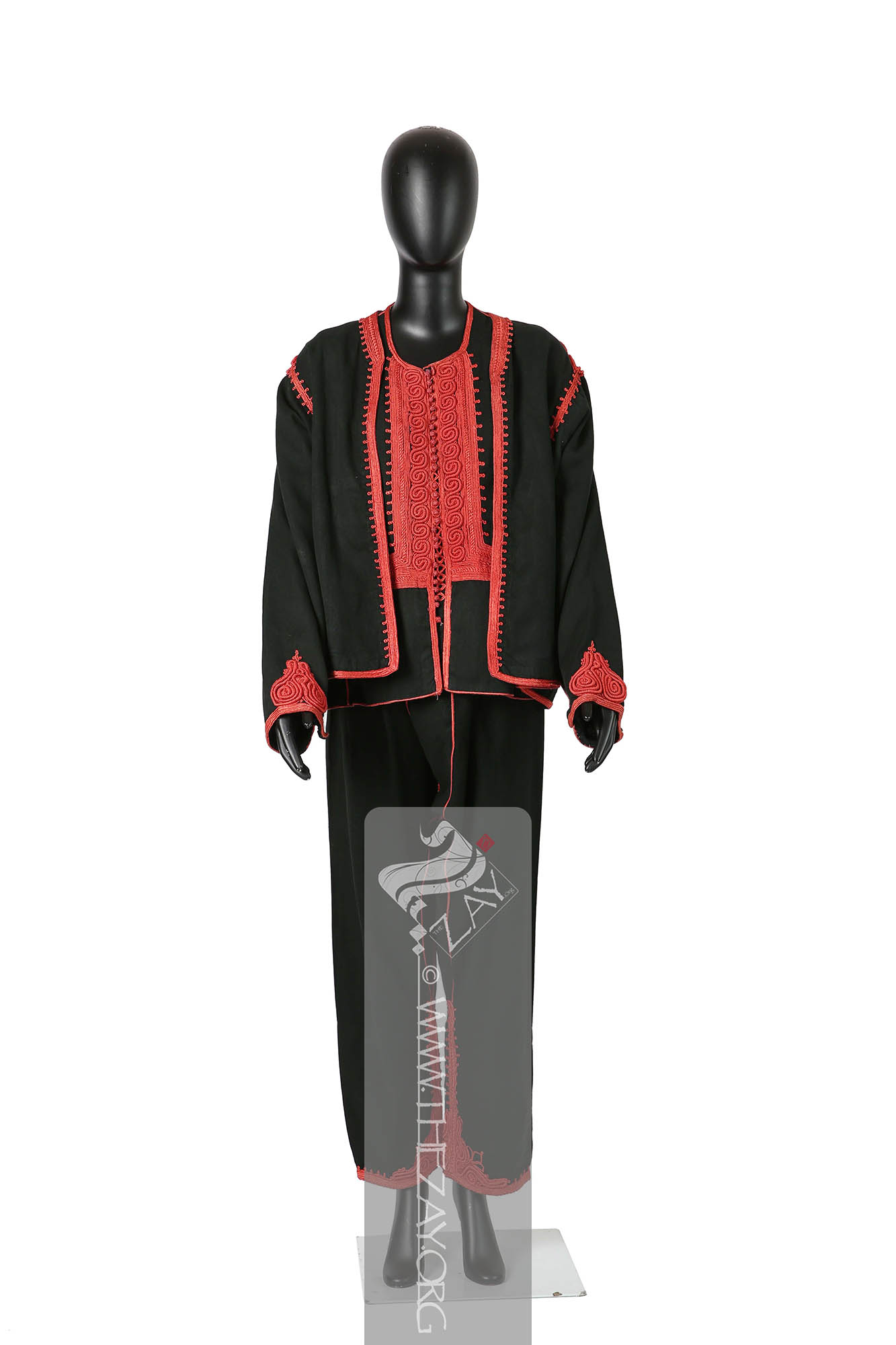
A front open jacket with no fastening it displays coiling patterns inspired by floral shapes. The front of the jacket is primarily plain except for the embellishment done in (couching
Couching: (Latin: collocare – Place together), in needlework and embroidery couching is a technique in which yarn or other materials are laid across the surface of the ground fabric and fastened in place with small stitches of the same or a different yarn
The side panels of the jacket under the armhole display a large floral and foliage arrangement distributed equally on both sides of the seams. A narrow (palmette Palmette: (French: Palmette – Small palm, synonym Greco-Roman: Anthemion), a decorative element, motif, or ornament particularly pertaining to designs of architecture and decorative arts that has radiating petals resembling a palm leaf. It is believed to have originated in ancient Egypt and had subsequently reached far and wide. ) shaped base gives way to twisted and coiled vines that spread into a canopy-like structure with spiral motifs.
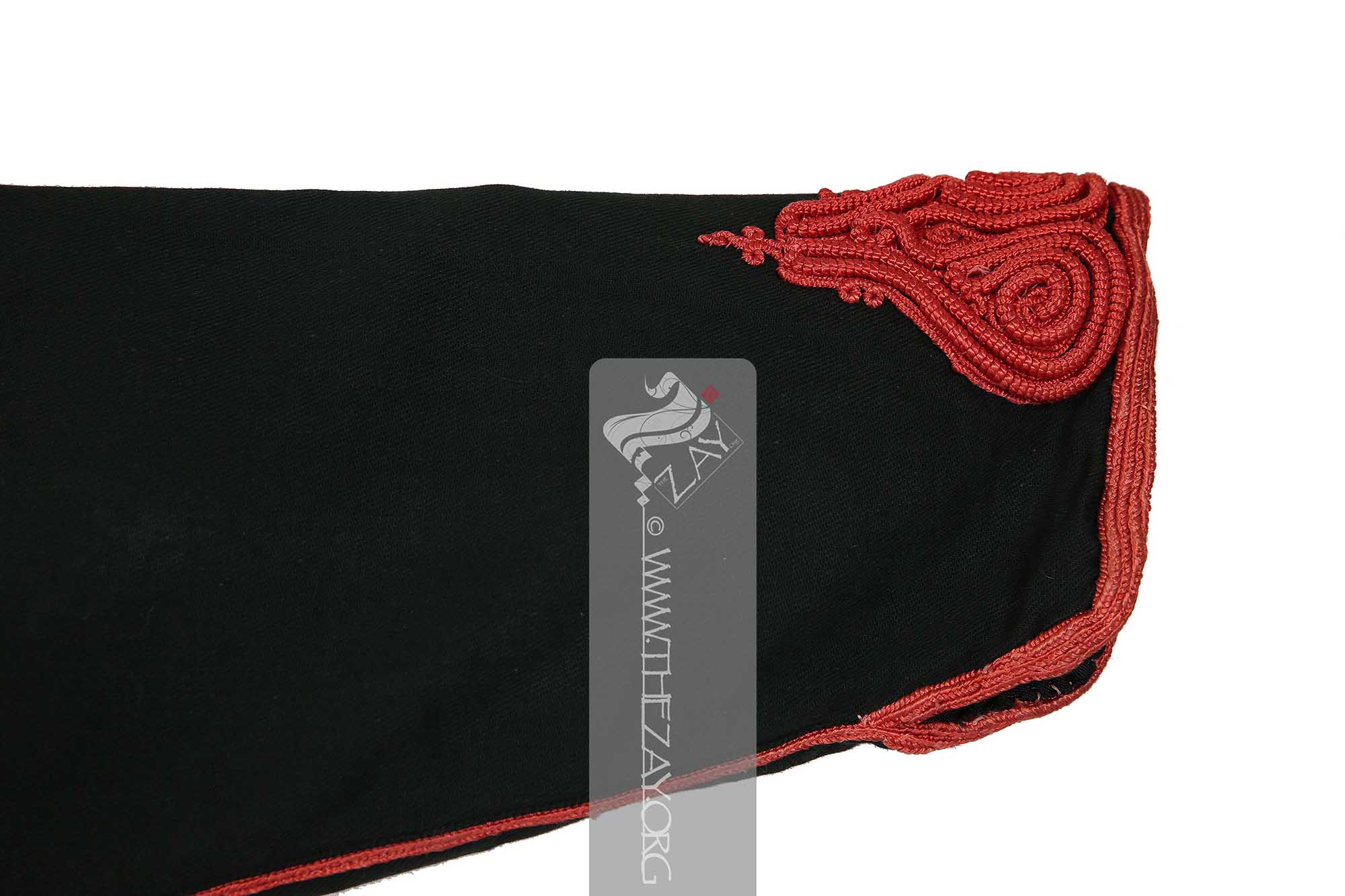
A similar but smaller spiral arrangement is reflected on the cuffs while the back of each sleeve has a thick wavy vine that gives way to a central rhomboidal-shaped formation that continues into a thinner wavy vine towards the shoulder.
A rhomboidal amulet-shaped arrangement in a similar manner rests on each shoulder and functions as a shoulder pad. These shapes converge towards the seamline trimming merging with both in the front as well as the back.
Although it is possibly hand embroidered the jacket is stitched partially by hand and partially by machine. It is lined with black silk (satin Sātin: (Arabic: Zaytuni: from Chinese port of Zayton in Quanzhou province where it was exported from and acquired by Arab merchants), one of the three basic types of woven fabric with a glossy top surface and a dull back. Originated in China and was fundamentally woven in silk.) weave with flat woven silk edging in coral Coral: (Greek: korallion, probably from Hebrew: goral – small pebbles), is a pale to medium shade of pink with orange or peach undertones, resembling the colour of certain species of coral. pink and features a deep pocket on the underside of each front flap.
Links