




1 of 16
| Local Name | Fustan |
| Object Category | Overgarment |
| Gender | Female |
| Date of object | c. 21st century |
| Place Of orgin | Iraq |
| Region | - |
| Object Range | Global |
| Dimensions | Length: 165 cm Width: 127 cm |
| Materials | Silk Other |
| Technique | Machine Stitched Machine Embroidered |
| Color | |
| Motif | Floral |
| Provenance | Donated, Saif Al-Obaidi, Iraq 2021 |
| Location | The Zay Zay: (Arabic: costume, Pl. azyaā’), a set of clothes in a style typical of a particular country or historical period. Initiative |
| Status | In Storage |
| ZI number | ZI2021.500969.1 IRAQ |
Object Note
Part of a set along with two more items (ZI2021.500969.1a IRAQ, ZI2021.500969.1b IRAQ), also part of the collection.
Object History
This piece was donated to Dr. Reem Tariq
Ṭariq: (Arabic; Synonym: tulle_bi_talli
Tūlle_bi_tallī: (French: Tulle – a city in France where fine material for veil was first made; Turkish: tel – wire; Synonym: tariq; talli; badla; khus_dozi ), series of small metal knots made on a woven net ground as embellishment. The term is commonly used in the North African Arab region specifically in Egypt. Ṭariq: (Arabic; Synonym: tulle_bi_talli
Tūlle_bi_tallī: (French: Tulle – a city in France where fine material for veil was first made; Turkish: tel – wire; Synonym: tariq; talli; badla; khus_dozi ), series of small metal knots made on a woven net ground as embellishment. The term is commonly used in the North African Arab region specifically in Egypt.
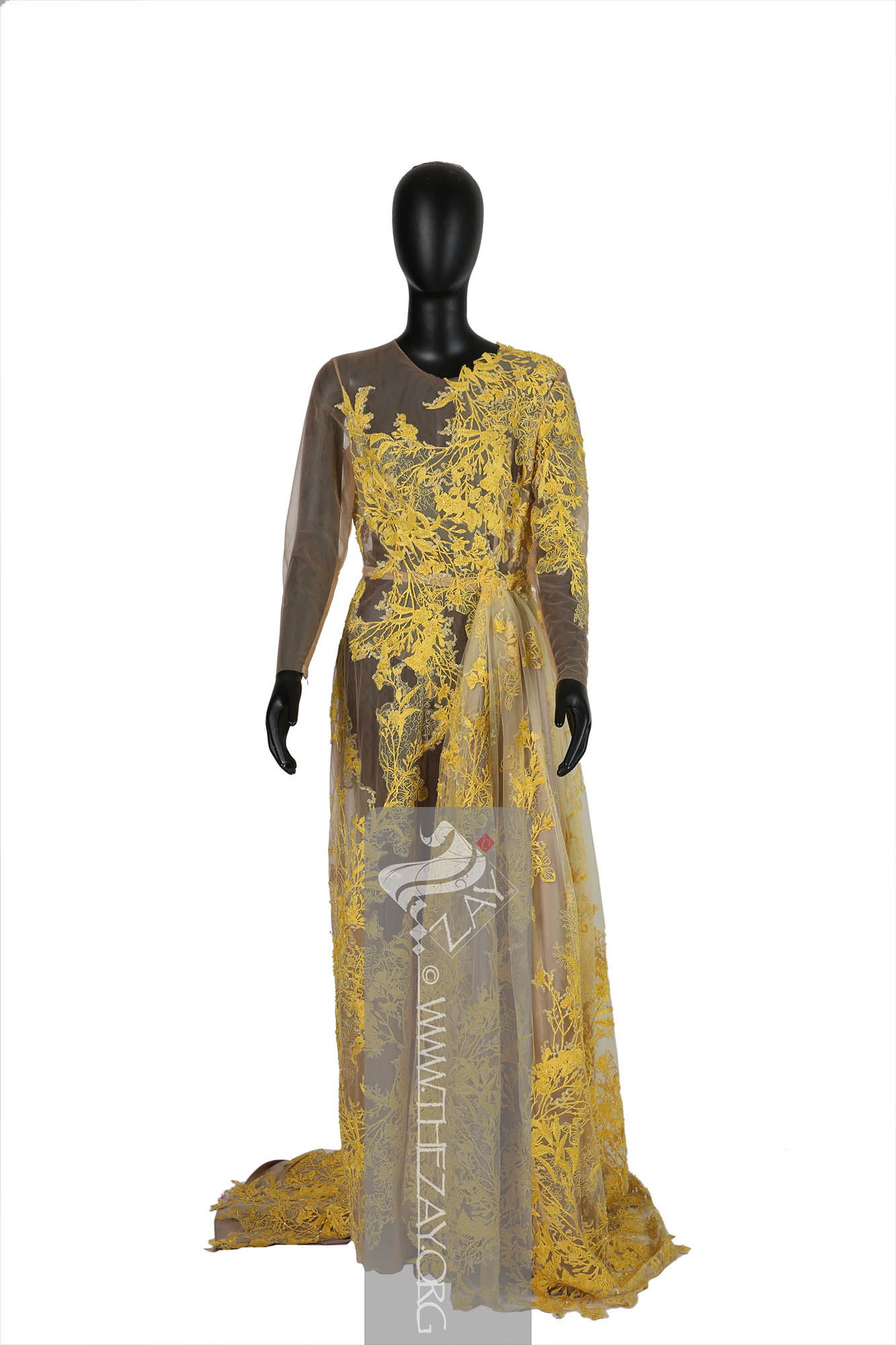
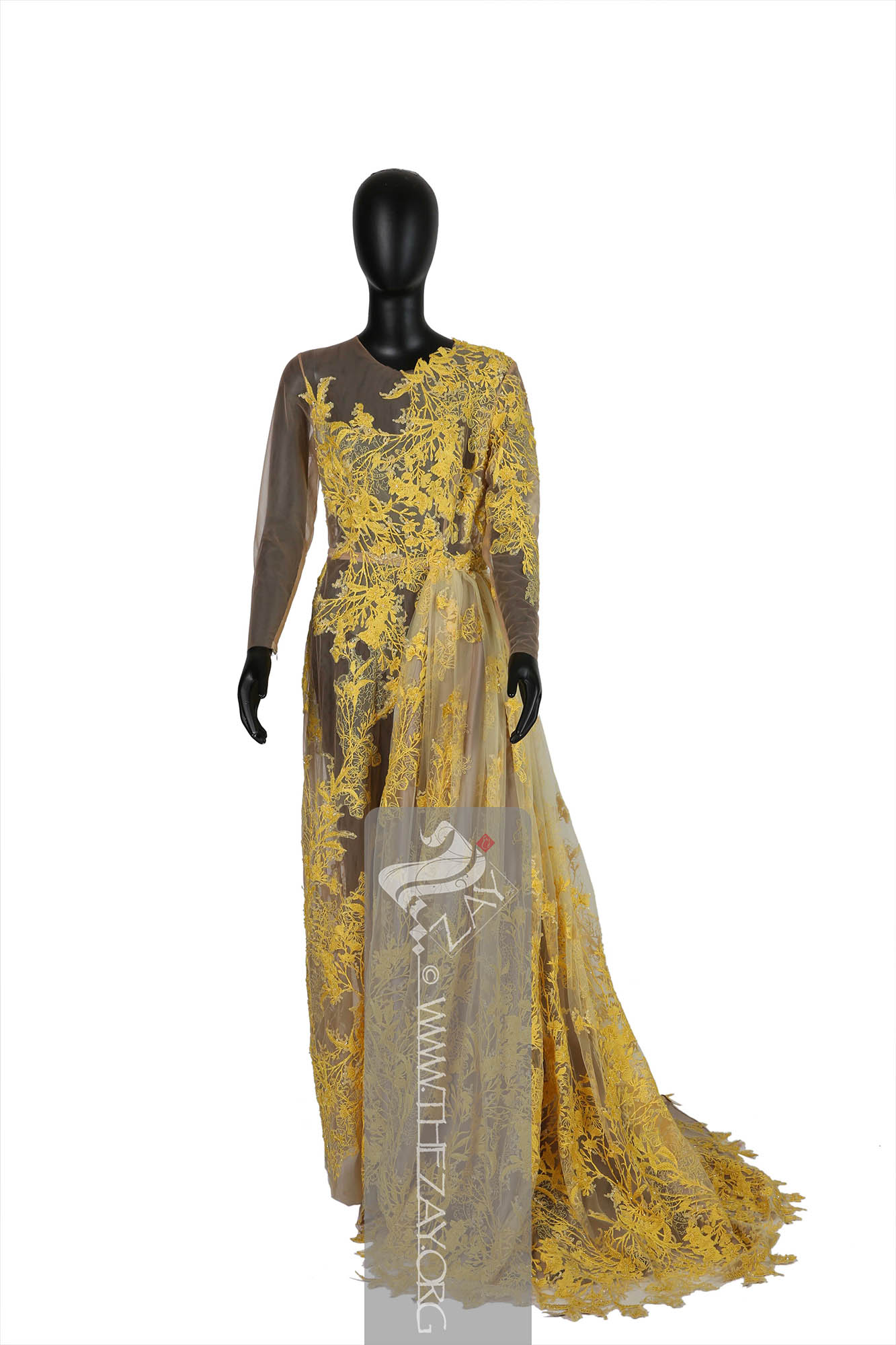
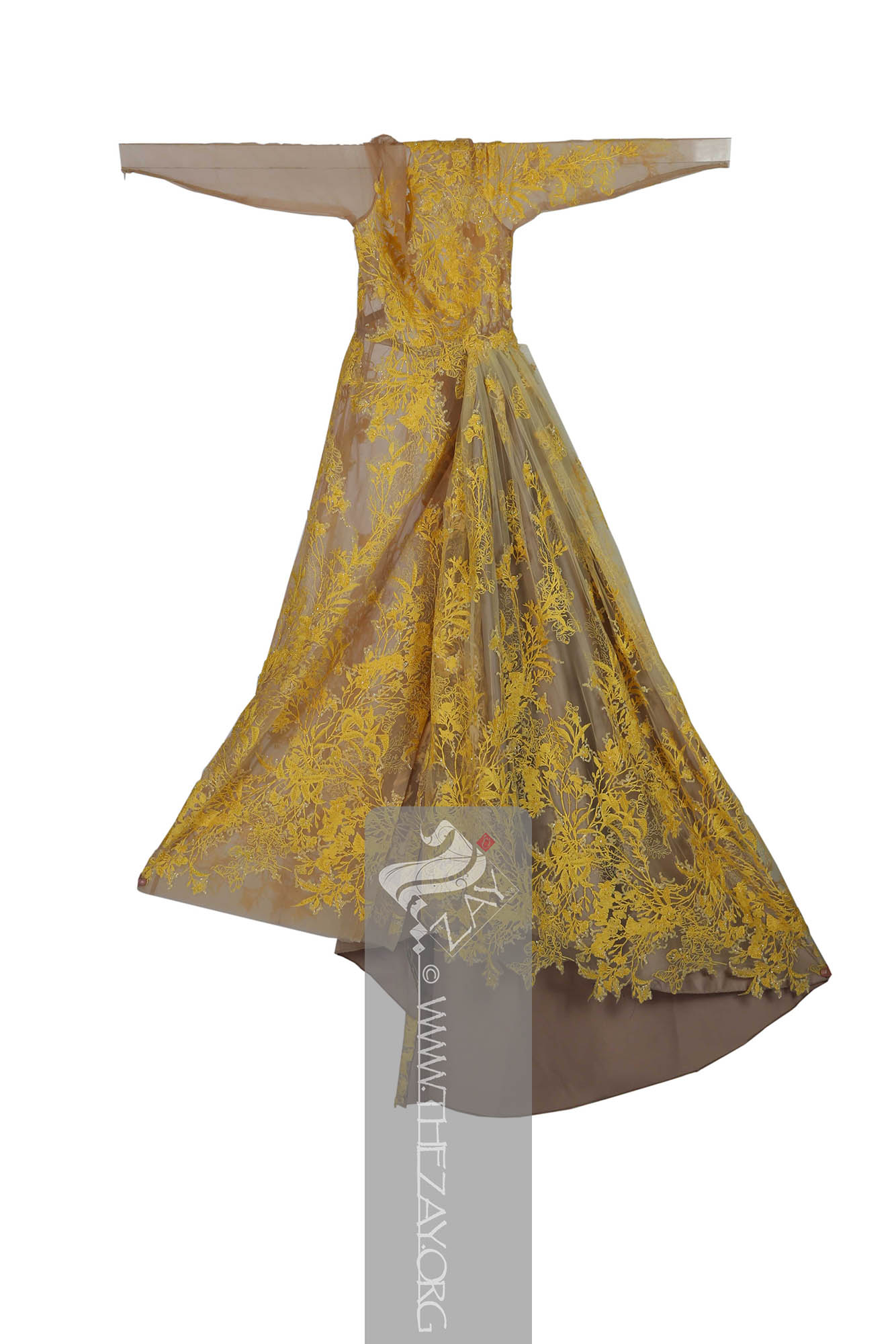
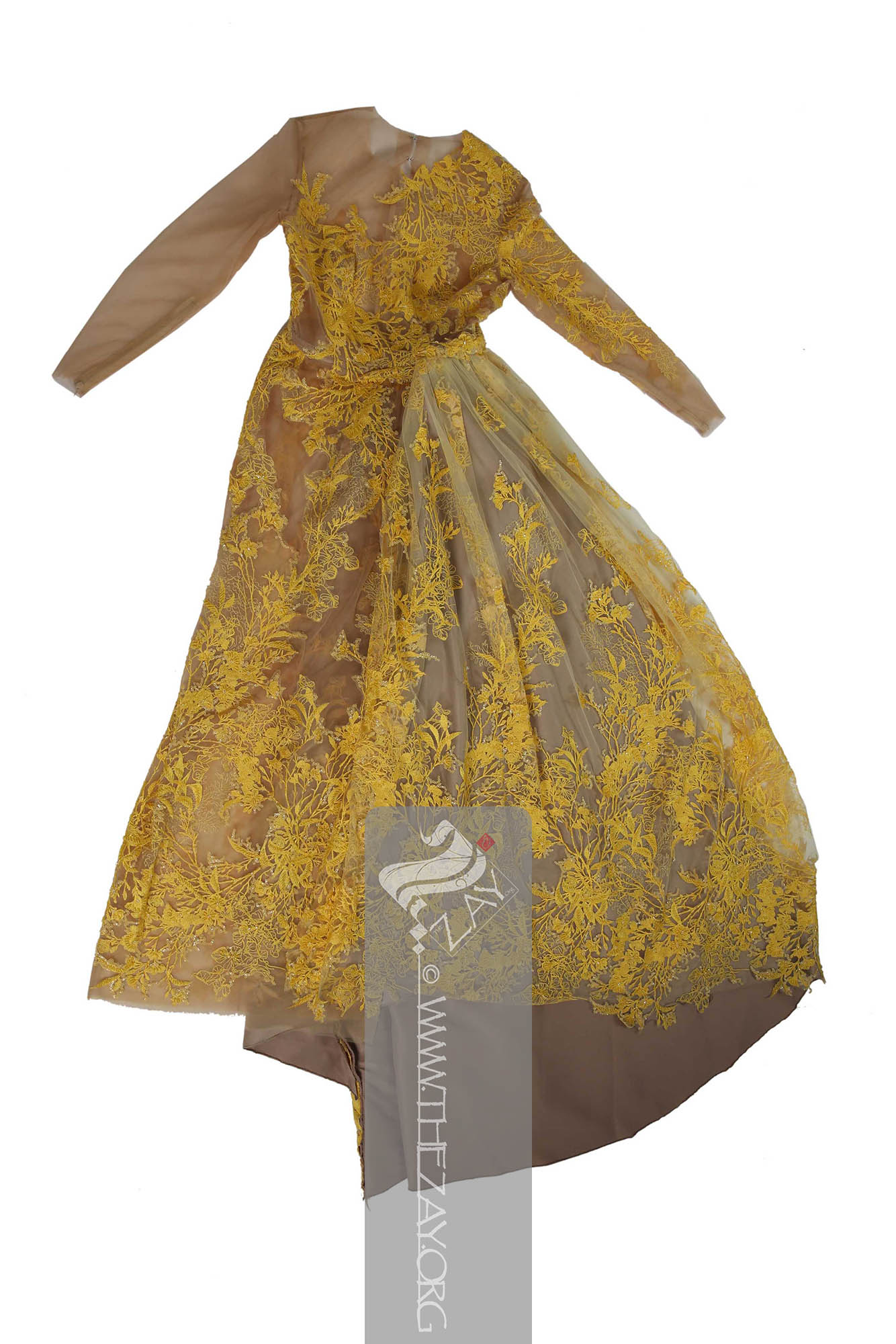
A contemporary dress with a cape, Babylon Festival, Iraq, 2021, donated to the initiative by Iraqi designer Saif Al-Obaidi, worn by Kuwaiti artist Shams at the opening of the Babylon Cultural Festival in 2021, inspired by Babylonian heritage I would say the significance of this dress is that it represents the work of contemporary Iraqi fashion designer worn by a Kuwaiti artist on Iraqi soil, during the opening of major yearly Iraqi cultural fest.
Babil International Festival is an annual festival held on the terraces of the ancient city of Babylon in the province of Babylon in central Iraq. Its activities were first launched in 1987. The festival activities have been suspended since 2003 following the Iraq war and the subsequent security deterioration, but the festival activities were resumed in 2021 after a break of 19 years. With the Kuwaiti Singer Shams, one of the star-studded Arab entertainers emigrating to the fest.
Object Features
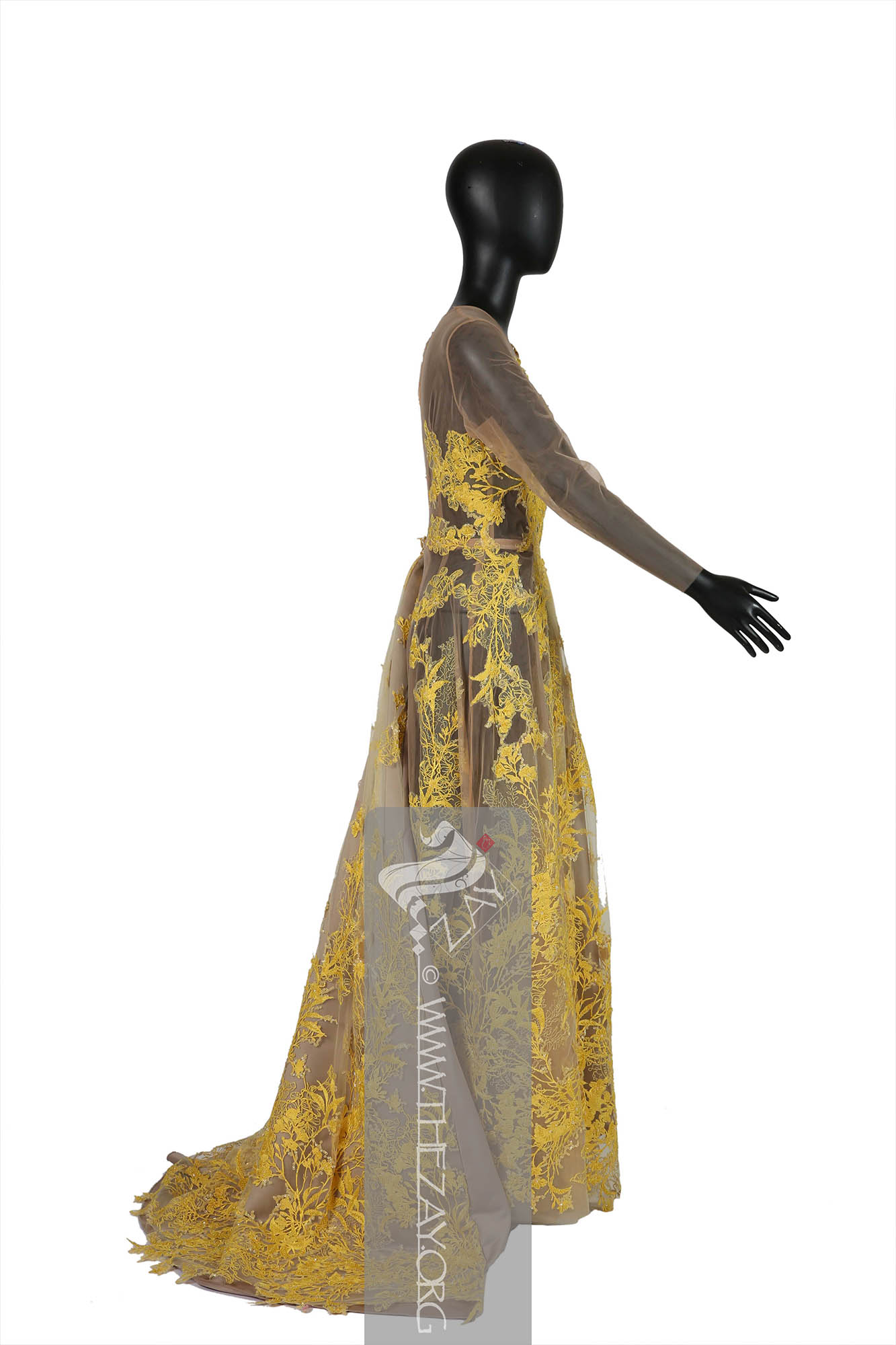
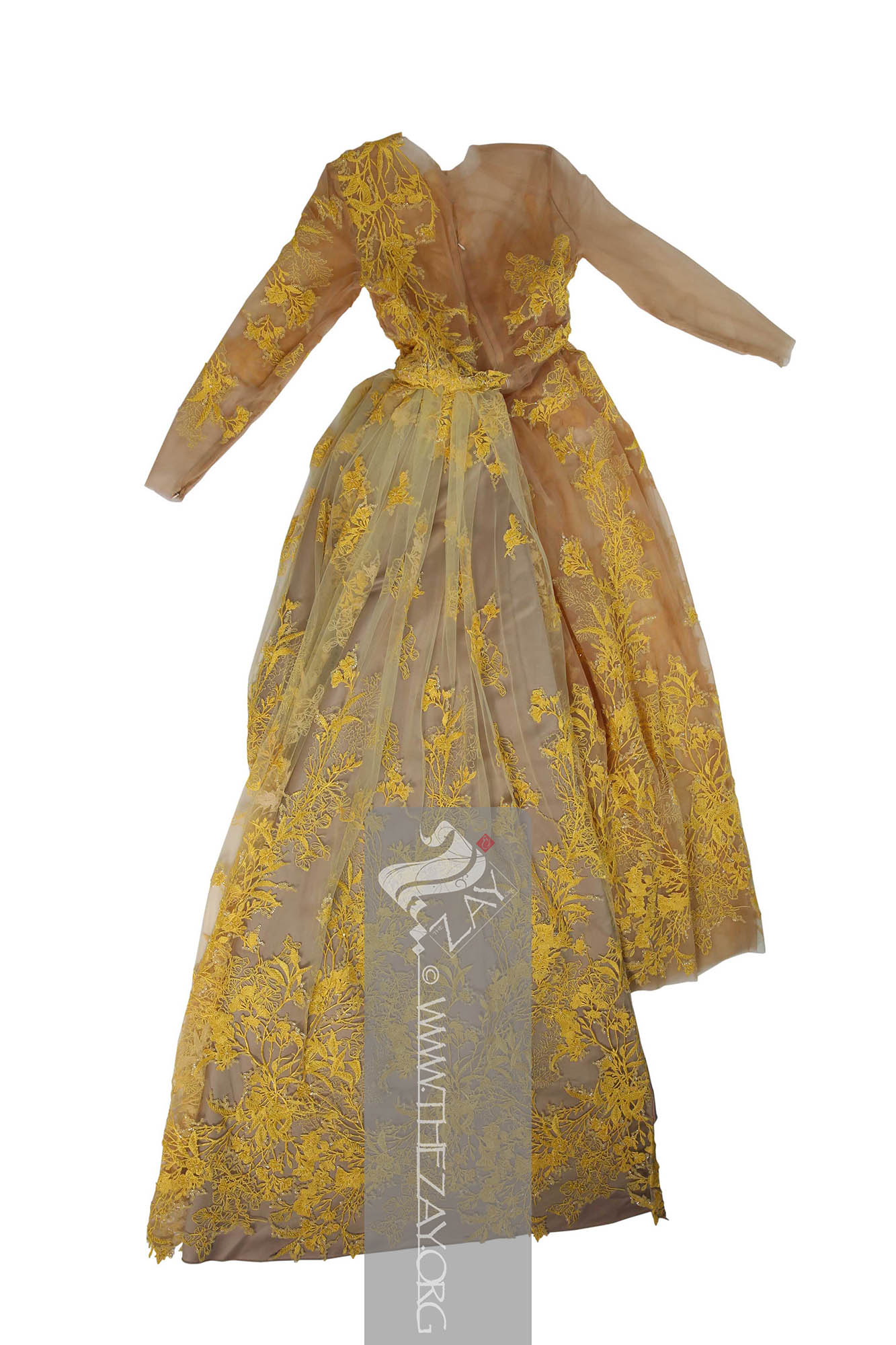
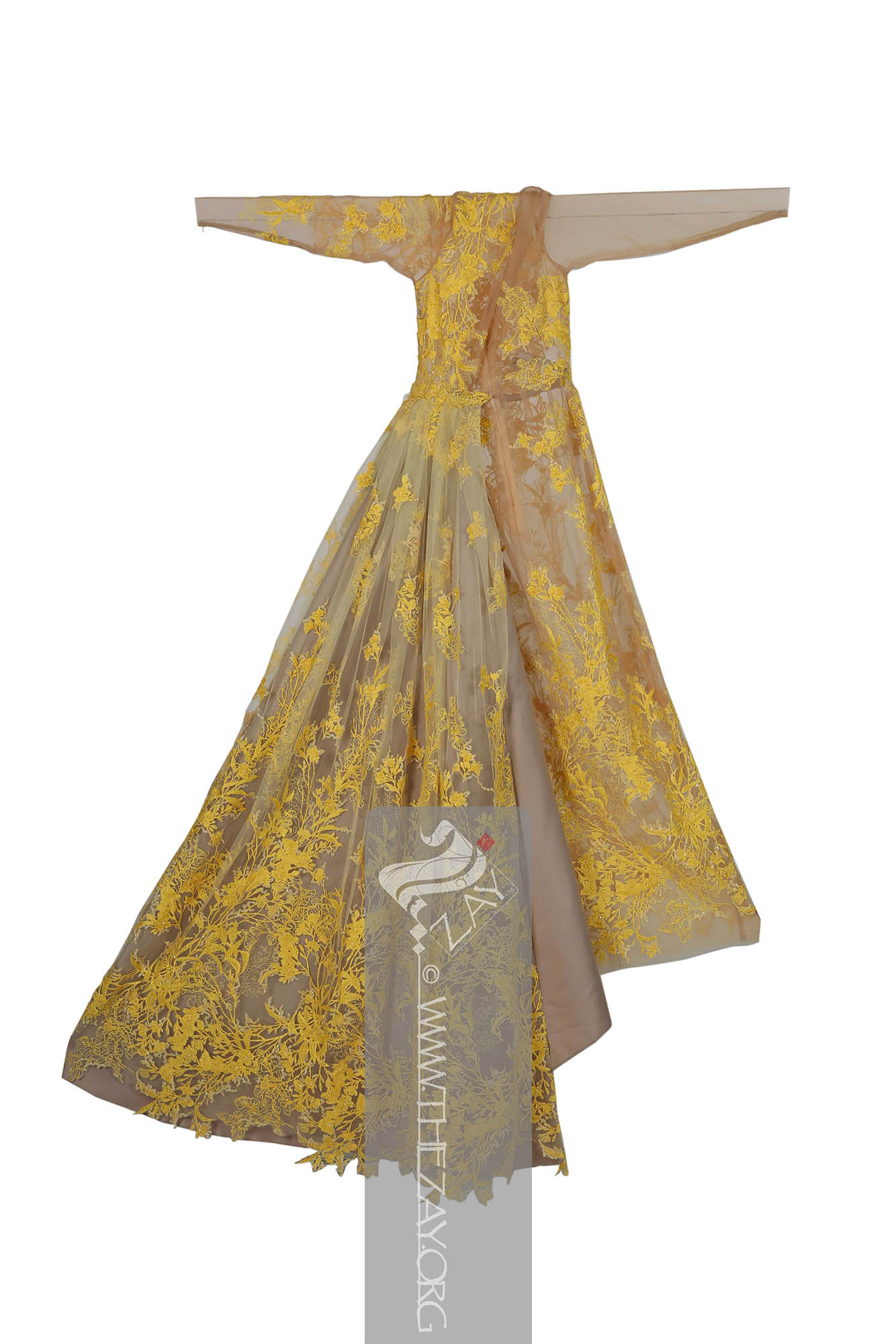
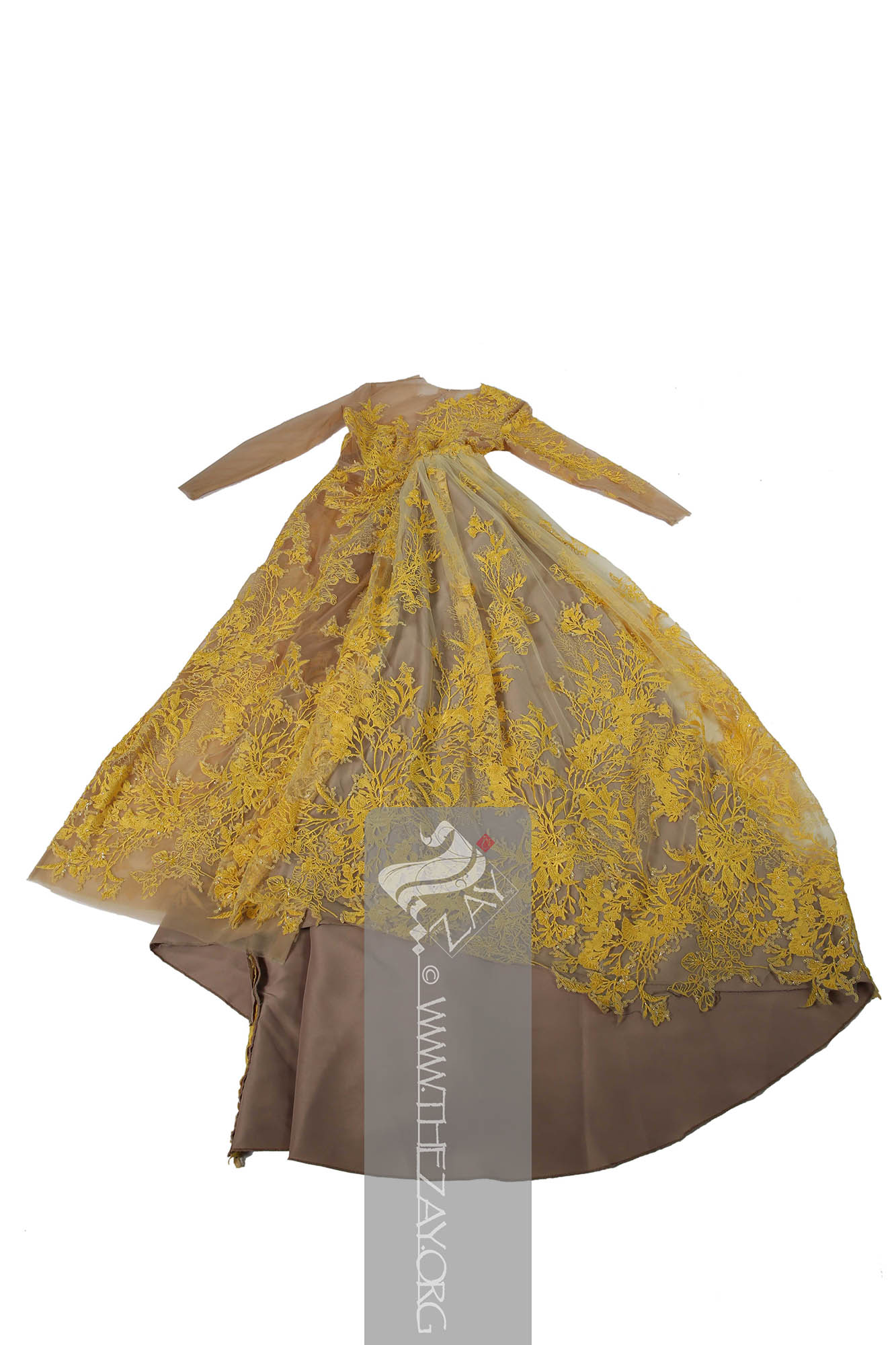
This is an asymmetric evening gown constructed of yellow tulle and beige silk of (satin Sātin: (Arabic: Zaytuni: from Chinese port of Zayton in Quanzhou province where it was exported from and acquired by Arab merchants), one of the three basic types of woven fabric with a glossy top surface and a dull back. Originated in China and was fundamentally woven in silk.) weave. Featuring elaborate embroidered embellishment and a side train, the (yoke Yoke: (Synonym: Bodice_Yoke), a structured pattern fitted at the shoulders defining the structure of women’s garments. Introduced in c. 1880s it defines the transition between the upper and lower parts of the garments and can now be found stitched-in where the blouse is separated from the skirt by a horizontal seam. ) and the skirt of the dress are constructed of tulle, while the train on the skirt is constructed of satin Sātin: (Arabic: Zaytuni: from Chinese port of Zayton in Quanzhou province where it was exported from and acquired by Arab merchants), one of the three basic types of woven fabric with a glossy top surface and a dull back. Originated in China and was fundamentally woven in silk. with a tulle overlay.
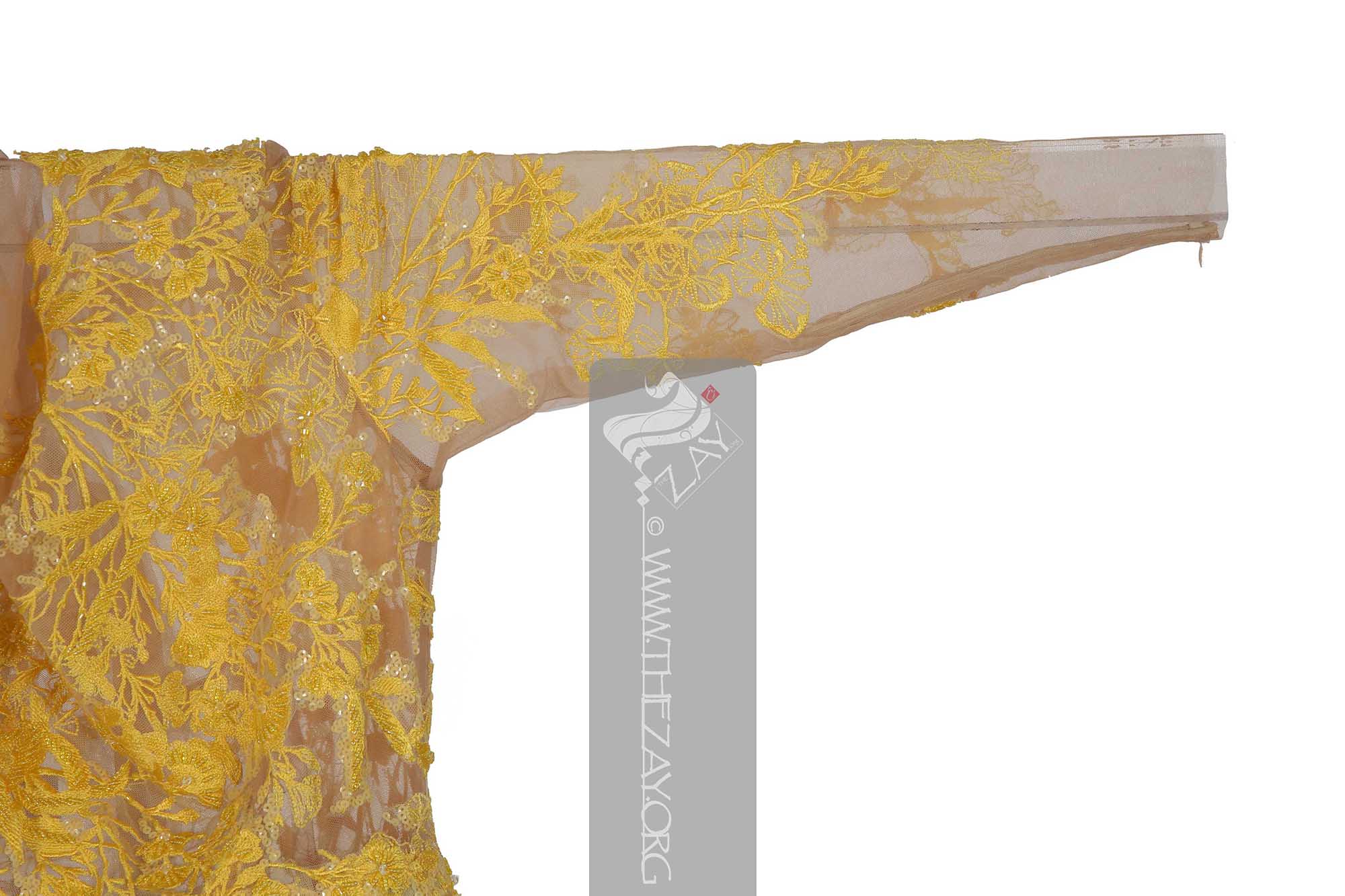
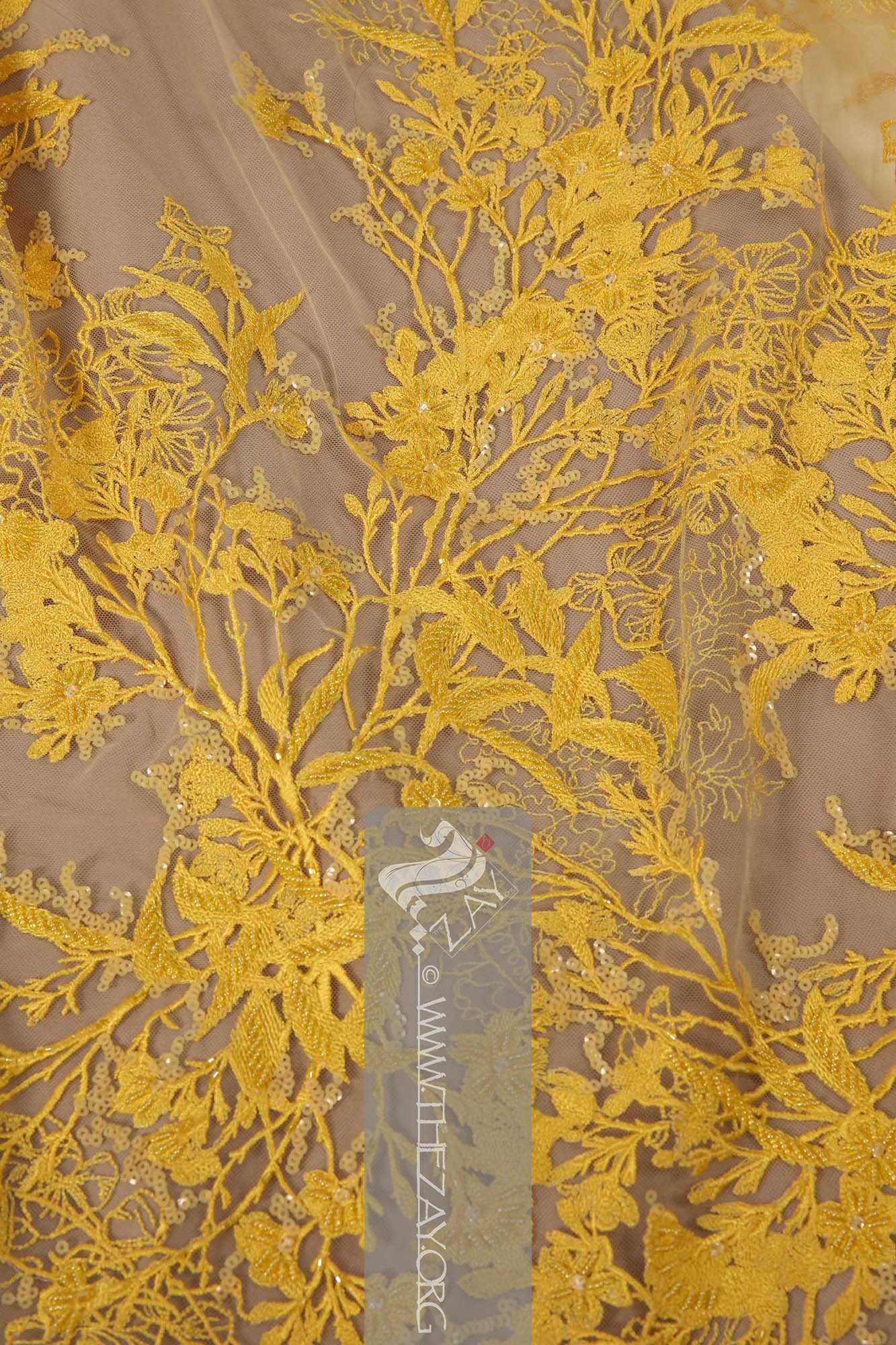
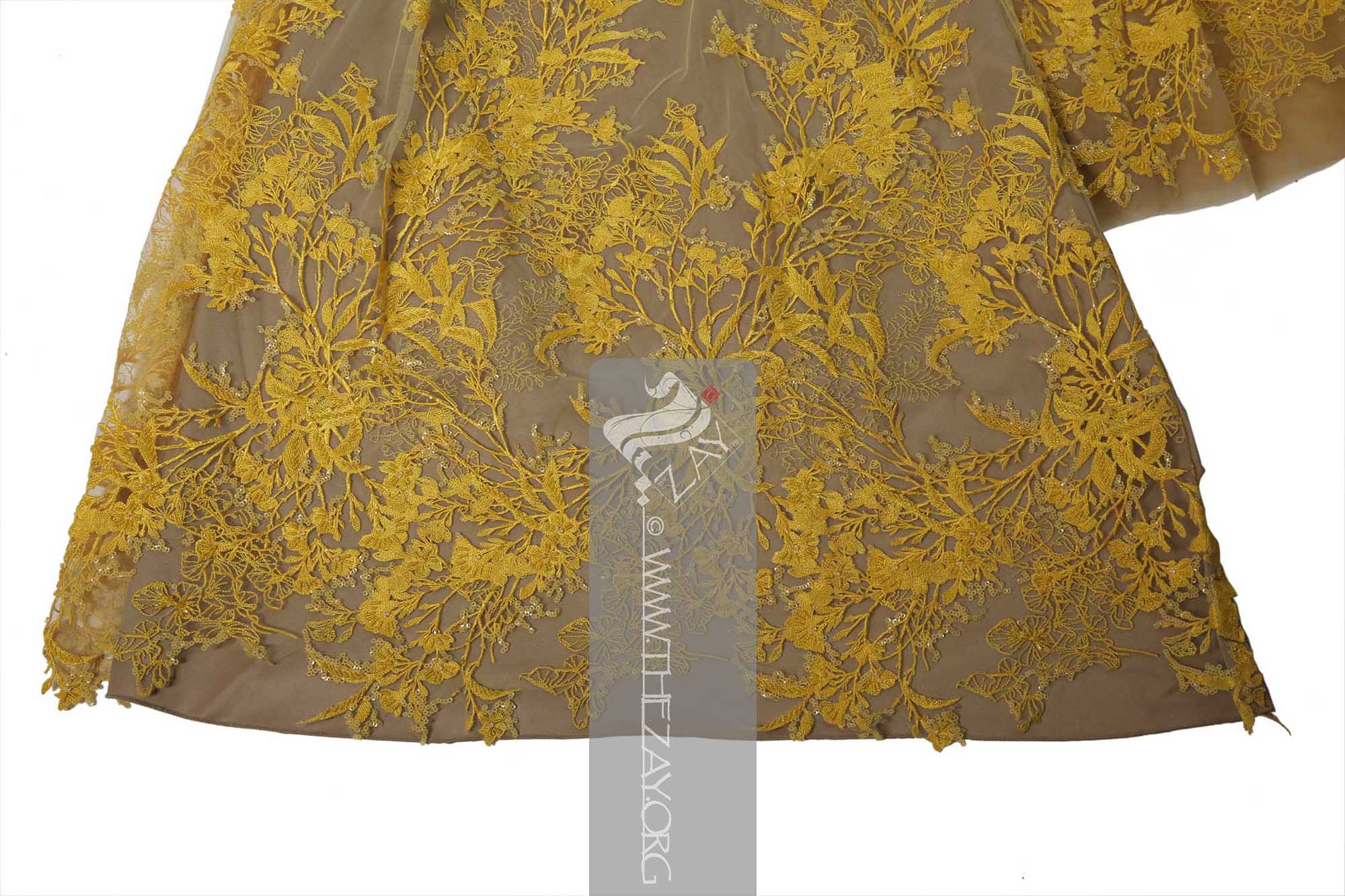
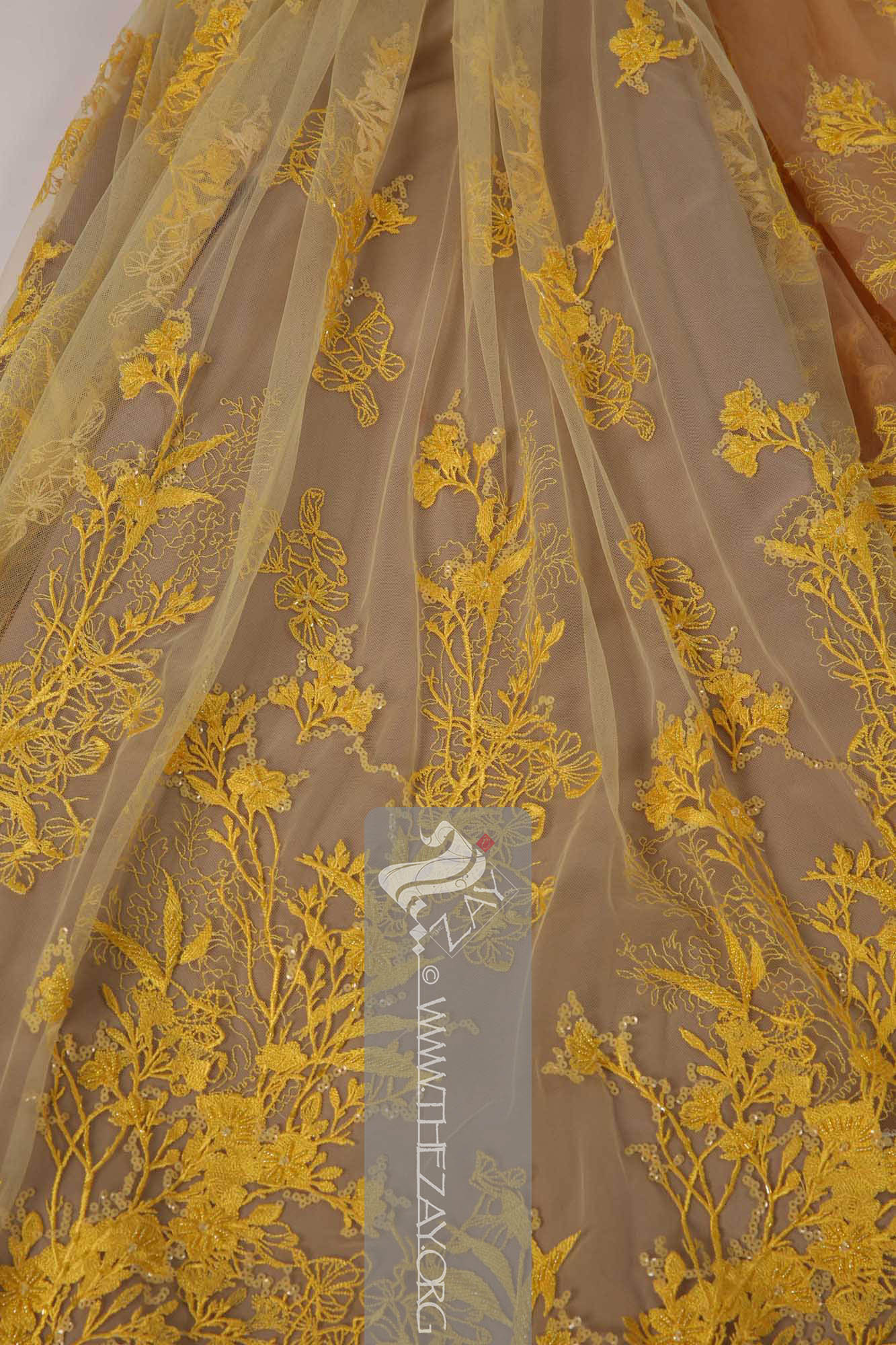
The embellishment on the piece features an elaborate design of floral and foliage arrangement in yellow silk floss Floss: (Old French: flosche – nap of velvet), is a type of silk fibre obtained from the cocoons of wild silkworms. It is characterized by its long, fluffy fibers that are not tightly woven, making it ideal for use in various textile applications such as embroidery, lace-making, and sewing. thread over a ground of yellow tulle with highlights of ivory sequins and yellow beads. A variety of embroidery techniques, primarily (blanket_stitch Blanket_stitch: A basic sewing stitch used to secure the edges of fabric or create decorative borders by looping the thread over the edges of blankets, quilts, and other fabrics and pulling it through, forming a series of evenly spaced stitches that resemble a chain. ), (satin_stitch Satin_stitch: (Synonym: Damask Stitch), is a type of flat embroidery stitch that creates a satin like smooth and shiny surface by closely spaced stitches, covering an entire area or shape.), and (chain_stitch Chain_stitch: An embroidery technique where a looped stitch is made in a continuous chain-like pattern. Each stitch is formed by looping the thread through the previous stitch, creating a linked chain. ) styles have been used to execute the pattern. The yellow tulle is further cut in the shape of the embroidered pattern and (appliqued Appliqued: (French: appliquer – Apply), ornamental needlework where small pieces of decorative fabric are sewn on to a larger piece to form a pattern.) on the beige tulle of the dress.
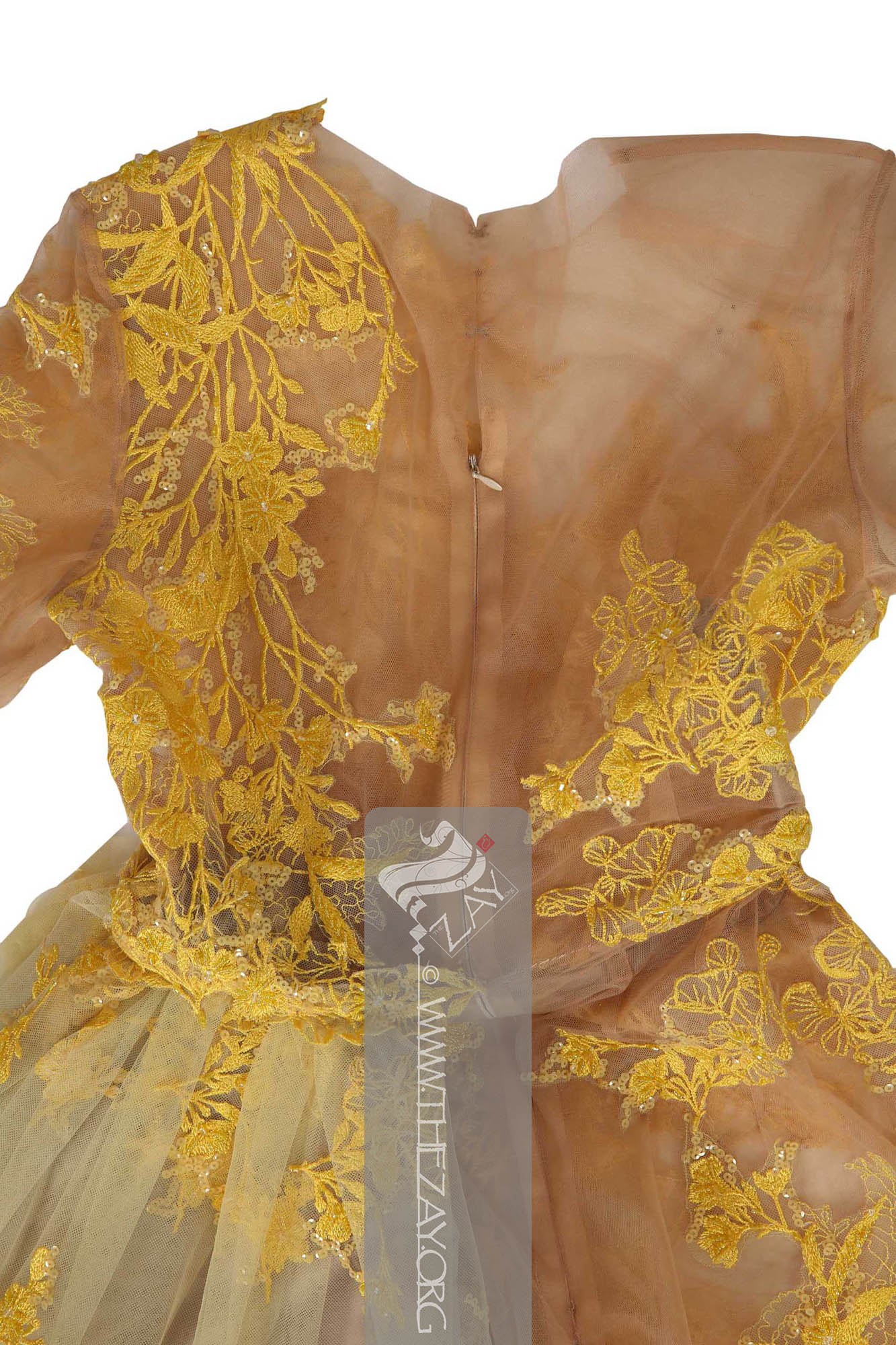
One of the sides of the skirt features a long side slit. A similar embroidered embellishment is featured on the yoke Yoke: (Synonym: Bodice_Yoke), a structured pattern fitted at the shoulders defining the structure of women’s garments. Introduced in c. 1880s it defines the transition between the upper and lower parts of the garments and can now be found stitched-in where the blouse is separated from the skirt by a horizontal seam. and extends into one of the long full sleeves. While the cuff of each sleeve features a zipper closure, a similar zipper is added to the back of the yoke Yoke: (Synonym: Bodice_Yoke), a structured pattern fitted at the shoulders defining the structure of women’s garments. Introduced in c. 1880s it defines the transition between the upper and lower parts of the garments and can now be found stitched-in where the blouse is separated from the skirt by a horizontal seam. for fastening of the piece. A stiff waistband is attached to the underside of the dress, with a metal hook and eye for fastening around the waist.
The piece also features a long side train that gives the dress its asymmetric nature. Unlike the rest of the piece, the train is constructed of a thick beige satin Sātin: (Arabic: Zaytuni: from Chinese port of Zayton in Quanzhou province where it was exported from and acquired by Arab merchants), one of the three basic types of woven fabric with a glossy top surface and a dull back. Originated in China and was fundamentally woven in silk.. It is embellished with embroidered tulle of the dress appliqued Appliqued: (French: appliquer – Apply), ornamental needlework where small pieces of decorative fabric are sewn on to a larger piece to form a pattern. to the satin Sātin: (Arabic: Zaytuni: from Chinese port of Zayton in Quanzhou province where it was exported from and acquired by Arab merchants), one of the three basic types of woven fabric with a glossy top surface and a dull back. Originated in China and was fundamentally woven in silk. of the train.
Links
Charuga: (Possibly Kurdish), a mantle-like embroidered women’s traditional garment from the Qaraqosh region in northern Iraq, traditionally fastened at the shoulder. Historically worn by field workers, it helped conceal dust and dirt, making them less visible during labour, it is a festive garment worn sparingly during festivals and other special occasions.
from Northern Iraq Has Arrived at the TRC!, www.trc-leiden.nl/trc/index.php/en/blog/1378-the-charugaCharuga: (Possibly Kurdish), a mantle-like embroidered women’s traditional garment from the Qaraqosh region in northern Iraq, traditionally fastened at the shoulder. Historically worn by field workers, it helped conceal dust and dirt, making them less visible during labour, it is a festive garment worn sparingly during festivals and other special occasions.
-from-northern-iraq-has-arrvied-at-the-trc. Accessed 29 Jan. 2024.