


1 of 13
| Local Name | Kurtah |
| Object Category | Dress |
| Gender | Female |
| Date of object | c. 1988 |
| Place Of orgin | Asia - India |
| Region | Mecca |
| Object Range | KSA |
| Dimensions | Length: 135 cm Width: 103 cm |
| Materials | Silk Metal Other |
| Technique | Machine Stitched Woven |
| Color | |
| Motif | Floral Calligraphy |
| Provenance | Gifted, Basma al Chalabi, Iraq 2021 |
| Location | The Zay Zay: (Arabic: costume, Pl. azyaā’), a set of clothes in a style typical of a particular country or historical period. Initiative |
| Status | In storage |
| ZI number | ZI2021.500884 KSA |
Object History
This item was acquired by Dr. Reem Tareq El Mutwalli from her cousin, Basma Al Chalabi, from Iraq as a gift in 2021.
Basma Abdul Karim was born in Baghdad in 1958. She graduated from the Institute of Technology in Baghdad with a Diploma in Surveying and lives in the Al Adhamiyah neighbourhood of Baghdad.
This piece was originally received as a gift by her mother, Sahira, during her pilgrimage – hajj – to Mecca, Kingdom of Saudi Arabia, at the invitation of a Saudi royal princess from the House of Al Sa’ud in 1988.
Sahirah Nuri El Mutwalli was born in the Al-Adhamiyah neighbourhood of Baghdad in 1926. She was the third daughter of her parents’ six children. Her father, Nuri Abdul Aziz Al-Mutwalli, was the last appointed caretaker to the Sunni shrine of Imam Abu Hanifa in Iraq.
After graduating from the Faculty of Law at Baghdad University in 1952, she worked as an accountant in Al-Karkh Secondary School for Girls and then at Al-Hariri Secondary School for Girls. She married her first cousin, Mr. Abdul Karim Dawood Chalabi, in 1957 AD , and together they had four children – two sons and two daughters. She passed away on December 13, 2017, in Baghdad. Ms Basma gifted the item in memory of her late mother, Sahira Nuri El Mutwalli, paternal aunt to Dr. Reem. It was eventually added to The Zay Zay: (Arabic: costume, Pl. azyaā’), a set of clothes in a style typical of a particular country or historical period. Initiative collections to enhance and enrich it.
Object Features
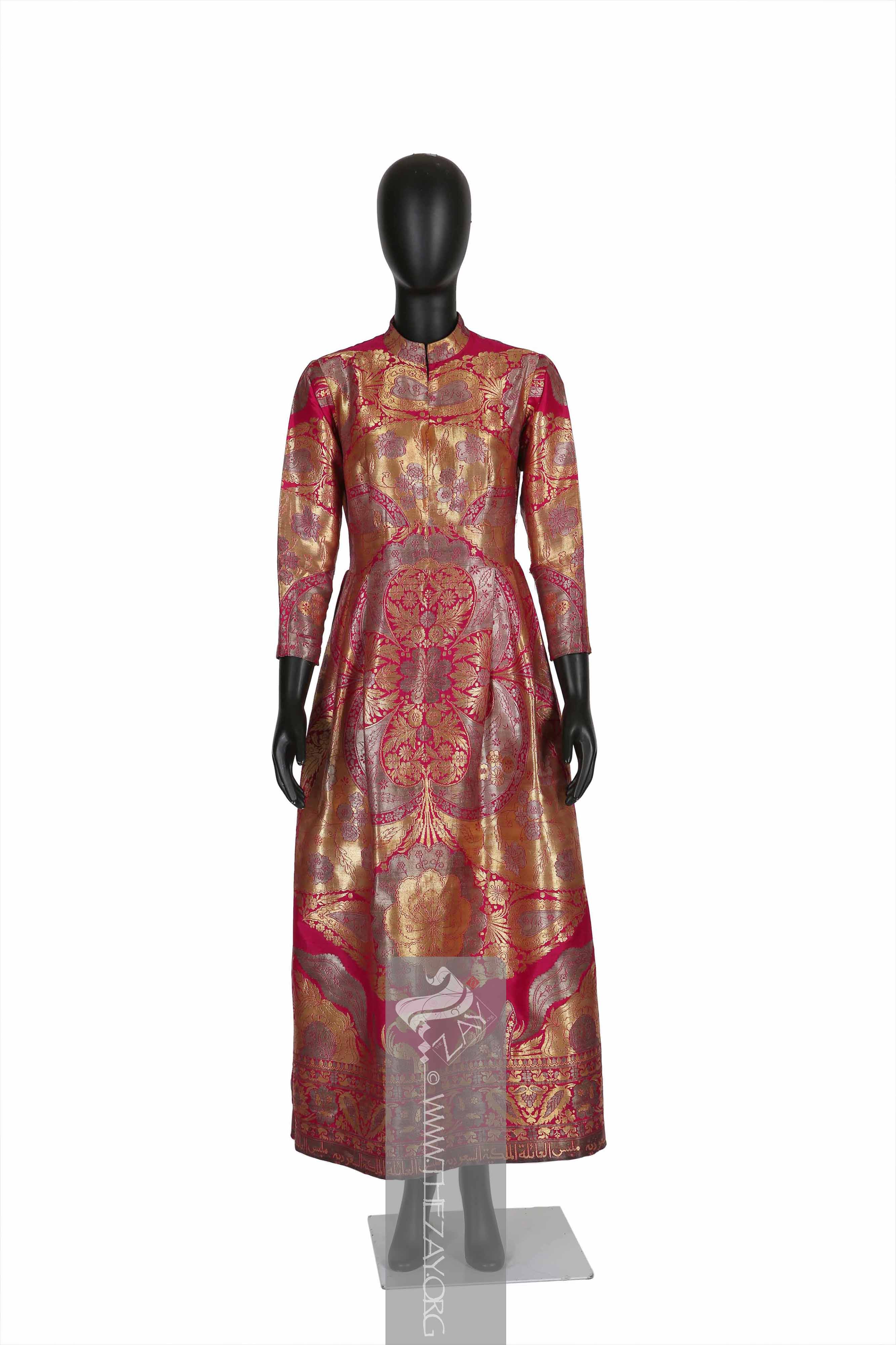
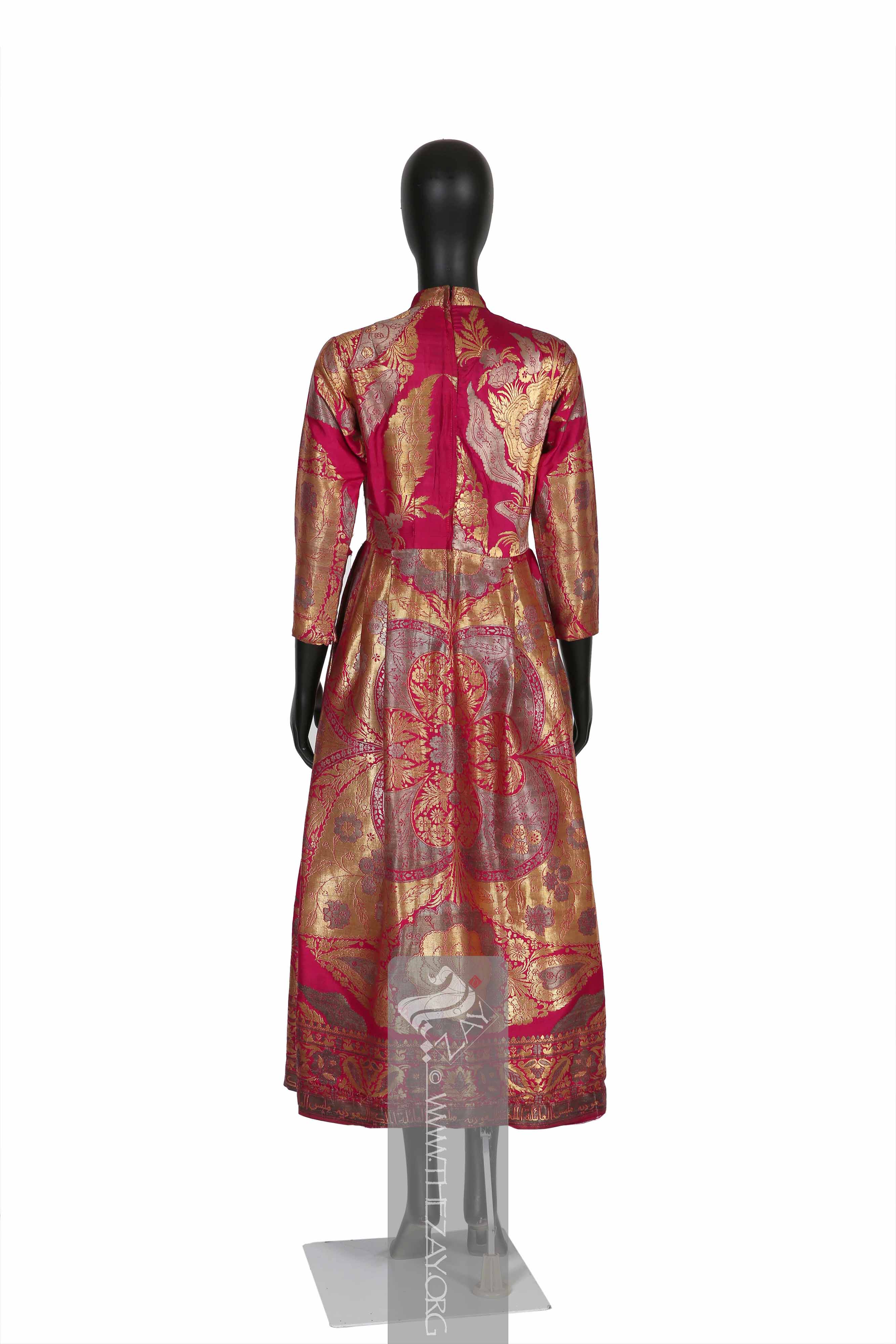
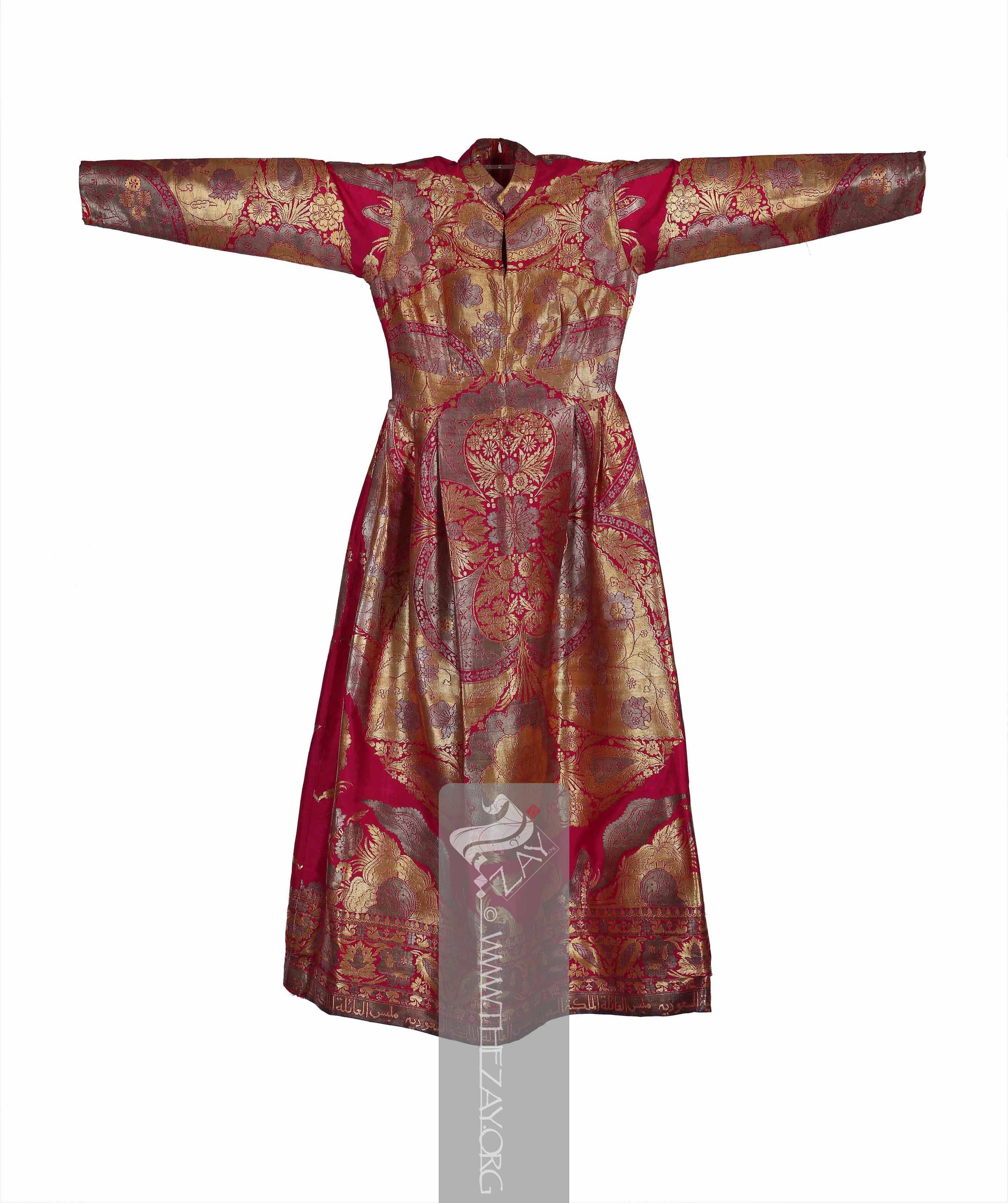
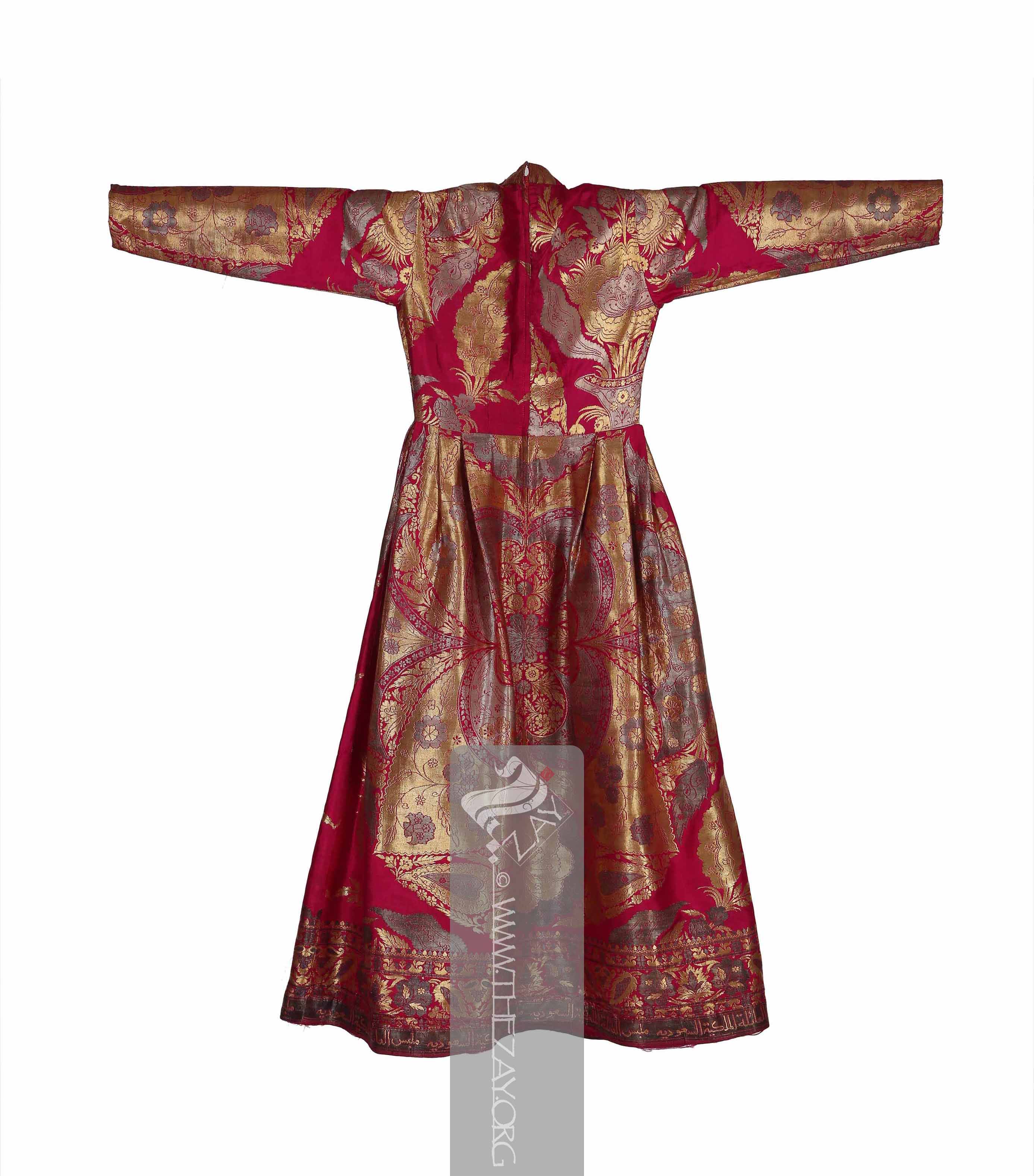
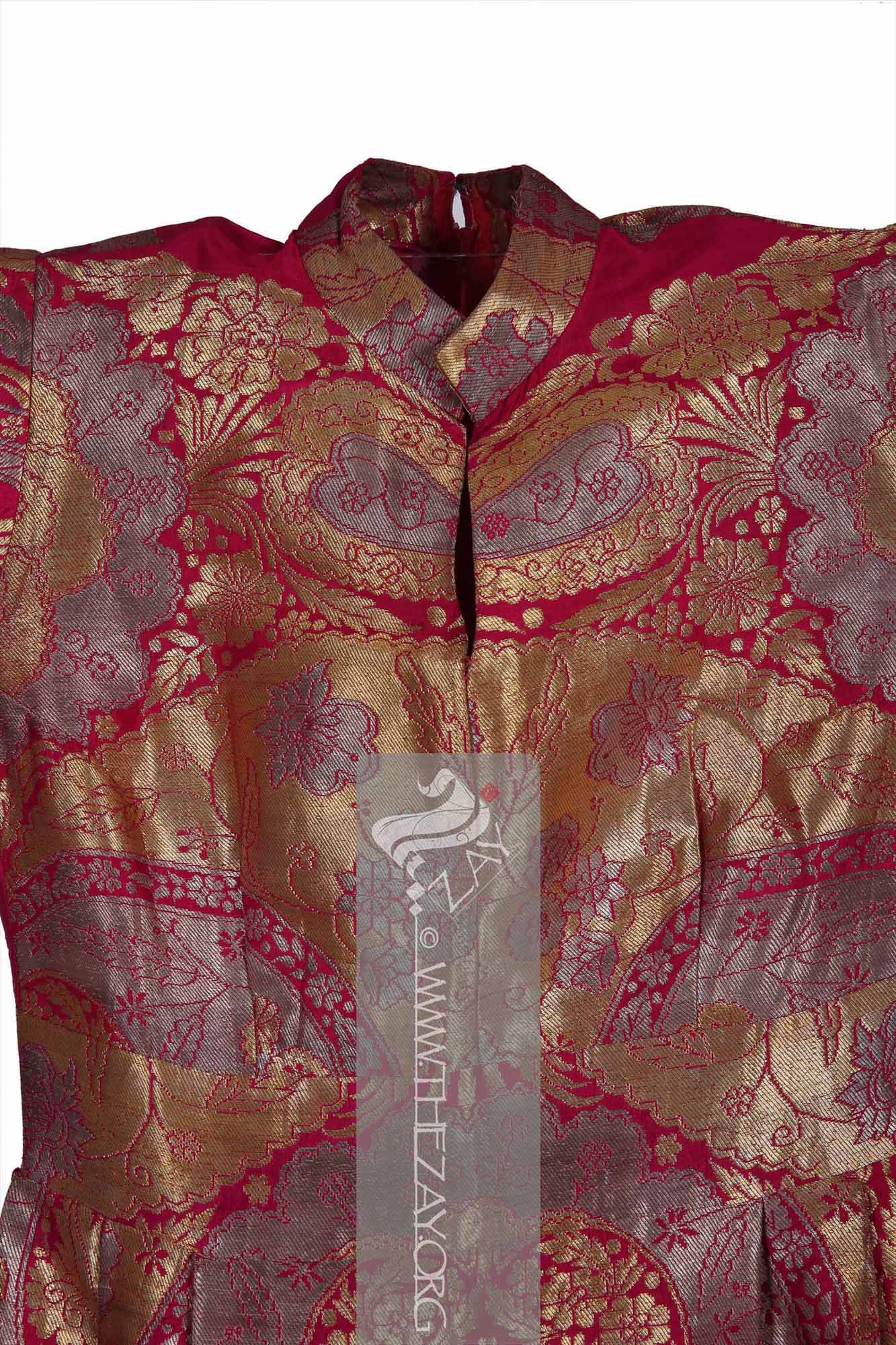
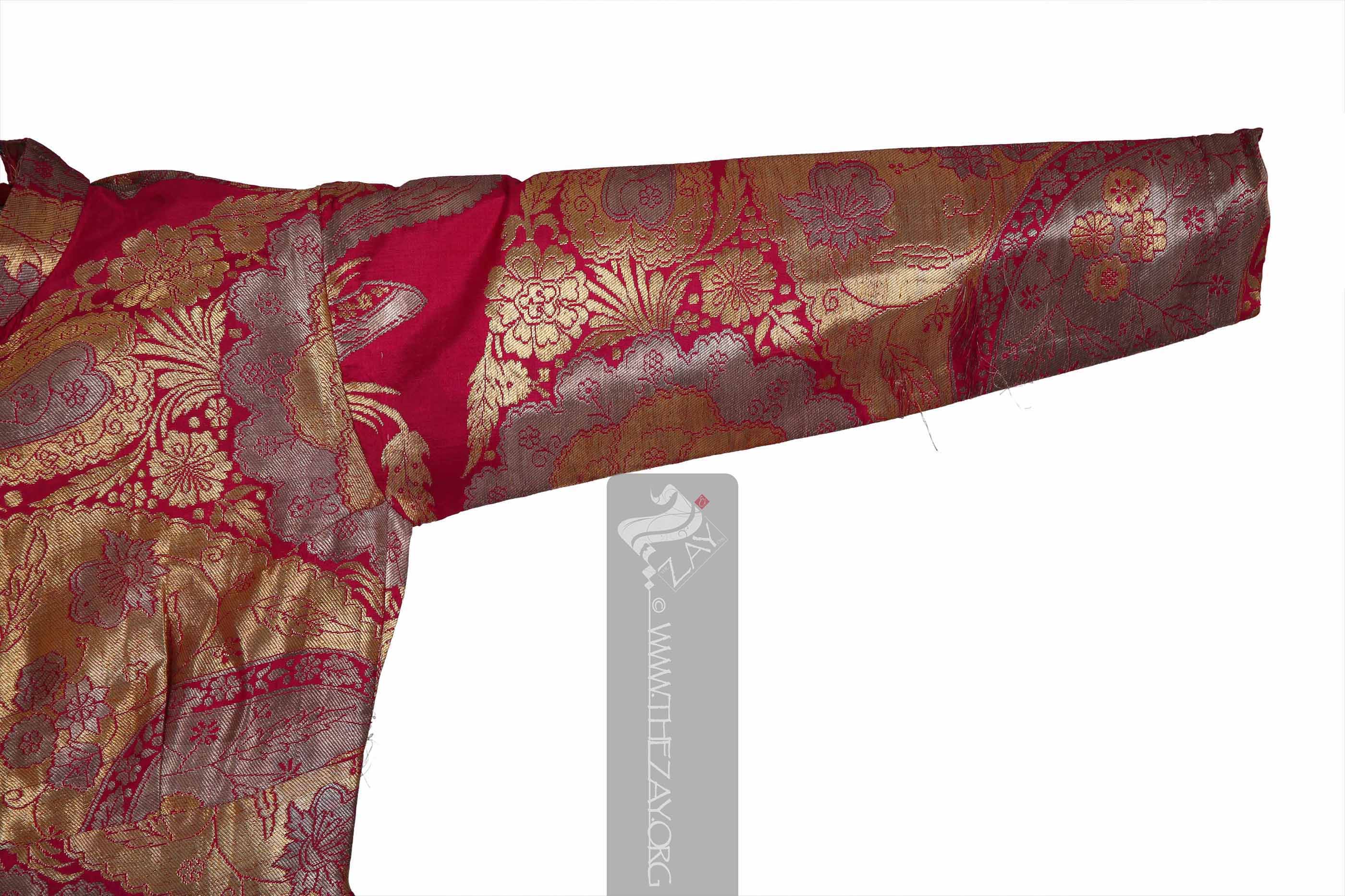
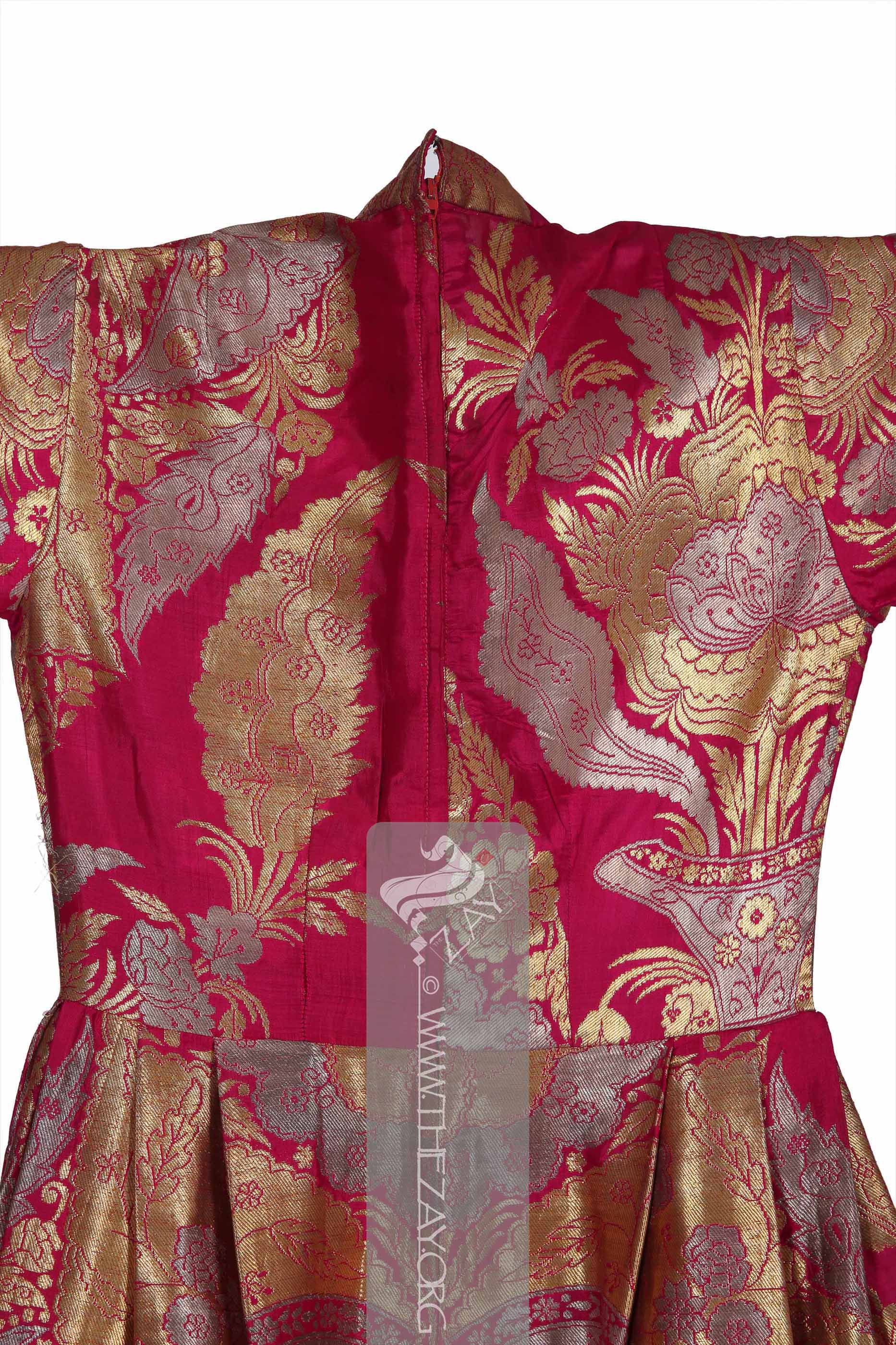
This is a women’s dress (kurtah
Kurtah: (Cl. Persian: kurtah – long collarless shirt; Synonym: nafnūf, gawan, fustān), a garment generally for women worn in the Kingdom of Saudi Arabia with a defined waistline and a full skirt with or without pleats.
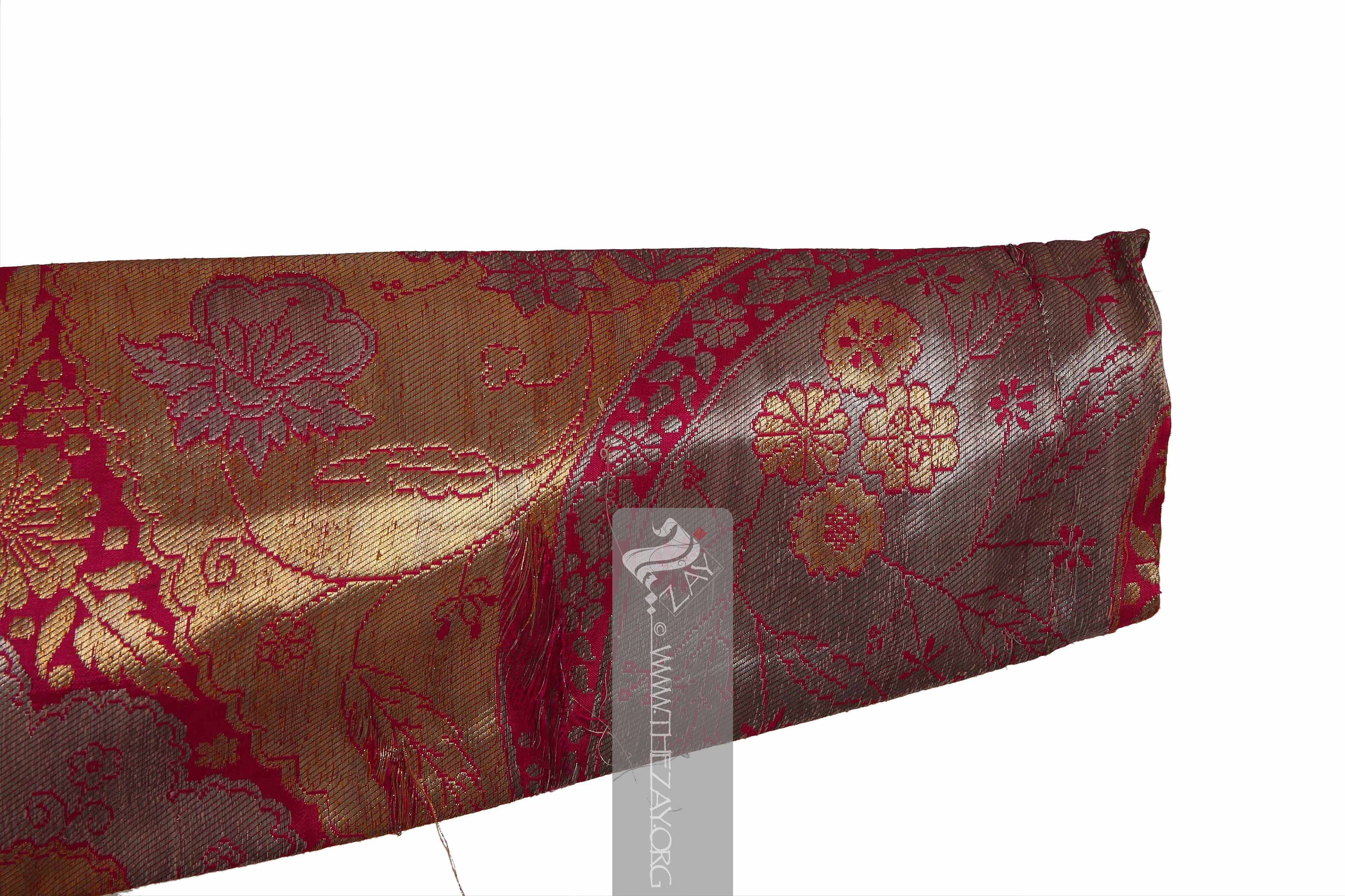
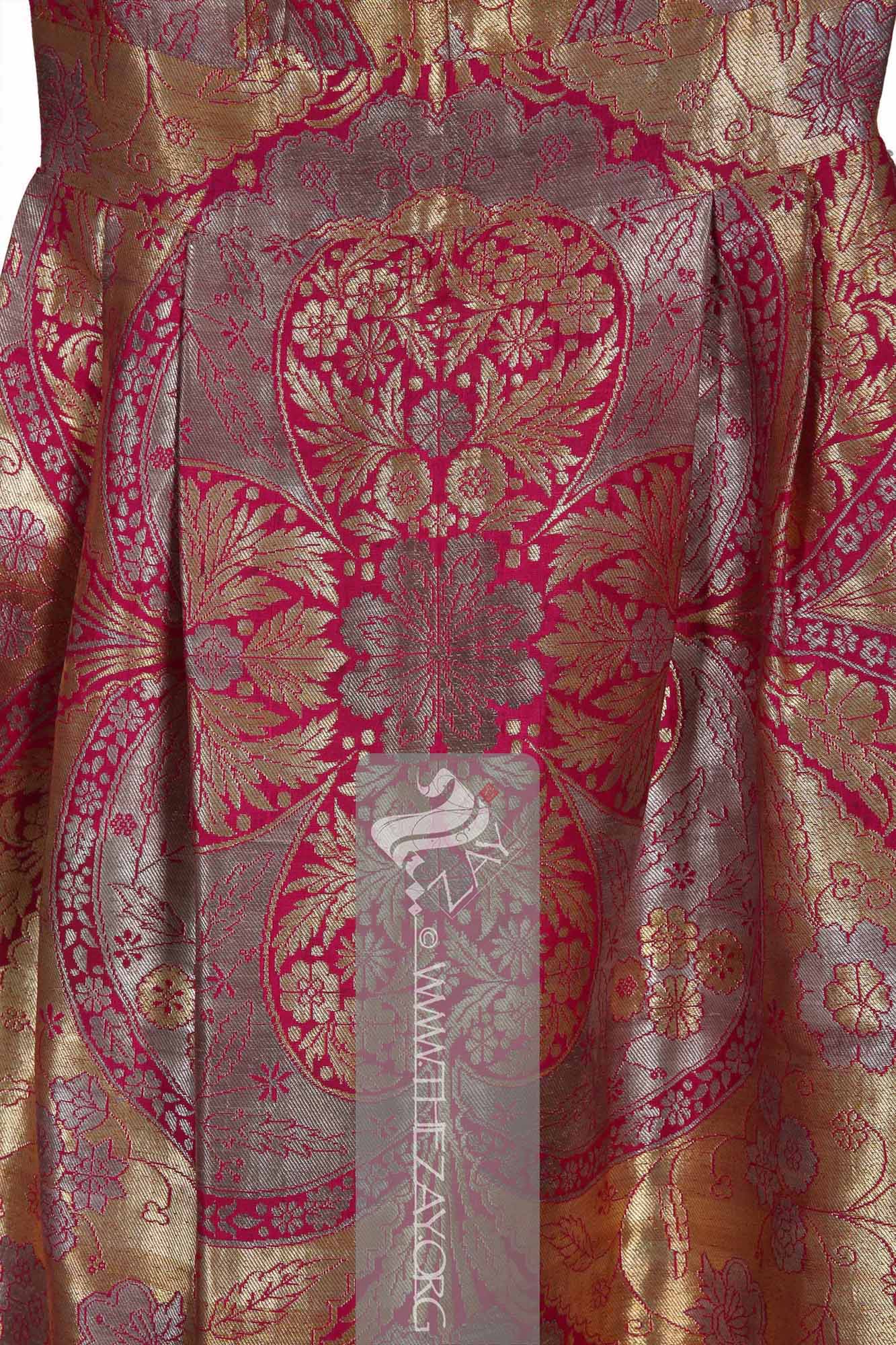
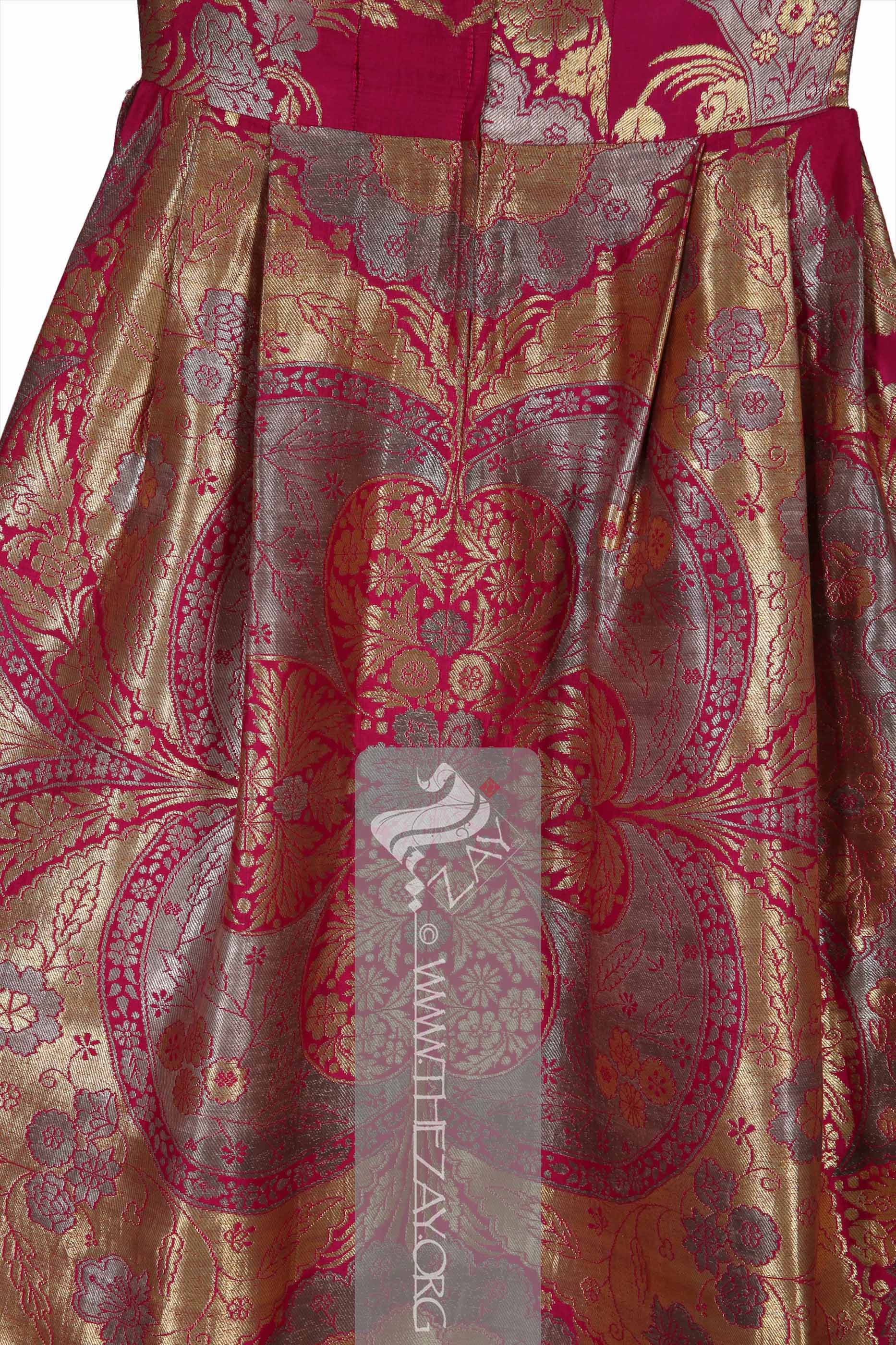
The piece is constructed of a silk brocade
Brocade: (Italian: brocco – twisted thread), is a richly decorative fabric woven with an intricate raised pattern. Its origins can be traced back to ancient China, where it was made for the imperial court. It later spread to Europe during the Renaissance and became popular in couture and decorative arts. fabric of Indian origin. The woven pattern in metal thread (zari
Zarī: (Persian two-syllables: zar: gold & dozi: embellishment), complex embroidery technique that uses metal alloy on silk, satin, or velvet, and may include pearls, beads, and precious stones. Colloquially in the Arab gulf region, the term (zarī) is loosely applied to any gilded thread, embellishment or gilded brocade fabric. Originated in ancient Persia it has been used extensively in Indian and Middle Eastern textiles for centuries. ) / (sabtah
Sabtah: (Arabic), traditionally a metal thread used for decorative purposes on fabric akin to zari
Zarī: (Persian two-syllables: zar: gold & dozi: embellishment), complex embroidery technique that uses metal alloy on silk, satin, or velvet, and may include pearls, beads, and precious stones. Colloquially in the Arab gulf region, the term (zarī) is loosely applied to any gilded thread, embellishment or gilded brocade fabric. Originated in ancient Persia it has been used extensively in Indian and Middle Eastern textiles for centuries. in Saudi Arabia. Often made of precious metal like gold and silver, these threads were once commonly used for embroidery as well as weave. It is also imitated in lurex as a cost-effective alternative today. Laḥm: (Arabic), traditionally a metal thread made of silver used for decorative purposes on fabric akin to zari
Zarī: (Persian two-syllables: zar: gold & dozi: embellishment), complex embroidery technique that uses metal alloy on silk, satin, or velvet, and may include pearls, beads, and precious stones. Colloquially in the Arab gulf region, the term (zarī) is loosely applied to any gilded thread, embellishment or gilded brocade fabric. Originated in ancient Persia it has been used extensively in Indian and Middle Eastern textiles for centuries. also called sabtah
Sabtah: (Arabic), traditionally a metal thread used for decorative purposes on fabric akin to zari
Zarī: (Persian two-syllables: zar: gold & dozi: embellishment), complex embroidery technique that uses metal alloy on silk, satin, or velvet, and may include pearls, beads, and precious stones. Colloquially in the Arab gulf region, the term (zarī) is loosely applied to any gilded thread, embellishment or gilded brocade fabric. Originated in ancient Persia it has been used extensively in Indian and Middle Eastern textiles for centuries. in Saudi Arabia. Often made of precious metal like gold and silver, these threads were once commonly used for embroidery as well as weave. It is also imitated in lurex as a cost-effective alternative today. Shaḥm: (Arabic), traditionally a metal thread made of gold used for decorative purposes on fabric akin to zari
Zarī: (Persian two-syllables: zar: gold & dozi: embellishment), complex embroidery technique that uses metal alloy on silk, satin, or velvet, and may include pearls, beads, and precious stones. Colloquially in the Arab gulf region, the term (zarī) is loosely applied to any gilded thread, embellishment or gilded brocade fabric. Originated in ancient Persia it has been used extensively in Indian and Middle Eastern textiles for centuries. , also called sabtah in Saudi Arabia. Although it falls under the category of a sabtah, it is not synonymous, as it only refers to the thread made of gold and no other metals. Kurtah: (Cl. Persian: kurtah – long collarless shirt; Synonym: nafnūf, gawan, fustān), a garment generally for women worn in the Kingdom of Saudi Arabia with a defined waistline and a full skirt with or without pleats.
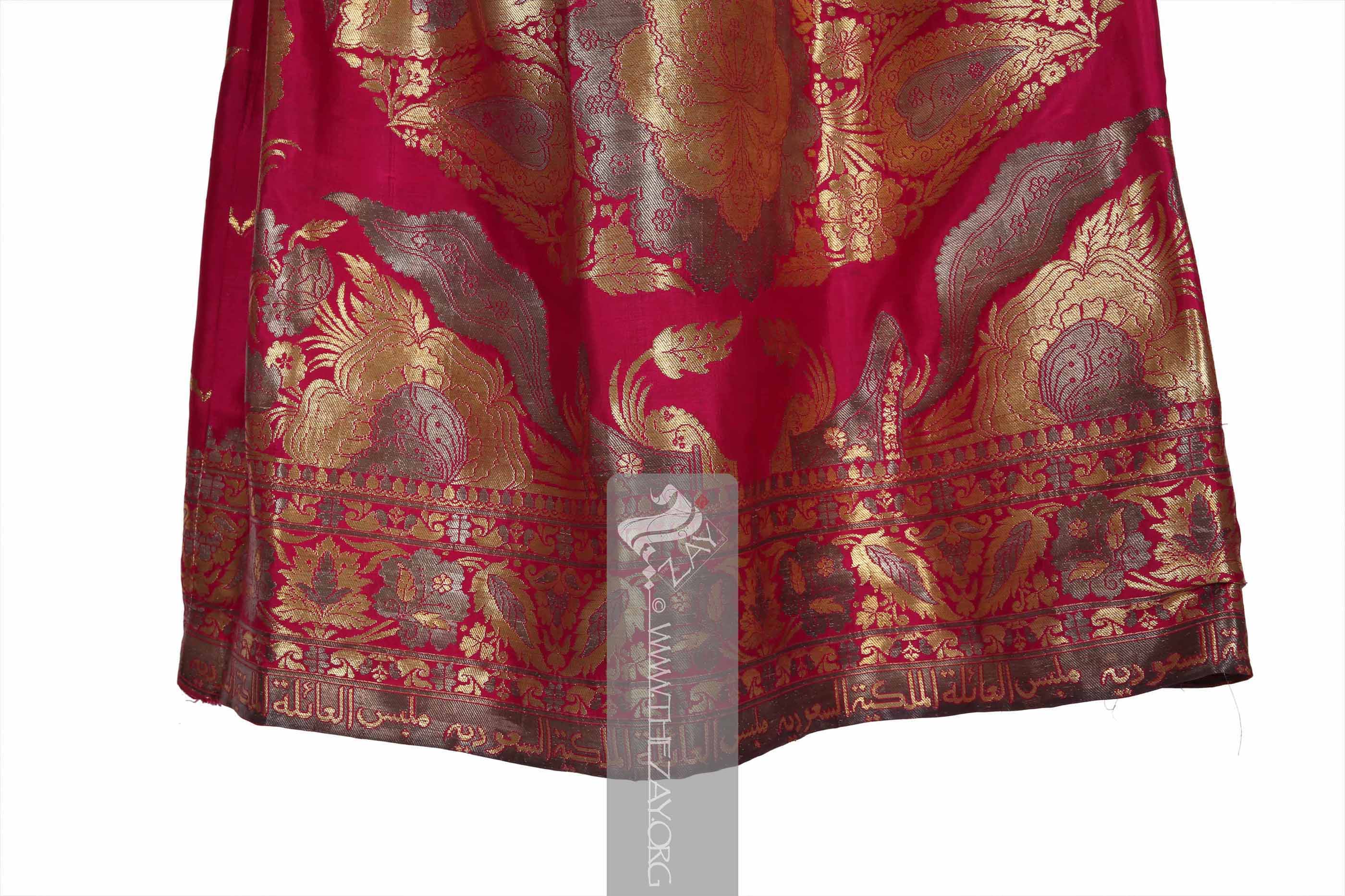
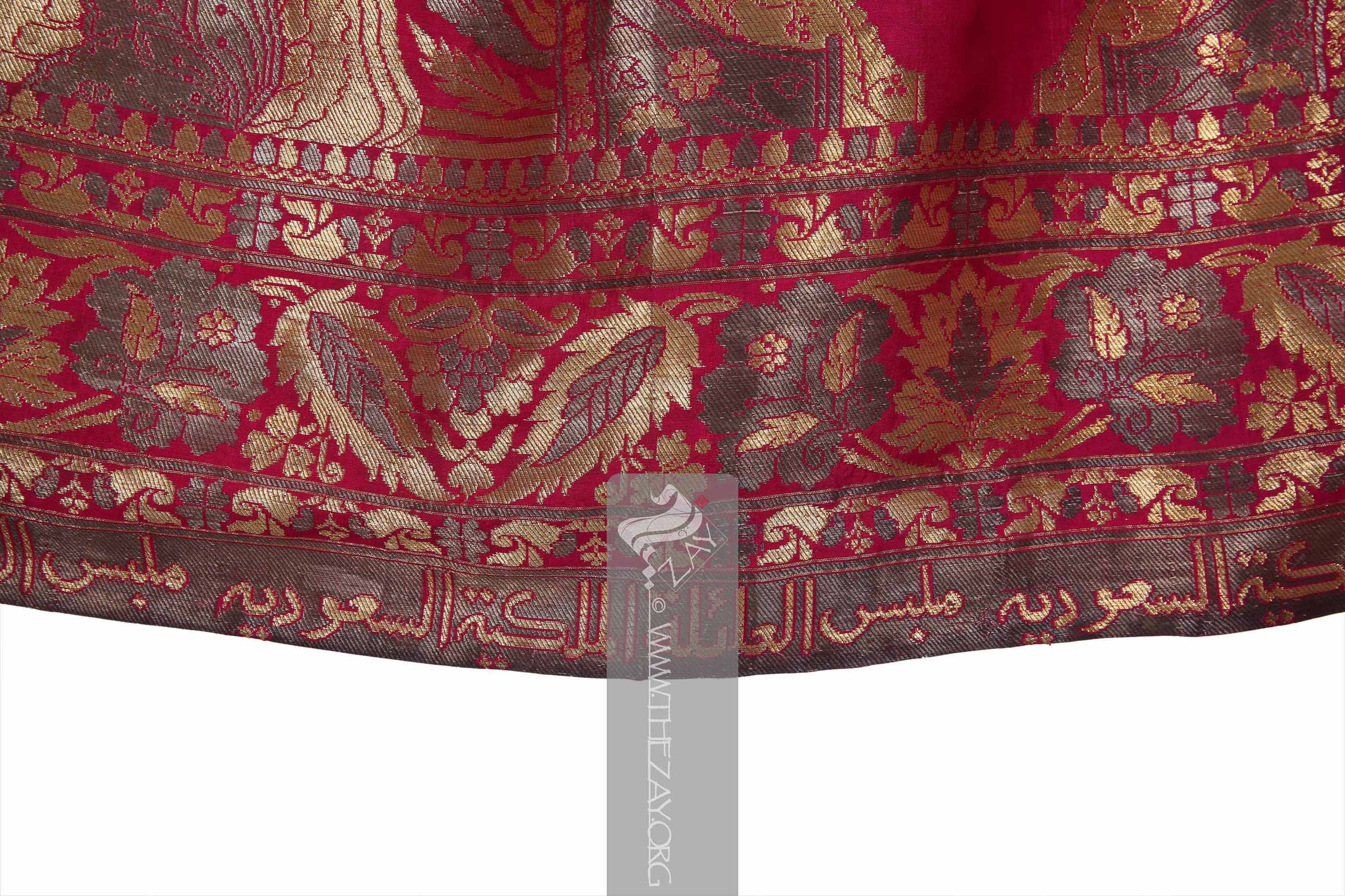
The woven design is possibly custom-made and unique, as the hemline of the kurtah
Kurtah: (Cl. Persian: kurtah – long collarless shirt; Synonym: nafnūf, gawan, fustān), a garment generally for women worn in the Kingdom of Saudi Arabia with a defined waistline and a full skirt with or without pleats.
While the centre of the piece is adorned with concentric floral and foliage patterns alternately woven in gold and silver, the fall hemline of the dress is a wide panel that can be roughly divided into four parts.
The layer at the bottom near the edge of the hem comprises an Arabic script, as already mentioned. This is followed by a wide band of floral and foliage repeats with a narrow border on top as well as the bottom.
Each border is composed of a series of cartouche repeats with a floral vase at its centre flanked by a (paisley Paisley: (Scottish Gaelic, Pàislig: a town in Scotland), often called buta, boteh, amli, or kalgi in the subcontinent and kazuwah in Arabic, is a Persian tear drop motif with a curved end specially in textiles. Its popularity and subsequent local production in 18th century at Paisley are responsible for its nomenclature.) on either side. The top border is followed by a narrow-scalloped banner with foliage repeats.
The decorative patterns over the rest of the field of the piece primarily consist of large floral and foliage shaped frames in concentric patterns with floral, foliage and paisley Paisley: (Scottish Gaelic, Pàislig: a town in Scotland), often called buta, boteh, amli, or kalgi in the subcontinent and kazuwah in Arabic, is a Persian tear drop motif with a curved end specially in textiles. Its popularity and subsequent local production in 18th century at Paisley are responsible for its nomenclature. fillers.
A completely unlined and machine-stitched kurtah
Kurtah: (Cl. Persian: kurtah – long collarless shirt; Synonym: nafnūf, gawan, fustān), a garment generally for women worn in the Kingdom of Saudi Arabia with a defined waistline and a full skirt with or without pleats.
Links