


1 of 9
| Local Name | Thawb kurar |
| Object Category | Overgarment |
| Gender | Female |
| Date of object | c.1990 |
| Place Of orgin | Bahrain |
| Region | Muharraq |
| Object Range | Bahrain, Qatar, et al |
| Dimensions | Length: 172 cm Width:135 cm |
| Materials | Cotton Metal |
| Technique | Machine Stitched Woven Print |
| Color | |
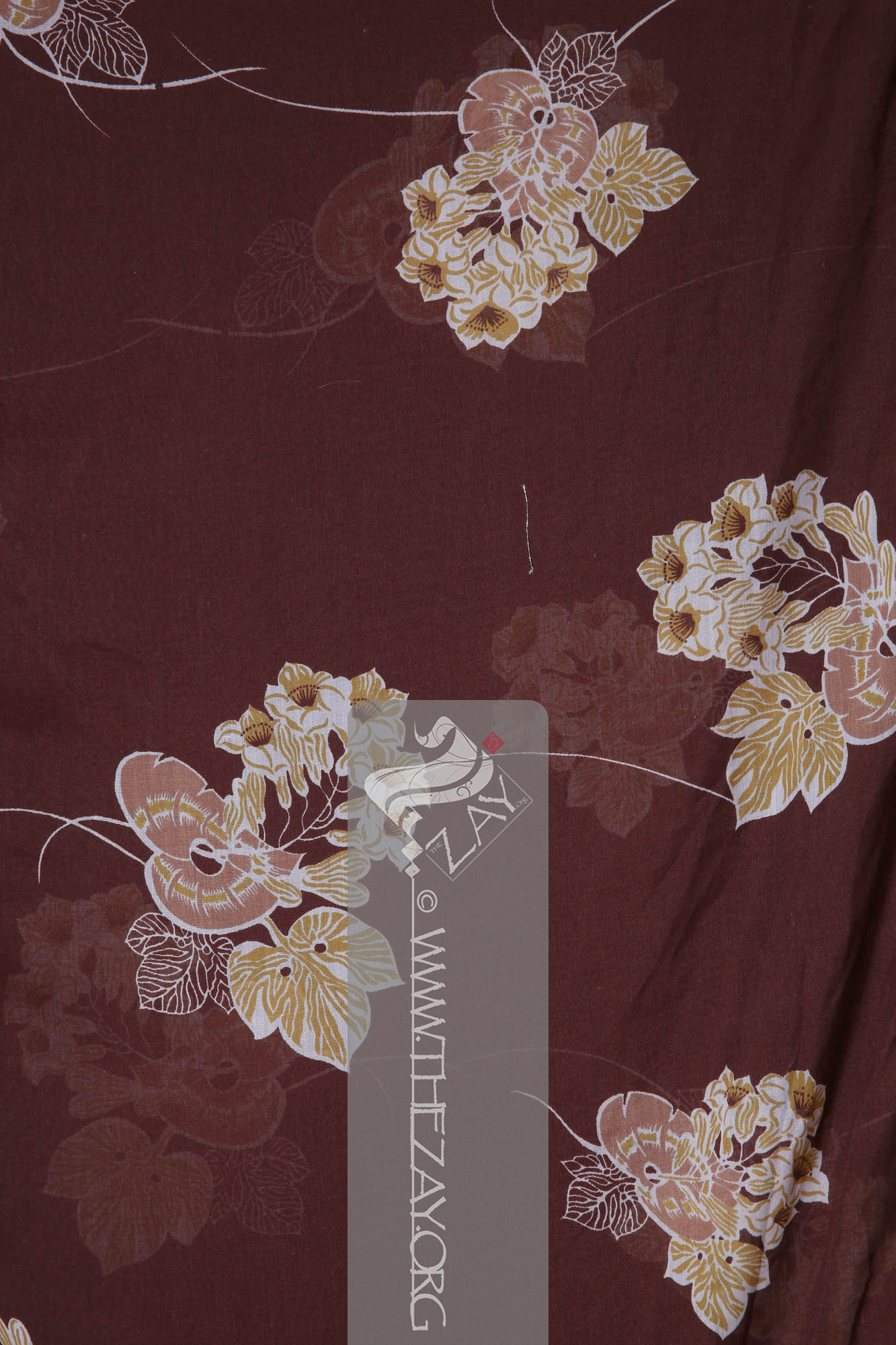
| Motif | Floral |
| Provenance | Purchased, Fawziyah, Sharjah 2018 |
| Location | The Zay Zay: (Arabic: costume, Pl. azyaā’), a set of clothes in a style typical of a particular country or historical period. Initiative |
| Status | In storage |
| ZI number | ZI2018.500381.1 BAHRAIN |
Object Note
Part of a lot along with another item (ZI2018.500381.2 BAHRAIN), also in the collection.
Object History
This piece was purchased by Dr. Reem Tariq
Ṭariq: (Arabic; Synonym: tulle_bi_talli
Tūlle_bi_tallī: (French: Tulle – a city in France where fine material for veil was first made; Turkish: tel – wire; Synonym: tariq; talli; badla; khus_dozi ), series of small metal knots made on a woven net ground as embellishment. The term is commonly used in the North African Arab region specifically in Egypt. Ṭariq: (Arabic; Synonym: tulle_bi_talli
Tūlle_bi_tallī: (French: Tulle – a city in France where fine material for veil was first made; Turkish: tel – wire; Synonym: tariq; talli; badla; khus_dozi ), series of small metal knots made on a woven net ground as embellishment. The term is commonly used in the North African Arab region specifically in Egypt.
Dr Reem met Ms Fawziyah at the Sharjah Heritage Days, a festival in Sharjah in 2018. Ms Fawziyah, a participant from Bahrain, was showcasing her traditional Bahraini crafts at the Heritage Square, the venue of the festival.
The two ladies struck up a conversation, and Dr Reem eventually acquired this piece from her.
Object Features
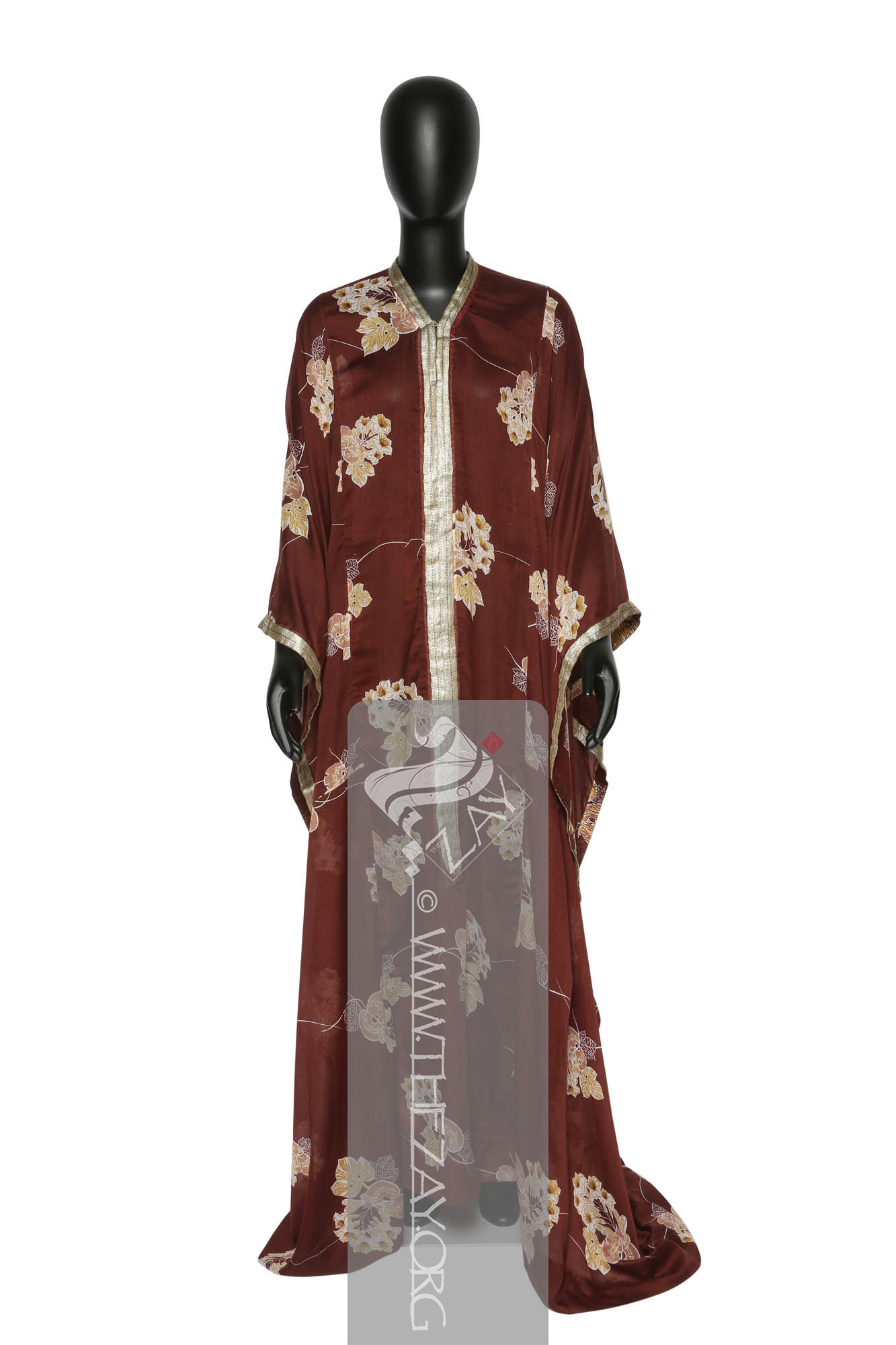
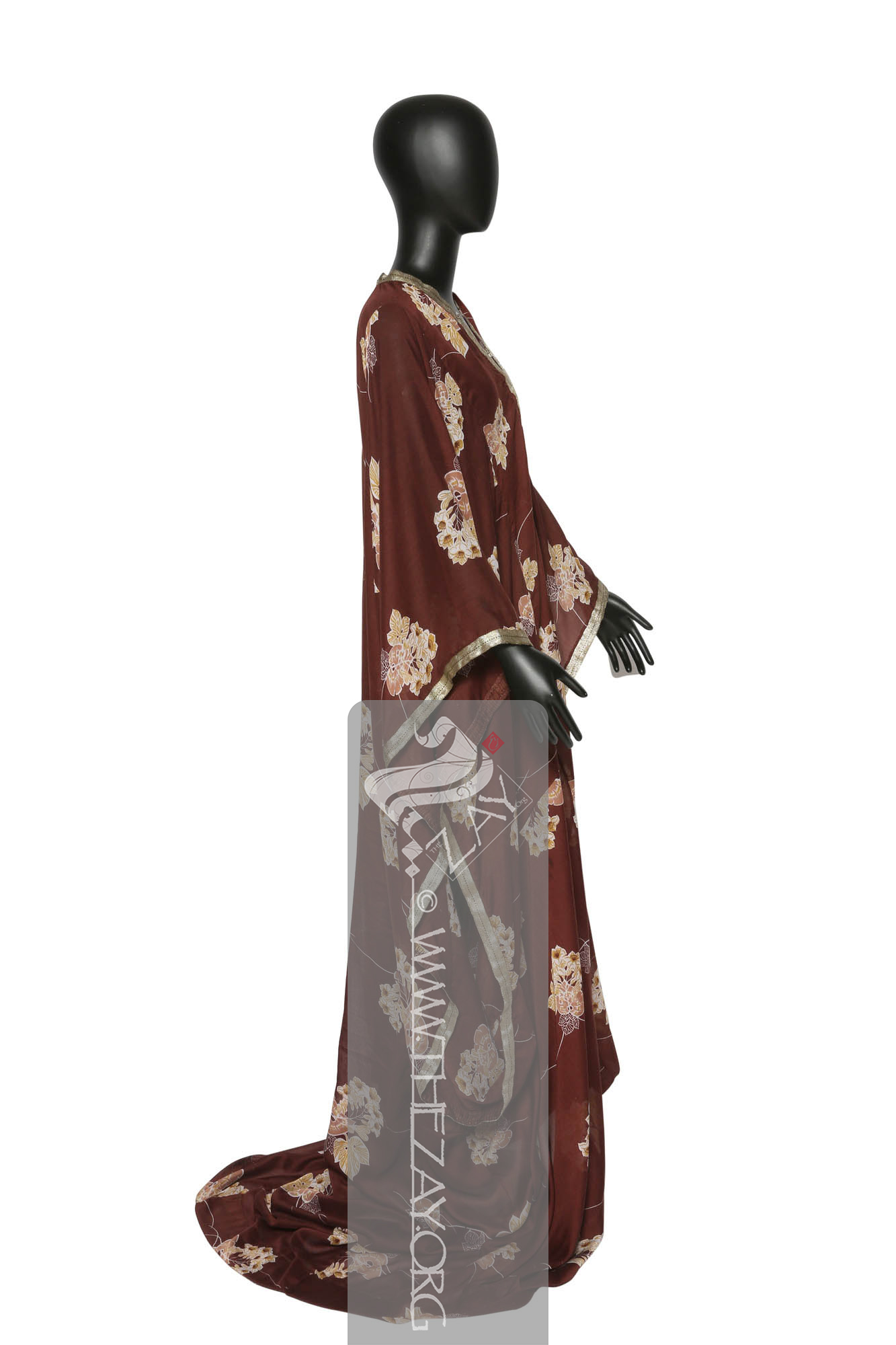
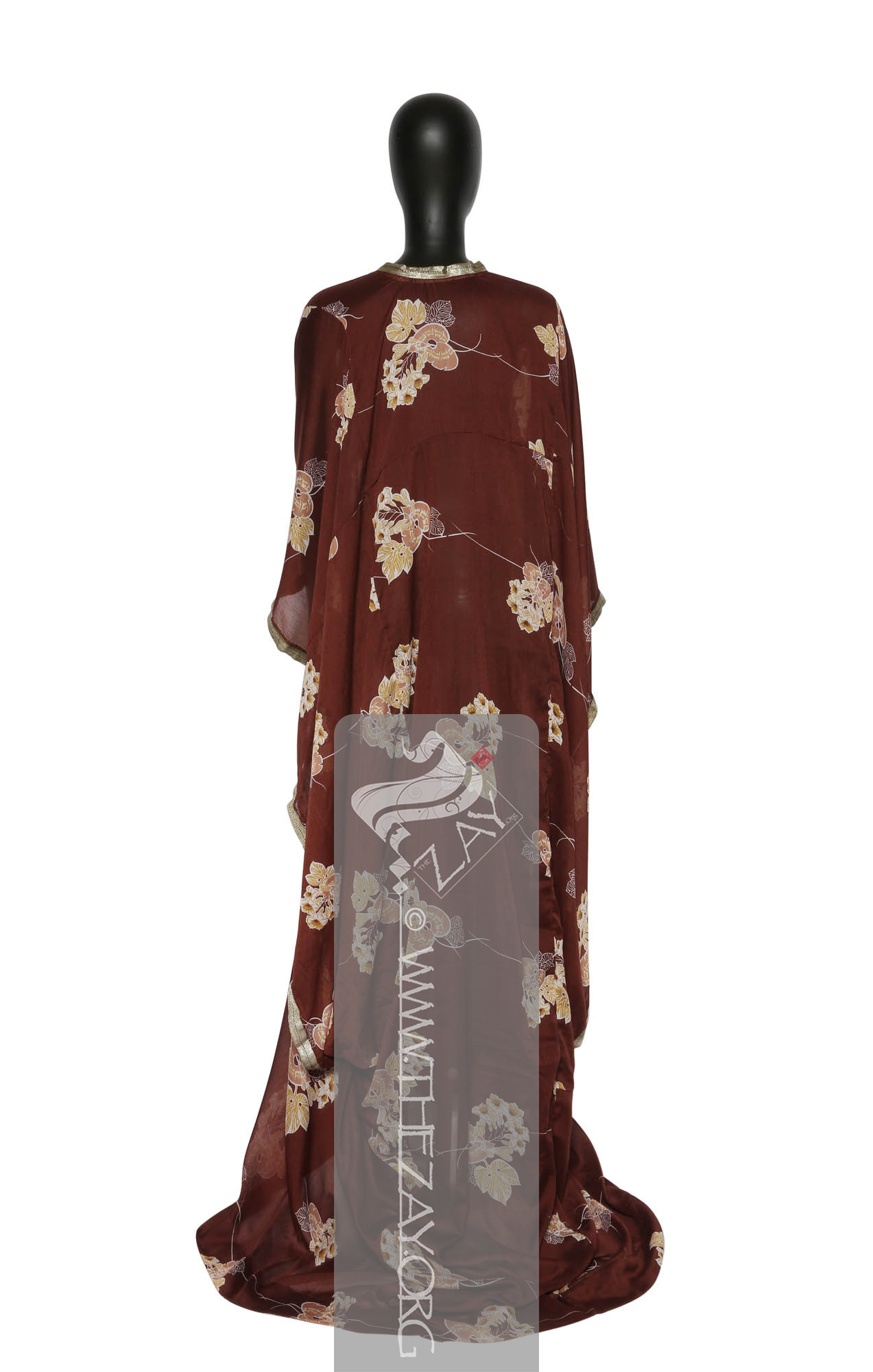
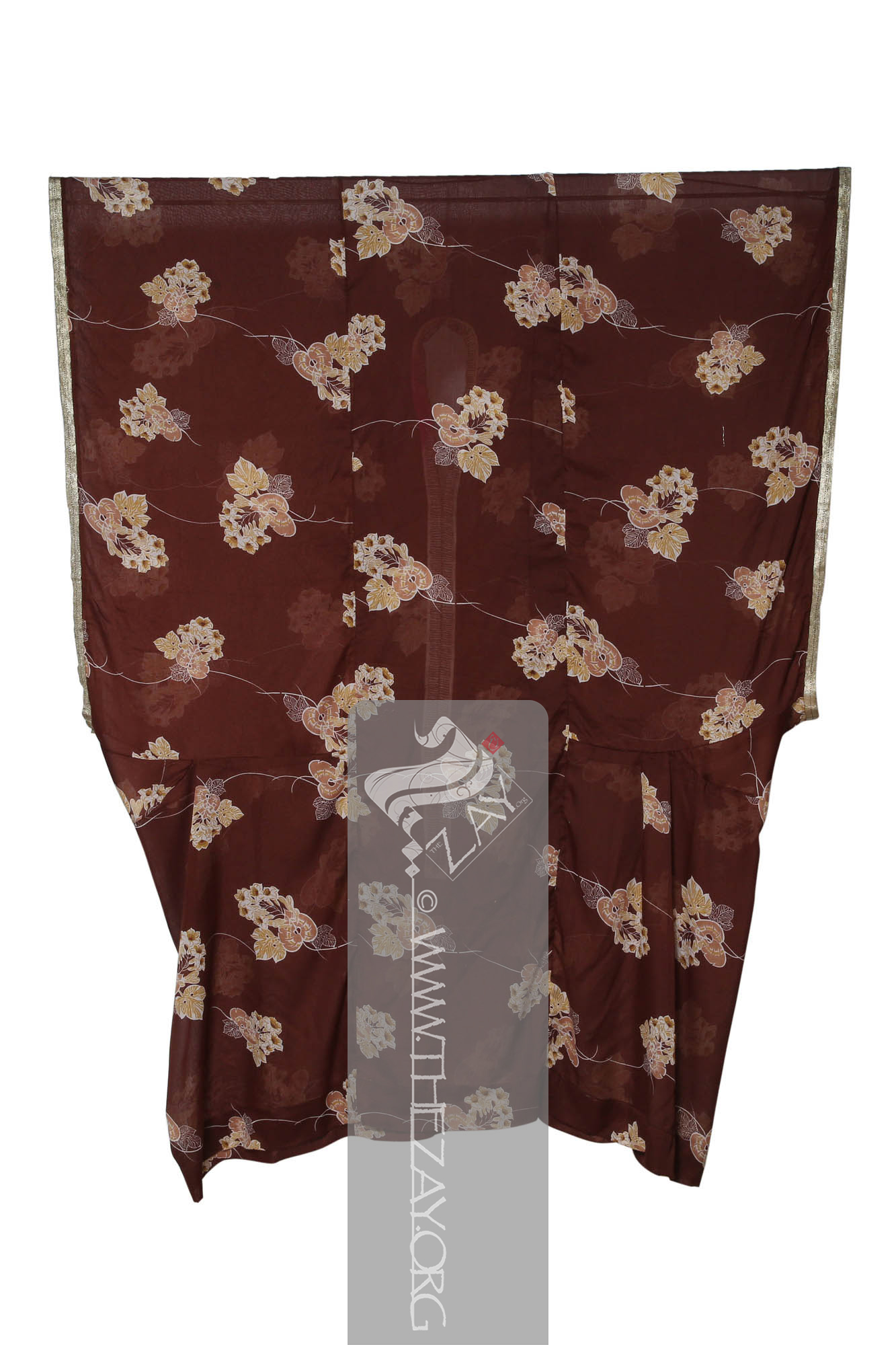
This is a traditional Gulf Arab style woman’s tunic robe (thawb
Thawb: (Arabic: thawb, Pl. Athwāb/thībān), can be pronounced thobe
Thobe: (Arabic: thawb, Pl. Athwāb/thībān), can be pronounced thawb or tobe
Tobe: (Arabic: thawb, Pl. Athwāb/thībān), can be pronounced thawb or thobe based on locale. The standard Arabic word for ‘fabric’ or ‘garment’. It can refer to a qamīs-like tunic worn by men and women in the Arabian Peninsula, Iraq, the southern and south-western ports and islands of Iran, and some countries in East and West Africa. More specifically, it can refer to the square-shaped Bedouin overgarment worn by women. based on locale. The standard Arabic word for ‘fabric’ or ‘garment’. It can also refer to a qamīs-like tunic worn by men and women in the Arabian Peninsula, Iraq, the southern and south-western ports and islands of Iran, and some countries in East and West Africa. More specifically, it can refer to the square-shaped Bedouin overgarment worn by women. or tobe
Tobe: (Arabic: thawb, Pl. Athwāb/thībān), can be pronounced thawb or thobe based on locale. The standard Arabic word for ‘fabric’ or ‘garment’. It can refer to a qamīs-like tunic worn by men and women in the Arabian Peninsula, Iraq, the southern and south-western ports and islands of Iran, and some countries in East and West Africa. More specifically, it can refer to the square-shaped Bedouin overgarment worn by women. based on locale. The standard Arabic word for ‘fabric’ or ‘garment’. It can also refer to a qamīs-like tunic worn by men and women in the Arabian Peninsula, Iraq, the southern and south-western ports and islands of Iran, and some countries in East and West Africa. More specifically, it can refer to the square-shaped Bedouin overgarment worn by women in the Arabian Gulf region. ), often locally referred to as the (thawb
Thawb: (Arabic: thawb, Pl. Athwāb/thībān), can be pronounced thobe
Thobe: (Arabic: thawb, Pl. Athwāb/thībān), can be pronounced thawb or tobe
Tobe: (Arabic: thawb, Pl. Athwāb/thībān), can be pronounced thawb or thobe based on locale. The standard Arabic word for ‘fabric’ or ‘garment’. It can refer to a qamīs-like tunic worn by men and women in the Arabian Peninsula, Iraq, the southern and south-western ports and islands of Iran, and some countries in East and West Africa. More specifically, it can refer to the square-shaped Bedouin overgarment worn by women. based on locale. The standard Arabic word for ‘fabric’ or ‘garment’. It can also refer to a qamīs-like tunic worn by men and women in the Arabian Peninsula, Iraq, the southern and south-western ports and islands of Iran, and some countries in East and West Africa. More specifically, it can refer to the square-shaped Bedouin overgarment worn by women. or tobe
Tobe: (Arabic: thawb, Pl. Athwāb/thībān), can be pronounced thawb or thobe based on locale. The standard Arabic word for ‘fabric’ or ‘garment’. It can refer to a qamīs-like tunic worn by men and women in the Arabian Peninsula, Iraq, the southern and south-western ports and islands of Iran, and some countries in East and West Africa. More specifically, it can refer to the square-shaped Bedouin overgarment worn by women. based on locale. The standard Arabic word for ‘fabric’ or ‘garment’. It can also refer to a qamīs-like tunic worn by men and women in the Arabian Peninsula, Iraq, the southern and south-western ports and islands of Iran, and some countries in East and West Africa. More specifically, it can refer to the square-shaped Bedouin overgarment worn by women in the Arabian Gulf region. kurar
Kurar: (Arabic:), hand woven and twisted metal thread cords akin to passementerie
Passementerie: (French: passement – braid), decorative trimmings or edgings for textile, often made of threads of silk, cotton, or precious metals such as gold and silver, generally braided or twisted into cords.
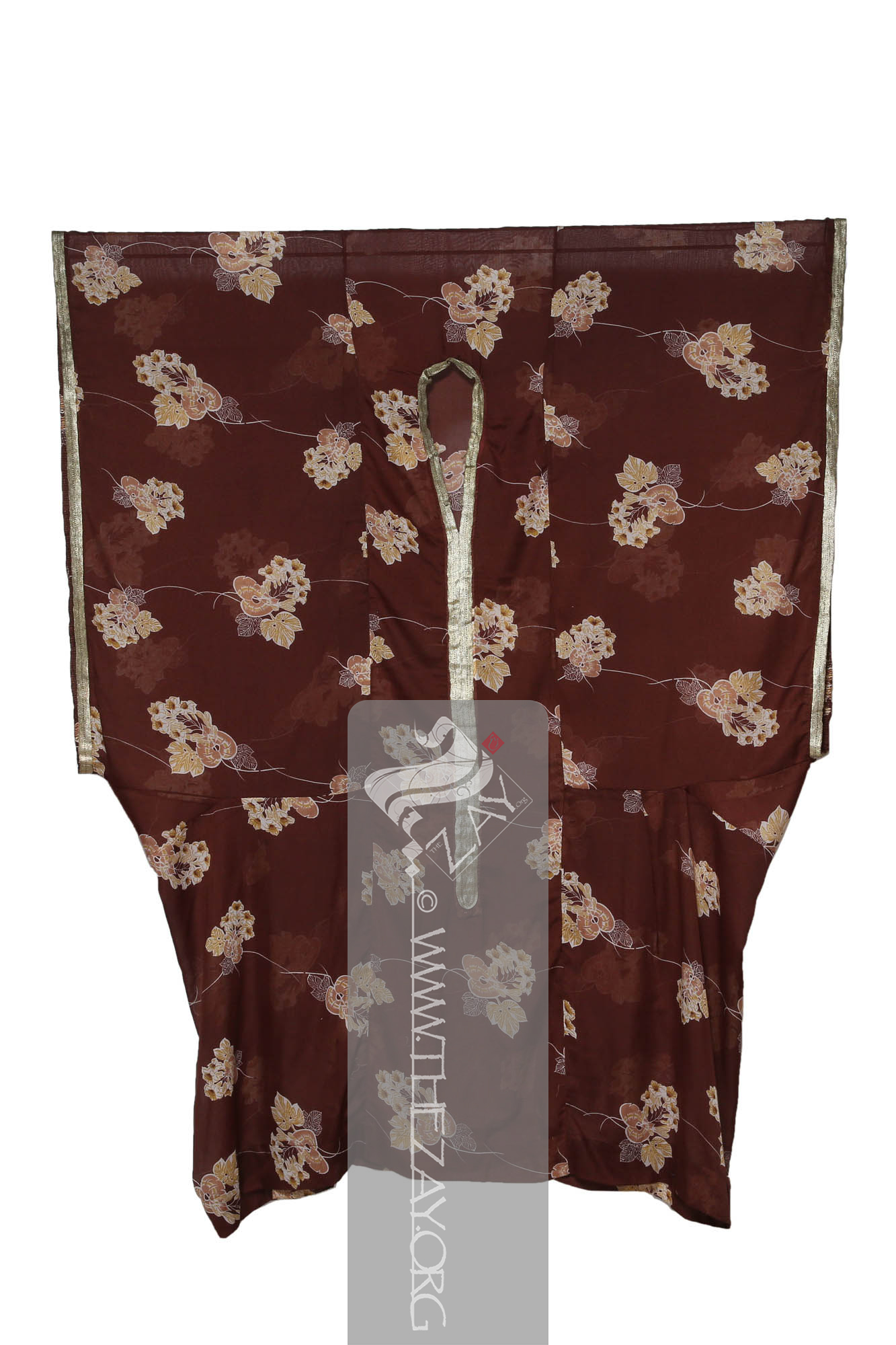
Constructed of a printed cotton voile, the thawb
Thawb: (Arabic: thawb, Pl. Athwāb/thībān), can be pronounced thobe
Thobe: (Arabic: thawb, Pl. Athwāb/thībān), can be pronounced thawb or tobe
Tobe: (Arabic: thawb, Pl. Athwāb/thībān), can be pronounced thawb or thobe based on locale. The standard Arabic word for ‘fabric’ or ‘garment’. It can refer to a qamīs-like tunic worn by men and women in the Arabian Peninsula, Iraq, the southern and south-western ports and islands of Iran, and some countries in East and West Africa. More specifically, it can refer to the square-shaped Bedouin overgarment worn by women. based on locale. The standard Arabic word for ‘fabric’ or ‘garment’. It can also refer to a qamīs-like tunic worn by men and women in the Arabian Peninsula, Iraq, the southern and south-western ports and islands of Iran, and some countries in East and West Africa. More specifically, it can refer to the square-shaped Bedouin overgarment worn by women. or tobe
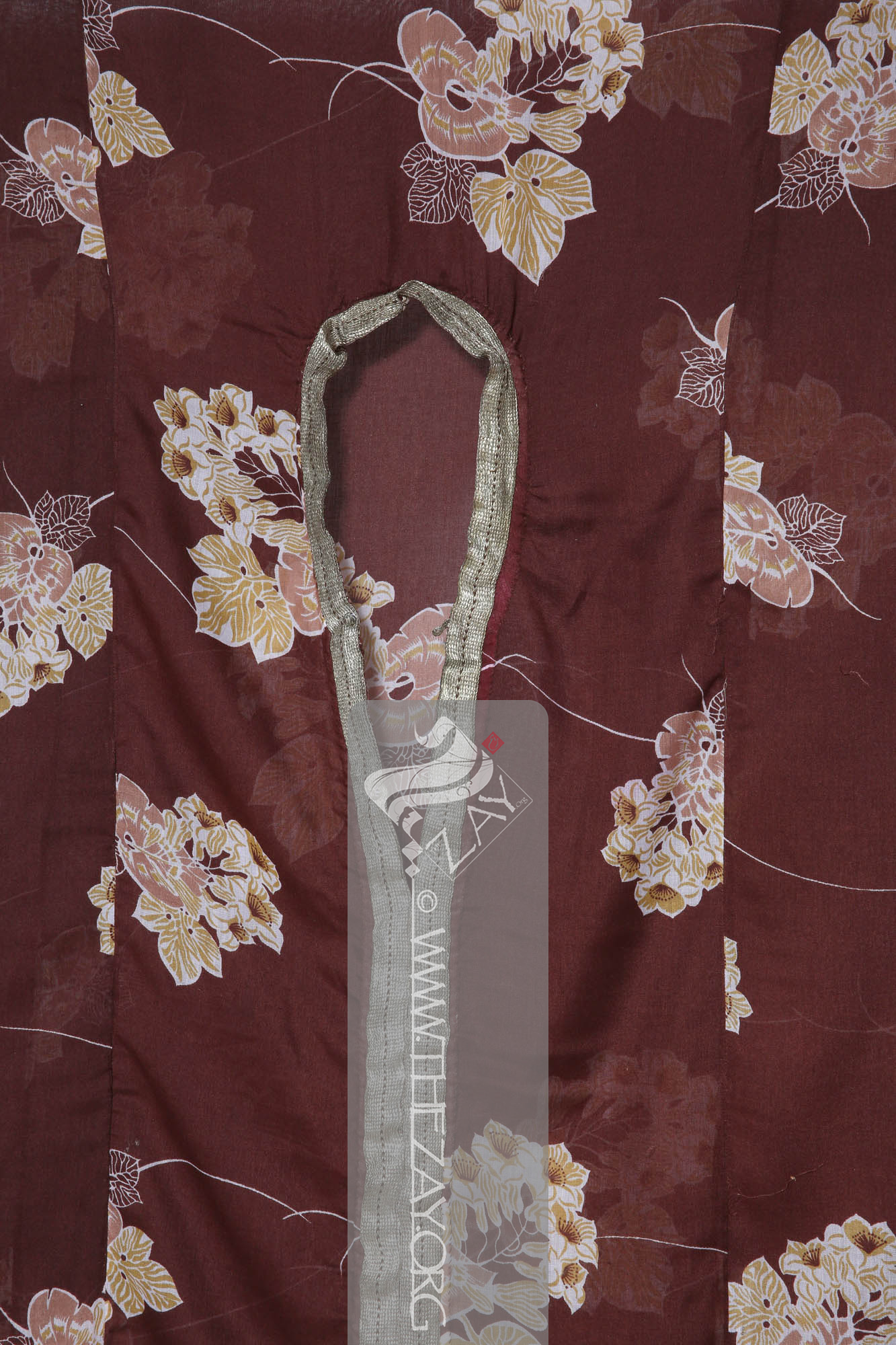
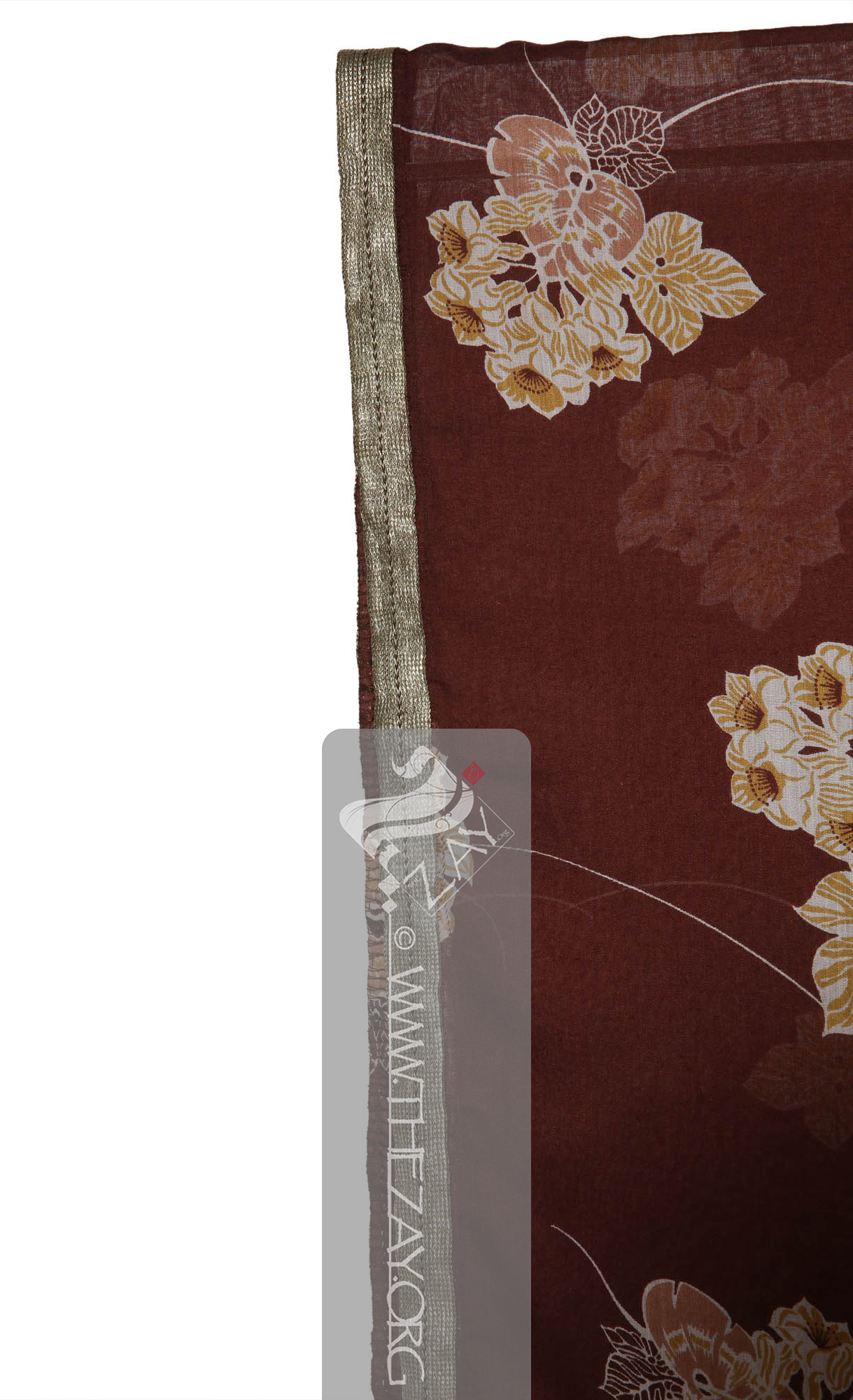
Tobe: (Arabic: thawb, Pl. Athwāb/thībān), can be pronounced thawb or thobe based on locale. The standard Arabic word for ‘fabric’ or ‘garment’. It can refer to a qamīs-like tunic worn by men and women in the Arabian Peninsula, Iraq, the southern and south-western ports and islands of Iran, and some countries in East and West Africa. More specifically, it can refer to the square-shaped Bedouin overgarment worn by women. based on locale. The standard Arabic word for ‘fabric’ or ‘garment’. It can also refer to a qamīs-like tunic worn by men and women in the Arabian Peninsula, Iraq, the southern and south-western ports and islands of Iran, and some countries in East and West Africa. More specifically, it can refer to the square-shaped Bedouin overgarment worn by women in the Arabian Gulf region. features metal thread (zari
Zarī: (Persian two-syllables: zar: gold & dozi: embellishment), complex embroidery technique that uses metal alloy on silk, satin, or velvet, and may include pearls, beads, and precious stones. Colloquially in the Arab gulf region, the term (zarī) is loosely applied to any gilded thread, embellishment or gilded brocade fabric. Originated in ancient Persia it has been used extensively in Indian and Middle Eastern textiles for centuries. ), possibly silver, band (kurar
Kurar: (Arabic:), hand woven and twisted metal thread cords akin to passementerie
Passementerie: (French: passement – braid), decorative trimmings or edgings for textile, often made of threads of silk, cotton, or precious metals such as gold and silver, generally braided or twisted into cords.
The kurar
Kurar: (Arabic:), hand woven and twisted metal thread cords akin to passementerie
Passementerie: (French: passement – braid), decorative trimmings or edgings for textile, often made of threads of silk, cotton, or precious metals such as gold and silver, generally braided or twisted into cords. Frog_fastener: (Synonym: Chinese frog closure, frog closure), is a decorative and functional type of button used to fasten clothing. Said to have originated between c. 5th to 7th century China these buttons consist of a cord or braid looped through a decorative knot. Kurar: (Arabic:), hand woven and twisted metal thread cords akin to passementerie
Passementerie: (French: passement – braid), decorative trimmings or edgings for textile, often made of threads of silk, cotton, or precious metals such as gold and silver, generally braided or twisted into cords.
Although the piece lacks any apparent lining, the embellished portions along the neckline and the edges of the sleeves have a white cotton (gauze Gauze: (English), very fine wire mesh transparent fabric of silk, linen, or cotton.) fabric attached to the underside of the thawb Thawb: (Arabic: thawb, Pl. Athwāb/thībān), can be pronounced thobe Thobe: (Arabic: thawb, Pl. Athwāb/thībān), can be pronounced thawb or tobe Tobe: (Arabic: thawb, Pl. Athwāb/thībān), can be pronounced thawb or thobe based on locale. The standard Arabic word for ‘fabric’ or ‘garment’. It can refer to a qamīs-like tunic worn by men and women in the Arabian Peninsula, Iraq, the southern and south-western ports and islands of Iran, and some countries in East and West Africa. More specifically, it can refer to the square-shaped Bedouin overgarment worn by women. based on locale. The standard Arabic word for ‘fabric’ or ‘garment’. It can also refer to a qamīs-like tunic worn by men and women in the Arabian Peninsula, Iraq, the southern and south-western ports and islands of Iran, and some countries in East and West Africa. More specifically, it can refer to the square-shaped Bedouin overgarment worn by women. or tobe Tobe: (Arabic: thawb, Pl. Athwāb/thībān), can be pronounced thawb or thobe based on locale. The standard Arabic word for ‘fabric’ or ‘garment’. It can refer to a qamīs-like tunic worn by men and women in the Arabian Peninsula, Iraq, the southern and south-western ports and islands of Iran, and some countries in East and West Africa. More specifically, it can refer to the square-shaped Bedouin overgarment worn by women. based on locale. The standard Arabic word for ‘fabric’ or ‘garment’. It can also refer to a qamīs-like tunic worn by men and women in the Arabian Peninsula, Iraq, the southern and south-western ports and islands of Iran, and some countries in East and West Africa. More specifically, it can refer to the square-shaped Bedouin overgarment worn by women in the Arabian Gulf region. to provide extra support to the embellishment and prevent the top fabric from fraying. Primarily a machine-embroidered piece, the appliquéd bands are hand-embroidered.
More details
Kurar
Kurar: (Arabic:), hand woven and twisted metal thread cords akin to passementerie
Passementerie: (French: passement – braid), decorative trimmings or edgings for textile, often made of threads of silk, cotton, or precious metals such as gold and silver, generally braided or twisted into cords. Passementerie: (French: passement – braid), decorative trimmings or edgings for textile, often made of threads of silk, cotton, or precious metals such as gold and silver, generally braided or twisted into cords.
The practice of kurar
Kurar: (Arabic:), hand woven and twisted metal thread cords akin to passementerie
Passementerie: (French: passement – braid), decorative trimmings or edgings for textile, often made of threads of silk, cotton, or precious metals such as gold and silver, generally braided or twisted into cords. Kurar: (Arabic:), hand woven and twisted metal thread cords akin to passementerie
Passementerie: (French: passement – braid), decorative trimmings or edgings for textile, often made of threads of silk, cotton, or precious metals such as gold and silver, generally braided or twisted into cords.