


1 of 15
| Local Name | Bukhnug zari |
| Object Category | Headwear |
| Gender | Female |
| Date of object | c. 1990 |
| Place Of orgin | Bahrain |
| Region | Muharraq |
| Object Range | Bahrain, Kuwait, Qatar, Saudi Arabia et al |
| Dimensions | Length: 110 cm Width: 51 cm |
| Materials | Silk Metal Other |
| Technique | Machine Embroidered Machine Stitched |
| Color | |
| Motif | Floral Geometric |
| Provenance | Gifted, Muhammad Salih Zari, Bahrain 2018 |
| Location | The Zay Zay: (Arabic: costume, Pl. azyaā’), a set of clothes in a style typical of a particular country or historical period. Initiative |
| Status | In storage |
| ZI number | ZI2018.500224.4 BAHRAIN |
Object Note
Part of a lot along with 3 more items (ZI2018.500224.1 BAHRAIN, ZI2018.500224.2 BAHRAIN, and ZI2018.500224.3 BAHRAIN) also in the collection.
Object History
This piece was gifted to Dr. Reem Tariq
Ṭariq: (Arabic; Synonym: tulle_bi_talli
Tūlle_bi_tallī: (French: Tulle – a city in France where fine material for veil was first made; Turkish: tel – wire; Synonym: tariq; talli; badla; khus_dozi ), series of small metal knots made on a woven net ground as embellishment. The term is commonly used in the North African Arab region specifically in Egypt. Ṭariq: (Arabic; Synonym: tulle_bi_talli
Tūlle_bi_tallī: (French: Tulle – a city in France where fine material for veil was first made; Turkish: tel – wire; Synonym: tariq; talli; badla; khus_dozi ), series of small metal knots made on a woven net ground as embellishment. The term is commonly used in the North African Arab region specifically in Egypt.
Dr Reem spent the day interviewing Mr P K who had arrived in Bahrain from India in the 1980s as a teenager. Upon arrival, P.K joined Zari Zarī: (Persian two-syllables: zar: gold & dozi: embellishment), complex embroidery technique that uses metal alloy on silk, satin, or velvet, and may include pearls, beads, and precious stones. Colloquially in the Arab gulf region, the term (zarī) is loosely applied to any gilded thread, embellishment or gilded brocade fabric. Originated in ancient Persia it has been used extensively in Indian and Middle Eastern textiles for centuries. ’s business, initially working on the shop floor. Over time, he advanced to the role of a manager at the new store.
During their conversation, Dr Reem explained that the purpose of her visit was to acquire historical pieces made by the Zari Zarī: (Persian two-syllables: zar: gold & dozi: embellishment), complex embroidery technique that uses metal alloy on silk, satin, or velvet, and may include pearls, beads, and precious stones. Colloquially in the Arab gulf region, the term (zarī) is loosely applied to any gilded thread, embellishment or gilded brocade fabric. Originated in ancient Persia it has been used extensively in Indian and Middle Eastern textiles for centuries. family. Mr P.K. informed her that all he had were two discarded boxes of items and generously offered some of the pieces as gifts. Amongst these items was this particular piece that was ultimately purchased to be added to the collection of The Zay Zay: (Arabic: costume, Pl. azyaā’), a set of clothes in a style typical of a particular country or historical period. Initiative, further enhancing its cultural and historical value.
Object Features
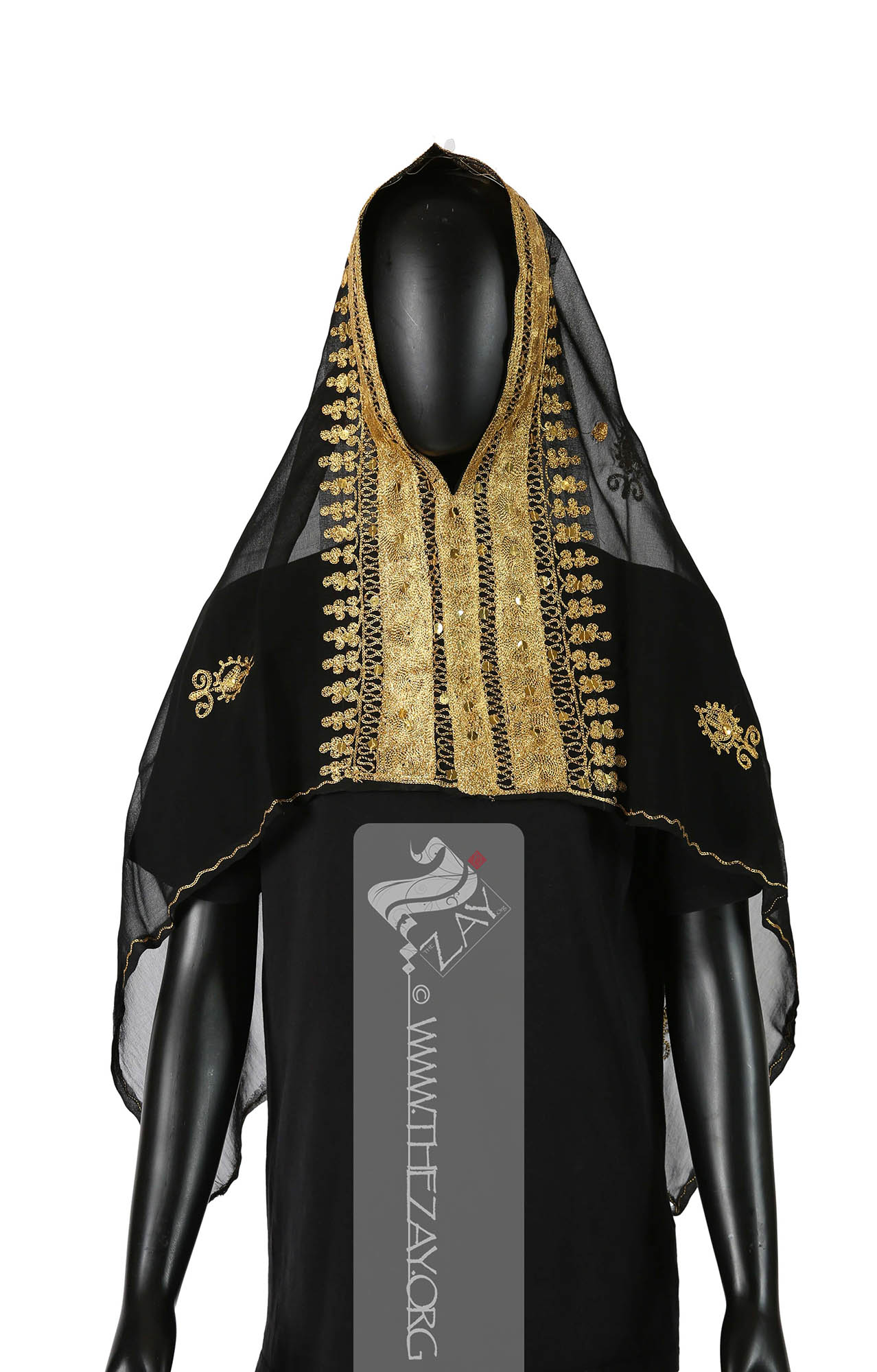
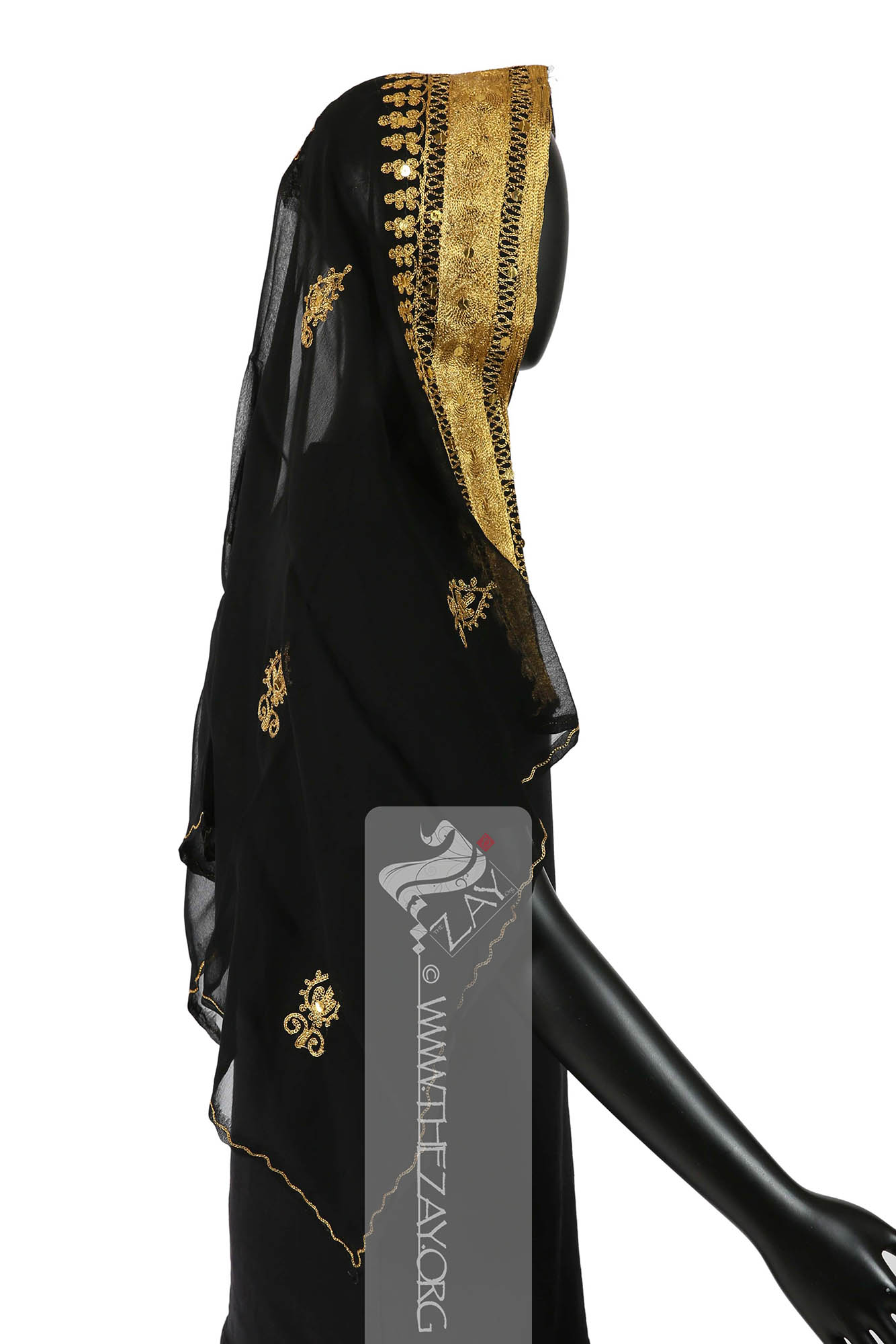
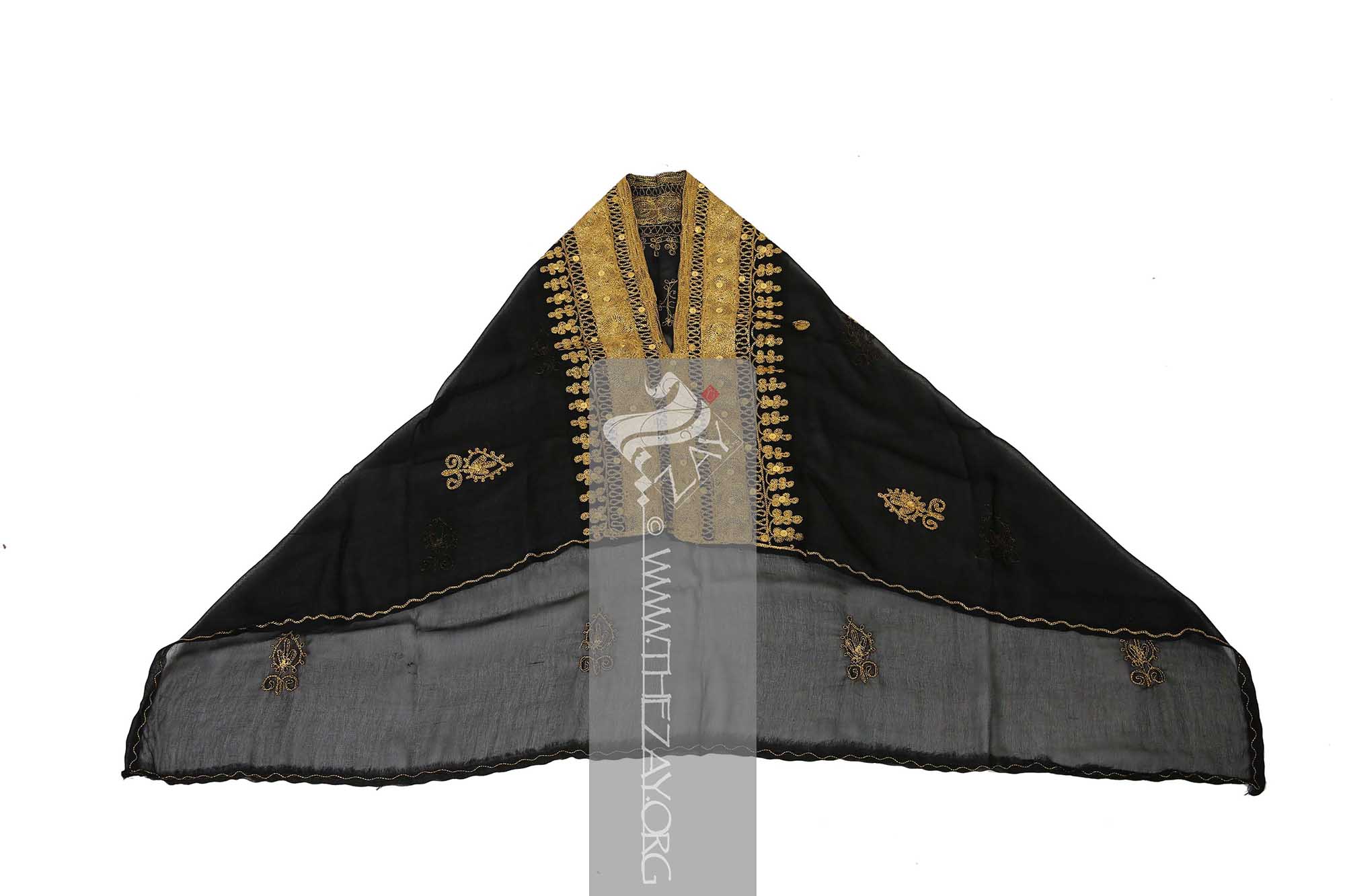
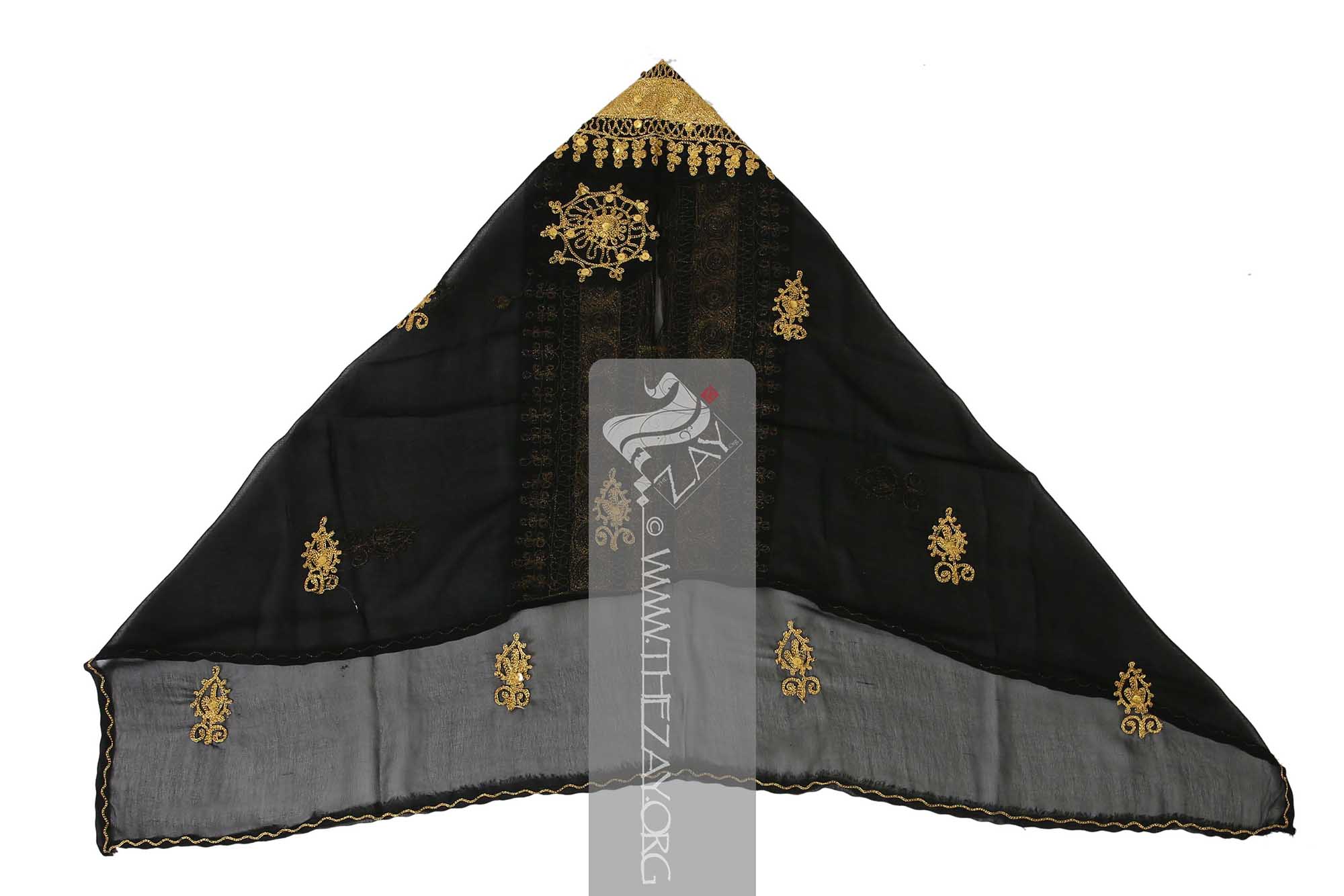
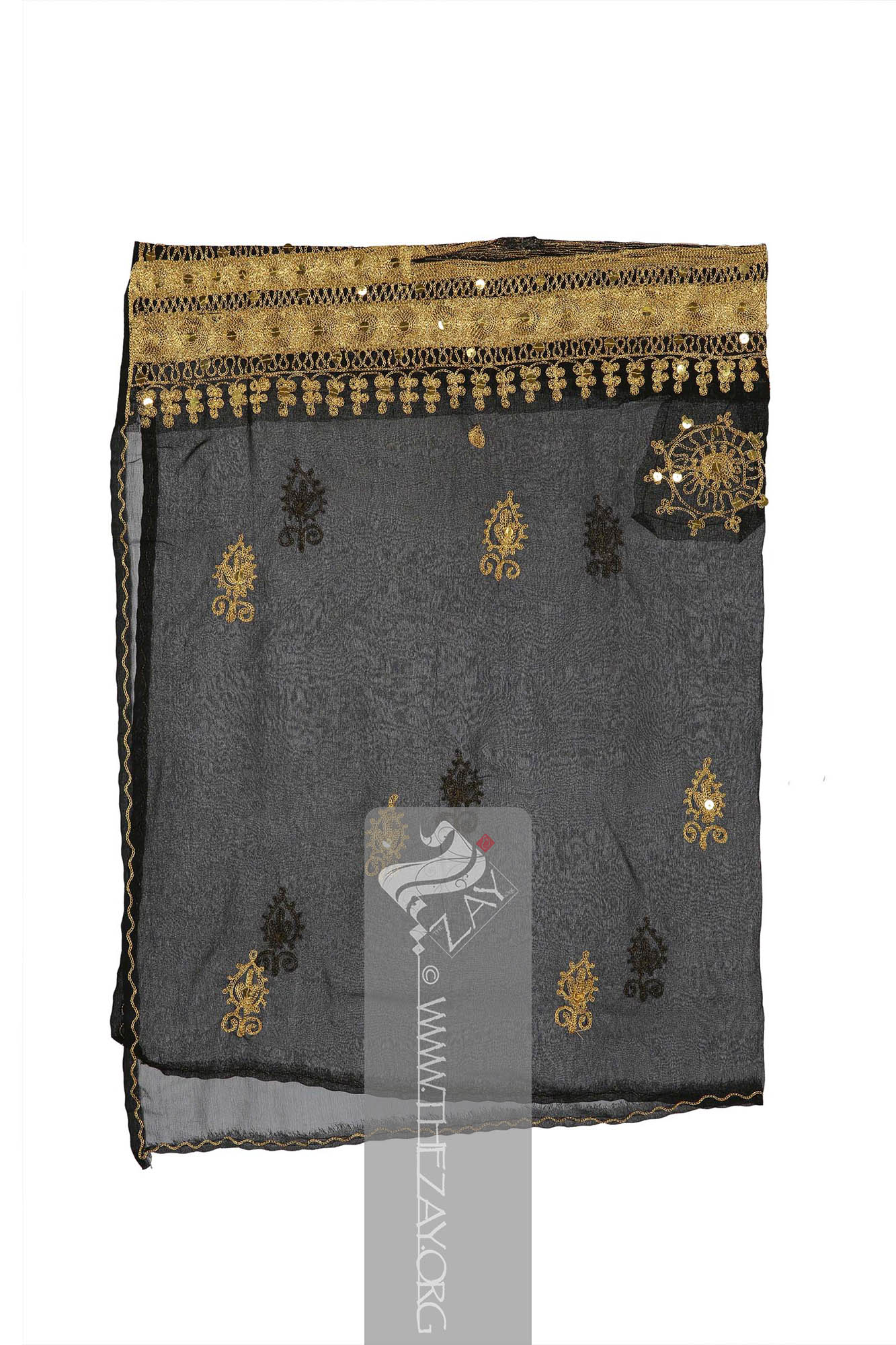
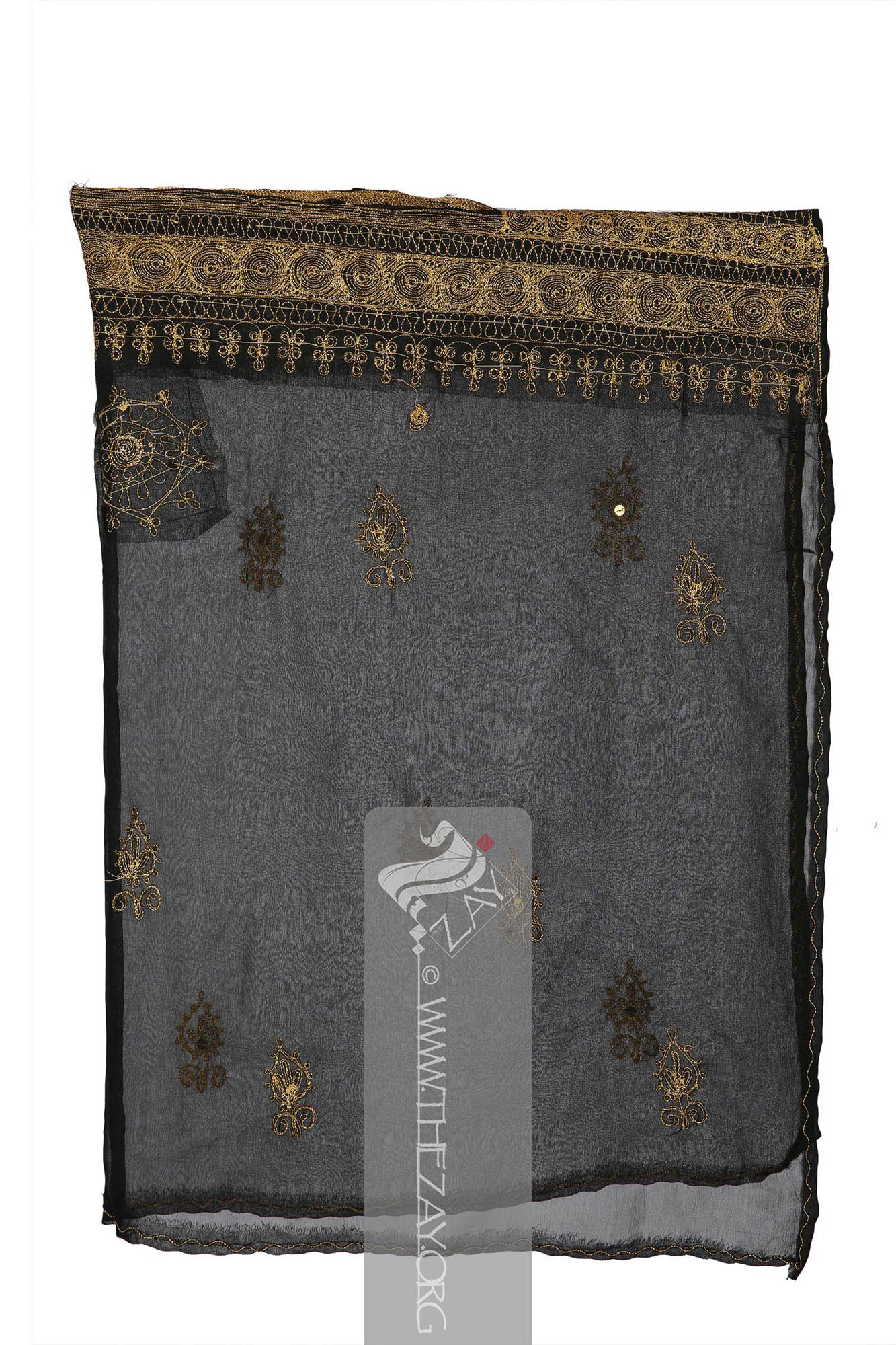
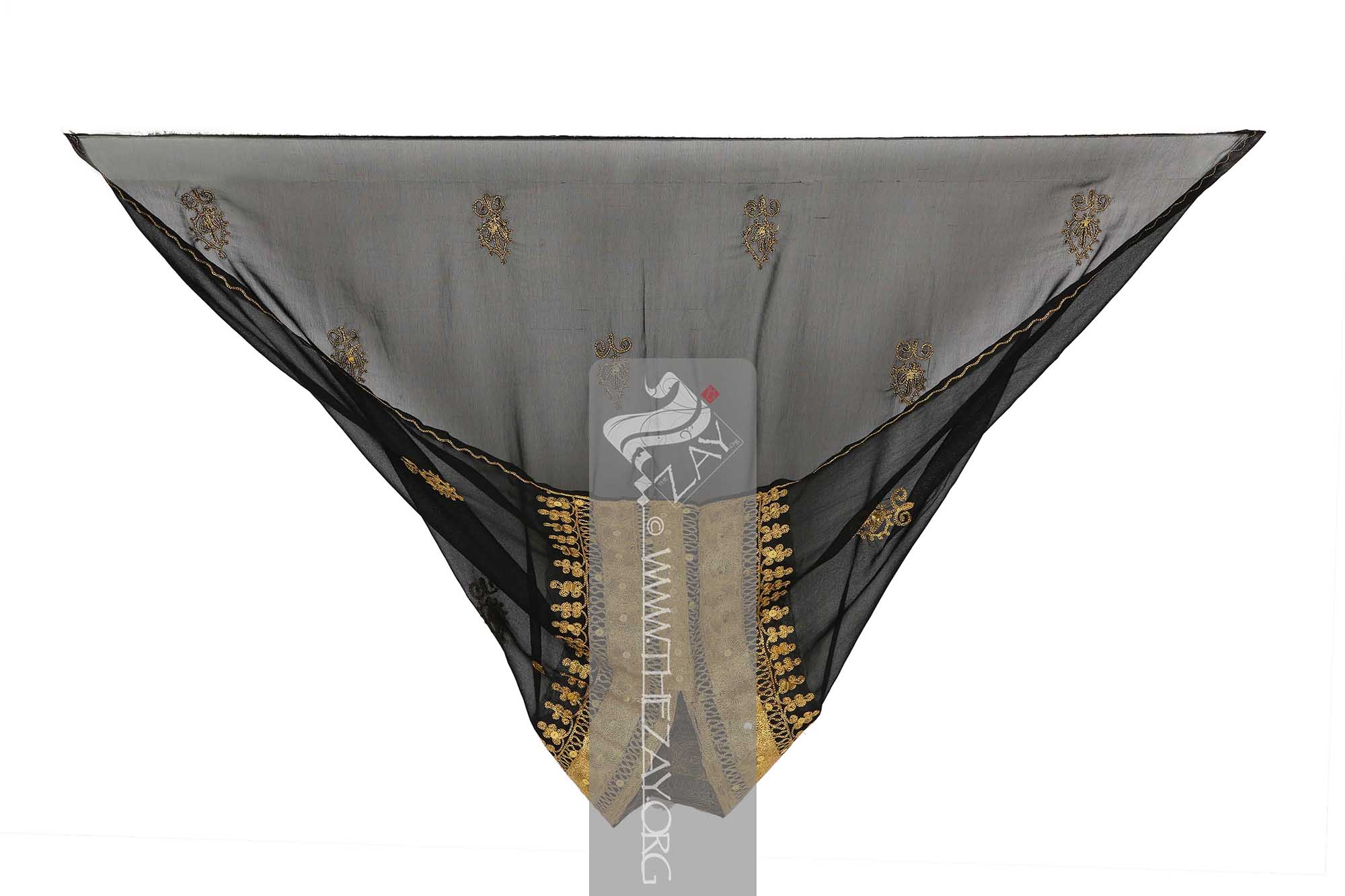
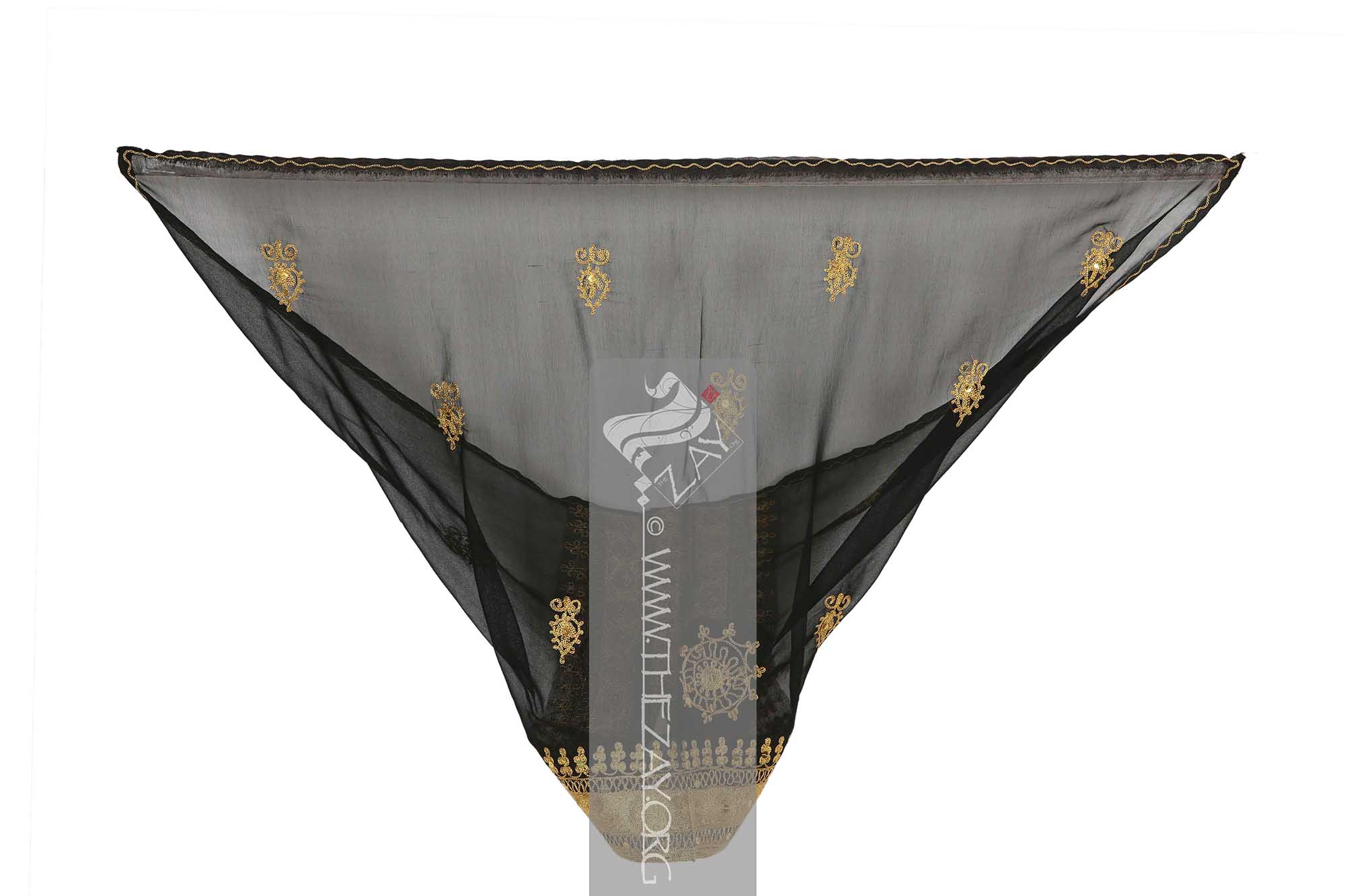
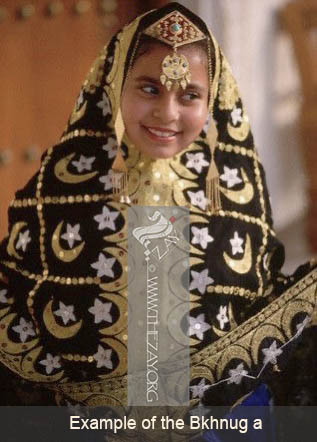
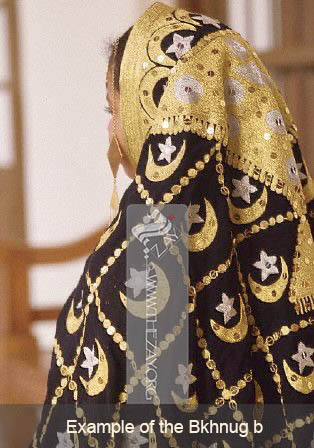
This is a traditional coif (bukhnug Bukhnug: (Arabic: khanaq: to choke, pl. bakhānq, bakhānk), a form of veil (Niqāb), serves as a (hijāb) used by young girls and women, to cover the head, neck, and upper body, the sides of which are pinned, or sewn, under the chin. Colloquially, the letter (qāf) is pronounced (ga).) from the Gulf Arab region, often worn by young girls from puberty or sometimes pre-puberty until their marriage. Constructed of a black silk chiffon fabric, the piece features embroidered embellishment in metal thread (zari Zarī: (Persian two-syllables: zar: gold & dozi: embellishment), complex embroidery technique that uses metal alloy on silk, satin, or velvet, and may include pearls, beads, and precious stones. Colloquially in the Arab gulf region, the term (zarī) is loosely applied to any gilded thread, embellishment or gilded brocade fabric. Originated in ancient Persia it has been used extensively in Indian and Middle Eastern textiles for centuries. ) and metal sequins, possibly in gilded silver.
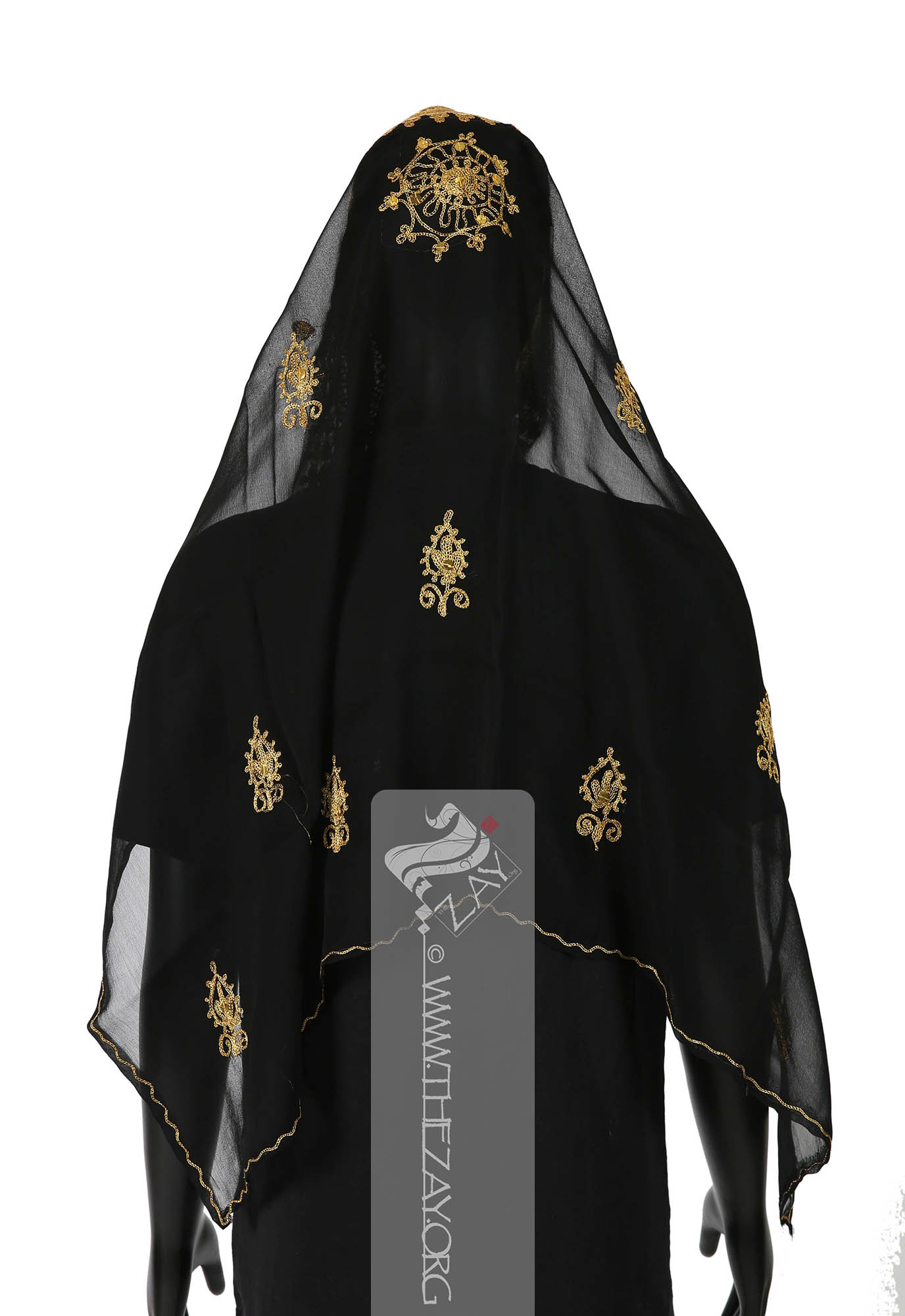
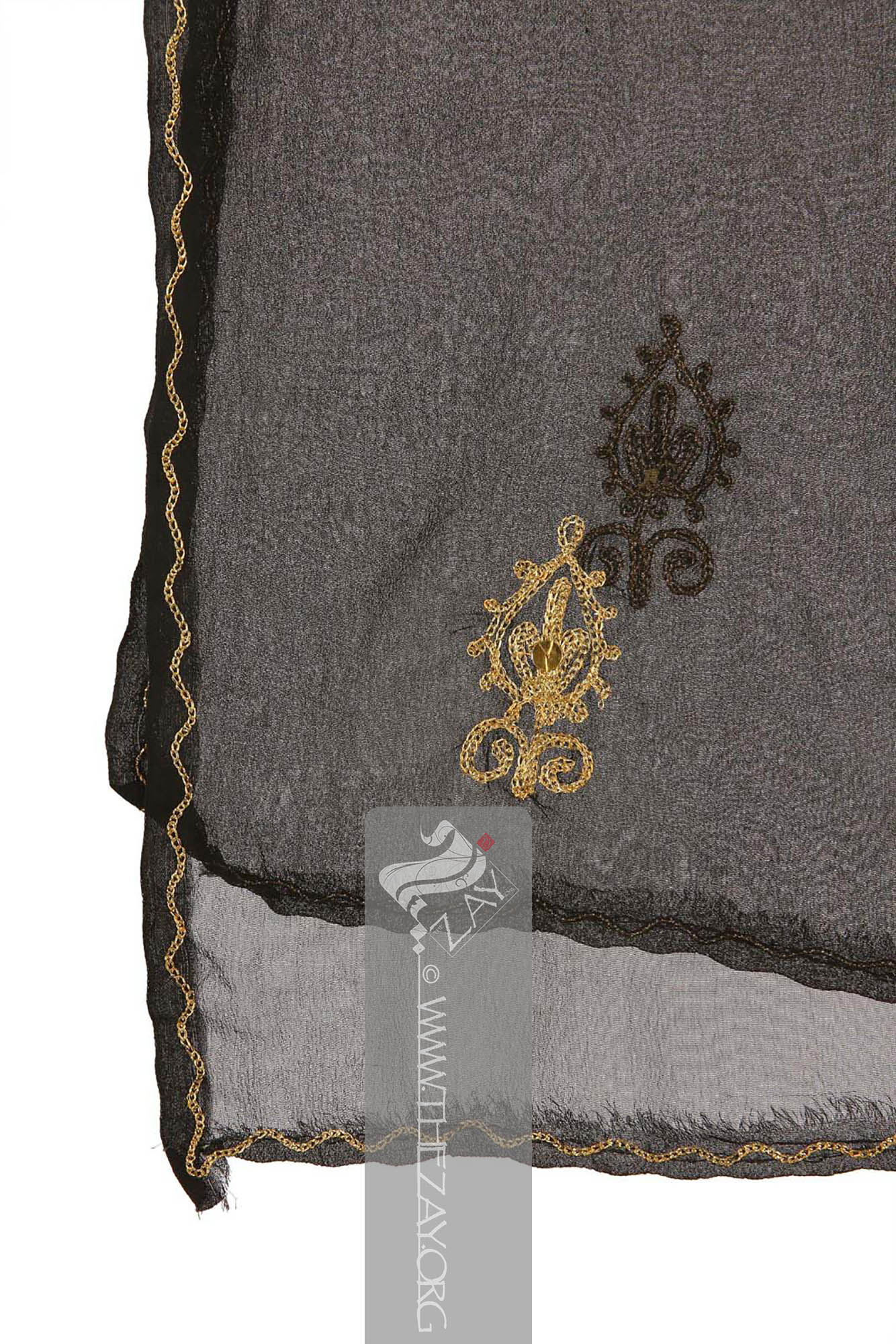
The field of the bukhnug Bukhnug: (Arabic: khanaq: to choke, pl. bakhānq, bakhānk), a form of veil (Niqāb), serves as a (hijāb) used by young girls and women, to cover the head, neck, and upper body, the sides of which are pinned, or sewn, under the chin. Colloquially, the letter (qāf) is pronounced (ga). is adorned with sparse repeats of a foliage pattern in (chain_stitch Chain_stitch: An embroidery technique where a looped stitch is made in a continuous chain-like pattern. Each stitch is formed by looping the thread through the previous stitch, creating a linked chain. ) style embroidery with golden zari Zarī: (Persian two-syllables: zar: gold & dozi: embellishment), complex embroidery technique that uses metal alloy on silk, satin, or velvet, and may include pearls, beads, and precious stones. Colloquially in the Arab gulf region, the term (zarī) is loosely applied to any gilded thread, embellishment or gilded brocade fabric. Originated in ancient Persia it has been used extensively in Indian and Middle Eastern textiles for centuries. and golden sequined accents. It also features a thin, wavy zigzag line in chain_stitch Chain_stitch: An embroidery technique where a looped stitch is made in a continuous chain-like pattern. Each stitch is formed by looping the thread through the previous stitch, creating a linked chain. style with golden zari Zarī: (Persian two-syllables: zar: gold & dozi: embellishment), complex embroidery technique that uses metal alloy on silk, satin, or velvet, and may include pearls, beads, and precious stones. Colloquially in the Arab gulf region, the term (zarī) is loosely applied to any gilded thread, embellishment or gilded brocade fabric. Originated in ancient Persia it has been used extensively in Indian and Middle Eastern textiles for centuries. adorning its border.
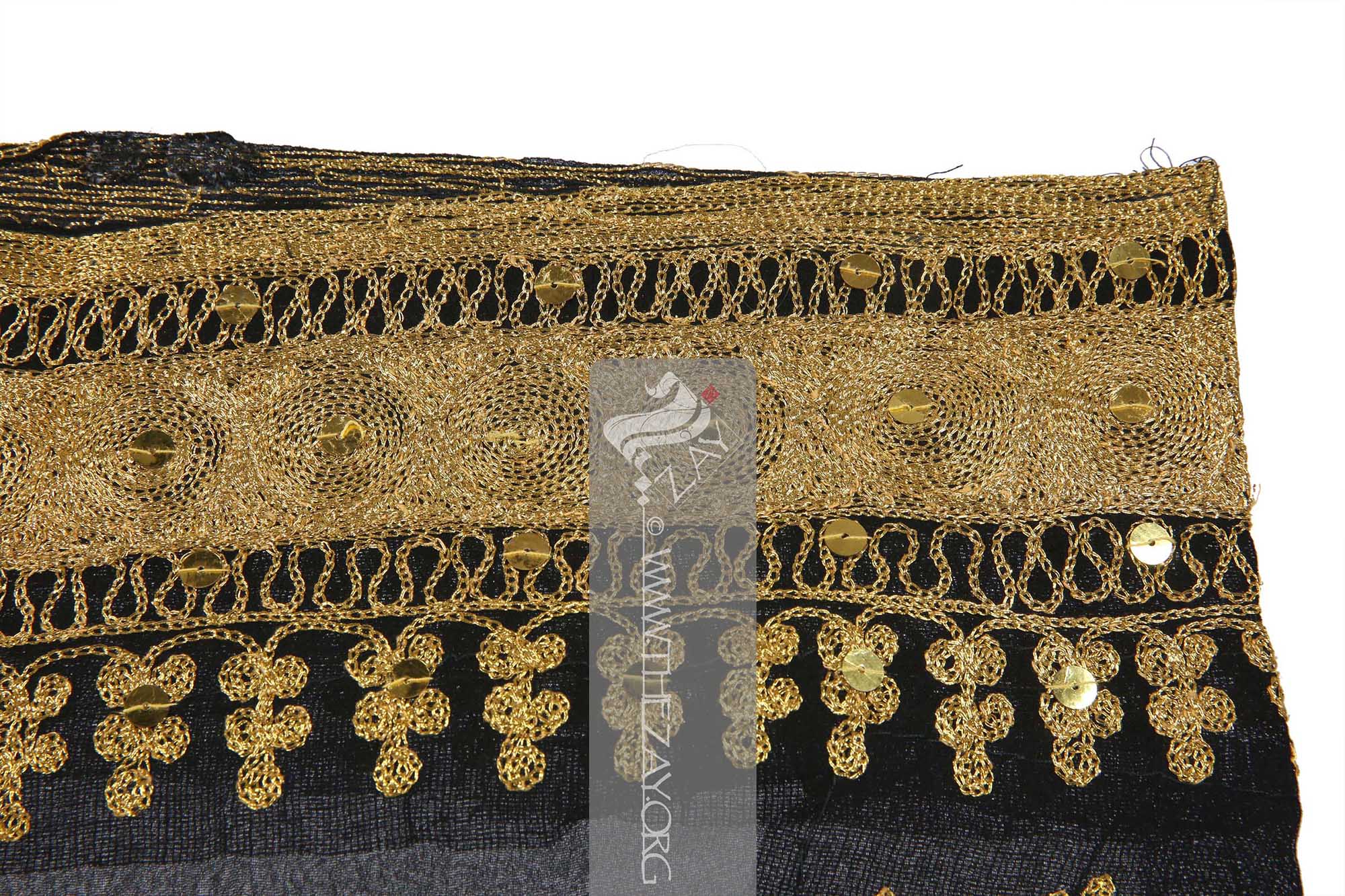
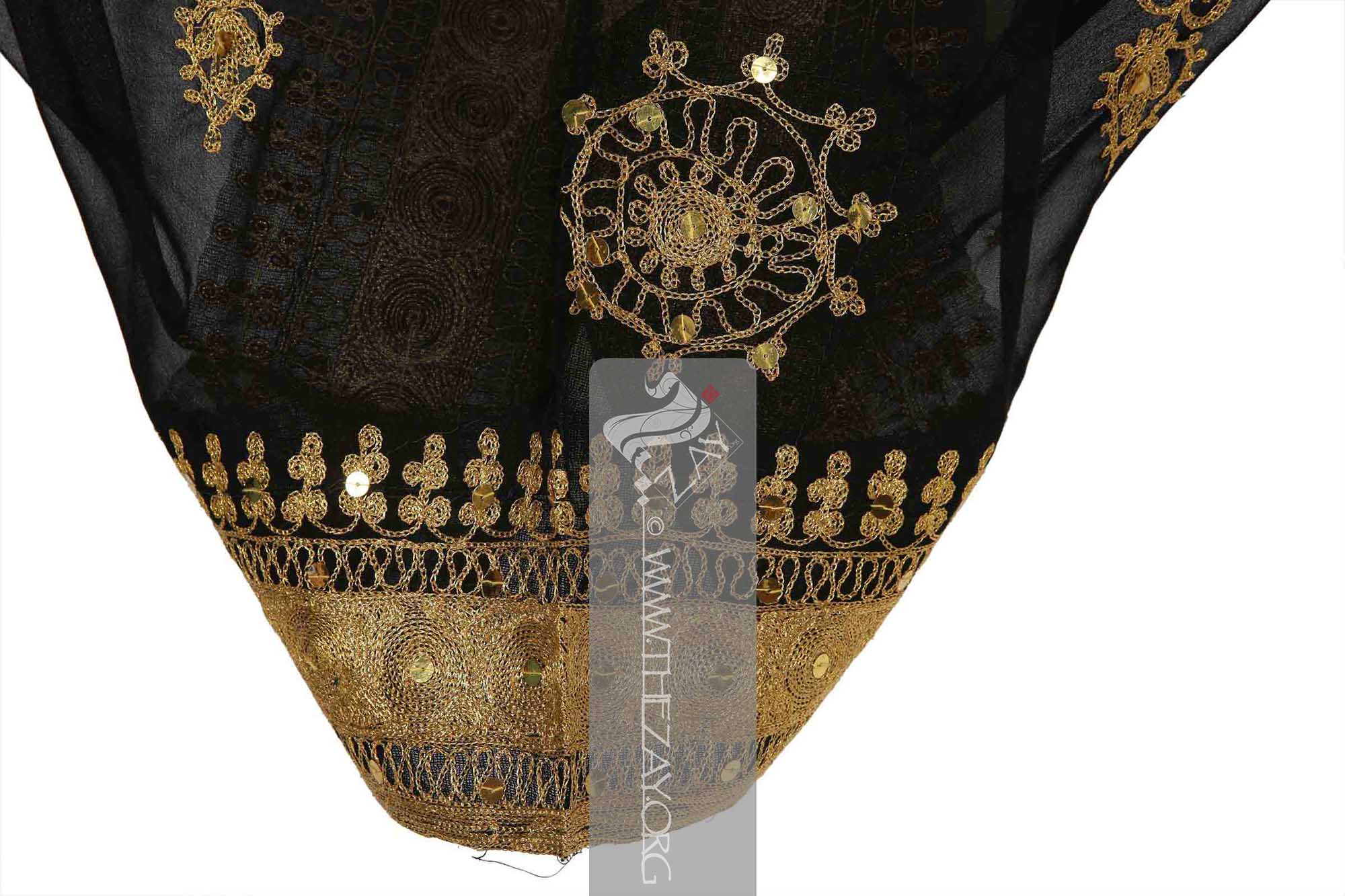
The heavy embellishment is concentrated around the opening and the rectangular patch beneath the opening that covers the neck and centre of the upper torso of the wearer. At the centre is a narrow band of looped circular repeats over a heavily filled ground with golden zari Zarī: (Persian two-syllables: zar: gold & dozi: embellishment), complex embroidery technique that uses metal alloy on silk, satin, or velvet, and may include pearls, beads, and precious stones. Colloquially in the Arab gulf region, the term (zarī) is loosely applied to any gilded thread, embellishment or gilded brocade fabric. Originated in ancient Persia it has been used extensively in Indian and Middle Eastern textiles for centuries. with a metal sequin at the centre of each circle.
This is followed by a narrow pane of curvy, meandering line on both sides, also with golden sequin highlights. A wider panel resembling the central band with larger looped circular patterns form the next layer, followed by another panel of meandering lines.
Finally, a floral repeat panel over a scalloped base sit at the two edges on both sides. A large floral pattern composed of concentric circles in combination with meandering lines and a scalloped banner adorns the centre of the crown of the bukhnug Bukhnug: (Arabic: khanaq: to choke, pl. bakhānq, bakhānk), a form of veil (Niqāb), serves as a (hijāb) used by young girls and women, to cover the head, neck, and upper body, the sides of which are pinned, or sewn, under the chin. Colloquially, the letter (qāf) is pronounced (ga)..
While a thin black cotton (gauze Gauze: (English), very fine wire mesh transparent fabric of silk, linen, or cotton.) fabric lines the front central embellished panel and the pattern at the crown, the rest of the bukhnug Bukhnug: (Arabic: khanaq: to choke, pl. bakhānq, bakhānk), a form of veil (Niqāb), serves as a (hijāb) used by young girls and women, to cover the head, neck, and upper body, the sides of which are pinned, or sewn, under the chin. Colloquially, the letter (qāf) is pronounced (ga). is not lined. The embellishment is machine-embroidered, and it is given a clean machine-stitched finish.
Links