

1 of 8
| Local Name | Sarwal |
| Object Category | Pants |
| Gender | Female |
| Date of object | 2015 |
| Place Of orgin | Oman |
| Region | n/a |
| Object Range | Oman, United Arab Emirates, Qatar, Saudi Arabia, Bahrain |
| Dimensions | Length: 105 cm. Width: 44 cm. |
| Materials | Silk Cotton |
| Technique | Machine Embroidered Machine Stitched |
| Color | |
| Motif | Geometric |
| Provenance | Purchased by Dr. Reem Traiq El Mutwalli |
| Location | The Zay Zay: (Arabic: costume, Pl. azyaā’), a set of clothes in a style typical of a particular country or historical period. Initiative |
| Status | In storage |
| ZI number | ZI500246b OMAN |
Object Note
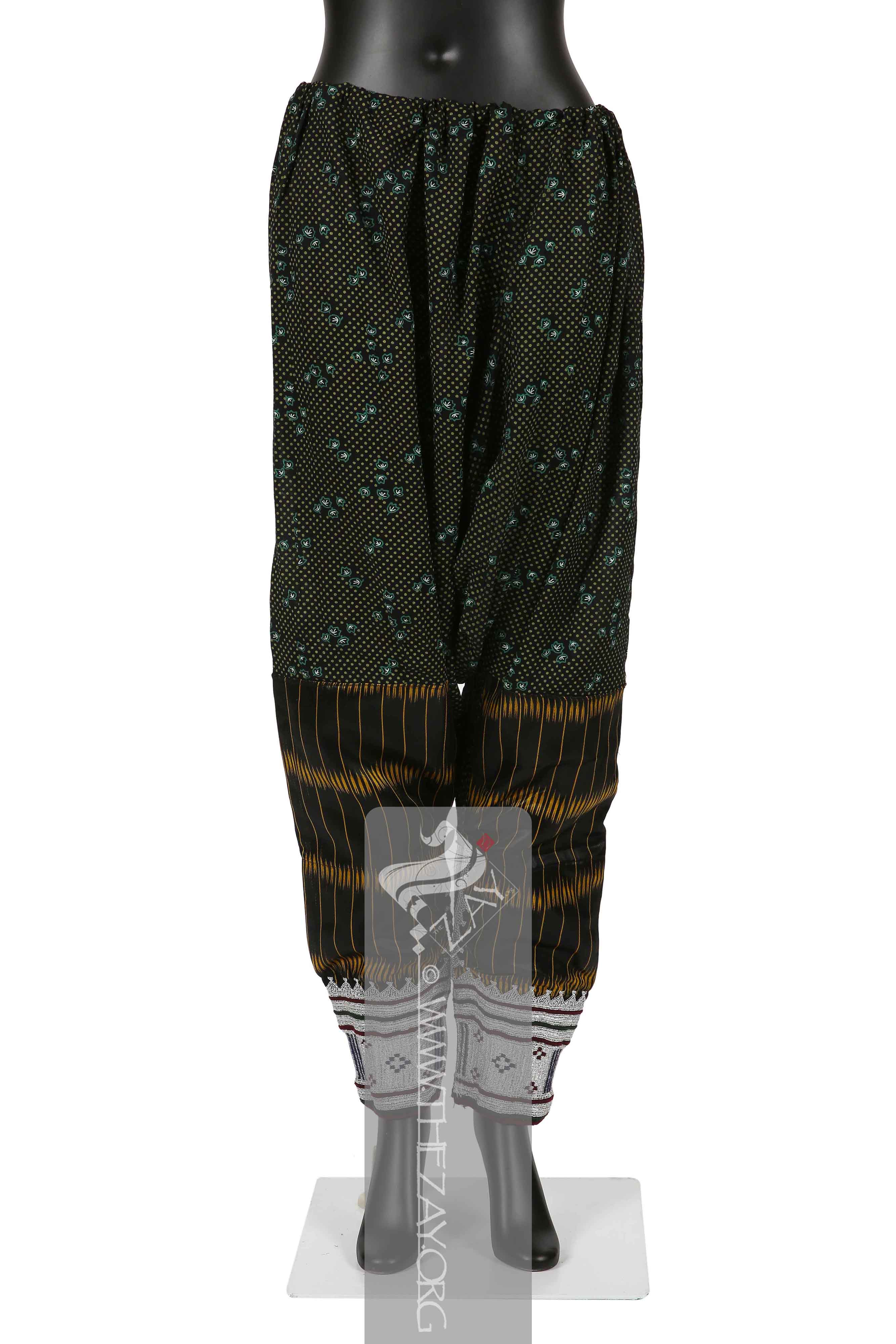
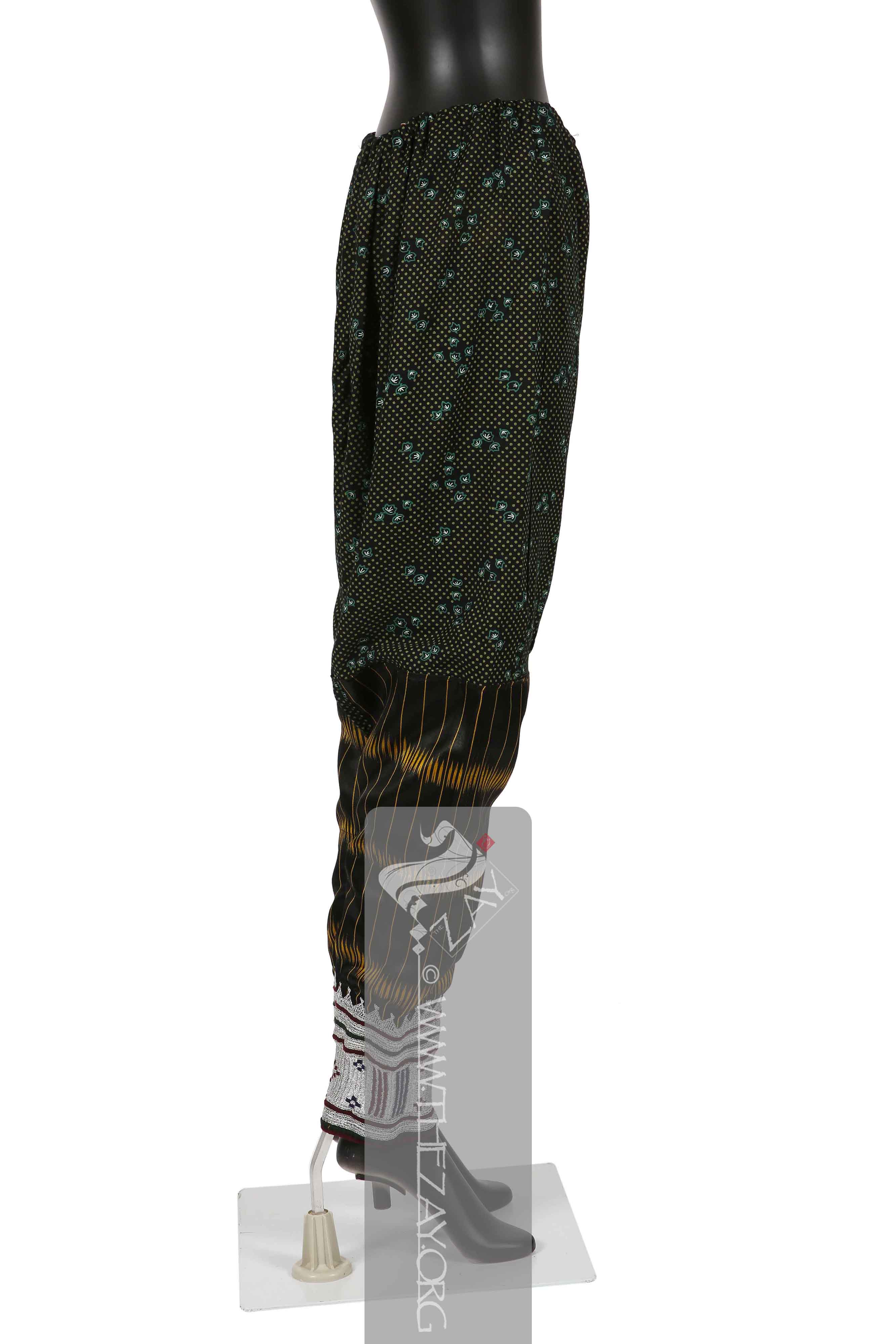
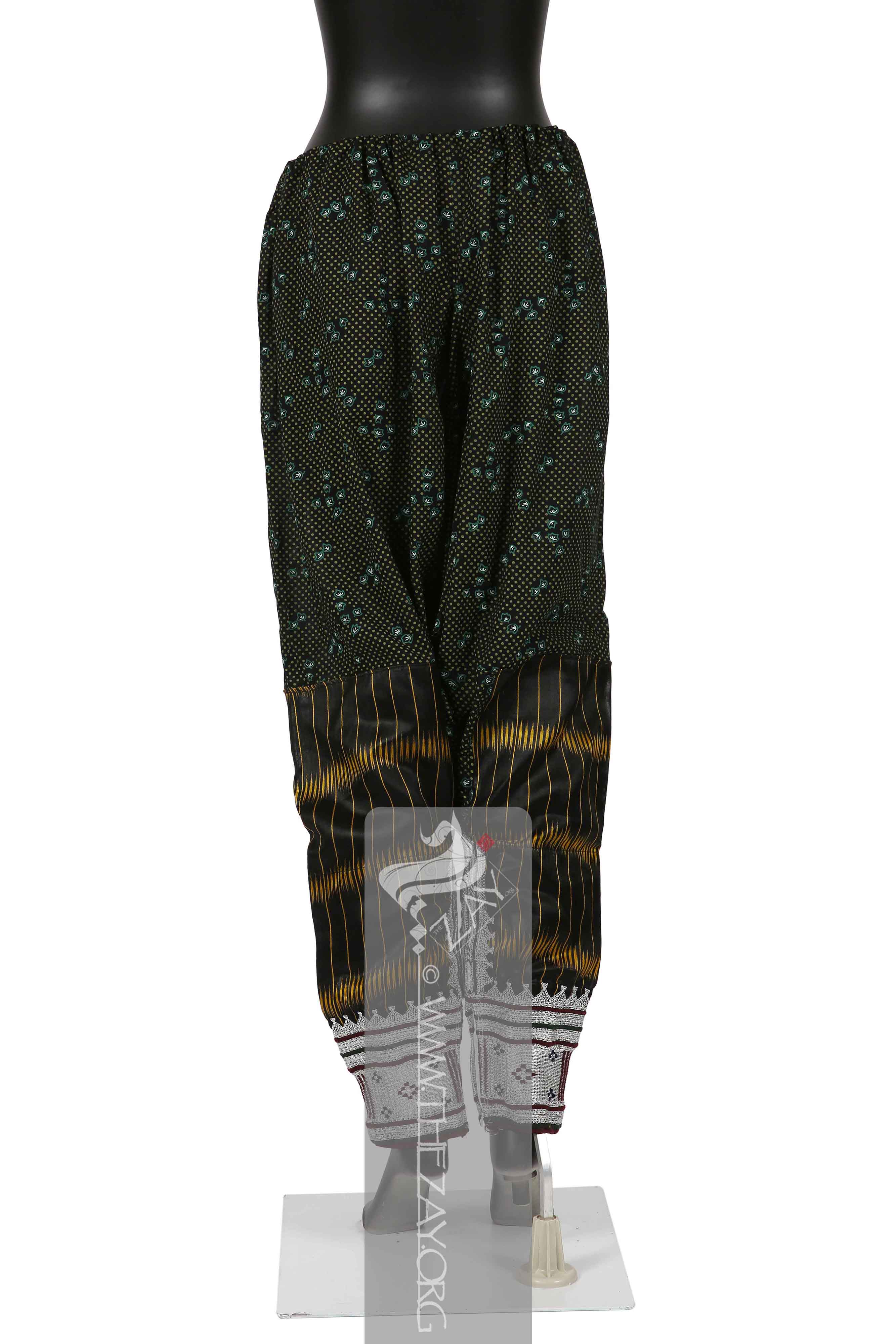
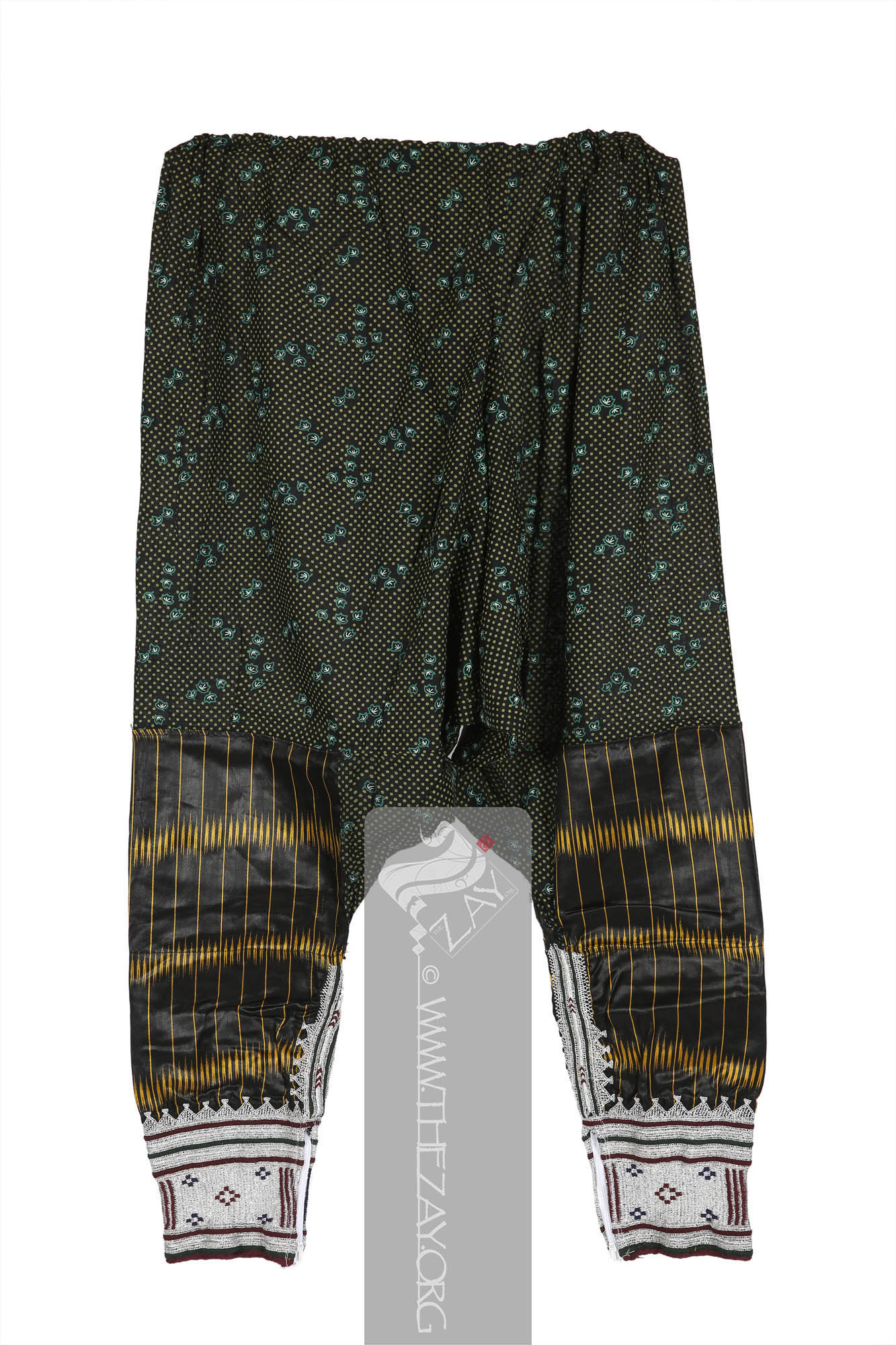
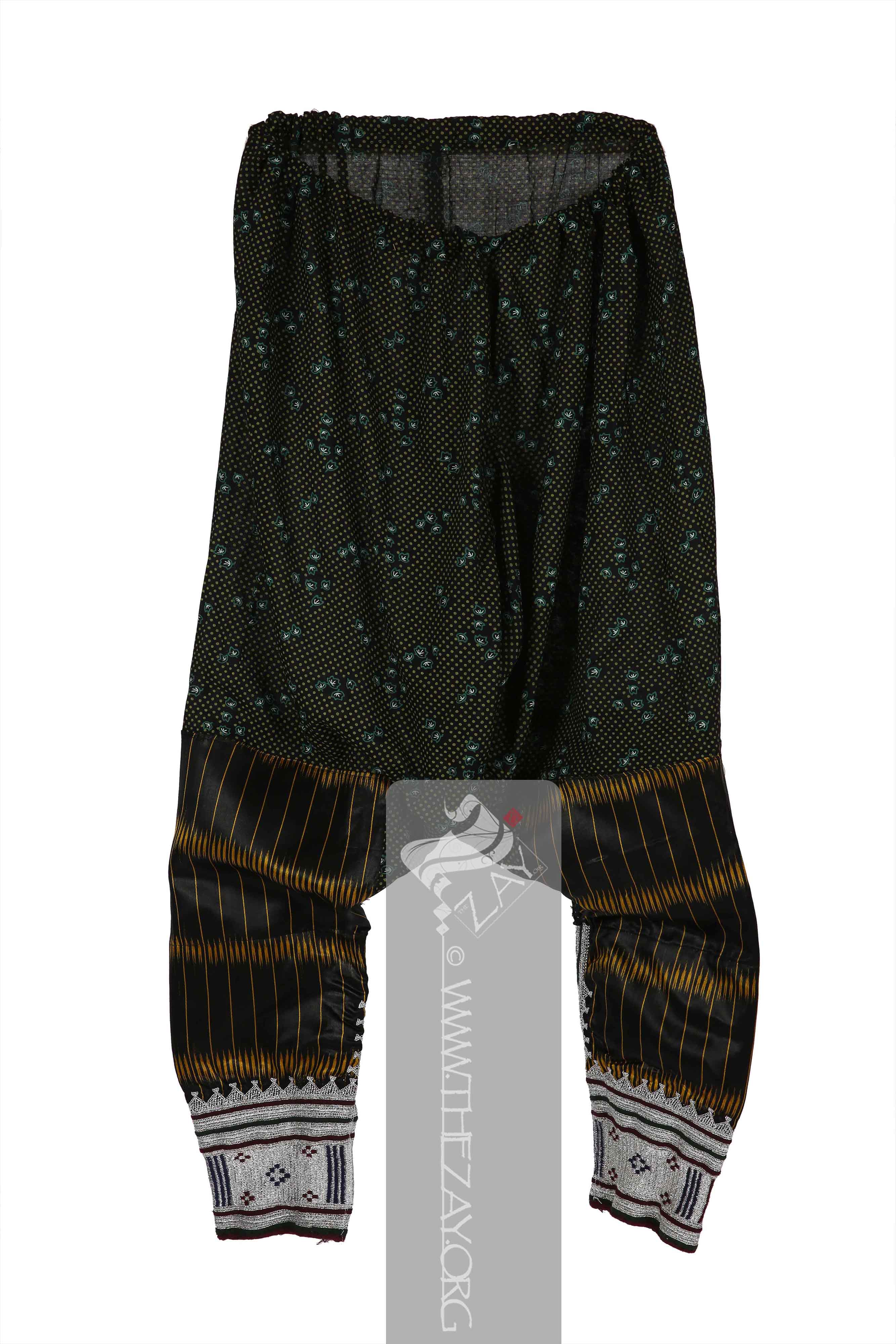
These underpants (sarwal
Ṣarwāl: (Farsi: shalvār; Synonym: salwar, shirwāl), trousers featuring tapering ankles and drawstring closure of Central Asian origin. They disseminated in the Indian subcontinent between c.1st-3rd century BCE. Although exact period of its arrival in the Arab world is disputed their widespread adoption is confirmed from the 12th century.
Object History
On a winter’s day in 2015, Dr. Reem saw a group of female Omaniperformers at a function held at the desert winter camp of Sheikhah Hamdah bint Mohammed Al Nahyan, the maternal aunt to the late Sheikh Khalifah bin Zayid Al Nahyan. Dr. Reem was very taken by their dresses and ordered this three-piece ensemble from a woman who makes them in Oman, not thinking that one day they would form a part of the Zay Zay: (Arabic: costume, Pl. azyaā’), a set of clothes in a style typical of a particular country or historical period.’s Collection.
Object Features
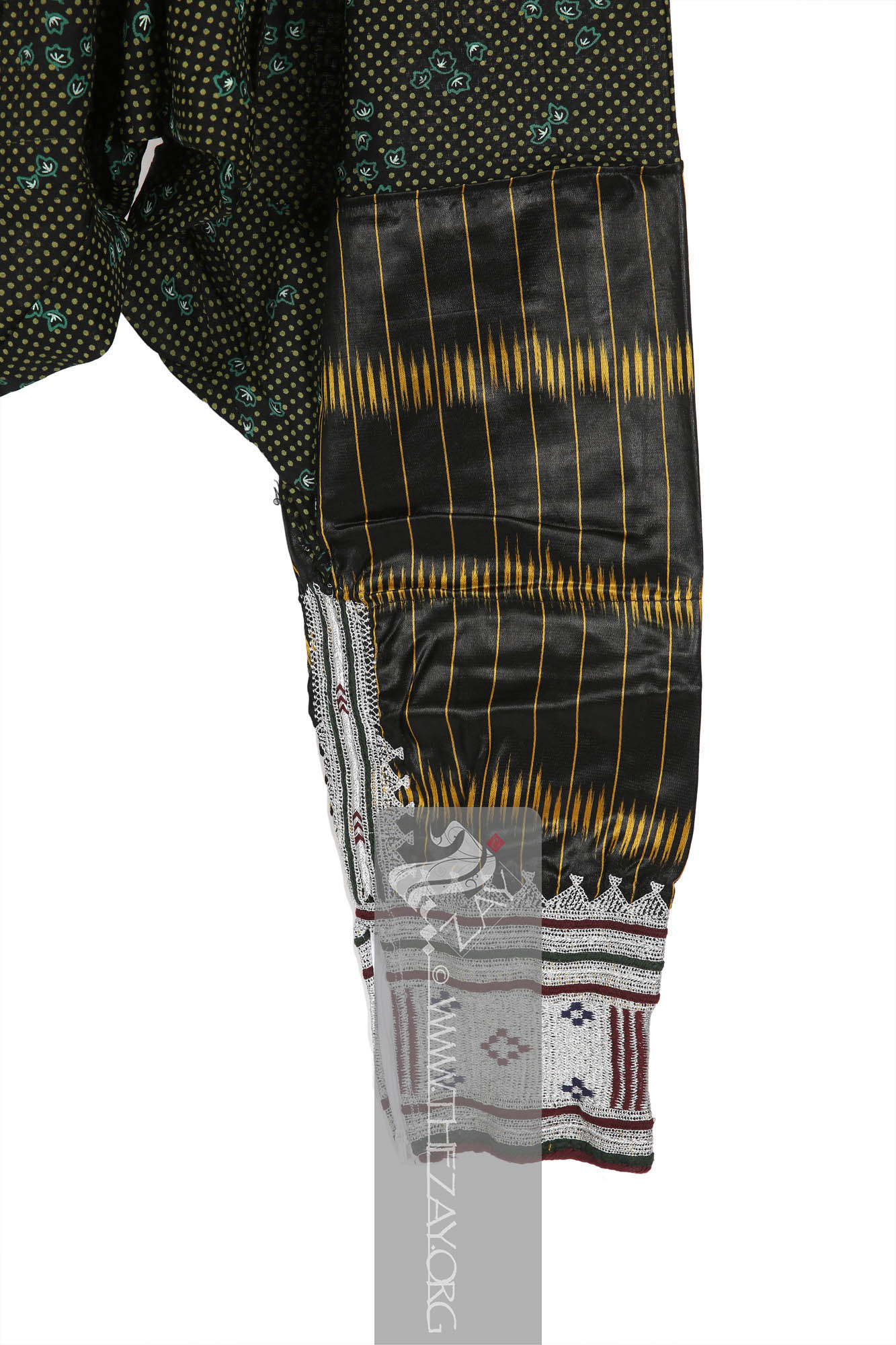
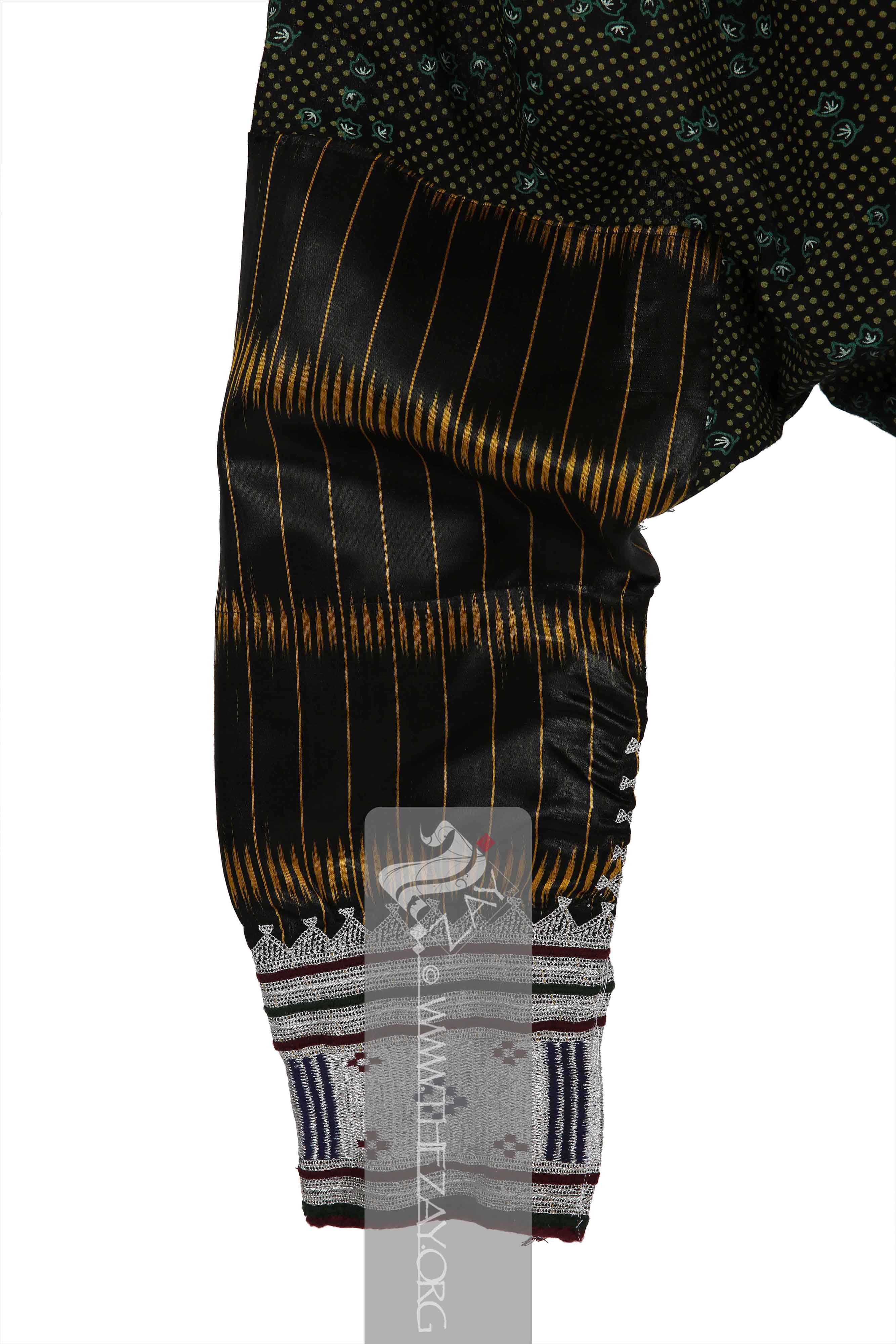
These sarwal
Ṣarwāl: (Farsi: shalvār; Synonym: salwar, shirwāl), trousers featuring tapering ankles and drawstring closure of Central Asian origin. They disseminated in the Indian subcontinent between c.1st-3rd century BCE. Although exact period of its arrival in the Arab world is disputed their widespread adoption is confirmed from the 12th century.
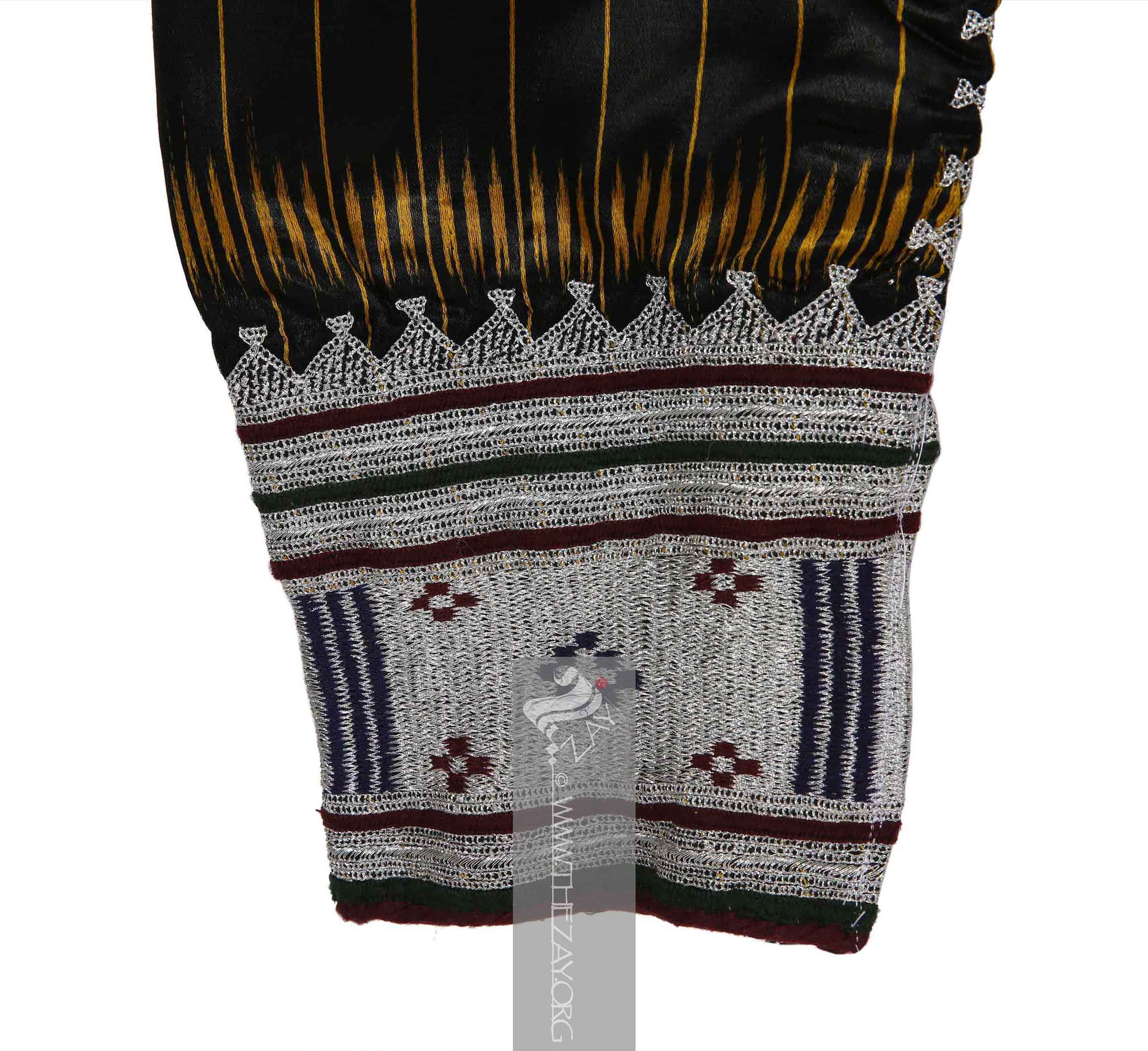
The sarwal
Ṣarwāl: (Farsi: shalvār; Synonym: salwar, shirwāl), trousers featuring tapering ankles and drawstring closure of Central Asian origin. They disseminated in the Indian subcontinent between c.1st-3rd century BCE. Although exact period of its arrival in the Arab world is disputed their widespread adoption is confirmed from the 12th century. Bādlah: (Hindustani: badal – cloud from Sanskirt: vārdala – water; Synonym: tariq; talli
Tallī: (Turkish: tel – wire, string), Gulf Arab – a woven braided trimming made with metal wire, threads and ribbons often sewn on detachable panels used as embellishments. Other – (Synonym: tulle_bi_talli
Tūlle_bi_tallī: (French: Tulle – a city in France where fine material for veil was first made; Turkish: tel – wire; Synonym: tariq; talli; badla; khus_dozi ), series of small metal knots made on a woven net ground as embellishment. The term is commonly used in the North African Arab region specifically in Egypt. Tūlle_bi_tallī: (French: Tulle – a city in France where fine material for veil was first made; Turkish: tel – wire; Synonym: tariq; talli; badla; khus_dozi ), series of small metal knots made on a woven net ground as embellishment. The term is commonly used in the North African Arab region specifically in Egypt. Khus_dozi: (Arabic: khus – straw from Akkadian – kikkišu – piled up reed; Persian: dozi – needlework; Synonym: tariq; talli
Tallī: (Turkish: tel – wire, string), Gulf Arab – a woven braided trimming made with metal wire, threads and ribbons often sewn on detachable panels used as embellishments. Other – (Synonym: tulle_bi_talli
Tūlle_bi_tallī: (French: Tulle – a city in France where fine material for veil was first made; Turkish: tel – wire; Synonym: tariq; talli; badla; khus_dozi ), series of small metal knots made on a woven net ground as embellishment. The term is commonly used in the North African Arab region specifically in Egypt. Tūlle_bi_tallī: (French: Tulle – a city in France where fine material for veil was first made; Turkish: tel – wire; Synonym: tariq; talli; badla; khus_dozi ), series of small metal knots made on a woven net ground as embellishment. The term is commonly used in the North African Arab region specifically in Egypt. Ṣarwāl: (Farsi: shalvār; Synonym: salwar, shirwāl), trousers featuring tapering ankles and drawstring closure of Central Asian origin. They disseminated in the Indian subcontinent between c.1st-3rd century BCE. Although exact period of its arrival in the Arab world is disputed their widespread adoption is confirmed from the 12th century.