




1 of 6
| Local Name | Shaylah; wigayah; samadah, shaylah bu_nafah |
| Object Category | Headwear |
| Gender | Female |
| Date of object | c.1983 |
| Place Of orgin | UAE |
| Region | Dubai |
| Object Range | UAE, Qatar, Oman, Bahrain, Kuwait, KSA |
| Dimensions | Length: 70 cm Width: 474 cm |
| Materials | Synthetic |
| Color | |
| Motif | Geometric |
| Provenance | Purchased, Khadijah Khalaf al Nasaj, Dubai 1983 |
| Location | The Zay Zay: (Arabic: costume, Pl. azyaā’), a set of clothes in a style typical of a particular country or historical period. Initiative |
| Status | In storage |
| ZI number | ZI1983.50014 UAE |
Object History
This piece was purchased by Dr. Reem Tariq
Ṭariq: (Arabic; Synonym: tulle_bi_talli
Tūlle_bi_tallī: (French: Tulle – a city in France where fine material for veil was first made; Turkish: tel – wire; Synonym: tariq; talli; badla; khus_dozi ), series of small metal knots made on a woven net ground as embellishment. The term is commonly used in the North African Arab region specifically in Egypt. Ṭariq: (Arabic; Synonym: tulle_bi_talli
Tūlle_bi_tallī: (French: Tulle – a city in France where fine material for veil was first made; Turkish: tel – wire; Synonym: tariq; talli; badla; khus_dozi ), series of small metal knots made on a woven net ground as embellishment. The term is commonly used in the North African Arab region specifically in Egypt.
Object Features
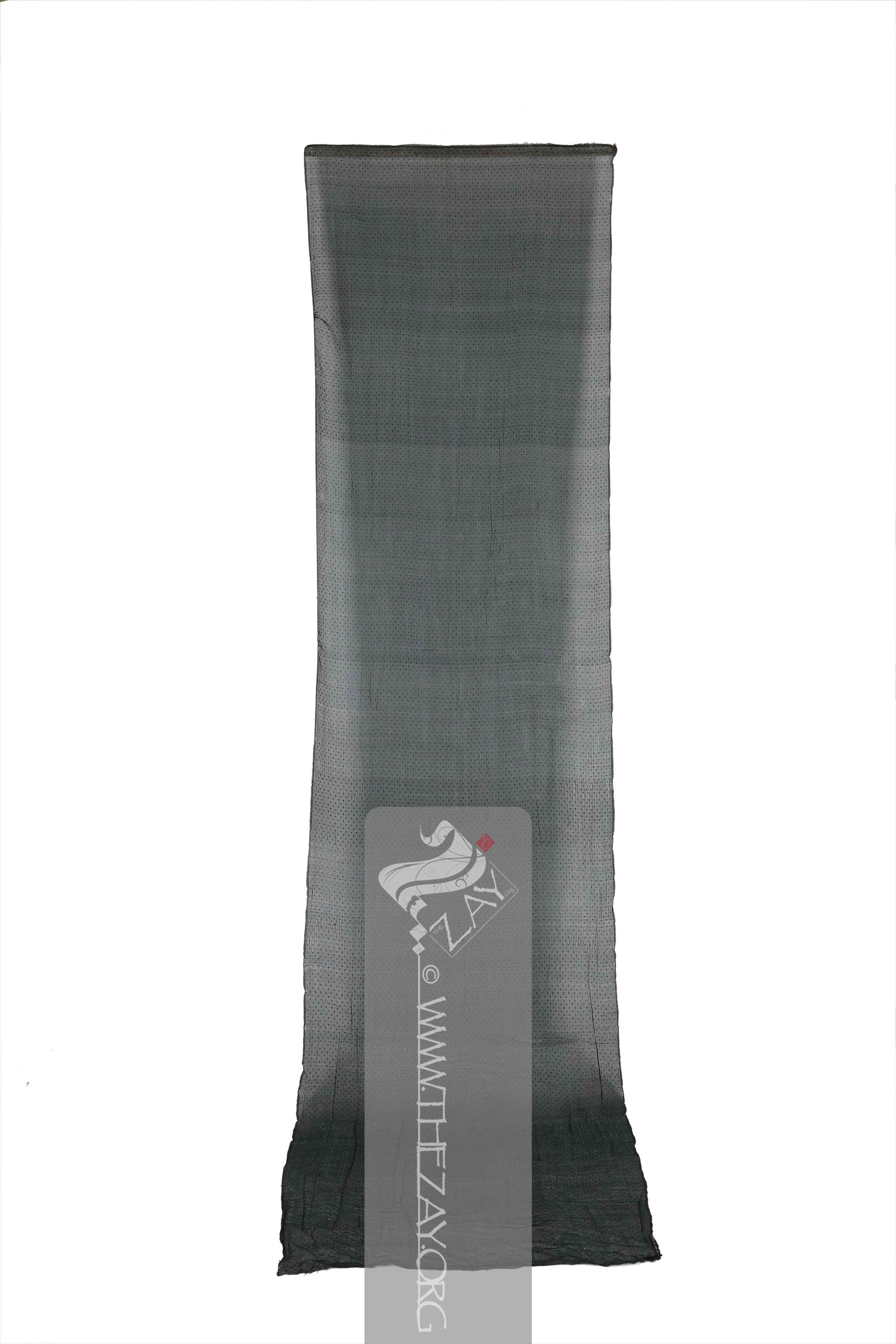
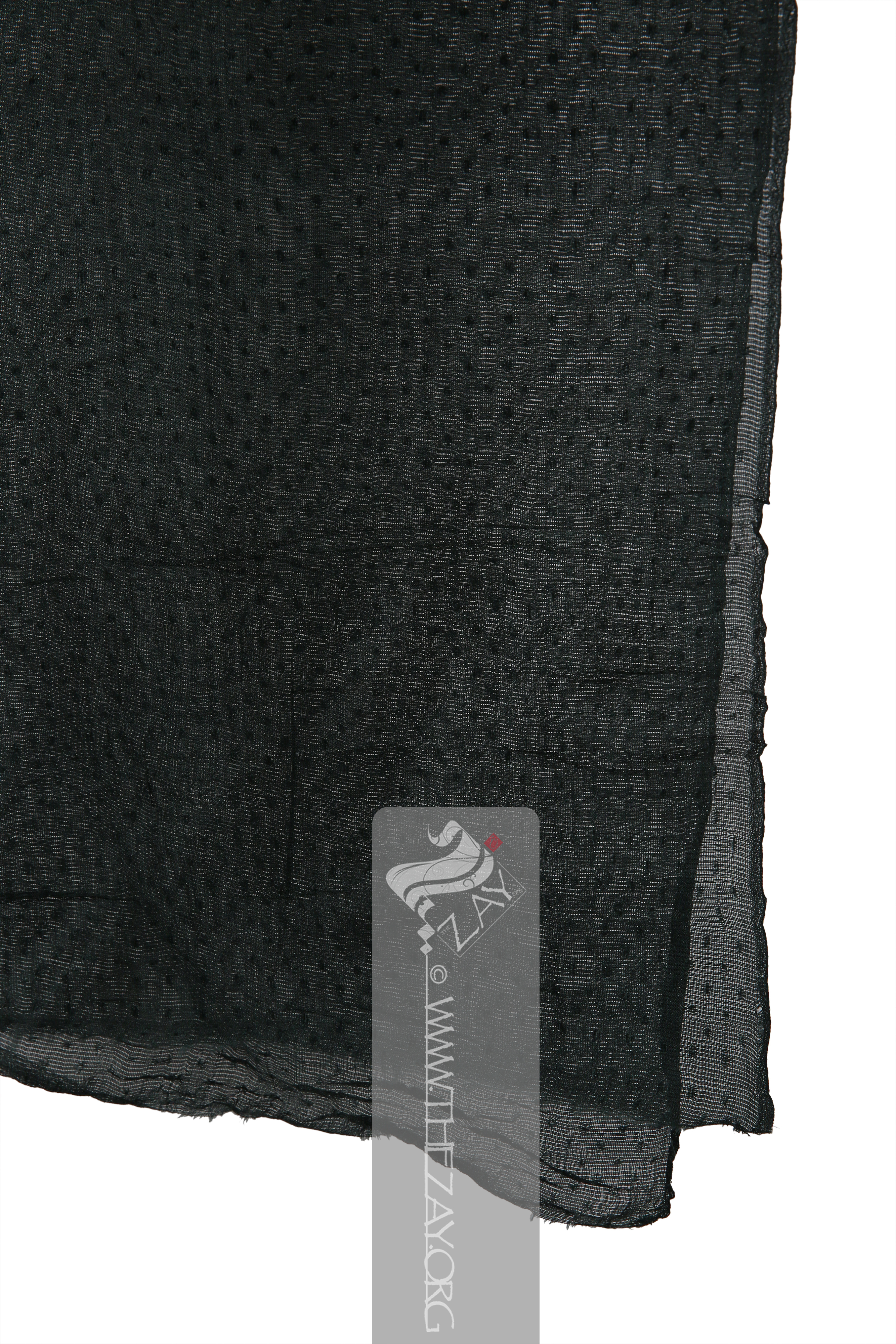
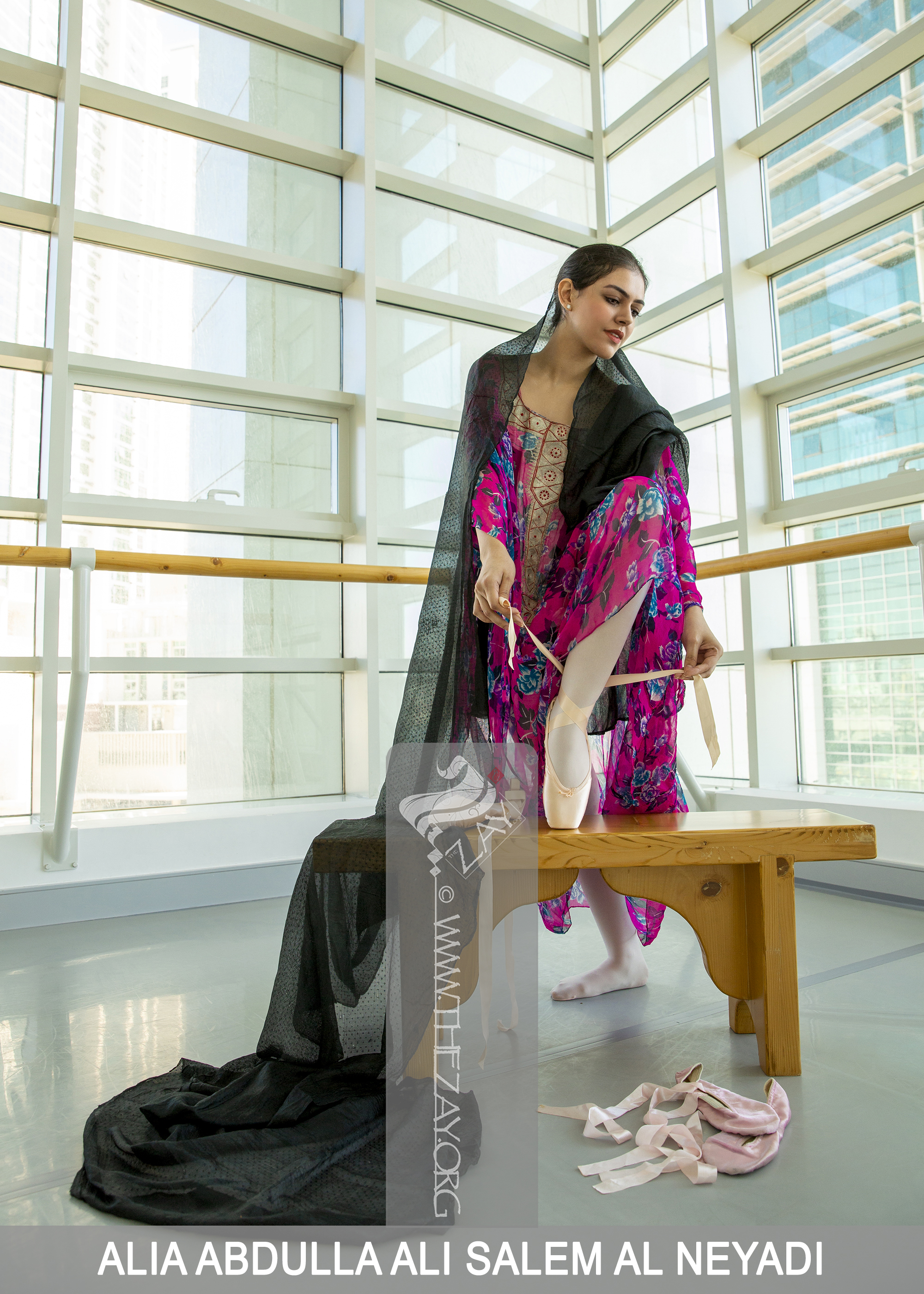
These are an identical pair of traditional head scarves (shaylah Shaylah: (Colloquial Gulf Arabic), a length of fabric used as shawl, head cover or veil. Also known as (wigāyah) or (milfa’), generally made from sheer fabrics such as tulle (tūr), cotton gauze (wasmah Wasmah: (Arabic: woad), is derived from the woad herb (wasmah) used to dye the cotton gauze black. It is mainly used for headcovers or veils and overgarments in most of the Arab gulf region.) (nidwah) or (Nīl), or silk chiffon (sarī).) / (shaylah Shaylah: (Colloquial Gulf Arabic), a length of fabric used as shawl, head cover or veil. Also known as (wigāyah) or (milfa’), generally made from sheer fabrics such as tulle (tūr), cotton gauze (wasmah Wasmah: (Arabic: woad), is derived from the woad herb (wasmah) used to dye the cotton gauze black. It is mainly used for headcovers or veils and overgarments in most of the Arab gulf region.) (nidwah) or (Nīl), or silk chiffon (sarī). bu_nafah Bū_nafah: (Arabic, bū: diminutive of abū: father, nafah: bethir: seeds, synonyms: bū_nūnah, naf_al _matar), a term colloquially used in the Arab Gulf region to identify mainly point d’Esprit tulle; shear net, adorned in small seed or pin like dots woven into the fabric. Used particularly for veils (shiyal) and overgarments (athwāb).) / (wigayah Wigāyah: (Arabic: verb waqa: to protect), the term is applied to any fabric that is draped off the head to cover the upper portion of the body thus used as shawl, head scarf or veil (shaylah). Some can have a fringe (hāshīyah). The letter (qāf) is commonly pronounced (guh) colloquially rendering the term: wigāyah.) / (samadah) commonly worn by women of the countries from the Arabian Peninsula.
Each piece is constructed of a (selvedge
Selvedge: (English: Self-finished edge or self-edge: a dialect forming transition), an edge produced on woven fabric during manufacture that prevents it from unravelling. Traditionally the term selvage applied to only loom woven fabric, presently it could be applied to flat knitted fabric too. ) to selvedge
Selvedge: (English: Self-finished edge or self-edge: a dialect forming transition), an edge produced on woven fabric during manufacture that prevents it from unravelling. Traditionally the term selvage applied to only loom woven fabric, presently it could be applied to flat knitted fabric too. (quadrille
Quadrille: (Latin: quadrum – square) Quadrille fabric is a type of lightweight cotton or linen fabric, woven with a checked or plaid pattern in contrasting colours. It is commonly used for clothing, drapery, and upholstery.