

1 of 4
| Local Name | Shaylah; Shaylah nidwah; Shaylah wasmah, wiqayah, samadah |
| Object Category | Headwear |
| Gender | Female |
| Date of object | c. 1990 |
| Place Of orgin | UAE |
| Region | Abu Dhabi |
| Object Range | UAE, Oman, Qatar, Bahrain, Kuwait, KSA, Iran et al |
| Dimensions | Length: 115 cm Width: 182 cm |
| Materials | Silk |
| Technique | Machine Stitched |
| Color | |
| Provenance | Purchased, Abdullah Khunji stores, Abu Dhabi 1999 |
| Location | The Zay Zay: (Arabic: costume, Pl. azyaā’), a set of clothes in a style typical of a particular country or historical period. Initiative |
| Status | In storage |
| ZI number | ZI1999.500724 UAE |
Object History
This piece was purchased by Dr. Reem Tariq
Ṭariq: (Arabic; Synonym: tulle_bi_talli
Tūlle_bi_tallī: (French: Tulle – a city in France where fine material for veil was first made; Turkish: tel – wire; Synonym: tariq; talli; badla; khus_dozi ), series of small metal knots made on a woven net ground as embellishment. The term is commonly used in the North African Arab region specifically in Egypt. Ṭariq: (Arabic; Synonym: tulle_bi_talli
Tūlle_bi_tallī: (French: Tulle – a city in France where fine material for veil was first made; Turkish: tel – wire; Synonym: tariq; talli; badla; khus_dozi ), series of small metal knots made on a woven net ground as embellishment. The term is commonly used in the North African Arab region specifically in Egypt.
Abdullah Khunji Khunjī: Abdullah Hussain Khunjī is a renowned Emirati fabric merchant of Iranian origin. He opened the first specialised textile store in Abu Dhabi central market after returning from a trip to Switzerland companying the late UAE founding father Shaikh Zayed bin Sultan al Nahyan early 1970’s. Today he commands a fleet of stores and businesses across the seven emirates. is recognized as one of the oldest and most prominent fabric merchants in the United Arab Emirates. Dr. Reem has known Mr. Khunji Khunjī: Abdullah Hussain Khunjī is a renowned Emirati fabric merchant of Iranian origin. He opened the first specialised textile store in Abu Dhabi central market after returning from a trip to Switzerland companying the late UAE founding father Shaikh Zayed bin Sultan al Nahyan early 1970’s. Today he commands a fleet of stores and businesses across the seven emirates. since childhood, as her mother was among his earliest clients.
During her doctoral research, Mr. Khunji Khunjī: Abdullah Hussain Khunjī is a renowned Emirati fabric merchant of Iranian origin. He opened the first specialised textile store in Abu Dhabi central market after returning from a trip to Switzerland companying the late UAE founding father Shaikh Zayed bin Sultan al Nahyan early 1970’s. Today he commands a fleet of stores and businesses across the seven emirates. sold several textile pieces to Dr. Reem, anticipating that these items would gradually become rare due to various factors. This transaction was predicated on the expectation that Dr. Reem would, over time, come to appreciate their historical significance and preserve them as exemplary artifacts of the period.
The Zay Zay: (Arabic: costume, Pl. azyaā’), a set of clothes in a style typical of a particular country or historical period. Initiative expresses its profound gratitude to Mr. Khunji Khunjī: Abdullah Hussain Khunjī is a renowned Emirati fabric merchant of Iranian origin. He opened the first specialised textile store in Abu Dhabi central market after returning from a trip to Switzerland companying the late UAE founding father Shaikh Zayed bin Sultan al Nahyan early 1970’s. Today he commands a fleet of stores and businesses across the seven emirates. for his foresight. It is an honor to realize his vision by incorporating these pieces into its collection as integral components of cultural history.
Object Features
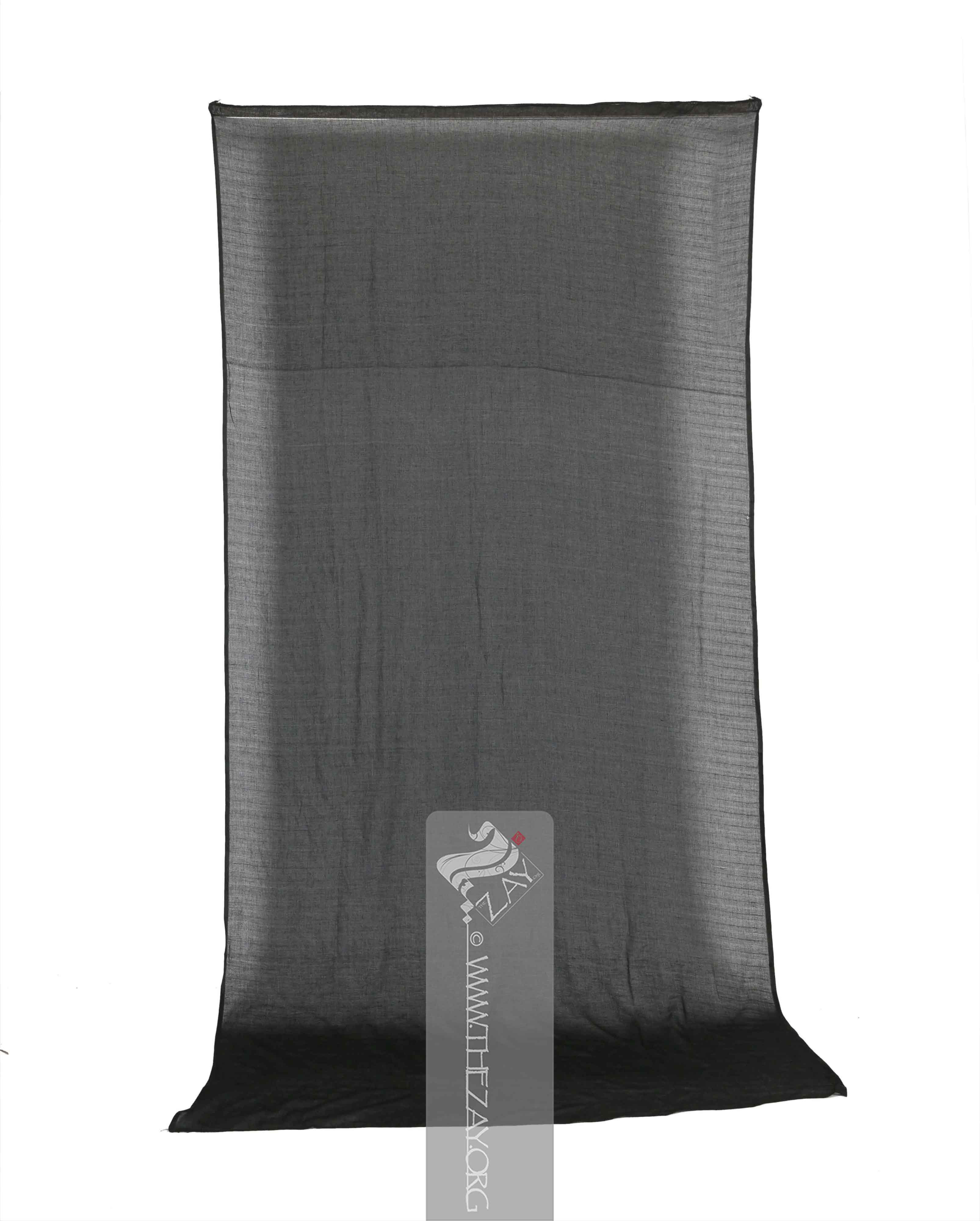
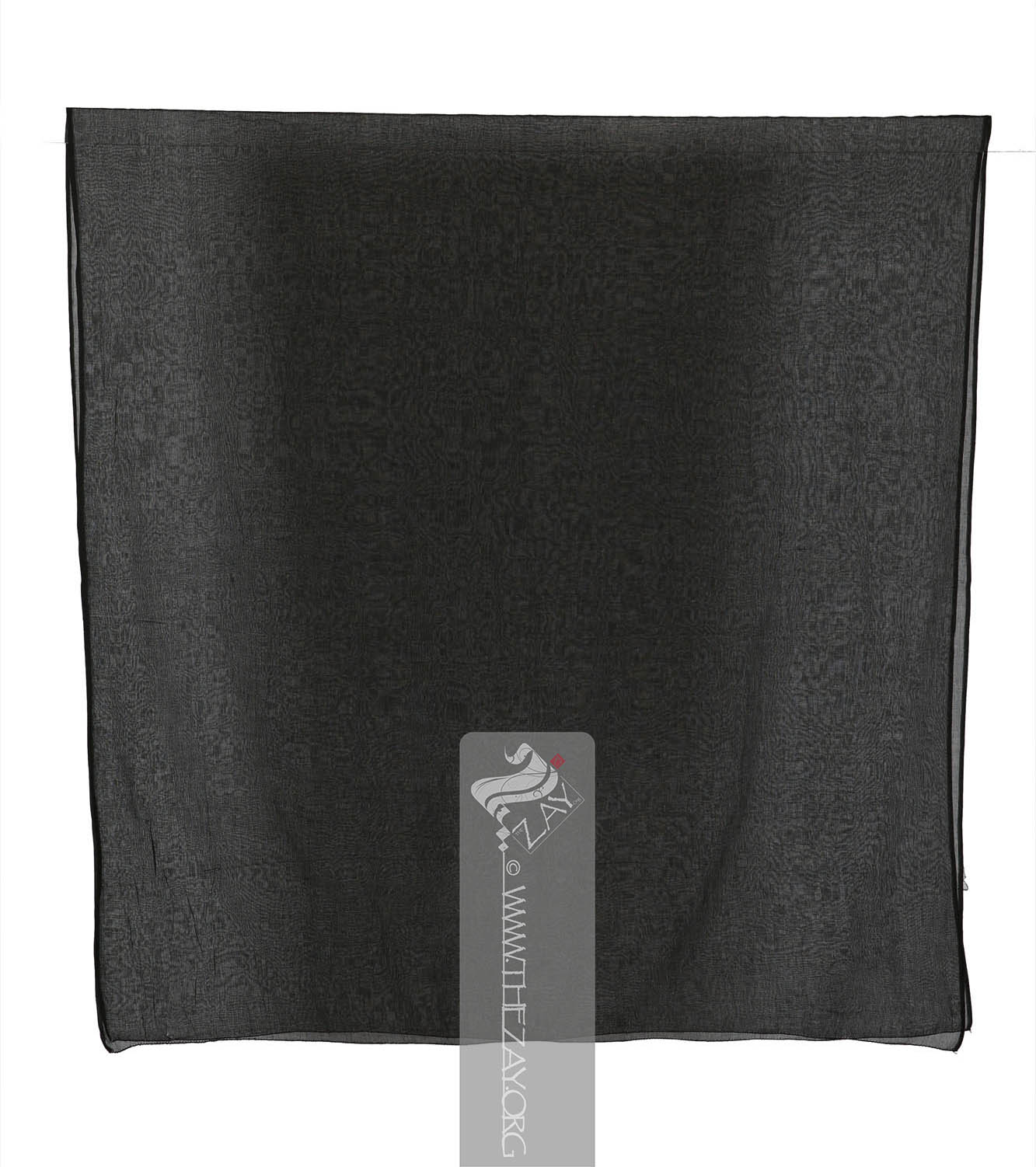
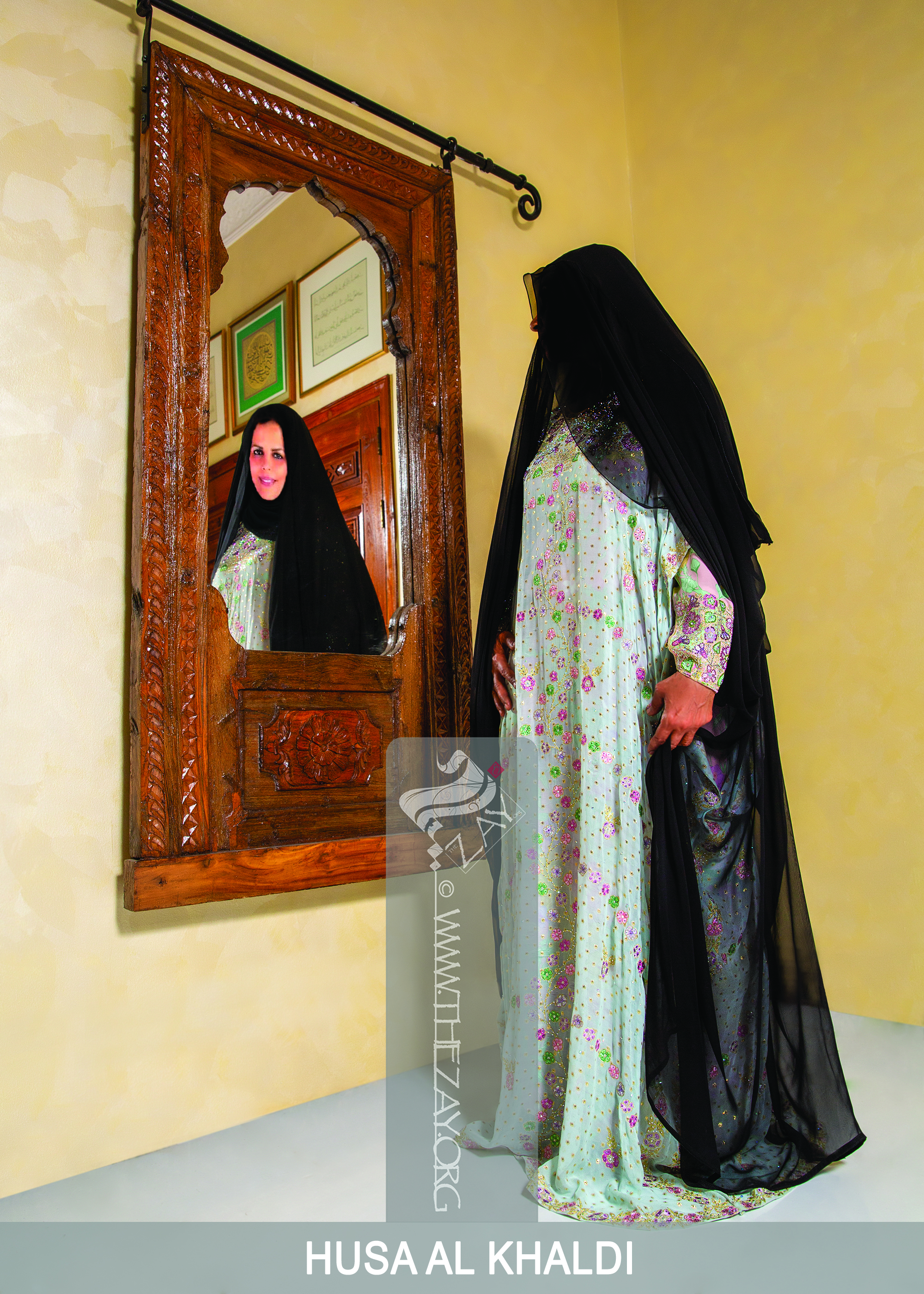
This is a traditional head scarf Scarf: (English), usually a rectangular piece of cloth loosely worn over the shoulders, upper body and arms, and sometimes also over the head. (shaylah Shaylah: (Colloquial Gulf Arabic), a length of fabric used as shawl, head cover or veil. Also known as (wigāyah) or (milfa’), generally made from sheer fabrics such as tulle (tūr), cotton gauze (wasmah Wasmah: (Arabic: woad), is derived from the woad herb (wasmah) used to dye the cotton gauze black. It is mainly used for headcovers or veils and overgarments in most of the Arab gulf region.) (nidwah) or (Nīl), or silk chiffon (sarī).) / (shaylah Shaylah: (Colloquial Gulf Arabic), a length of fabric used as shawl, head cover or veil. Also known as (wigāyah) or (milfa’), generally made from sheer fabrics such as tulle (tūr), cotton gauze (wasmah Wasmah: (Arabic: woad), is derived from the woad herb (wasmah) used to dye the cotton gauze black. It is mainly used for headcovers or veils and overgarments in most of the Arab gulf region.) (nidwah) or (Nīl), or silk chiffon (sarī). nidwah Nidwah: (Colloquial Gulf Arabic). Loose weave, black Indian cotton gauze (shāsh) fabric. Generally used for shawl Shawl: (Persian: shāl from Hindi: duśālā – Shoulder Mantle), a shawl is a South Asian version of a scarf worn or wrapped loosely over the shoulders and is usually made of wool. , head scarf Scarf: (English), usually a rectangular piece of cloth loosely worn over the shoulders, upper body and arms, and sometimes also over the head. or veil (shaylah Shaylah: (Colloquial Gulf Arabic), a length of fabric used as shawl, head cover or veil. Also known as (wigāyah) or (milfa’), generally made from sheer fabrics such as tulle (tūr), cotton gauze (wasmah Wasmah: (Arabic: woad), is derived from the woad herb (wasmah) used to dye the cotton gauze black. It is mainly used for headcovers or veils and overgarments in most of the Arab gulf region.) (nidwah) or (Nīl), or silk chiffon (sarī).) and overgarments (athwāb). When dyed in woad it is called (wasmah Wasmah: (Arabic: woad), is derived from the woad herb (wasmah) used to dye the cotton gauze black. It is mainly used for headcovers or veils and overgarments in most of the Arab gulf region.), when dyed in indigo it is then called (nīl).) / (shaylah Shaylah: (Colloquial Gulf Arabic), a length of fabric used as shawl, head cover or veil. Also known as (wigāyah) or (milfa’), generally made from sheer fabrics such as tulle (tūr), cotton gauze (wasmah Wasmah: (Arabic: woad), is derived from the woad herb (wasmah) used to dye the cotton gauze black. It is mainly used for headcovers or veils and overgarments in most of the Arab gulf region.) (nidwah) or (Nīl), or silk chiffon (sarī). wasmah Wasmah: (Arabic: woad), is derived from the woad herb (wasmah) used to dye the cotton gauze black. It is mainly used for headcovers or veils and overgarments in most of the Arab gulf region.) / (wigayah Wigāyah: (Arabic: verb waqa: to protect), the term is applied to any fabric that is draped off the head to cover the upper portion of the body thus used as shawl, head scarf or veil (shaylah). Some can have a fringe (hāshīyah). The letter (qāf) is commonly pronounced (guh) colloquially rendering the term: wigāyah.) / (samadah) commonly worn by women of the countries from the Arabian Peninsula.
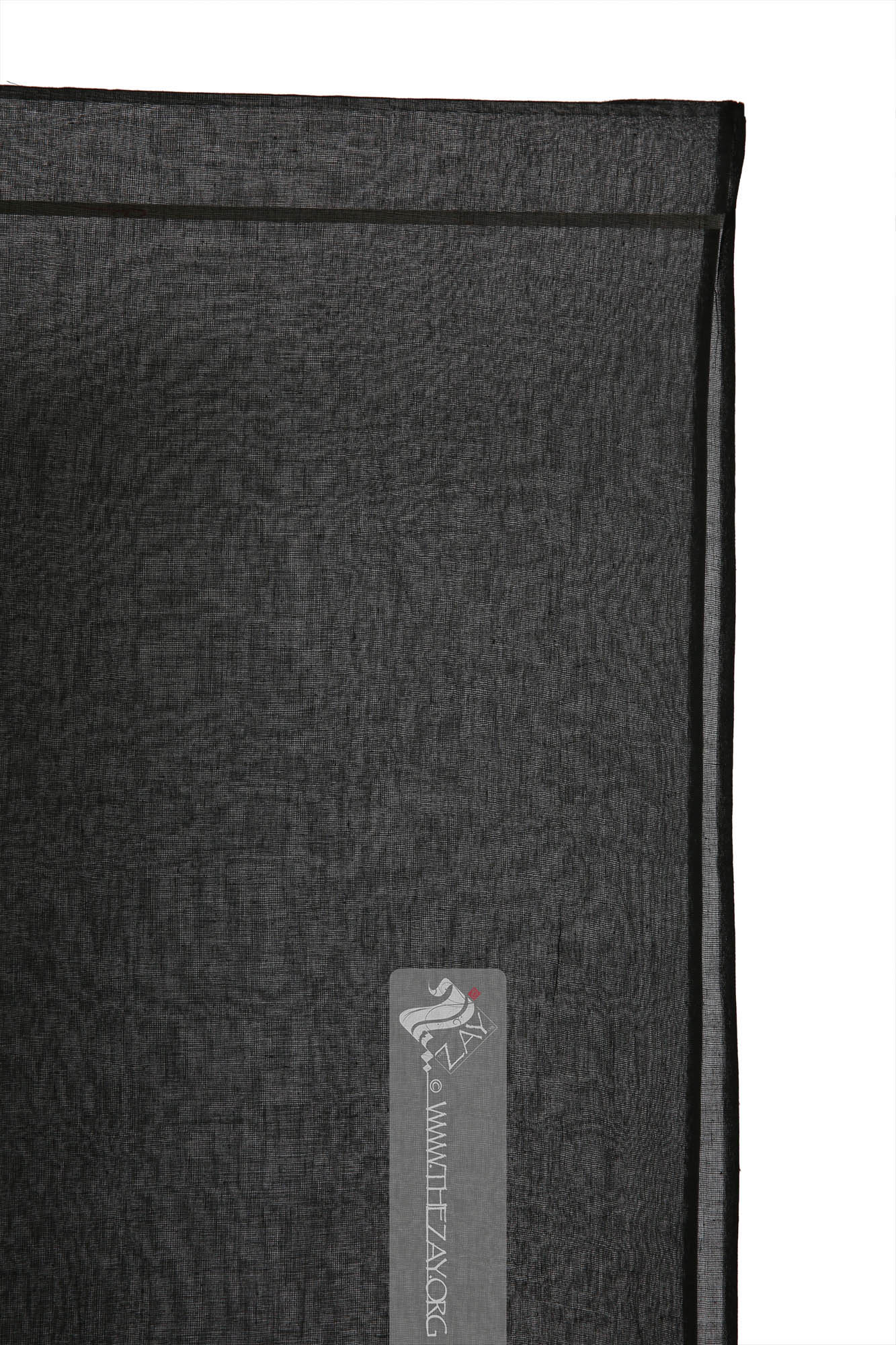
It is constructed of a (selvedge Selvedge: (English: Self-finished edge or self-edge: a dialect forming transition), an edge produced on woven fabric during manufacture that prevents it from unravelling. Traditionally the term selvage applied to only loom woven fabric, presently it could be applied to flat knitted fabric too. ) to selvedge Selvedge: (English: Self-finished edge or self-edge: a dialect forming transition), an edge produced on woven fabric during manufacture that prevents it from unravelling. Traditionally the term selvage applied to only loom woven fabric, presently it could be applied to flat knitted fabric too. woven silk chiffon. The (warp Warp: One of the two basic components used in weaving which transforms thread or yarns to a piece of fabric. The warp is the set of yarns stretched longitudinally in place on a loom before the weft Weft: one of the two basic components used in weaving that transforms thread or yarns into a piece of fabric. It is the crosswise thread on a loom that is passed over and under the warp threads. is introduced during the weaving process. ) and one of the (weft Weft: one of the two basic components used in weaving that transforms thread or yarns into a piece of fabric. It is the crosswise thread on a loom that is passed over and under the warp threads.) edges are folded and stitched to give it a neat finish. The field of the shaylah Shaylah: (Colloquial Gulf Arabic), a length of fabric used as shawl, head cover or veil. Also known as (wigāyah) or (milfa’), generally made from sheer fabrics such as tulle (tūr), cotton gauze (wasmah Wasmah: (Arabic: woad), is derived from the woad herb (wasmah) used to dye the cotton gauze black. It is mainly used for headcovers or veils and overgarments in most of the Arab gulf region.) (nidwah) or (Nīl), or silk chiffon (sarī). is unembellished and plain.