

1 of 3
| Local Name | Shaylah |
| Object Category | Headwear |
| Gender | Female |
| Date of object | c. 20th century |
| Place Of orgin | UAE |
| Region | UAE |
| Object Range | UAE, Qatar, Oman, Bahrain, KSA, Kuwait, et al |
| Dimensions | Length: 213 cm Width: 99 cm |
| Materials | Cotton |
| Technique | Woven Dyed |
| Color | |
| Provenance | Purchased, 1991 |
| Location | The Zay Zay: (Arabic: costume, Pl. azyaā’), a set of clothes in a style typical of a particular country or historical period. Initiative |
| Status | Storage |
| ZI number | ZI1991.500713 UAE |
Object History
This piece was purchased by Dr. Reem Tariq
Ṭariq: (Arabic; Synonym: tulle_bi_talli
Tūlle_bi_tallī: (French: Tulle – a city in France where fine material for veil was first made; Turkish: tel – wire; Synonym: tariq; talli; badla; khus_dozi ), series of small metal knots made on a woven net ground as embellishment. The term is commonly used in the North African Arab region specifically in Egypt. Ṭariq: (Arabic; Synonym: tulle_bi_talli
Tūlle_bi_tallī: (French: Tulle – a city in France where fine material for veil was first made; Turkish: tel – wire; Synonym: tariq; talli; badla; khus_dozi ), series of small metal knots made on a woven net ground as embellishment. The term is commonly used in the North African Arab region specifically in Egypt.
Object Features
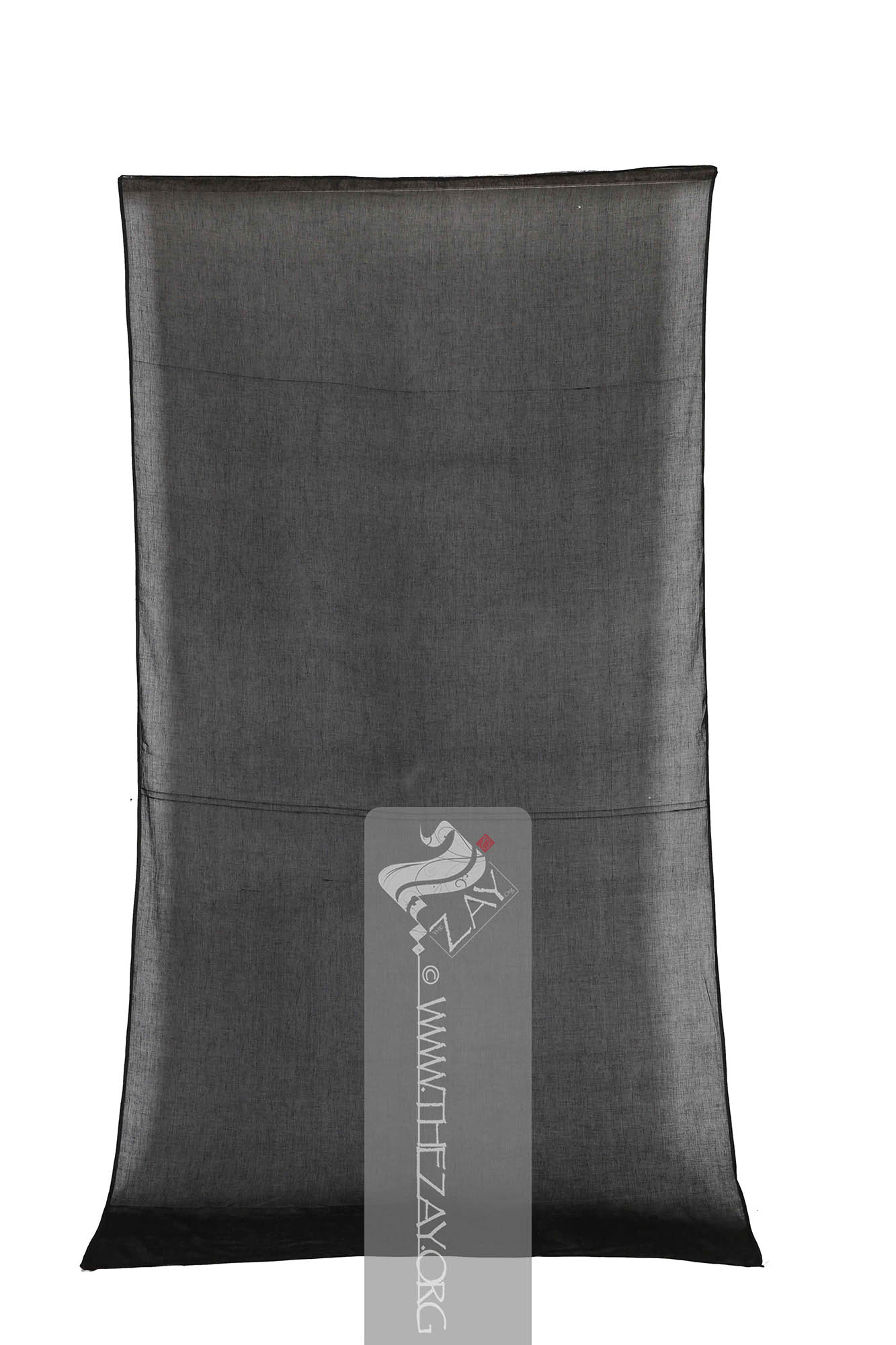
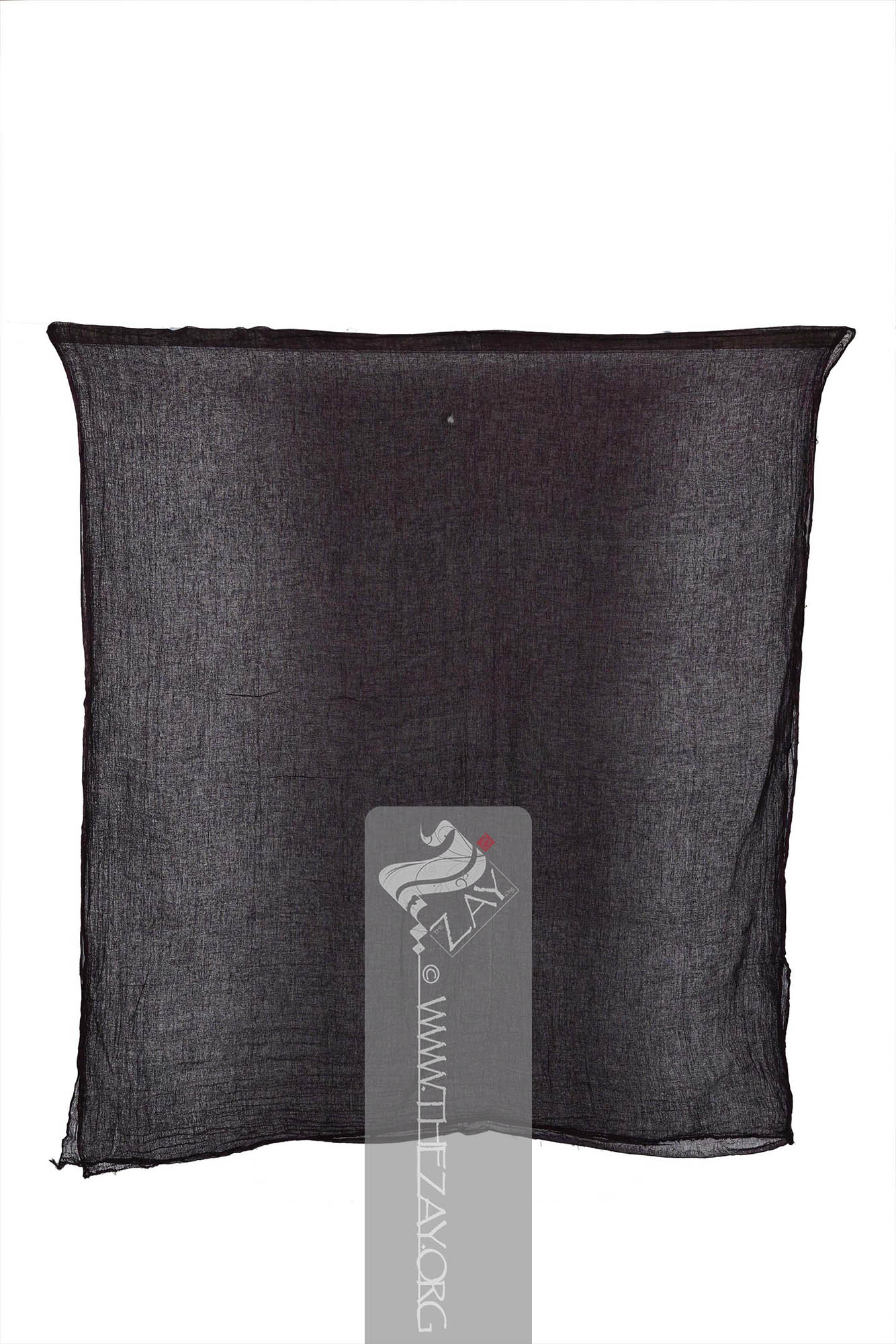
This is a traditional head scarf Scarf: (English), usually a rectangular piece of cloth loosely worn over the shoulders, upper body and arms, and sometimes also over the head. (shaylah Shaylah: (Colloquial Gulf Arabic), a length of fabric used as shawl, head cover or veil. Also known as (wigāyah) or (milfa’), generally made from sheer fabrics such as tulle (tūr), cotton gauze (wasmah Wasmah: (Arabic: woad), is derived from the woad herb (wasmah) used to dye the cotton gauze black. It is mainly used for headcovers or veils and overgarments in most of the Arab gulf region.) (nidwah) or (Nīl), or silk chiffon (sarī).) commonly worn by women in countries across the Arabian Peninsula.
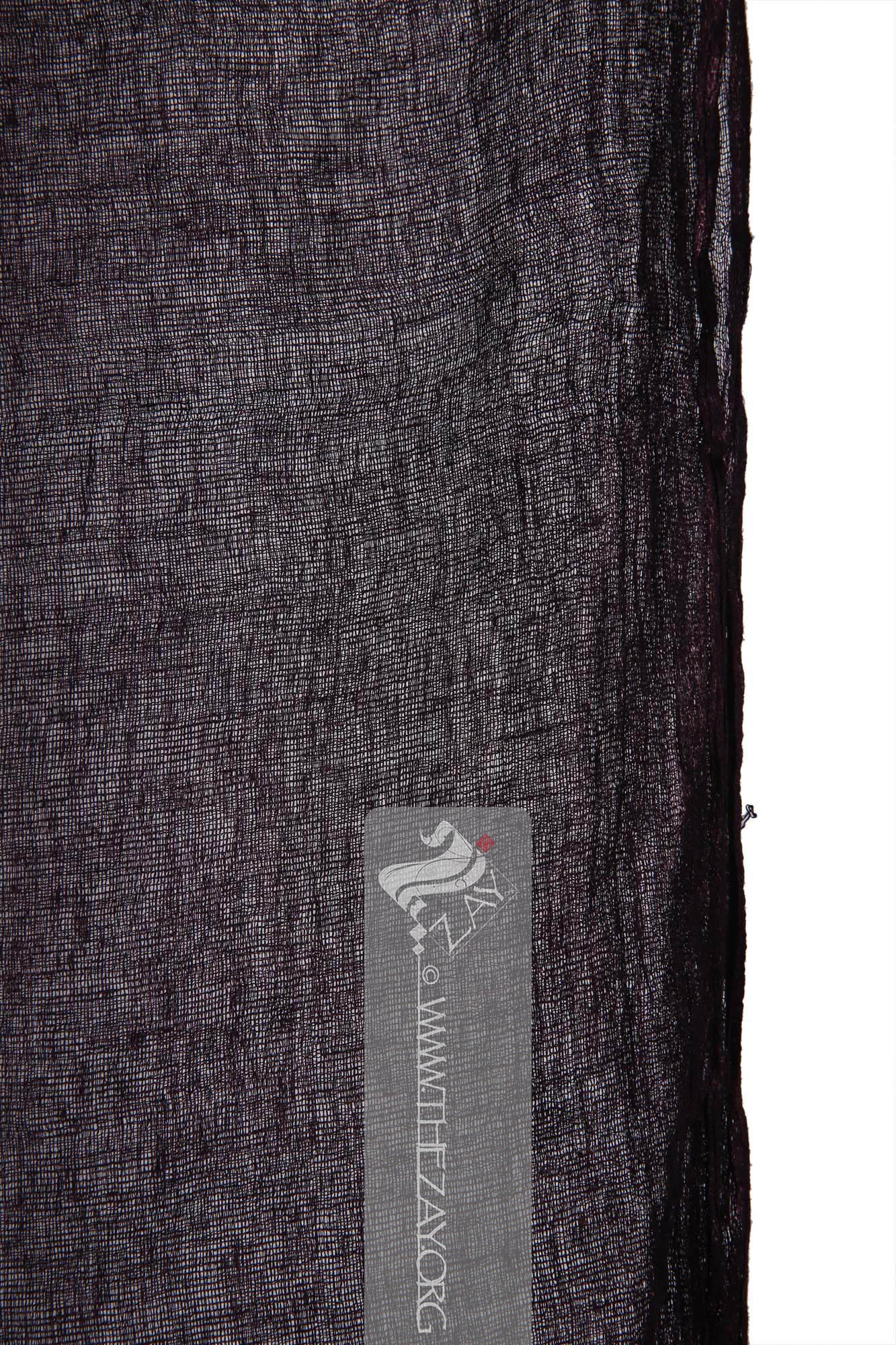
It is constructed of a (selvedge Selvedge: (English: Self-finished edge or self-edge: a dialect forming transition), an edge produced on woven fabric during manufacture that prevents it from unravelling. Traditionally the term selvage applied to only loom woven fabric, presently it could be applied to flat knitted fabric too. ) to selvedge Selvedge: (English: Self-finished edge or self-edge: a dialect forming transition), an edge produced on woven fabric during manufacture that prevents it from unravelling. Traditionally the term selvage applied to only loom woven fabric, presently it could be applied to flat knitted fabric too. woven cotton (gauze Gauze: (English), very fine wire mesh transparent fabric of silk, linen, or cotton.) fabric. Dyed in (indigo Indigo: (Latin: Indigo – India, synonym: nil Nīl: (Latin: indigo), Arabised term for Indigo, a natural dye belonging to the ‘Indigofera Tinctoria’ species of plants that have been cultivated in East Asia, Egypt, India, and Peru since antiquity. According to Pliny the Elder, it was named after India as it was the source of the dye.), a natural dye belonging to the ‘Indigofera Tinctoria’ species of plants that has been cultivated in East Asia, Egypt, India, and Peru since antiquity. According to Pliny the Elder, it was named after India as it was the source of the dye. ) blue, the field of the piece lacks any adornment. The (warp Warp: One of the two basic components used in weaving which transforms thread or yarns to a piece of fabric. The warp is the set of yarns stretched longitudinally in place on a loom before the weft Weft: one of the two basic components used in weaving that transforms thread or yarns into a piece of fabric. It is the crosswise thread on a loom that is passed over and under the warp threads. is introduced during the weaving process. ) ends of the piece retain a clean woven finish.